


Closures DIN18
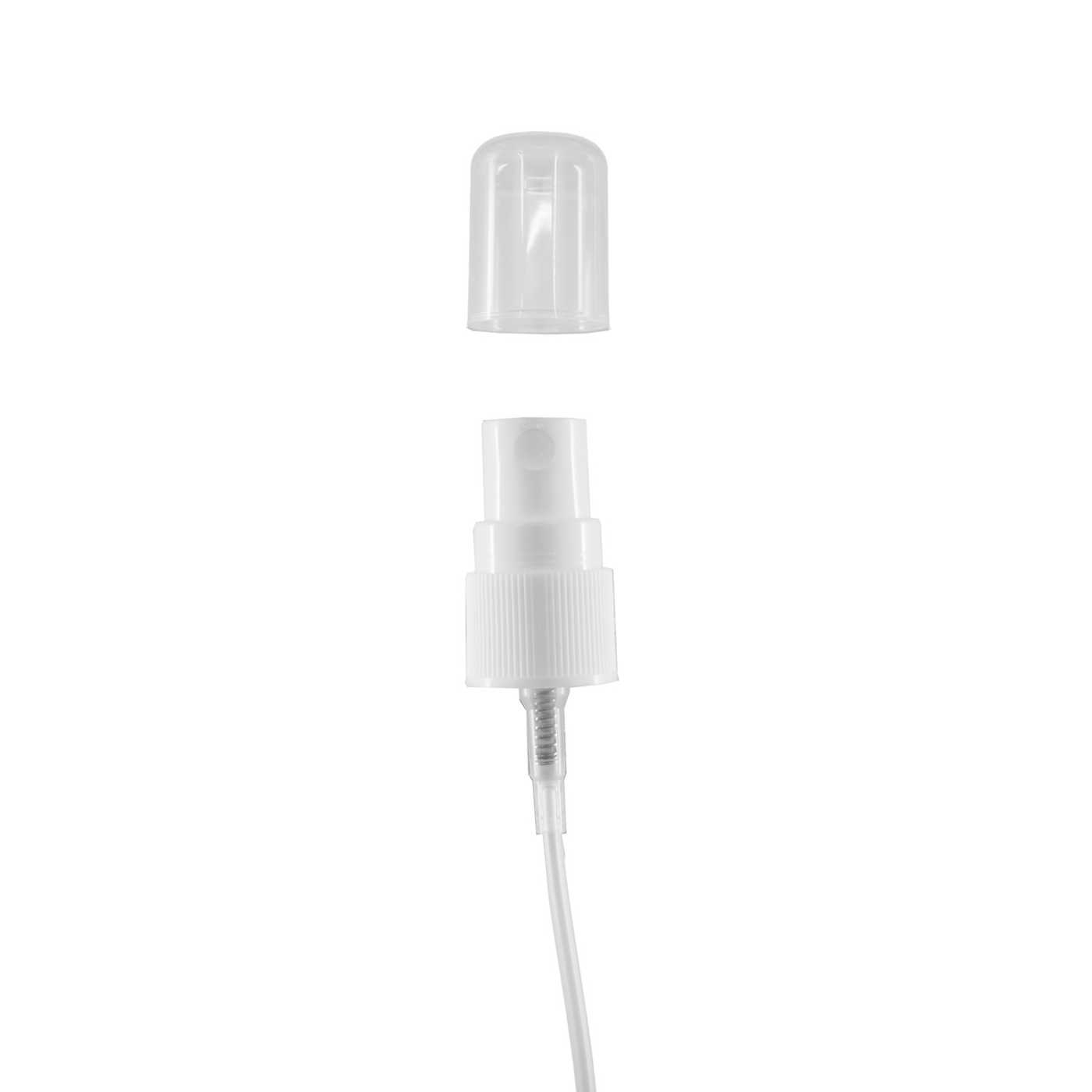
Plastic Fine Mist Sprayer, 18/410, white, 220 mm, for plastic bottle
Plastic spray pump 18/410 turns a standard plastic bottle into a dispenser that applies the liquid content as a fine mist . full description
Lowest price in the last 30 days: €0.37
Total for 1 pcs: €0.37
Product description
Plastic spray pump 18/410 turns a standard plastic bottle into a dispenser that applies the liquid content as a fine mist. It works wherever a product needs to be distributed evenly and in small amounts over skin, hair, or fabric: facial waters, hydrolats, tonics, hair sprays, air and linen fresheners, and hand sanitisers. The white colour is neutral and pairs well with clear, white, or coloured bottles.
The long dip tube allows the pump to be used on tall bottles; for shorter ones it can simply be trimmed to the required length. The pump is made of polypropylene and is suitable for contact with cosmetic products. A declaration of conformity is available with the product.
Suitable formulations
The pump produces a mist only from thin liquids. The result depends primarily on the viscosity of the contents.
- Water-based formulations – hydrolats, tonics, facial mists, hair waters, and detangling sprays disperse evenly.
- Alcoholic and hydroalcoholic mixtures – hand sanitisers, room fragrances, fabric sprays, and body sprays with alcohol.
- Thin solutions with a solubilised fragrance – when the perfume composition or essential oil is properly dissolved and the solution is clear.
Thick gels, emulsions, and pure vegetable oils cannot be atomised into a mist through the fine nozzle. They come out in a stream or gradually clog the mechanism. A lotion pump or dropper is more suitable for such contents.
Dosage and use
One press delivers a small dose (the exact value is in the product specifications). The product is applied economically, and it is easy to gauge how many presses correspond to the desired amount. On first use, pump the head several times until the mechanism is primed and liquid begins to flow.
Trim the dip tube with sharp scissors using a diagonal cut so it reaches just above the bottom of the bottle. The angled end will not suction to the base, and the pump will draw out nearly all the contents.
After screwing on the pump, it is advisable to briefly invert the bottle and check whether the thread seals properly. This is particularly important with thin alcoholic mixtures, which will seep through even a small gap.
Useful information
Choosing a bottle. The pump fits bottles with the same neck type. The thread type is listed in the specifications of both the bottle and the pump. Glass vials often have a different thread type even if the neck diameter looks similar, so comparing diameter alone is not sufficient. Suitable bottles and ready-made bottle-and-pump combinations are available from Handymade. For custom combinations, we recommend testing the seal, spray performance, and packaging behaviour with the specific formulation.
Filling the bottle. The bottle should be filled to its nominal volume, meaning the volume it is designed for in standard filling. The total brim volume is the physical capacity up to the neck. The difference between the two serves as headspace for the pump mechanism with dip tube and for expansion of the contents with temperature changes. A bottle filled to the brim will overflow when the pump is attached.
Preparation before first use. Pump clean warm water through the sprayer several times, then isopropyl alcohol or ethanol. Allow it to dry thoroughly. This ensures the alcohol reaches the inside of the mechanism and dip tube, which a simple soak would not.
Polypropylene tolerates both water-based and alcoholic formulations well, but undiluted essential oils and strong solvents may gradually degrade the plastic and seals. Mixtures with a higher proportion of essential oils should be tested on the packaging in advance.
Reuse. Before filling with a different product, repeat the cleaning procedure to prevent residue from the previous contents and fragrance from remaining in the mechanism. If the nozzle sprays unevenly after prolonged storage, the cause is usually dried residue. Pumping warm water through it will generally resolve the issue.
Recycling. The pump is made of plastic and can be disposed of for recycling as plastic packaging once it has reached the end of its useful life.
Frequently asked questions
Parameters
- Product color
- White
- Country of origin
- European Union
- Diameter
- 20,4 mm
- Thread type
- 18/410
- Height
- 40 mm
- Tube length
- 220 mm
- Dose
- 0.07 ml
Product documentation
- PDSProduct Data Sheet
- PDF ↓
Verified by customers.
No reviews yet.
Only customers with a delivered order can write reviews.