

Daniela2 Sept 2026

Closures DIN28
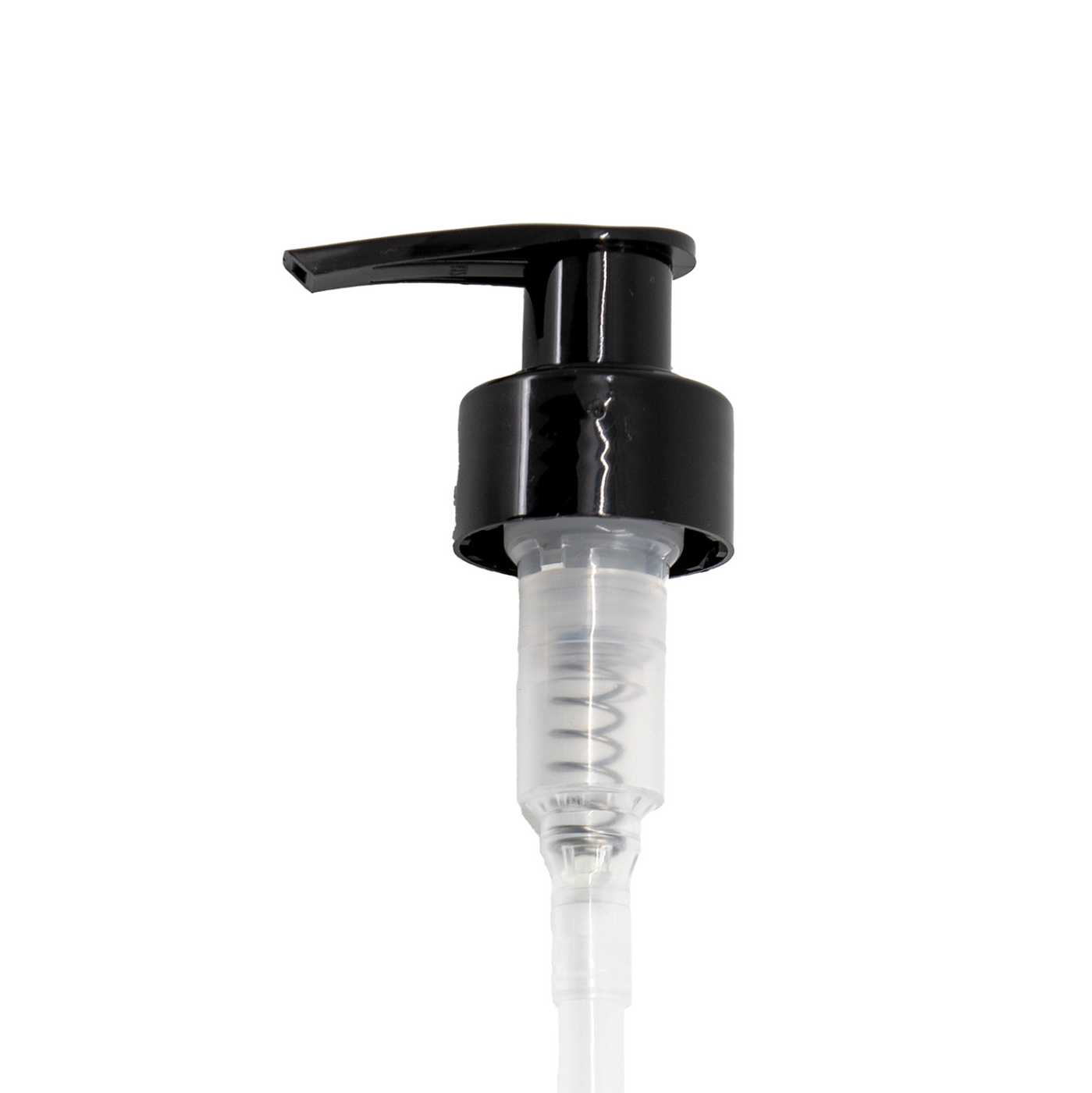
The plastic pump 28/410 is a dispensing closure for bottles with liquid to medium-viscosity contents. full description
Lowest price in the last 30 days: €0.62
Total for 1 pcs: €0.62
The plastic pump 28/410 is a dispensing closure for bottles with liquid to medium-viscosity contents. A single press delivers approximately 1 ml of product, allowing clean, one-handed dispensing without opening the bottle. It is best suited for liquid soaps, shower gels, shampoos, conditioners and body lotions — products used daily where convenient dispensing matters.
The bottle contents never come into contact with hands or shower water during use. For bathroom products this is a practical advantage over a flip-top cap.
Very thick creams, butters and products with abrasive particles (scrubs with salt, sugar or ground kernels) are not suitable for the pump. The mechanism cannot draw up thick contents, and solid particles can clog it.
The pump is supplied with a long dip tube that is trimmed to the height of the bottle before use. This makes it compatible with both shorter and taller bottles with the same neck finish. The tube length and other dimensions are listed in the product specifications.
The process is straightforward: hold the pump against the outside of the bottle, mark a point just above the bottom and cut the tube with sharp scissors. The end should reach almost to the bottom so the bottle can be emptied as fully as possible.
Cut the tube at an angle. An angled end cannot suction onto the bottom of the bottle, so the pump draws smoothly even when only a little product remains.
After fitting onto a filled bottle, press the pump several times until the tube and mechanism are primed with product. Only then will it deliver a full dose.
Filling the bottle. Bottles have two distinct volumes: nominal and total. The nominal volume is the amount the bottle is designed to hold under normal filling conditions. The total volume is the physical capacity up to the rim of the neck. The difference provides headspace for the pump body and dip tube, and for product expansion with temperature changes. The bottle should therefore be filled to the nominal volume, not to the brim — otherwise product will overflow when the pump is fitted.
Preparation before first use. Rinse the pump with warm water, then pump isopropyl alcohol or ethanol through it several times to disinfect the internal mechanism and the dip tube. Allow it to dry completely before use. Residual water in the mechanism would place unnecessary strain on the product's preservation system.
Dose and product viscosity. The actual dose depends on how freely the contents flow. With thicker products the dose may be smaller and the pump returns more slowly. With a new formulation it is worth testing the dispensing on a single bottle before filling an entire batch.
Bottle compatibility. The pump fits bottles with a 28/410 neck finish. Bottles with the same neck type as well as ready-matched bottle-and-pump combinations are available in the Handymade range. The black colour works with glass and plastic bottles in various colours. When assembling your own combination, we recommend verifying the seal, dose and closure behaviour with the specific formulation.
Material and cosmetic contact. The pump is made from polypropylene (PP) and is suitable for contact with cosmetic products. The full declaration statement is provided in the product specifications.
For products with a high proportion of essential oils, alcohol or solvents, we recommend carrying out a compatibility test with the specific formulation and monitoring the seal, pump action and appearance of the plastic over several weeks.