


Closures DIN18
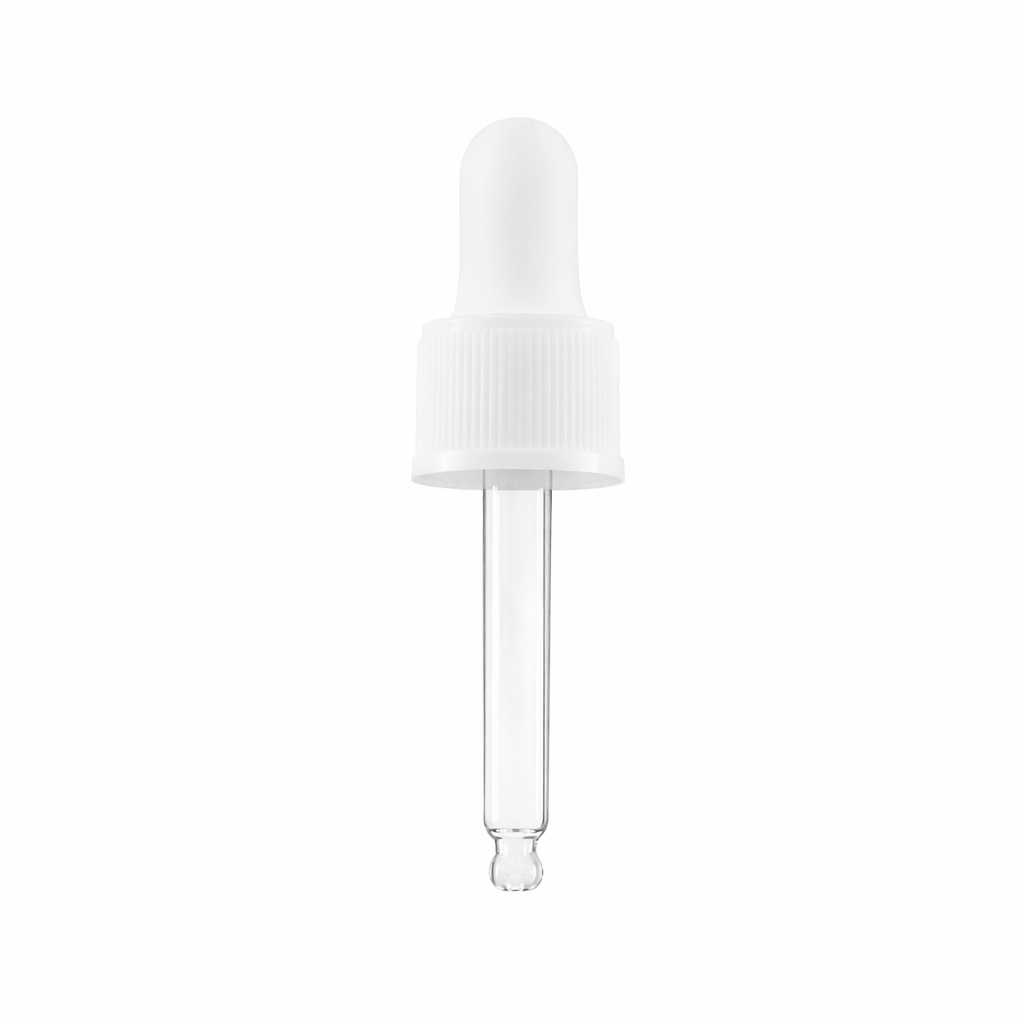
White matte dropper, 52 mm
White matte dropper 52 mm is a closure for small bottles that dispenses the contents drop by drop . Squeezing the bulb draws liquid into the pipette, which is then released gradually the same way. full description
Lowest price in the last 30 days: €0.51
Total for 1 pcs: €0.51
Product description
White matte dropper 52 mm is a closure for small bottles that dispenses the contents drop by drop. Squeezing the bulb draws liquid into the pipette, which is then released gradually the same way. Only the required amount is taken, and the rest remains in the bottle without contact with fingers.
It is suitable for facial serums, oils and herbal extracts — thin to medium-viscosity liquids used in small amounts at a time. The white matte finish is colour-neutral and pairs well with both clear and tinted glass.
How the dropper works
The dropper consists of three parts: a polypropylene cap with a screw thread, a silicone bulb and a glass pipette. The cap seals the bottle when screwed on, the bulb creates the negative pressure needed to draw up liquid, and the pipette measures the dose. The glass pipette is the part that comes into direct contact with the contents.
Drop size is not fixed. It depends on the viscosity and surface tension of the liquid, its temperature and how the dropper is held. An oil forms a different drop than a water-based serum or an alcohol-based extract. The dropper is therefore a convenient dispensing aid, not a precision measuring device.
If the product instructions specify a number of drops, it is worth verifying this with the finished formulation. Simply dispense a known number of drops onto a scale and calculate the average weight per drop.
Suitable product types
- Facial serums and concentrates — used a few drops at a time without touching the contents with fingers.
- Facial, hair and massage oils — oil can be applied directly to the palm or skin without spilling.
- Cosmetic tinctures and herbal extracts — thin alcohol- or glycerin-based infusions dispensed drop by drop.
- Beard oils and cuticle oils — small amounts applied precisely to the target area.
- Active ingredients in production — the dropper makes it easier to add liquid raw materials in small doses, for example when preparing test samples.
The dropper is not suitable for thick gels, creams or emulsions. These are difficult to draw into the pipette and release poorly. A pump dispenser is more appropriate for such textures.
Choosing a bottle and filling
The dropper fits bottles with the matching neck finish as stated in the product specifications. The second criterion is pipette length: it should reach just above the bottom so that as much of the contents as possible can be dispensed, but must not rest on the bottom. Bottles with a compatible neck finish and ready-made dropper-and-bottle combinations are available from Handymade. For custom combinations, we recommend checking the seal, dispensing performance and dropper behaviour with the specific formulation.
When filling, allow for the difference between the nominal and total volume of the bottle. The nominal volume is the amount the bottle is designed to hold under normal filling conditions. The total volume is the physical capacity up to the rim of the neck. The difference between the two serves as a reserve for the dropper pipette and for expansion of the contents when temperature changes. Fill only to the nominal volume, not to the rim — otherwise the contents will overflow when the dropper is inserted.
Things worth knowing
The dropper is suitable for contact with cosmetic products. Before first use, wash and disinfect it with isopropyl alcohol or ethanol. Allow it to dry thoroughly, including the inside of the pipette and bulb, so that no water or residual disinfectant enters the product.
Bottles fitted with a dropper should be stored upright. A dropper with liquid drawn up should not be turned bulb-side down. Liquid would seep into the bulb, from which it is difficult to rinse out.
Silicone may swell and soften with prolonged contact with concentrated essential oils, silicone oils or solvents. For such contents, we recommend carrying out a compatibility test beforehand and monitoring whether the bulb changes shape or elasticity.
Before sorting for recycling, separate the glass pipette, plastic cap and silicone bulb from one another, as they are three different materials.
Frequently asked questions
Parameters
Product documentation
- PDSProduct Data Sheet
- PDF ↓
Verified by customers.
No reviews yet.
Only customers with a delivered order can write reviews.