


Bottles only
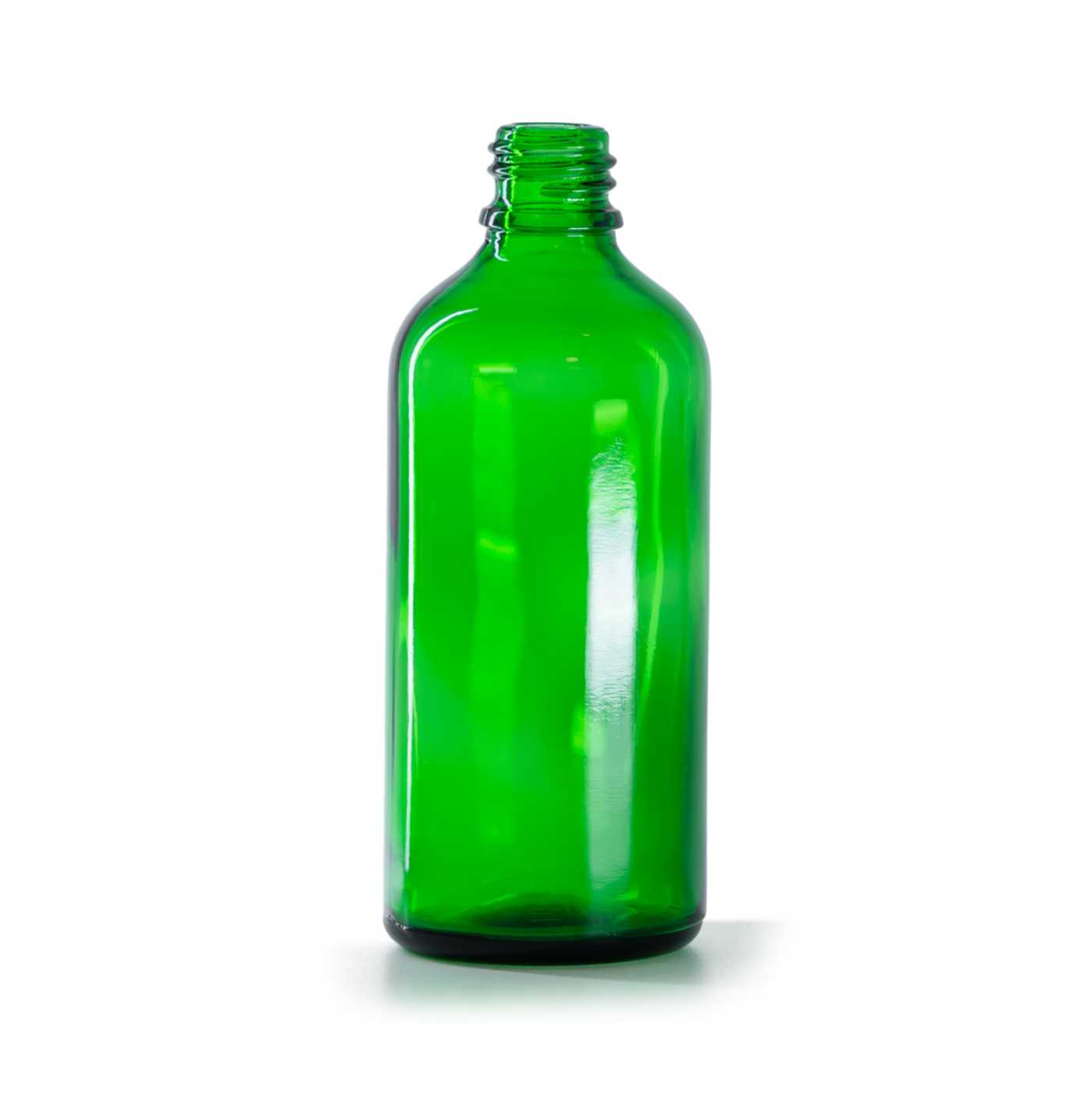
Glass bottle, vial, green, 18 mm, 100 ml
Pack size10 ml15 ml30 ml50 ml100 ml
A glass bottle in an apothecary style, made from green glass with an 18 mm neck, is intended for filling smaller batches of liquid cosmetics. full description
Lowest price in the last 30 days: €0.93
Total for 1 pcs: €0.93
Add 69 more pcs and the price drops to €0.85/pc.
Product description
A glass bottle in an apothecary style, made from green glass with an 18 mm neck, is intended for filling smaller batches of liquid cosmetics. The container with a nominal volume of 100 ml is particularly suited for facial and body oils, serums, tinctures, tonics, and hydrolats — products that are dispensed drop by drop or in small amounts. The green glass attenuates part of the light reaching the contents while still allowing the fill level to remain visible, so you can see how much product remains in the bottle.
An apothecary bottle is the name for this container shape: a cylindrical body with straight walls and a narrow threaded neck. This shape is easy to grip, stands stably, and offers a flat surface for a label. The container is intended for cosmetic products and has been assessed for this purpose. The declaration of conformity and supporting documents are listed in the product parameters.
Why choose the green apothecary bottle
- Glass with no interaction with the contents – glass does not absorb fragrances or colorants and releases nothing from its material into the fill. It is therefore suitable for products with a higher proportion of essential oils, alcoholic tinctures, and concentrated serums that some plastics could soften or stain.
- Green glass and light – the green colour of the glass filters part of the light, so light-sensitive contents degrade more slowly than in clear glass. The protection is partial, so it is advisable to store the green bottle away from direct sunlight. For very sensitive fills, amber or blue glass is the safer choice.
- 18 mm neck – a widely used neck size that accommodates various dispensing options depending on the consistency of the fill.
- Volume suited to a typical home batch – 100 ml is an amount that will be used up before the oil or serum begins to deteriorate. It is also a practical size for a gift or retail sale.
- Reusable – glass withstands thorough washing and disinfection; once empty, the bottle can be cleaned and refilled.
Nominal and total volume
For any container it is useful to distinguish between two figures. The nominal volume is the volume the bottle is designed to be filled to in normal use and the figure stated on the label. The total brim-full volume is the physical capacity up to the neck, which is somewhat larger. The difference provides clearance for the closure insert, dropper, or pump and for the expansion of the fill with temperature changes. The bottle should therefore be filled to the nominal volume, not to the brim. If filled to the brim, fitting a dropper would force some of the contents out and the closure might not seal properly. The exact values for both volumes are listed in the product parameters.
Choosing a closure
Closures for the bottle are selected according to the neck type stated in the parameters. The Handymade range includes closures with the matching neck type as well as ready-made bottle-and-closure combinations with their own product descriptions. With a custom combination, we recommend verifying the seal, dispensing behaviour, and compatibility of the closure with the specific formulation, as different inserts and seals react differently to oils, alcohol, and essential oils.
For oils and serums a dropper or pump is the standard choice, for tonics and hydrolats a spray, and for tinctures and concentrates a simple cap. The deciding factors are the viscosity of the fill and the required dispensing precision.
Preparing and using the bottle
Before the first fill it is advisable to wash, rinse, and disinfect the bottle with isopropyl alcohol or ethanol and leave it to dry completely, neck down. Traces of water in an oil-based fill encourage microbial growth and spoilage, so dryness inside the container is just as important as cleanliness.
Fill the bottle once the contents have cooled. Glass tolerates heat, but a rapid temperature difference between a hot fill and a cold wall can crack the bottle. Emulsions and serums that thicken as they cool should be filled while still liquid, but not hot.
The straight section of the body is suited for a label. Apply the label to a dry, degreased surface. After disinfection, allow the alcohol to evaporate completely before labelling, otherwise the adhesive will not bond evenly.
Good to know
Glass is fragile, so the bottles are transported in carriers or with protective padding. During filling, metal tools should not be used on the neck to prevent chipping the thread. With repeated use it is worth checking the neck against the light for any cracks. A damaged thread will no longer seal properly.
Green glass slightly alters the perceived colour of the contents: clear and yellowish oils appear greener, coloured tinctures appear darker. This is purely an optical effect with no impact on the fill, but it is worth accounting for when photographing and describing the product for sale.
Glass can be filled with a wide range of contents: aqueous solutions, hydrolats, alcoholic extracts, fixed and essential oils. The limiting factor is not the glass but the closure, whose seal and insert must be compatible with the specific fill. Once empty, the bottle is sorted for glass recycling. Before recycling, the closure made from a different material should be removed.
The bottle is not intended for freezing or for directly heating the contents while in the container. When a water-based fill is frozen, it expands and the glass cracks.
Frequently asked questions
Parameters
Product documentation
- PDSProduct Data Sheet
- PDF ↓
Verified by customers.
No reviews yet.
Only customers with a delivered order can write reviews.