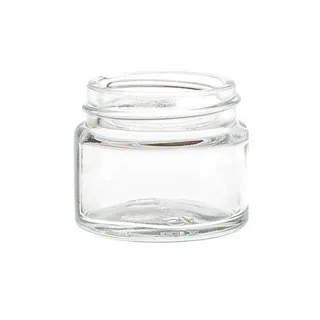
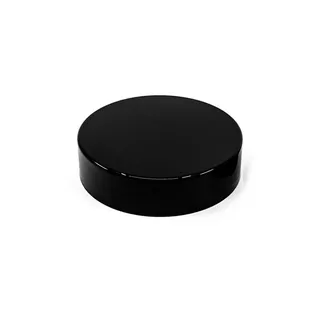
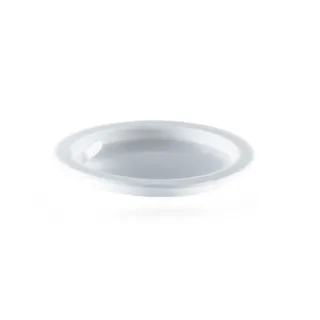
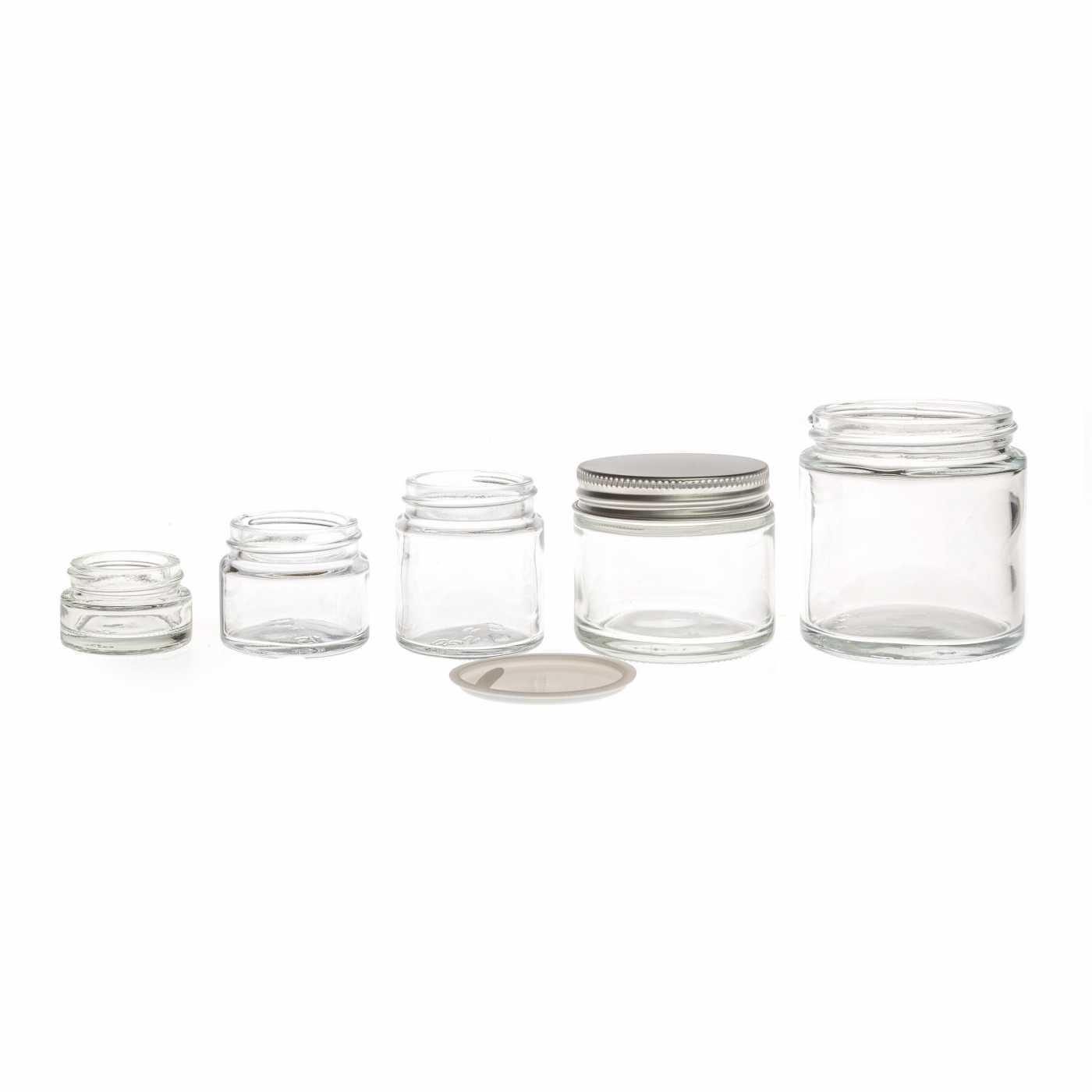
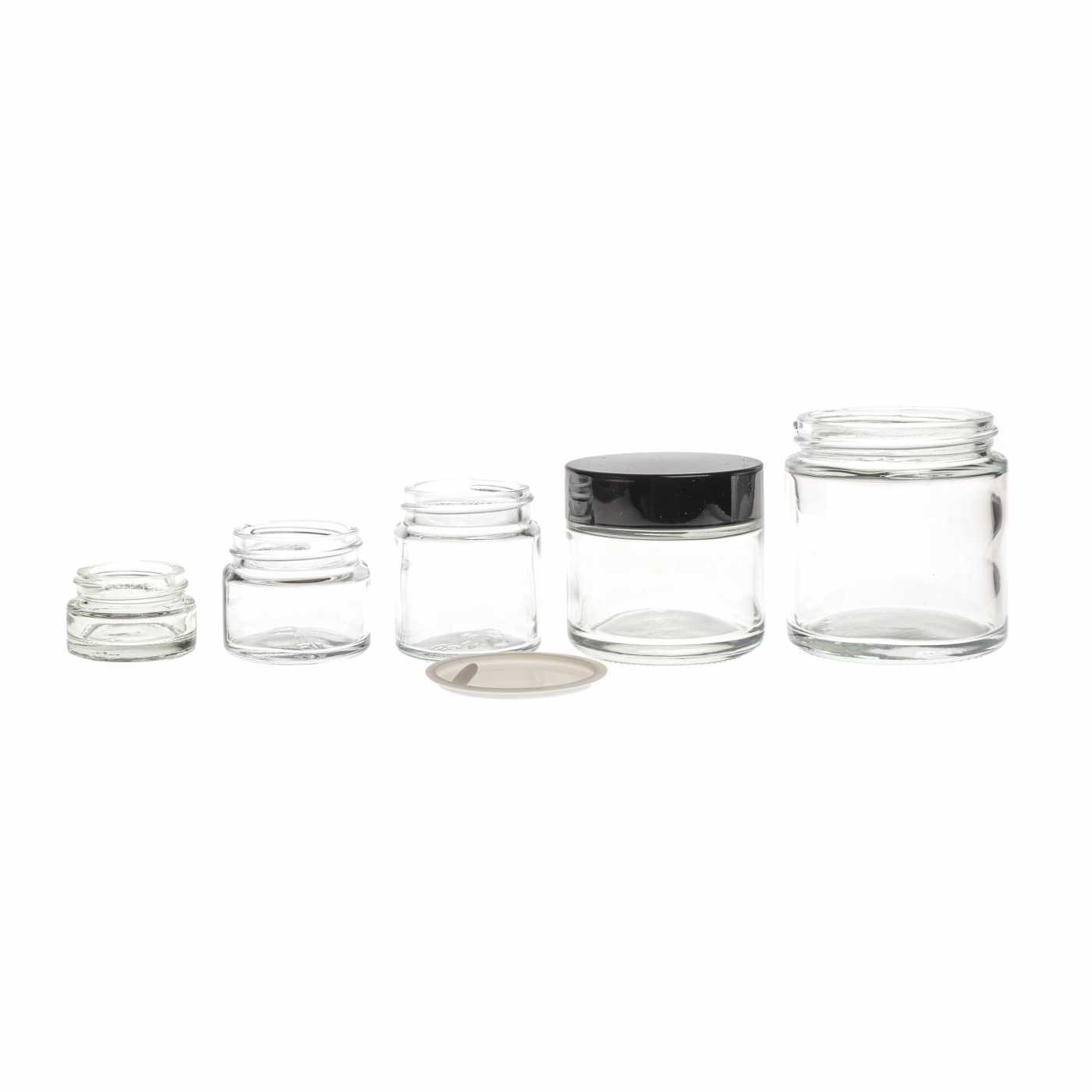
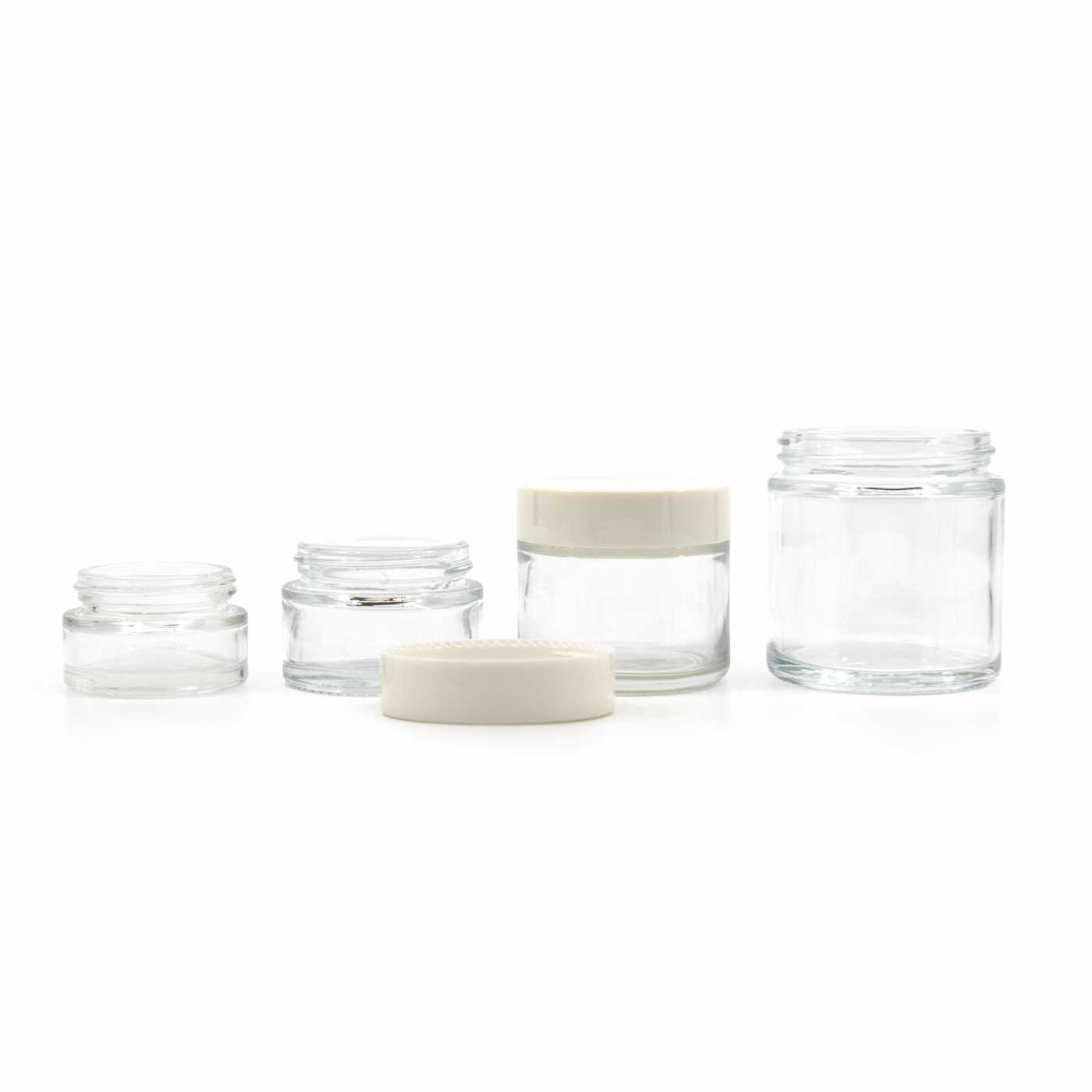
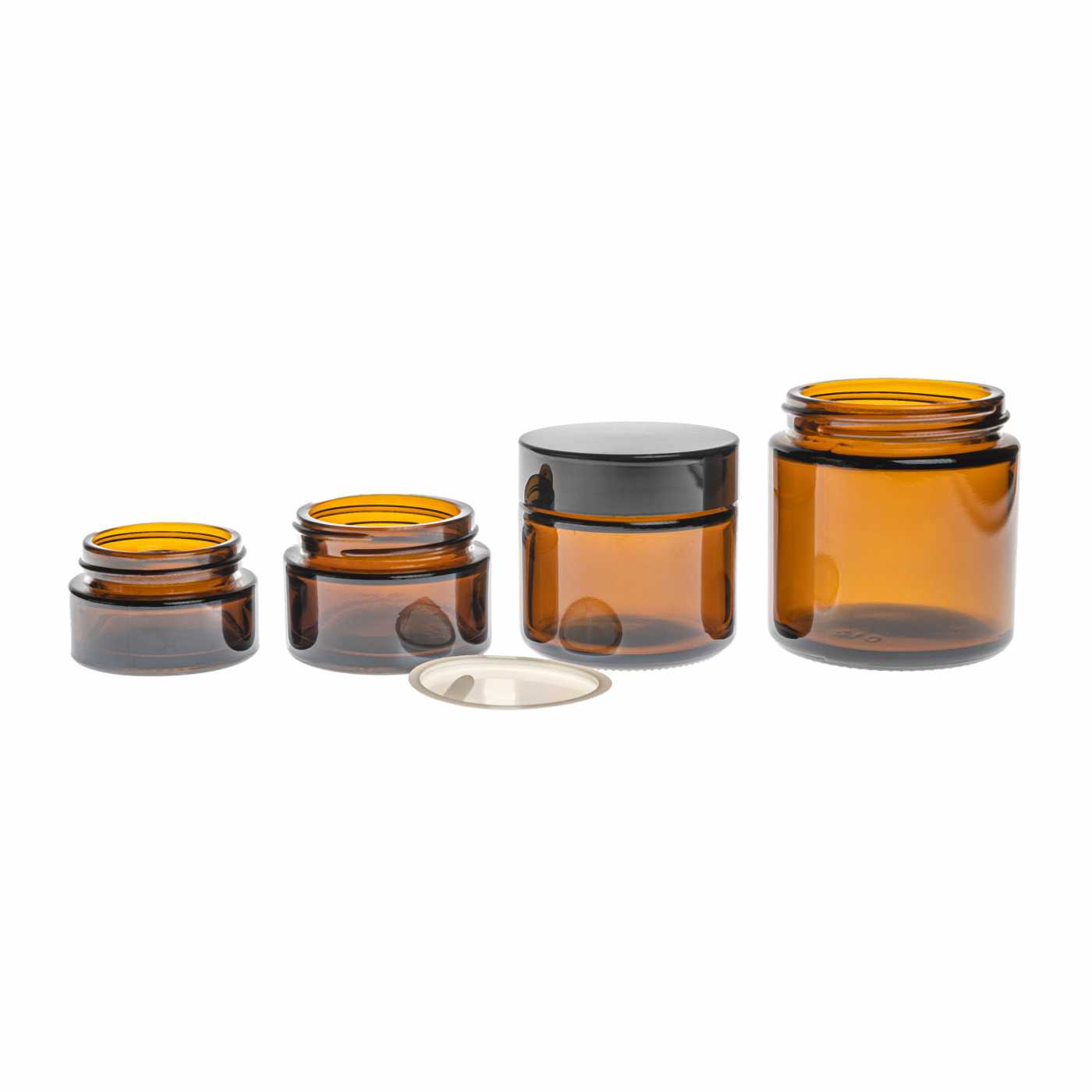
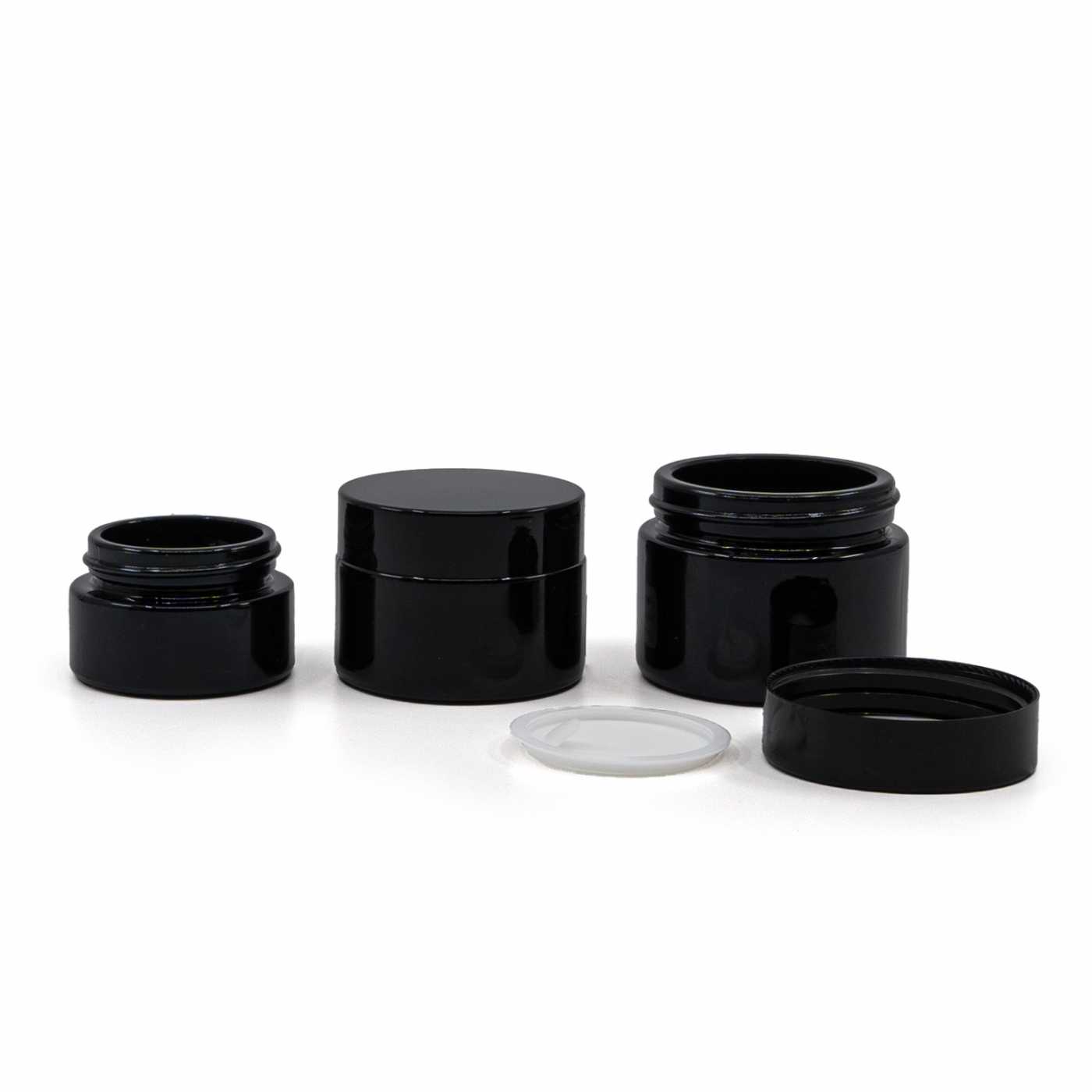
A glass jar with a capacity of 30 ml, a black screw-on lid and an inner insert form a complete set ready for filling creams, balms, ointments and solid perfumes in small quantities. The clear glass lets you see the contents, making it ideal especially for products where the customer needs to see the colour and texture, and for samples, travel-sized packaging or small batches. Glass does not react with vegetable or essential oils and does not absorb fragrance, so it holds up well even with anhydrous balms containing a higher proportion of essential oils, where plastic jars may not be suitable. The set is declared as suitable for contact with cosmetics; it is not intended for food use.
What the set contains
- Glass jar – clear glass with a nominal volume of 30 ml and a wide neck with a 48 mm thread. The wide opening allows comfortable scooping with a finger or spatula even with thick butters and balms that would be difficult to remove from a narrow neck.
- Black lid – a screw-on closure made of polypropylene (PP) with a foam polyethylene (EPE) sealing insert. The foam seal seats on the rim of the neck and improves the tightness of the joint, which is important for oily and semi-solid contents.
- Inner insert – a white plastic (PP) disc that is placed directly on the surface of the product under the lid after filling. It limits the contact of the contents with air and with the underside of the lid, helps keep the surface of the cream intact during transport and, with softer textures, prevents the contents from getting into the thread.
Suitable products
A volume of 30 ml corresponds to a typical packaging size for eye creams, concentrated face creams, balms for dry areas, ointments and solid perfumes. It works equally well for travel-sized versions of larger products, for customer samples before purchasing a full-size pack, or for test batches during recipe development when monitoring stability in the actual packaging is worthwhile.
The clear glass showcases products whose appearance is part of the experience: coloured butters, balms with visible plant pieces, sugar or salt scrubs in small packaging, or gel masks.
With a jar, the contents come into contact with fingers and air at every use. Creams and other products with an aqueous phase filled into a jar therefore require a reliable and tested preservation system. Anhydrous balms and ointments are less demanding in this respect, but we recommend an antioxidant for these as well.
Filling and volume
With this jar, a distinction is made between nominal volume and total capacity to the brim. The nominal volume is the quantity the container is designed for under normal filling conditions and corresponds to the 30 ml label. The total capacity to the brim is the physical volume of the glass up to the neck and is higher. The difference between them is a reserve for the inner insert, for the lid seal and for the slight expansion of the contents with temperature changes. It should therefore be filled to the nominal volume, not to the brim. Otherwise the contents would be pushed into the thread when screwing the lid on and the insert would have nowhere to seat.
The weight in grams depends on the density of the formulation. Oils, butters and balms have a density lower than water, so slightly less than 30 g will fit into a jar with a volume of 30 ml.
For balms and ointments that are poured while hot, allow them to cool slightly before filling, or warm the jar gently beforehand. A sudden temperature difference between the hot mass and the cold glass can damage the container. Insert the inner insert only after the contents have fully set and cooled.
Good to know
- Preparation before first fill – wash the jar, disinfect it with isopropyl alcohol or ethanol and allow it to dry completely. Glass can also withstand hot water. Do not boil the lid with the foam seal or the insert – washing and disinfection are sufficient. High temperatures could deform the seal.
- Light – clear glass does not protect the contents from light. Products containing unsaturated vegetable oils, sensitive essential oils or active ingredients prone to oxidation should be stored in the dark or a dark container should be chosen.
- Reuse – the glass jar can be reused after thorough washing and disinfection. For the lid, check whether the foam seal has absorbed the fragrance or colour of the previous contents. The inner insert is best replaced with a new one for a new batch for hygiene reasons.
- Labelling – a label is applied to the side wall of the jar or a circular label to the lid. With clear glass, bear in mind that the contents will show through, so a lid label is often used in combination with a smaller one on the side.
- Recycling – glass goes with glass, the lid and insert with plastics. Disassemble the set before sorting.
Frequently asked questions
Does the clear 30 ml glass jar protect the contents from light?
No, clear glass lets light through and does not protect the contents from it. It is suitable for products that are not light-sensitive, or for products stored in a box or out of direct light. For formulations with unsaturated oils or oxidation-sensitive active ingredients, dark glass is the safer choice.
What is the inner insert in the glass jar for?
The inner insert is a plastic disc that is placed on the surface of the product under the lid. It limits the contact of the contents with air and the lid, protects the surface of the cream during transport and, with softer textures, prevents the contents from being pushed into the thread. It is inserted only after the filled product has set and cooled.
How much cream fits in a 30 ml glass jar?
The jar is filled to the nominal volume of 30 ml, not to the brim. The remaining space is a reserve for the insert, the seal and the expansion of the contents. The weight of the filling in grams depends on the density of the formulation. For oils, butters and balms it is lower than the numerical volume in millilitres; for aqueous gel textures it approximately corresponds.
Is the glass jar with a black lid suitable for balms with essential oils?
Yes, glass is resistant to essential oils and does not absorb fragrance, making it more suitable for such balms than a plastic jar. The lid, seal and inner insert are plastic, however, so with a high proportion of essential oils we recommend verifying in the finished formulation that the seal and insert do not alter the appearance or fragrance.
Can the 30 ml glass jar be reused?
Yes, the glass jar is designed for reuse as well. After emptying, simply wash it, disinfect with ethanol or isopropyl alcohol and allow it to dry completely. The lid with the foam seal can be reused if it has not absorbed the fragrance or colour of the previous contents. The inner insert is best replaced with a new one for a new batch.