


Closures DIN24
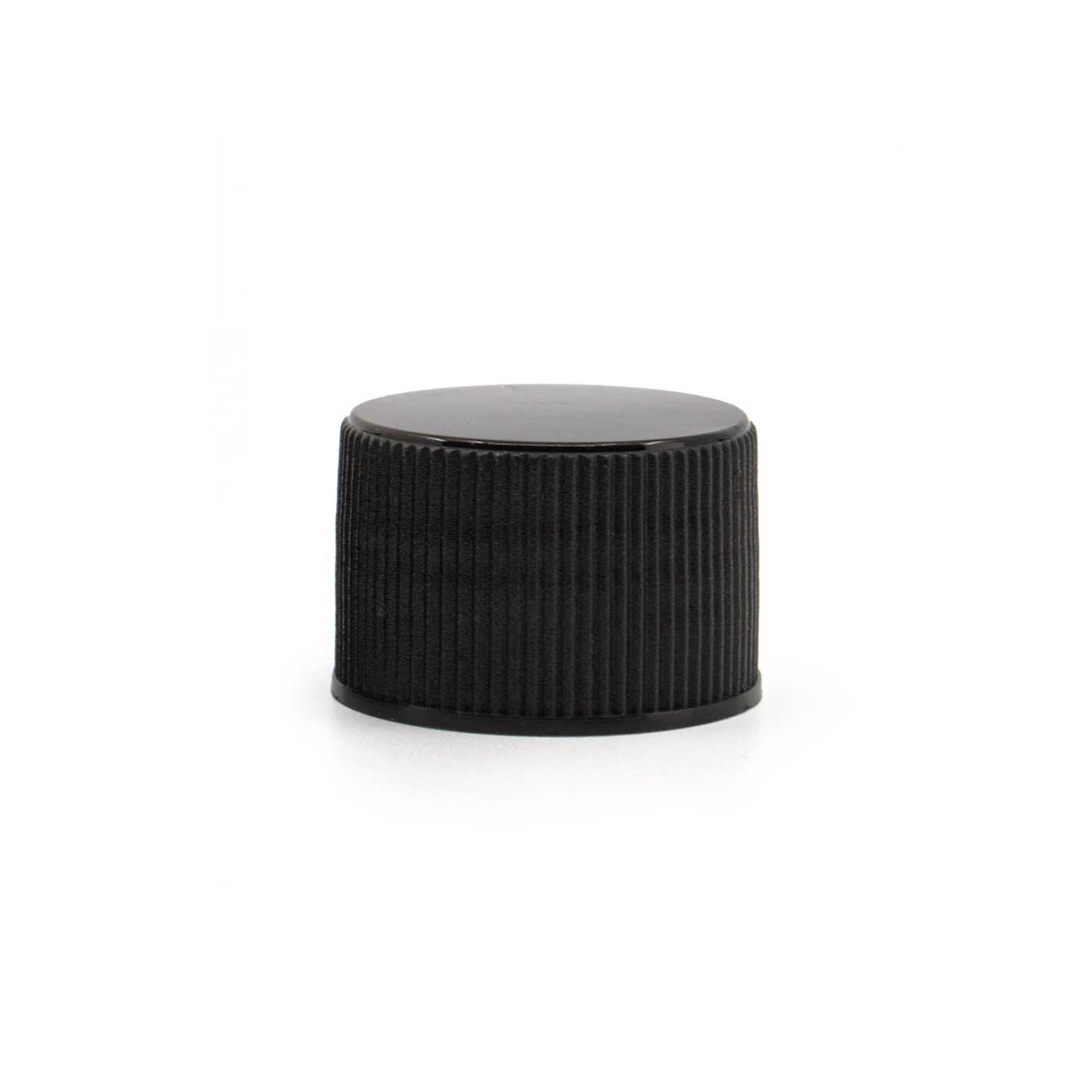
Plastic cap, 24/410, ribbed, black
Plastic cap 24/410, ribbed black Screw cap for bottles and small bottles with a 24/410 neck closes the container simply and without a dispensing mechanism. full description
Lowest price in the last 30 days: €0.16
Product description
Plastic cap 24/410, ribbed black
Screw cap for bottles and small bottles with a 24/410 neck closes the container simply and without a dispensing mechanism. It works wherever the contents are not dispensed by a pump or sprayer, but poured or applied directly: facial and body oils, tonics and travel-size shampoos, as well as technical solutions and cleaning products in the workshop or home.
The cap is made of polypropylene (PP) and features an inner foam polyethylene (EPE) sealing liner that, when tightened, seats against the neck rim and limits leakage. The outer surface is ribbed, so it grips well even with wet or oily fingers. The packaging is suitable for contact with cosmetic products; a declaration of conformity is available with the product.
Key features
- 24/410 thread – fits all bottles and small bottles with a 24 mm neck and 410-type thread, one of the most common in cosmetic packaging.
- EPE sealing liner – the foam liner compresses slightly when tightened, compensating for minor neck irregularities, which is particularly useful with aqueous and alcoholic contents.
- Ribbed surface – makes opening and tightening easier; with larger bottle runs, this shows in filling speed.
- No dispensing element – the contents are poured directly from the neck, so the cap suits products applied to the palm or a cotton pad, not dispensed drop by drop.
- Black colour – neutral in appearance and compatible with clear, amber, and white bottles.
- Cosmetic and technical grade – suitable for cosmetic as well as technical use, such as samples, intermediates, and laboratory solutions.
How to work with the cap
The cap is screwed onto the neck and tightened by hand. Over-tightening does not improve the seal — quite the opposite: the foam liner permanently compresses and may not reseat properly after the next opening. During batch filling, consistent torque is advisable — ideally one person or a simple capper, so all units seal uniformly.
Bottles are filled to the nominal volume, not to the top of the neck. The headspace is a reserve for the cap and for expansion of the contents with temperature changes. If filled completely, the contents are forced towards the thread when the cap is screwed on, and the container may leak or become sticky.
Before first use, wash the cap and optionally disinfect with isopropyl alcohol or ethanol, then allow it to dry completely. The foam liner retains moisture longer than smooth plastic, so do not close the bottle with a cap that is still damp.
Suitable for products such as
- Oils and oil serums – pure vegetable oils, massage oils, and oil blends not dispensed drop by drop.
- Tonics and hydrolats – aqueous products applied to a cotton pad or transferred to a smaller spray bottle.
- Travel sizes – shampoos, shower gels, and liquid soaps in small bottles where a pump takes up unnecessary space.
- Samples and test batches – first runs of emulsions and solutions that need to be closed simply and cheaply.
- Technical solutions – alcohol, disinfectant solutions, cleaning products, and solvents in the workshop or home.
Good to know
Closures and bottles are selected by neck type. Containers with a 24/410 neck and ready-made bottle + closure combinations are available in the Handymade range. For custom combinations, we recommend verifying the seal with the specific formulation, particularly for low-viscosity and alcohol-containing products.
Polypropylene is resistant to common cosmetic ingredients, both aqueous and oil-based. With concentrated essential oils, strong solvents, and some fragrance compositions, it is advisable to test the behaviour of both the cap and the liner on a single unit before filling the full batch.
The cap is designed for repeated opening. If the liner loses its elasticity or becomes deformed over time, the seal deteriorates and the cap should be replaced. When selling cosmetics, closures are not typically reused.
Allow a bottle filled with a warm product to cool to room temperature before closing. As a closed bottle cools, a vacuum forms inside — the cap is drawn tighter than intended and becomes harder to open.
Frequently asked questions
Parameters
Product documentation
- PDSProduct Data Sheet
- PDF ↓
Verified by customers.
No reviews yet.
Only customers with a delivered order can write reviews.