


Closures DIN18
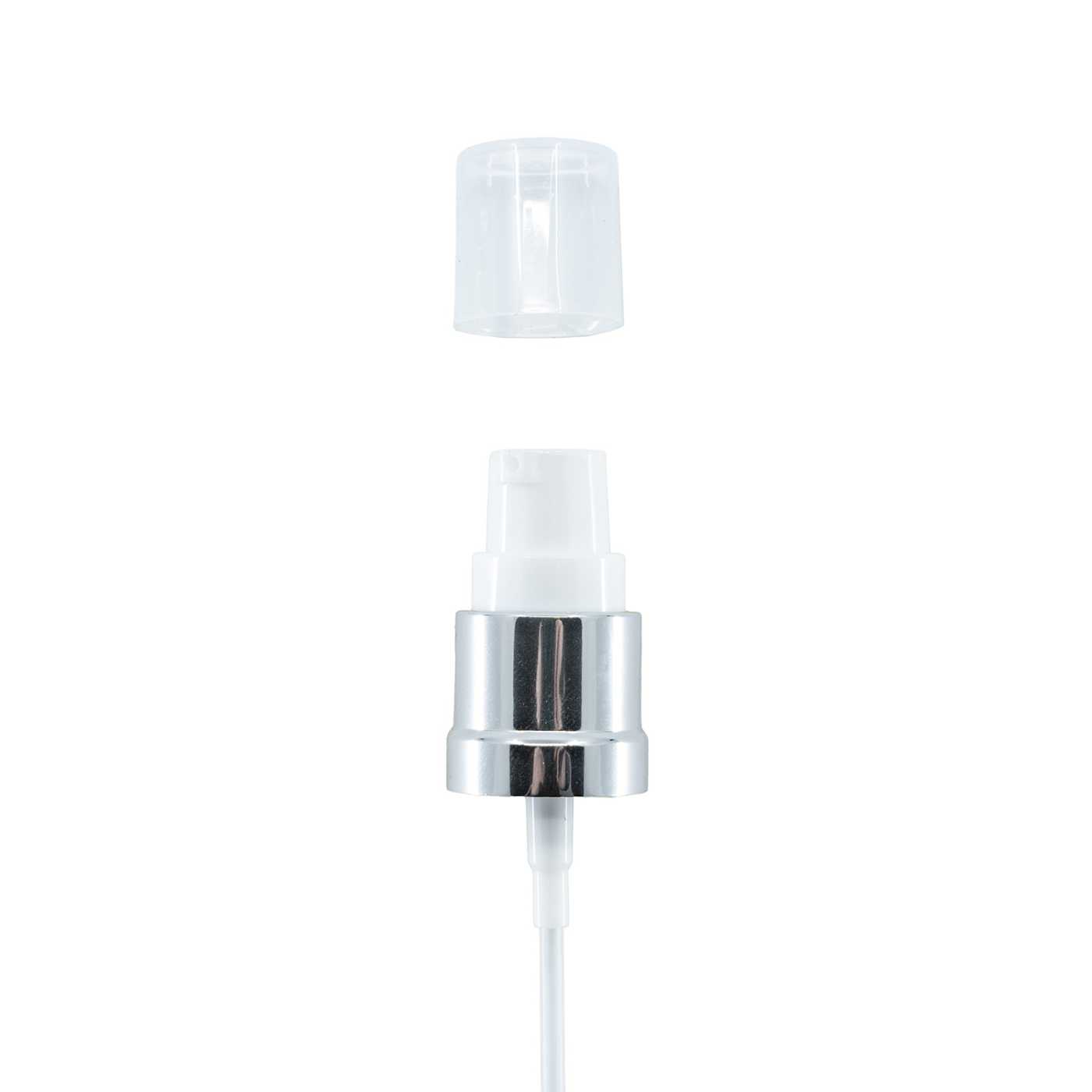
Plastic pump dispenser, 18/415, white-silver, glossy
Plastic pump dispenser 18/415 is a pump for narrow-neck bottles used to sell or prepare serums, facial oils, light emulsions and gels . full description
Lowest price in the last 30 days: €0.83
Product description
Plastic pump dispenser 18/415 is a pump for narrow-neck bottles used to sell or prepare serums, facial oils, light emulsions and gels. Each press delivers a small, consistent dose, making it especially suitable for concentrated products applied a few drops at a time. The contents are neither scooped out with fingers nor poured, which is more hygienic and gentler on the formulation than an open cap.
The dispenser is suitable for use with cosmetic products and meets the applicable regulatory requirements. The declaration of suitability for contact with cosmetics can be found in the product parameters.
Why choose a pump dispenser
- Precise small dose – one press delivers the amount that corresponds to a standard single application of serum or facial oil. The customer neither overdoses nor wastes the product.
- Hygienic dispensing – the contents do not come into contact with hands, and no contaminants enter the bottle as with scooping from an open neck. For aqueous formulations this supports the preservation system rather than replacing it.
- Reduced air contact – the product remains sealed in the bottle, which benefits oils and active ingredients sensitive to oxidation. This is not an airless system – air does enter the bottle when pumping – but significantly less than with repeated opening.
- One-hand operation – practical both for daily routines and for product demonstrations.
How the dispenser works and what it dispenses
The dispenser draws the contents through a transparent dip tube that reaches the bottom of the bottle and pushes them out through the head. It works best with liquid to medium-viscosity products: water-based serums, facial oils, gel serums and light emulsions. Thick creams, butters and balms will not be drawn up or will dispense unevenly. For those, jars or wide-neck dispensers are the appropriate choice.
The mechanism is made of polypropylene (PP), which handles plant oils, glycerin, aqueous solutions and common concentrations of alcohol well. For formulations with a high proportion of essential oils or solvents, we recommend testing the pump's behaviour with the specific formula in advance, as such ingredients may gradually affect the plastic seals.
The dip tube is supplied at a length suited for taller bottles. If it is too long for your bottle, trim it with a sharp knife using an angled cut so that it ends just above the bottom. The angled cut prevents the tube from pressing flat against the bottom and losing suction.
Filling and headspace
Bottles have a nominal volume and a total capacity to the brim. The nominal volume is the amount the bottle is designed to hold under normal filling conditions. The total capacity is the physical space up to the neck. The difference between the two is the headspace for the closure and for expansion of the contents with temperature changes. A pump dispenser requires more headspace than a plain cap, because screwing it on pushes the dip tube and the lower part of the mechanism into the bottle.
Fill the bottle only to the nominal volume. Filling to the brim will cause the contents to overflow through the neck when the dispenser is fitted, contaminating the thread and compromising the seal.
After fitting the pump for the first time, press it several times until the dip tube fills and the head begins to dispense. This is the normal priming of a new mechanism, not a defect.
Good to know
- Appearance – the white head with a shiny silver aluminium collar looks clean and neutral on the bottle. It pairs well with clear, amber and frosted glass without visually competing with the label.
- Bottle selection – the dispenser fits bottles with neck type 18/415. Bottles with the same neck and ready-made bottle-and-pump combinations are available in the Handymade range. When assembling your own combination, we recommend verifying the seal and smooth dispensing with the actual formulation.
- Preparation before first use – rinse the pump with clean water or isopropyl alcohol, or alternatively ethanol, and allow it to dry completely. Residual water in the mechanism could dilute the first doses of an anhydrous product.
- Reuse – the dispenser can be reused after thorough rinsing. The mechanism cannot be fully disassembled, so when switching from an oil-based to a water-based formulation or when visible residue is present, we recommend a new pump.
- Shipping filled bottles – if finished products are being dispatched, secure the pump head against accidental pressing before shipping, or choose a bottle with sufficient headspace to prevent leakage in transit.
- Hot filling – the pump is plastic and is therefore not suitable for hot-filled products. Allow the contents to cool to room temperature before fitting the dispenser.
- Recycling – the dispenser combines plastic and an aluminium collar; once empty, dispose of it according to your local rules for mixed plastic packaging.
Pump dispenser, spray, or dropper?
The choice depends on the viscosity of the product and how it is to be applied. A spray atomises a thin, watery liquid into a fine mist and suits tonics and hydrosols, but will not spray thick serums or oils. A dropper delivers individual drops and works well for oils and serums where the customer controls the number of drops, but requires opening the bottle and contact of the dropper with the skin. A plastic pump dispenser delivers a preset dose without opening the bottle and works with both water-based and oil-based products. It is therefore the right choice where consistent, hygienic dosing is a priority.
Frequently asked questions
Verified by customers.
No reviews yet.
Only customers with a delivered order can write reviews.