
A powder face mask will nourish your skin. A simple homemade powder face mask is an undemanding cosmetic product that anyone can manage to make. For that reason too, it will find its place not only as part of your beauty and relaxation ritual, but it also makes a great gift that can be stored in a well-closed container for a long time.
About this recipe
This is a dry powder blend of cosmetic clays that you mix with water or a hydrolat only just before applying it to your face. A simple homemade powder mask is an undemanding cosmetic product that anyone can manage to make — the blend consists only of dry ingredients, and therefore does not need a preservative. You store the finished blend in a well-closed container.
The homemade powder face mask does not have a fixed recipe and you can adapt it to a certain extent according to your own needs — change the ratio of clays, add other powder ingredients or choose a different liquid for mixing.

Benefits of the powder face mask
The advantage of the fact that the powder mask consists only of dry ingredients and is stored without the presence of water is that it does not need a preservative. It is enough to add a little water to about a tablespoon of the powder blend and your homemade face mask is ready to use.
- No preservative
The blend is stored without the presence of water, so it does not need a preservative.
- Quick to prepare
Just add a little water to a tablespoon of the powder blend and the mask is ready to use.
- Long shelf life
In a well-closed container, ideally made of glass, the powder can be stored for a long time.
- Anyone can make it
A simple homemade powder mask is an undemanding cosmetic product that anyone can manage to make.
- A great gift
Thanks to how easily it is stored, the powder mask makes a welcome gift as well as part of a relaxation ritual.
- A recipe to suit you
You can adapt the ratio of clays, the type of liquid and any additional ingredients to the needs of your skin.
Product properties
Key ingredients in the recipe
Now let us take a closer look at the composition of the homemade powder face mask.
Pink cosmetic clay
You can recognise French pink clay at first glance by its pink to brick colour, which comes from its mineral content, especially iron oxides. It is created by mixing red clay with white kaolin and is suitable for the care of mature as well as oily skin, which it helps to degrease effectively. That is why a homemade powder mask containing pink clay is also suitable for problematic, acne-prone skin.
Bentonite
This fine cosmetic clay will be appreciated especially by more sensitive or mature skin. Thanks to the fact that bentonite swells very intensively in an aqueous environment and binds water, this cosmetic clay can be used on drier skin, because it degreases to a lesser extent than kaolin, for example. A powder face mask containing bentonite also helps to detoxify the skin and remove impurities.
Moroccan rhassoul clay
This Moroccan clay has exceptional cleansing and detoxifying properties, is gentle to the skin and is suitable for regulating oiliness. It is rich in magnesium, silicon, iron and calcium. It is used to cleanse the skin, hair and body, because it absorbs excess sebum, toxins and impurities without disrupting the skin’s natural balance. It is ideal for oily, combination and sensitive skin, leaving the skin smooth, hydrated and fresh.
Inulin
The white powder ingredient called inulin does not belong among the clays but is in fact a polysaccharide occurring in chicory. The homemade powder face mask contains it because it is a prebiotic — it supports the growth and development of the natural microflora on the skin, thus helping the skin defend itself against harmful pathogens.
Other ingredients
Water or a hydrolat is added as needed — it serves to mix the mask right before applying it to the face. To moisten the mask, you can use flower hydrolats instead of demineralised water.
Ethanol is used in the recipe as needed to disinfect your tools and work area. You also need to disinfect the container in which the powder mask will be stored.
The recipe (100 g)
The ingredient content is given in percentages by weight, so it corresponds to a batch of 100 g of the finished powder blend. Water or hydrolat and ethanol are not counted in — they are added as needed.
| Name of ingredient | Content in % | Function of the ingredient |
|---|---|---|
| Pink cosmetic clay | 50.00 % | base for the mask |
| Rhassoul Moroccan clay | 10.00 % | cleansing and detoxifying effects |
| Bentonite | 35.00 % | cleansing effects |
| Inulin | 5.00 % | prebiotic for the skin |
| Water or a hydrolat | as needed | for mixing the mask right before applying it to the face |
| Ethanol | as needed | disinfection of tools and work area |
How to make it
- Disinfection
Disinfect the tools that will come into contact with the ingredients, as well as the container where your powder face mask will be stored.
- Mixing and storage
Mix all the ingredients that the homemade powder mask consists of and store it appropriately. For storage, choose well-sealing containers, ideally glass ones.
- Preparing the mask
Before actually applying the mask to your skin, take the amount intended for one use into a separate container. Gradually add water or a hydrolat to it until you reach the desired consistency. Thorough mixing removes any lumps, which may be caused by the fact that the bentonite has not yet had time to bind the water present.
- Single use only
Prepare only as much mask as you will use at one time. The mask does not contain preservatives and clays are prone to contamination by microorganisms, so once mixed with water the mask cannot be stored long-term.
- Application 10 min
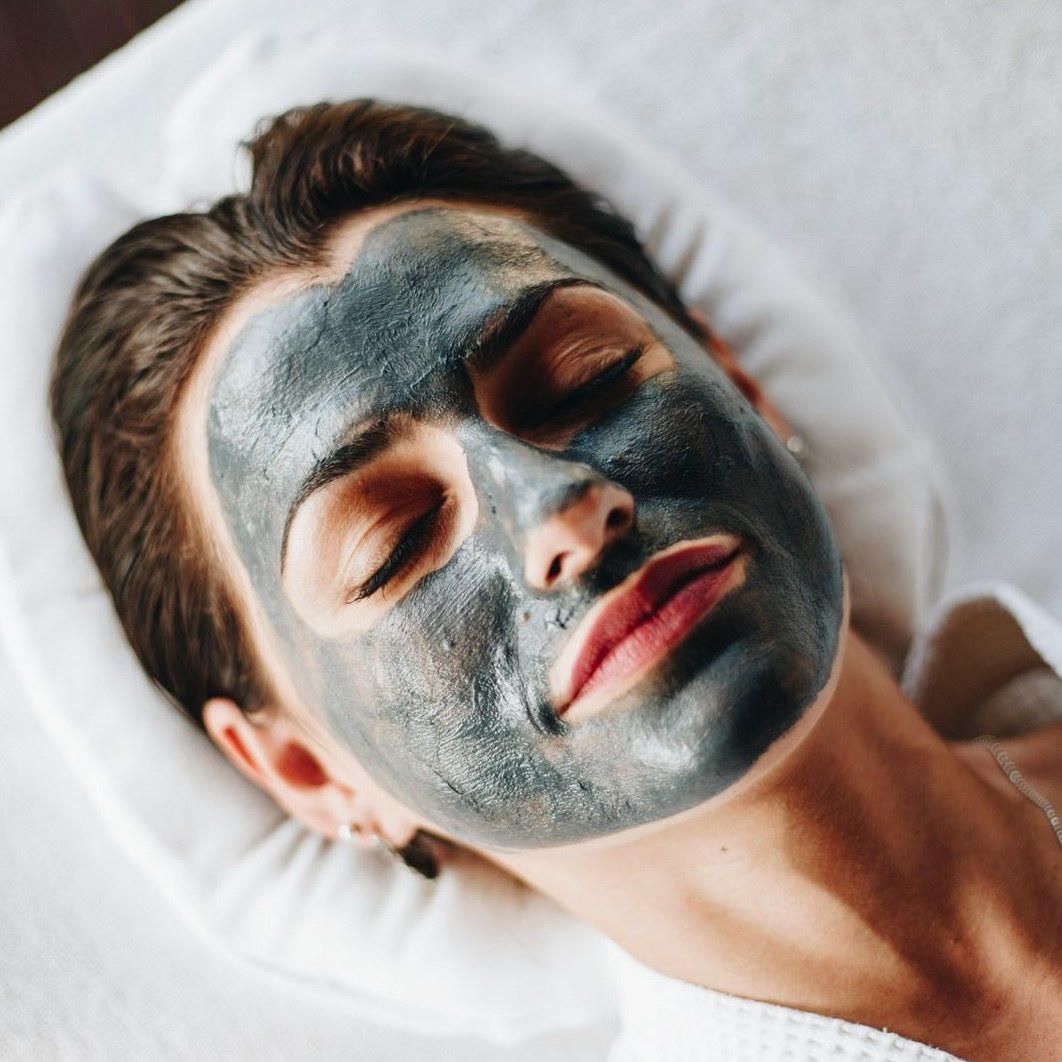
Apply the homemade face mask to your face and leave it on for about 10 minutes.

The powder face mask and its variations
The homemade powder face mask does not have a fixed recipe and you can adapt it to a certain extent according to your own needs.
Flower hydrolats
To moisten the mask, you can use flower hydrolats instead of demineralised water. A very popular hydrolat is rose water, which has soothing effects and suits many skin types. In addition, it gently scents your product.
Herbal decoctions
Herbal decoctions are also a substitute for flower hydrolats; you can easily prepare them at home from either fresh or dried herbs, exactly according to the needs of your skin.
Bentonite
If your skin does not need to be degreased so much, you can increase the content of bentonite. That way the homemade powder face mask will have more pronounced hydrating effects, or you can shorten the time for which you leave it on your skin.
Essential oils
Your powder face mask will gain a pleasant scent if you add essential oils. At the same time, these can provide added benefits such as antimicrobial or soothing effects. Always follow the recommended dosage for the essential oil in question and add them only to the finished moist mask.
Cosmetic clays
Your homemade powder face mask is also easy to vary by adding some other powder ingredients. You can reach for other types of clay depending on the requirements of your skin.
Activated charcoal
Your powder face mask can have even more intense cleansing properties if you add activated charcoal to it. It effectively binds impurities and thus helps in the care of problematic skin.

Warning
As mentioned, you can experiment with homemade recipes to achieve the properties you want. However, the final result can be influenced by many factors, such as humidity, temperature, the quality of the ingredients and the way they are stored.
Before you use any ingredient to make a cosmetic product, familiarise yourself with its properties, recommended dosage, storage conditions and safe handling. Every ingredient can have the potential to cause an allergic reaction in sensitive individuals, so before using the product we recommend finding out whether you are allergic to any of the ingredients or to the product as a whole, for example by means of a patch test.
If you have very sensitive or very acne-prone skin, or if you have other skin and health problems, we recommend consulting a medical professional before applying a new product to your skin, whether it is a homemade cosmetic product, a pure ingredient or a commercially available product.
Frequently asked questions about the recipe
Practical questions about the powder face mask — preservation, preparing a portion, choosing the liquid and how long to leave it on.
Why does a powder mask not need a preservative?
Because it consists only of dry ingredients and is stored without the presence of water. A preservative would only be needed if the blend contained water — and you add that only just before application.
How much mask should I prepare at once?
Prepare only as much as you will use at one time. The mask does not contain preservatives and clays are prone to contamination by microorganisms, so once mixed with water it cannot be stored long-term.
What can I mix the mask with apart from water?
Instead of demineralised water you can use flower hydrolats — rose water is especially popular, as it has soothing effects and gently scents the product. Herbal decoctions prepared from fresh or dried herbs are another alternative.
How long should I leave the mask on?
Apply the homemade face mask to your face and leave it on for about 10 minutes.
How do I get rid of lumps in the prepared mask?
Add the water or hydrolat gradually until you reach the desired consistency, and mix the blend thoroughly. Lumps form because the bentonite has not yet had time to bind the water present.
How do I store the powder mask and how long does it keep?
Store the dry powder blend in well-sealing containers, ideally made of glass. In a well-closed container it can be kept for a long time — unlike a mask that has already been mixed with water.
Conclusion
Does your relaxation time also include applying a miraculous mask to your face? You spread it on your face, lie down on the sofa and immediately find yourself in a beauty salon. Is it the same for you?
If you do not have one at home, make it according to this guide and let us know how you got on. Write to us about your experience at [email protected].
We look forward to your comments.
You will find the French pink clay, bentonite, Moroccan rhassoul and inulin from this recipe in the Handymade range of cosmetic clays and ingredients.