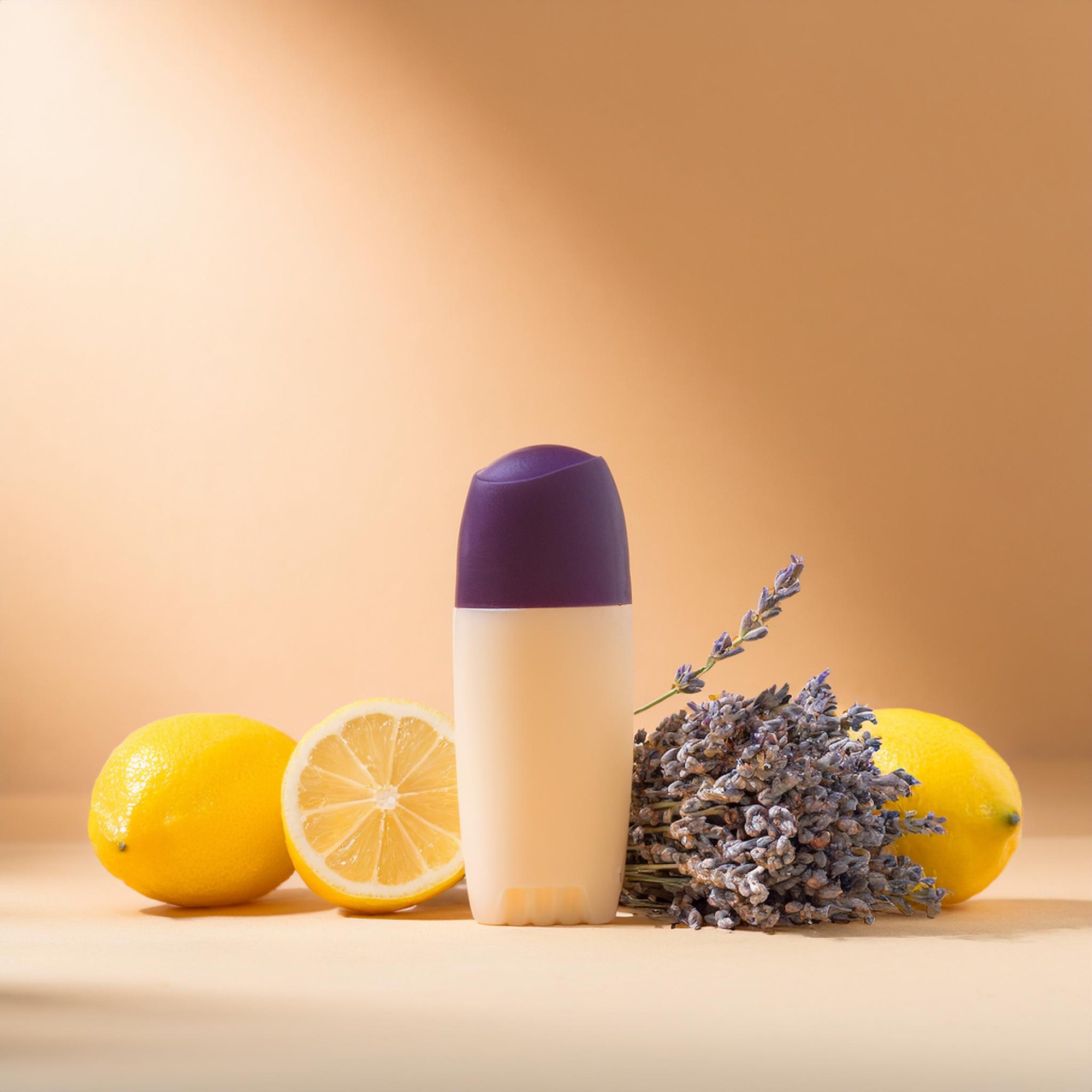
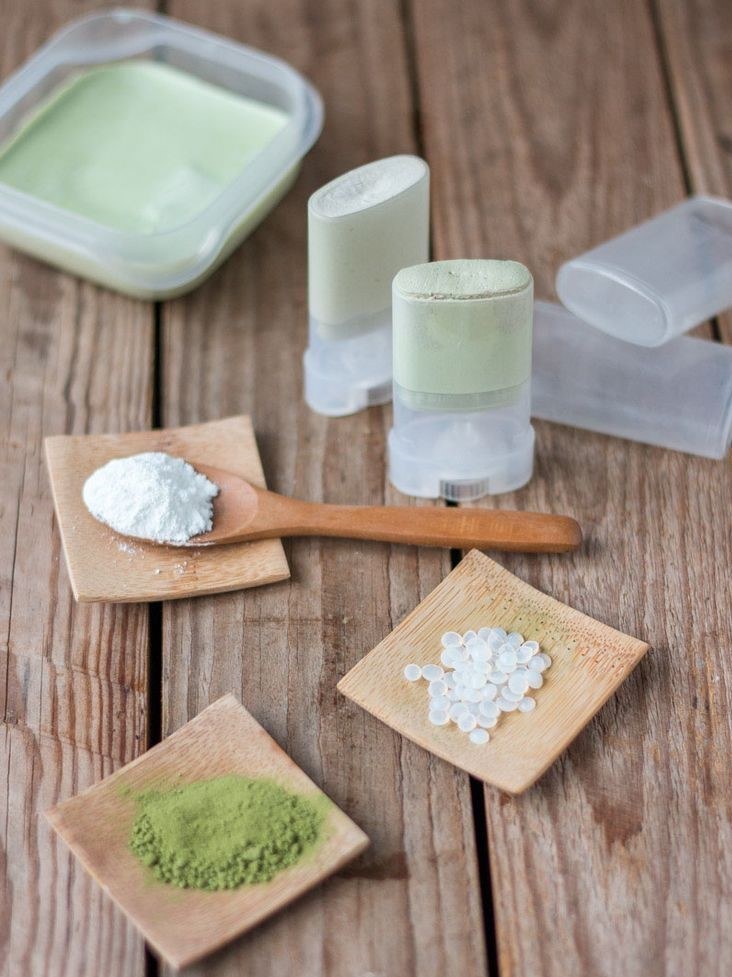
You can make a natural solid deodorant without baking soda and without a large amount of alcohol. We have built ours on the Dermosoft decalact deo blend, which has pronounced effects specifically against the microorganisms that create odour. Here is a tested recipe set out in five phases, from weighing the raw materials to pouring the mixture into deodorant sticks.
About this recipe
Yesterday we introduced an effective natural blend, Dermosoft decalact deo, which has pronounced effects specifically against the microorganisms that create odour. It is therefore an ingredient that is used in the production of deodorants.
Let’s be honest, the production of natural deodorants is still in its infancy. Even if you find some recipes, they contain either baking soda or a lot of alcohol. We will now introduce one of the recipes where you can use Dermosoft decalact deo.
The recipe is tested and comes from the workshop of Skinchakra.eu.
Key benefits
- No baking soda and no alcohol
Common natural deodorant recipes contain either baking soda or a lot of alcohol — this recipe is built on a different principle.
- An ingredient that works against odour
Dermosoft decalact deo has pronounced effects specifically against the microorganisms that create odour, which is why it is used in the production of deodorants.
- Solid form for a stick
Once phase E has been added, the finished mixture is poured straight into deodorant sticks, where it sets as it cools.
- A tested recipe
The recipe is tested and comes from the workshop of Skinchakra.eu.
- Exact percentages phase by phase
The recipe is set out in phases A to E with the exact percentage of every raw material, so you can easily recalculate the batch.
Product properties
Key raw materials in the recipe
Below we go through the raw materials that play the main role in this recipe — from the anti-odour blend through the wax base to the phase D powders. You will find the complete composition with all the percentages in the recipe below.
Dermosoft decalact deo
An effective natural blend with pronounced effects specifically against the microorganisms that create odour. It is therefore an ingredient used in the production of deodorants — in this recipe it makes up 1.0% and is added in phase C.
Rice bran wax
One of the three phase A waxes — together with myrica wax (18.0%) and rhus wax (6.0%) it forms the wax base of the stick. Rice bran wax makes up 7.0% of the recipe and is heated with the whole of phase A in a water bath.
Cupuacu butter
A plant butter in phase A, making up 5.0%. It is melted together with the waxes in a water bath at 80 °C, and only then is the melted phase B stirred into it.
Rice starch
The largest of the phase D powders — 10.0%. Since the powders in phase D are not soluble in the substance Heptyl Undecylenate, they need to be mixed together first and only then is the whole of phase D incorporated into the mixture.
White kaolin
A cosmetic clay in phase D, making up 5.0%. It is complemented by zeolite (4.0%) and allantoin (1.0%); all three are processed together with the other powders of this phase.
Other raw materials
Babassu oil (9.0%) and calendula CO2 extract (0.1%) form phase B. Under standard conditions they are in a solid state, so when working in cooler conditions you should warm them to approximately 30 °C.
In addition to the decalact deo blend, phase C contains Dermofeel TEC eco (5.0%, Triethyl Citrate), olive squalane (3.0%), vitamin E, tocopherol (0.5%) and alpha bisabolol (0.2%).
The liquid part of phase D consists of Heptyl Undecylenate (14.5%) and Isoamyl laurate (8.0%) — it is in Heptyl Undecylenate that the powders of this phase are not soluble. Phase A also contains Dermosoft GMCY (0.5%) and Ascorbyl palmitate (0.3%) — it is because of this wax that phase A is heated to 80 °C.
Phase E consists of CO2 extracts — evening primrose (1.0%), antimicrobial blend (0.1%), curcuma xanthorrhiza (0.1%), rosemary (0.1%), sage (0.1%) and ajowan (0.1%) — together with manuka oil (0.1%) and the essential oils litsea cubeba (0.1%) and lavender (0.2%). Phase E is added last and the mixture is poured into the sticks immediately.
Recipe (100 g)
The raw material contents are given as percentages by weight, so they correspond to a batch of 100 g of finished deodorant. The recipe is divided into five phases — A (waxes and butter), B (oil and extract), C (active ingredients), D (emollients and powders) and E (extracts and fragrances).
Shop the ingredients for this recipe
Untick what you already have Triethyl citrate, 100 mlrecipe uses 5,00 gin stock€5.99
- Deodorant Decalact Deo, 50 mlrecipe uses 1,00 gsold outWatch availability€4.61
 LexFeel Natural, 100 mlrecipe uses 14,50 gsold outWatch availability€15.74
| Phase / raw material | Content |
|---|---|
| Phase A | |
| Myrica wax | 18.0% |
| Rice bran wax | 7.0% |
| Rhus wax | 6.0% |
| Cupuacu butter | 5.0% |
| Dermosoft GMCY | 0.5% |
| Ascorbyl palmitate | 0.3% |
| Phase B | |
| Babassu oil | 9.0% |
| Calendula CO2 extract | 0.1% |
| Phase C | |
| Dermofeel TEC eco | 5.0% |
| Dermosoft decalact deo | 1.0% |
| Olive squalane | 3.0% |
| Vitamin E, Tocopherol | 0.5% |
| Alpha bisabolol | 0.2% |
| Phase D | |
| Heptyl Undecylenate | 14.5% |
| Isoamyl laurate | 8.0% |
| Rice starch | 10.0% |
| Zeolite | 4.0% |
| Kaolin | 5.0% |
| Allantoin | 1.0% |
| Phase E | |
| Evening primrose CO2 extract | 1.0% |
| Antimicrobial blend | 0.1% |
| Curcuma xanthorrhiza CO2 extract | 0.1% |
| Rosemary CO2 extract | 0.1% |
| Sage CO2 extract | 0.1% |
| Ajowan CO2 extract | 0.1% |
| Manuka oil | 0.1% |
| Litsea cubeba essential oil | 0.1% |
| Lavender essential oil | 0.2% |
Procedure
- Weighing the raw materials
Weigh each raw material into a separate beaker.
- Heating phase A Phase A80 °C
Heat phase A in a water bath at a temperature of 80 °C. This temperature is important because of the wax Ascorbyl Palmitate — if you used another wax, it is necessary to adapt the temperature to the properties of that raw material.
- Intermediate step for cooler conditions Phase B30 °C
This is an intermediate step, in case you will be working in cooler conditions — calendula and babassu need to be warmed to approximately 30 °C, because under standard conditions they are in a solid state.
- Combining phases A and B Phase A + B
Mix the melted phases A and B.
- Adding phase C Phase C
Add phase C and stir.
- Incorporating the powders Phase D
Since the powders in phase D are not soluble in the substance Heptyl Undecylenate, it is necessary to mix the powders first and only then incorporate the whole of phase D into the mixture.
- Phase E and pouring Phase E
Add phase E and pour immediately into the sticks.
- Cooling 12 h
Place in the fridge for at least 12 hours.
- Closing the sticks
Remove from the fridge and close the sticks.
- Done
You can start using the deodorant.
Frequently asked questions about the recipe
Practical questions about the natural solid deodorant — baking soda and alcohol, the temperatures of the individual phases, the phase D powders and cooling.
Does this deodorant contain baking soda or alcohol?
No. Most of the natural deodorant recipes you will find contain either baking soda or a lot of alcohol. This recipe uses the Dermosoft decalact deo blend instead, which acts against the microorganisms that create odour.
Why is phase A heated to 80 °C in particular?
This temperature is important because of the wax Ascorbyl Palmitate. If you used another wax, it is necessary to adapt the temperature to the properties of that raw material.
When do the calendula and babassu need to be warmed?
This is an intermediate step, in case you are working in cooler conditions. Warm the calendula and babassu to approximately 30 °C, because under standard conditions they are in a solid state.
Why are the phase D powders mixed separately?
The powders in phase D are not soluble in the substance Heptyl Undecylenate. That is why it is necessary to mix the powders first and only then incorporate the whole of phase D into the mixture.
How long does the deodorant have to cool?
Place the poured sticks in the fridge for at least 12 hours. Then take them out, close them, and you can start using the deodorant.
You will find Dermosoft decalact deo, and the waxes, oils and powders from this recipe, in the Handymade range of raw materials.