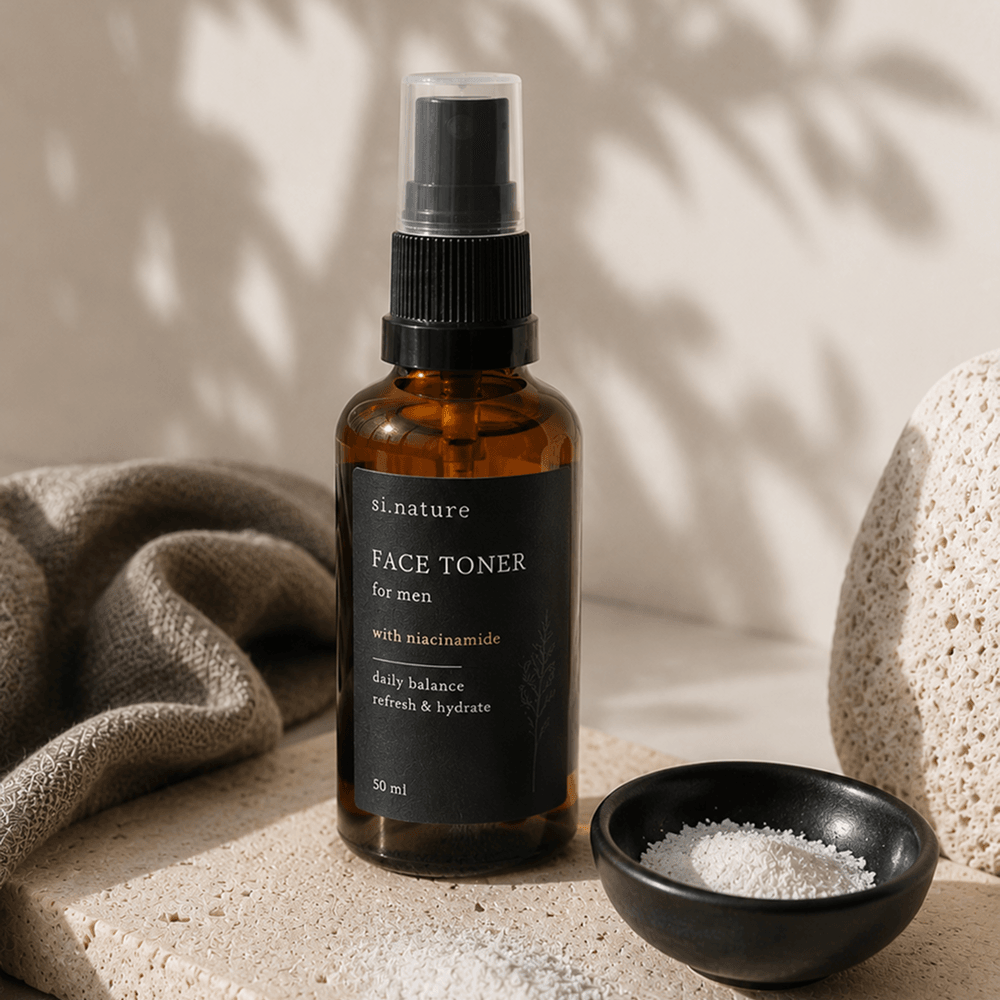
A face and beard serum is perfectly suitable for treating skin stressed by the weather or other influences. In addition to using it on the facial skin, you can also apply it to the stubble area and thus soften the skin, for example to make shaving easier. Spicy fragrance and hydration are the foundation of this natural serum for men — with an unmistakable woody-spicy scent.
About this recipe
The tutorial for the face and beard serum was prepared by Ivana Jačalová. To achieve intensive hydration, hyaluronic acid was used in the serum. In addition, the serum consists of aqueous and oily ingredients, therefore it is in the form of an emulsion created thanks to the emulsifier Olivem 1000. You will feel the soothing properties of the serum thanks to the content of witch hazel hydrolate and aloe vera juice.
Main benefits
- Intensive hydration
Hyaluronic acid intensively binds water, helps to hydrate the skin and return to it its lost water.
- Soothed skin
Witch hazel hydrolate and aloe vera juice help to soothe irritated skin, for example after shaving.
- Softer beard and stubble
Hemp oil softens the beard and the skin; you can also apply the serum to the stubble area to make shaving easier.
- No greasy film
Hemp oil is absorbed quickly and does not leave a greasy film behind, so it does not burden the skin.
- Woody-spicy scent
The base is formed by cedarwood, the middle notes by lavender and black pepper, and the top note by thyme.
Product properties
Key ingredients in the recipe
If you have been thinking about possible substitutions in the recipe or about the meaning and function of each individual ingredient, you are in the right place. Below you will find more information about the benefits and purpose of the individual ingredients for producing the face and beard serum.
Hyaluronic acid HMW
Effective and intensive hydration of the skin is provided by hyaluronic acid. This ingredient intensively binds water, thereby creating a gel depending on its concentration. In this way, it helps not only to hydrate the skin and return to it its lost water, but also to thicken the products.
You will appreciate hyaluronic acid if you have dry skin. At the same time, it provides effective hydration also for oily skin, without the use of oils and fats that would unnecessarily burden the skin. Since it is an active ingredient, it is possible to omit it from the recipe and replace it with water, or you can use the low-molecular-weight variant of hyaluronic acid, which thickens the product less, but because of the smaller particles penetrates into deeper layers of the skin.
Olivem 1000
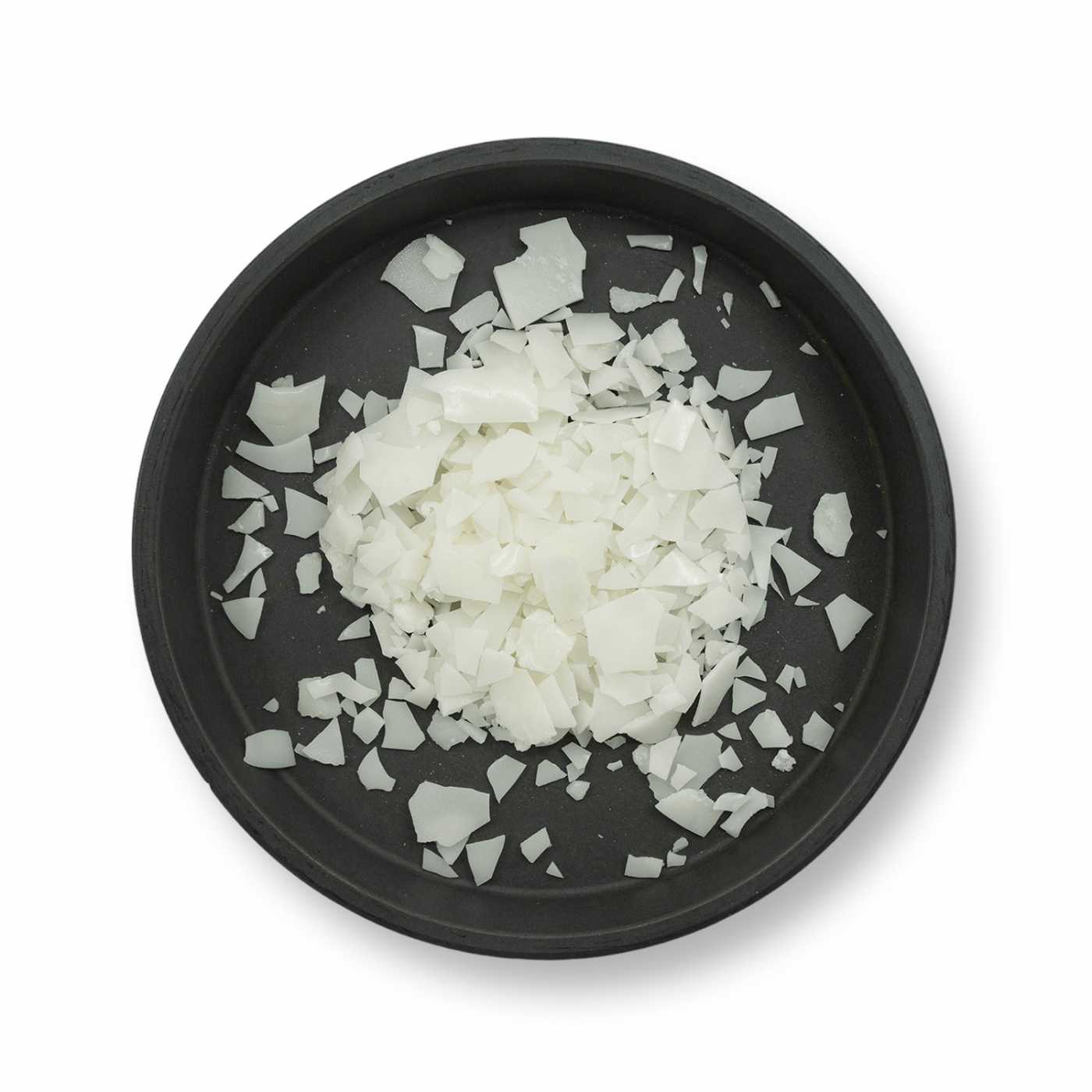
To combine the aqueous and oily phase, an emulsifier was used, in this case Olivem 1000. Emulsifiers are often similar in appearance to waxes, they are sold in the form of light granules or flakes that dissolve in oils after heating. Thanks to intensive mixing, they make it possible to subsequently combine water and oil, and at the same time thicken the product.
Olivem 1000 cannot be omitted, since otherwise the hemp oil will not mix with the aqueous phase. However, you can replace it with Beautyderm K10, or possibly with another emulsifier. By increasing the share of emulsifier in the recipe, you will obtain a thicker, more viscous serum.
Hemp oil
To soften the beard and the skin, hemp oil was used in this product. This oil has the advantage that it is absorbed quickly and does not leave a greasy film. In addition, it is rich in vitamins and minerals, including unsaturated fatty acids. At the same time, it helps to keep water in the skin by creating a protective film on it.
Hemp oil can be replaced with another plant oil in the face and beard serum recipe. By increasing its proportion, you will achieve a more caring and lipid-replenishing product, whereas decreasing its proportion in the recipe will cause the serum to be less oily.
Witch hazel hydrolate
Witch hazel is a frequent component of cosmetics for sensitive and irritated skin. Definitely do not omit it if you want your serum to help soothe skin after shaving or redness. Similar rules apply to its substitution as in the case of aloe vera juice. You have at your disposal a wide range of available hydrolates or floral waters if you decide to replace witch hazel with another type of hydrolate.
Aloe vera juice
Aloe vera juice provides excellent hydrating and caring effects for the skin. This juice also helps to soothe irritated skin, for example after shaving. It is a clear liquid without odour that is well tolerated by the skin, which is why you will find it in many types of commercially available cosmetics.
Aloe vera juice can be replaced with demineralised water or a hydrolate, or, conversely, you can increase the proportion of this juice at the expense of water in the recipe. Again, these substitutions will result in a change in the pH of the product.
Other ingredients
Demineralised water is the base for producing most cosmetic products. Its advantage lies in the fact that it does not contain minerals that would affect the stability of the emulsion or the preservative — which is also why you should not replace it with ordinary tap water or boiled water. However, you can replace it with hydrolates, which additionally contain volatile substances from plants. These not only smell nice, but also have caring properties for the skin. However, hydrolates often have a different pH than demineralised water, so such a substitution in the recipe will also cause a change in the amount of lactic acid needed to adjust the pH.
Glycerin is perfectly suitable for moisturising and hydrating stressed skin. It is a clear, syrupy liquid that is well soluble in water. It helps not only to hydrate the skin, but also to keep water in it for longer. In addition, it accelerates the hydration of powder ingredients such as hyaluronic acid, which is why it is an indispensable part of this recipe. Without glycerin, it will take a longer time until the hyaluronic acid is completely hydrated and stops forming lumps in the final product.
Essential oils are the main element for achieving a pleasant woody-spicy scent. The base is formed by cedarwood, while the middle notes consist of lavender and black pepper, and the top note is then formed by thyme. In addition, these oils have caring properties and are suitable for beard and moustache care. You can replace the selected essential oils with others according to your preference, but observe the recommended dosage, for example according to IFRA standards. It is ideal to avoid citrus oils especially during summer, as they can cause photosensitivity — the serum is a leave-on product. An alternative to essential oils is represented by fragrance oils, which are synthetically prepared, but the range of available oils is broader. Alternatively, it is possible to avoid perfuming completely and replace the essential oils with hemp oil.
Lactic acid was chosen for pH adjustment. This organic acid helps to gradually lower the pH to the physiological pH of the skin in the range of 4.5 to 5.5. A possible substitute is a solution of citric acid, but you will need a different amount than when using lactic acid.
Cosgard is a preservative commonly used for producing homemade cosmetics. Its advantage is its good efficacy, however for its use it is necessary to have an acidic pH in the product, and so pH adjustment using acids is essential. If you do not want to adjust the pH, choose for example the preservative Euxyl PE 9010, however it is always more advantageous to have products with the physiological pH of the skin, since it can be assumed that they will be less irritating.
Formula (100 g)
The ingredient content is given in percentages by weight, so it corresponds to a batch of 100 g of finished serum. The ingredients are divided into four phases — aqueous phase A, the paste of glycerin and hyaluronic acid (phase B), oil phase C and ingredients added after cooling (phase D).
Shop the ingredients for this recipe
Untick what you already have| Phase / ingredient | Content in % |
|---|---|
| Phase A | |
| Demineralised water | 30.10 % |
| Aloe vera juice | 25.00 % |
| Witch hazel hydrolate | 30.00 % |
| Phase B | |
| Vegetable glycerin | 5.00 % |
| Hyaluronic acid HMW | 0.30 % |
| Phase C | |
| Olivem 1000 | 2.00 % |
| Hemp oil | 5.50 % |
| Phase D | |
| Lavender essential oil | 0.20 % |
| Cedarwood essential oil | 0.30 % |
| Thyme essential oil | 0.20 % |
| Black pepper essential oil | 0.10 % |
| Tocopherol 96 % | 0.20 % |
| Lactic acid 80 % | 0.10 % |
| Cosgard preservative | 1.00 % |
| Packaging | |
| Bottle with dispenser | — |
Method
- Disinfection
Disinfect all tools, packaging and containers that you will use, for example with ethanol.
- Aqueous phase Phase A
Into a container, weigh the ingredients of phase A, i.e. water, aloe vera juice and hydrolate. Stir.
- Paste of glycerin and hyaluronic acid Phase B
In a heat-resistant container, mix the glycerin with the hyaluronic acid (phase B) until a thick paste is formed. Then add the mixture of ingredients of phase A, mix well and cover with aluminium foil.
- Oil phase Phase C
Into a second heat-resistant container, weigh the ingredients of phase C (hemp oil and emulsifier) and cover with aluminium foil.
- Water bath around 70 °C
Place both containers covered with aluminium foil into a water bath and heat until the Olivem 1000 is completely dissolved and both mixtures reach approximately the same temperature of around 70 °C.
- Combining the phases Phase A + B into C
Then pour the aqueous ingredients into the container with the oily ones (i.e. into phase C) and, still in the water bath, start mixing with an immersion stick blender.
- Mixing until cool
While continuously mixing, remove from the water bath and continue mixing for at least a few minutes until the water and oils stop separating from each other. Then stir periodically every few minutes until the mixture has cooled to room temperature.
- Essential oils and tocopherol Phase D
After cooling, mix the essential oils and tocopherol into the serum with a blender.
- pH adjustment Phase D
Check the pH of the mixture, for example using indicator strips. If it is not in the range of 4.5 to 5.5, add lactic acid drop by drop until you achieve a pH in the specified range. Note, the indicated amount of lactic acid is only approximate!
- Preservative and filling Phase D
After adjusting the pH, add the preservative and mix the serum thoroughly. Fill into a previously disinfected container.
Tips and tricks
Below you will find a few pieces of advice and tips that will make it easier for you to produce the face and beard serum. They will advise you, for example, how to create a stable emulsion or correctly adjust the pH of the product.
Do not forget to cover the containers before heating to prevent the evaporation of water and at the same time the ingress of water from the water bath. To increase the accuracy when producing larger batches, weigh the aqueous mixture before heating and record the weight. After heating, weigh the mixture again (place the hot container on a small plate so that the heat does not damage the scales) and top up the evaporated water.
It is important that both phases have approximately the same temperature of around 70 °C when they are combined. Otherwise, it may happen that the emulsifier solidifies before you have time to mix the mixture sufficiently with the blender. Use a stick immersion blender, possibly also a milk frother — but make sure that the milk frother has sufficient power (insufficient power is manifested by separation of the aqueous and oily phase).
When adjusting the pH, always add the lactic acid drop by drop, as its consumption will differ depending on the accuracy of dosing of the other ingredients, the quality of the ingredients or changes in the formula. For this reason, the indicated amount is only approximate. After each drop of lactic acid, mix the mixture thoroughly and check the pH. Do not add the Cosgard preservative before adjusting the pH — without a pH of 5.5 and below it will not be effective.
How to use
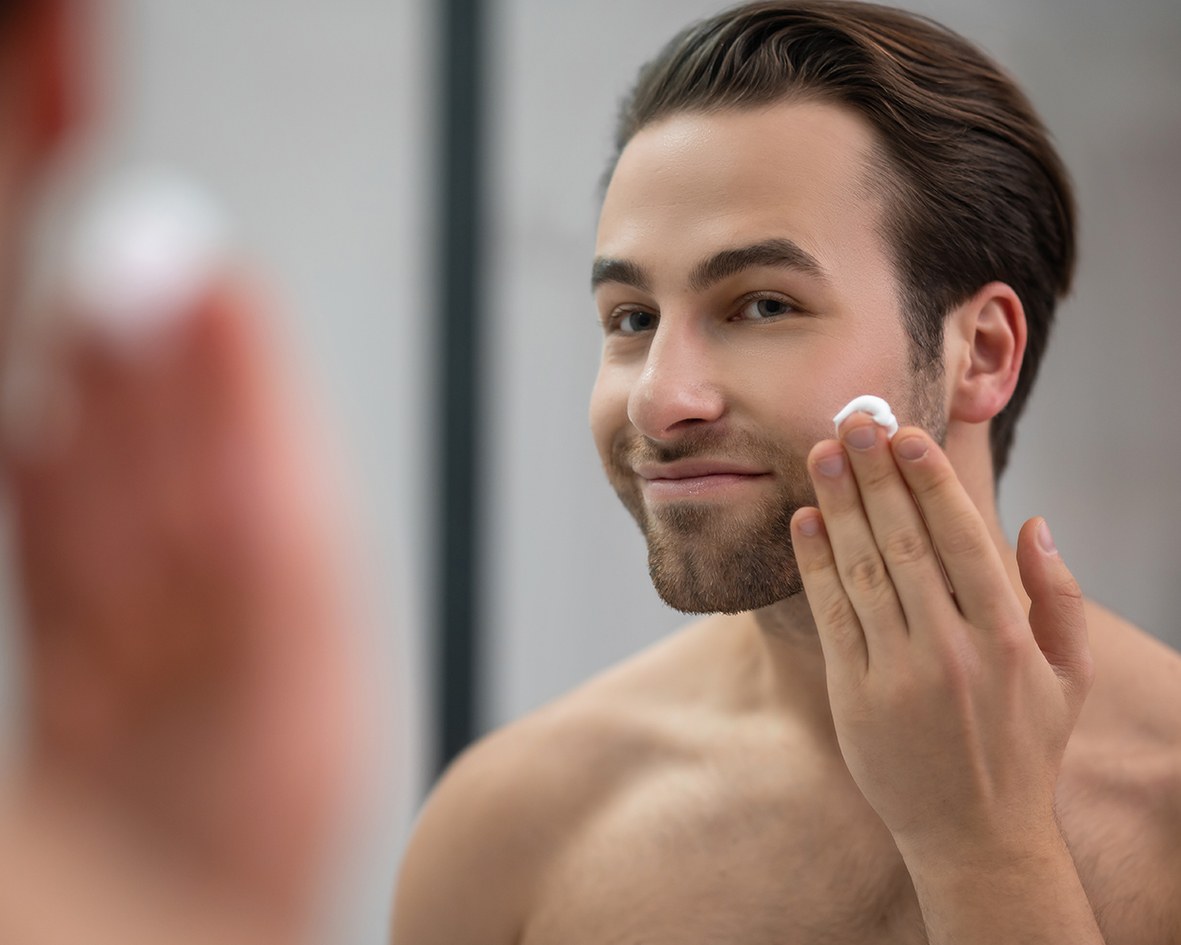
The serum is suitable for treating skin stressed by the weather or other influences. In addition to using it on the facial skin, you can also apply it to the stubble area and thus soften the skin, for example to make shaving easier. It is a leave-on product, so when perfuming it avoid citrus essential oils especially during summer — they can cause photosensitivity.
Warning
As mentioned, you can experiment with homemade recipes to achieve the desired properties. However, the final result can be influenced by many factors, such as humidity, temperature, quality of ingredients or their storage.
Before you use any ingredient to produce a cosmetic product, familiarise yourself with its properties, recommended dosage, storage conditions and safe handling. Each ingredient can have the potential to trigger an allergic reaction in sensitive individuals, therefore before using the product we recommend checking whether you are not allergic to any of the ingredients or to the overall product, e.g. by a skin test.
If you have very sensitive or very acne-prone skin, or if you have other skin and health problems, we recommend that you consult a medical professional before applying a new product to the skin, whether it is a homemade cosmetic product, a pure ingredient or a commercially available product.
Frequently asked questions about the recipe
Practical questions about the face and beard serum — ingredient substitutions, pH adjustment, combining the phases and preservation.
Can I replace demineralised water with tap water?
No. The advantage of demineralised water lies in the fact that it does not contain minerals that would affect the stability of the emulsion or the preservative, which is why you should not replace it with ordinary tap water or boiled water. However, you can replace it with hydrolates — these often have a different pH, so the amount of lactic acid needed to adjust the pH will change as well.
What can Olivem 1000 be replaced with?
Olivem 1000 cannot be omitted, otherwise the hemp oil will not mix with the aqueous phase. You can replace it with Beautyderm K10, or possibly with another emulsifier. By increasing the share of emulsifier in the recipe, you will obtain a thicker, more viscous serum.
What pH should the finished serum have?
The aim is the physiological pH of the skin in the range of 4.5 to 5.5. Check the pH for example with indicator strips and add the lactic acid drop by drop — the amount given in the formula is only approximate, because the consumption depends on the accuracy of dosing, the quality of the ingredients and on changes in the recipe.
Can hyaluronic acid be omitted from the recipe?
Yes. Since it is an active ingredient, it is possible to omit it from the recipe and replace it with water. Alternatively, you can use the low-molecular-weight variant of hyaluronic acid, which thickens the product less, but because of the smaller particles penetrates into deeper layers of the skin.
Why are the phases combined at approximately the same temperature?
It is important that both phases have approximately the same temperature of around 70 °C when they are combined. Otherwise, it may happen that the emulsifier solidifies before you have time to mix the mixture sufficiently with the blender.
When should the Cosgard preservative be added?
Only after adjusting the pH. Cosgard requires an acidic pH in the product — without a pH of 5.5 and below it will not be effective. If you do not want to adjust the pH, choose for example the preservative Euxyl PE 9010, however it is always more advantageous to have products with the physiological pH of the skin, since it can be assumed that they will be less irritating.
Conclusion
Hydration and care for men without a greasy feeling, with a typical spicy fragrance. That is the face and beard serum that will certainly please more than one man. For this great contribution with a guide to creating the face and beard serum, we thank Ivana Jačalová.
If you have any questions or tips from your own experience that we could add to this blog article, be sure to write to us at [email protected]. We will be happy to hear from you.
You will find the hyaluronic acid, Olivem 1000, hemp oil, hydrolates and essential oils from this recipe in the Handymade range of ingredients.