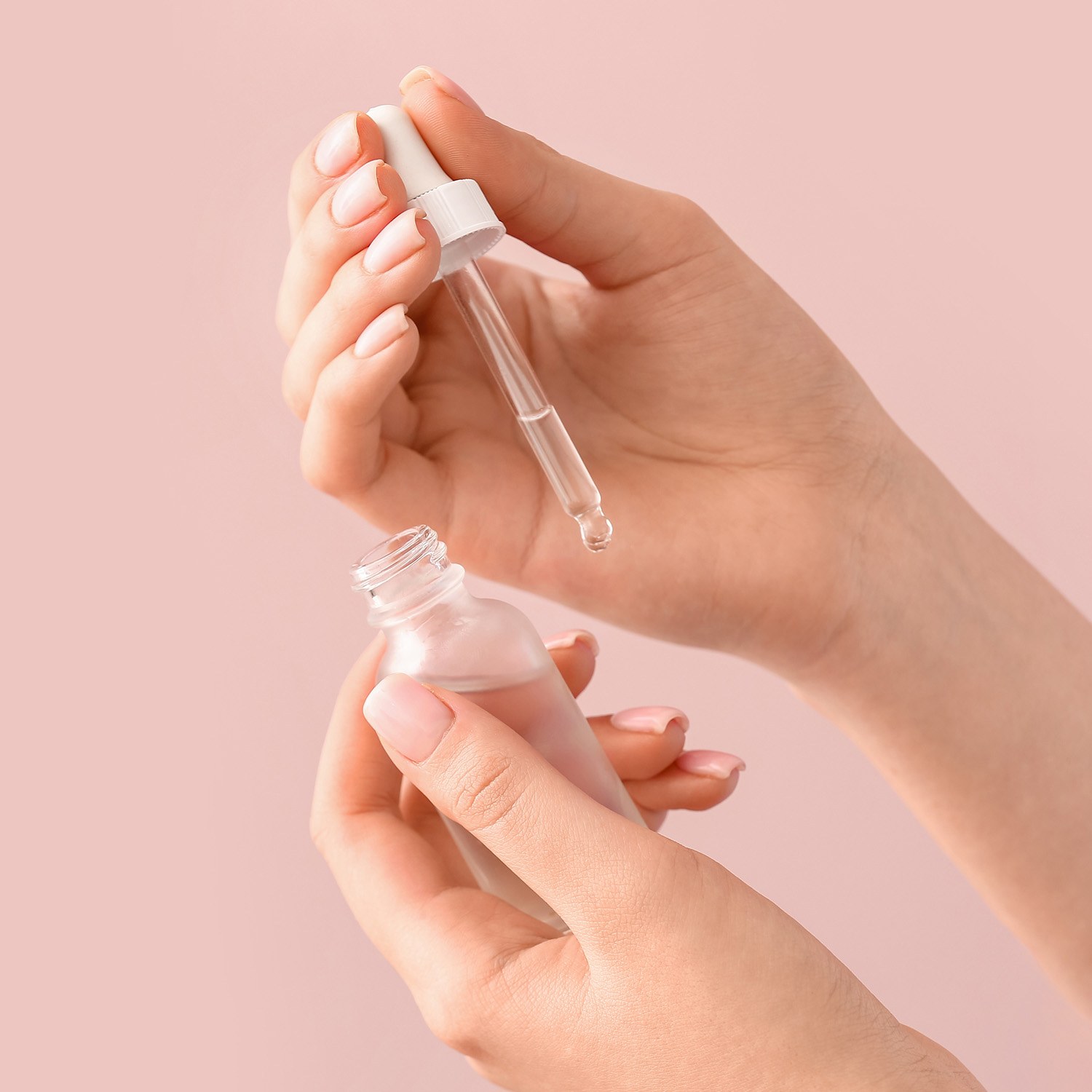

A vitamin C serum suits tired skin that needs brightening — make it together with us. Today we will show you how to make two vitamin C serums: the first is short-lived and takes you just a few minutes, the second is more demanding, but keeps considerably longer. Vitamin C acts as an antioxidant, capturing free radicals and providing electrons to destroy them.
About this recipe
This guide to two vitamin C face serums was prepared for you by our customer Klára Oláhová. It contains two recipes with 10% vitamin C — the first, a short-lived serum made from three raw materials plus sodium bicarbonate for adjusting the pH, which you can manage in about five minutes, and the second, a long-lasting serum with an oil phase, an emulsifier and a preservative, whose maximum shelf life is up to 6 months. The serums are intended for tired skin that needs brightening, and we recommend applying both of them at night.
Key benefits
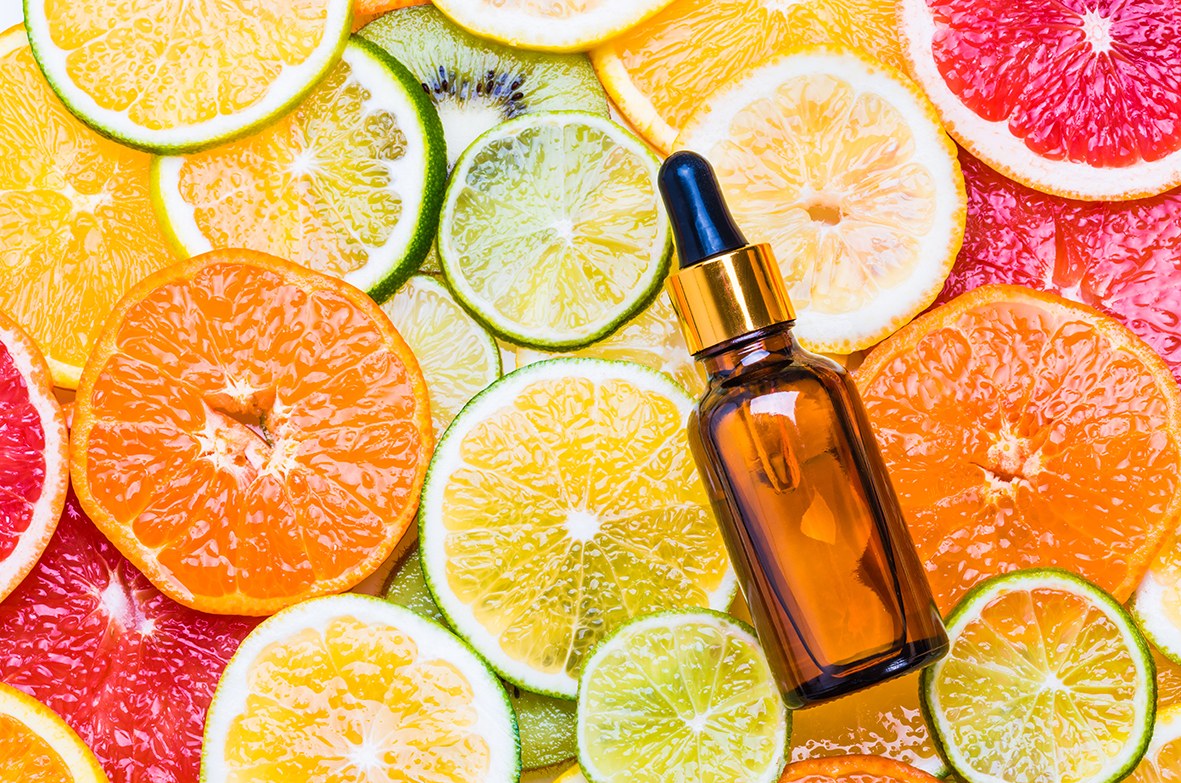
- Antioxidant action
Vitamin C acts as an antioxidant, capturing free radicals and providing electrons to destroy them.
- Support for vitamin E
It maintains the level of alpha-tocopherol (vitamin E), which acts precisely against free radicals.
- Anti-ageing effects
It helps to maintain the structure of collagen molecules, which are responsible for the elasticity of our skin.
- Radiant skin
Vitamin C helps with skin hyperpigmentation and, thanks to its effects, the skin is radiant.
- Regeneration and protection
Together with vitamin E they regenerate the skin and partly protect it against damage from UV radiation.
Product characteristics
Theory and calculation
Vitamin C is a very unstable substance, especially in the form of L-ascorbic acid. Because it is water-soluble, it easily changes into dehydro-L-ascorbate (DHA), which is referred to as an ineffective form of ascorbic acid. Despite a light-impermeable container, up to 50% of the L-ascorbic acid is converted into DHA (pH 3.5; temperature 25 °C) within just one week of storage, which we can also observe in the colour change of the serum to yellow-orange.
L-ascorbic acid can be stabilised with a number of products. The substance most commonly used for stabilisation is vitamin E, which is contained in many popular serums. However, this serum is more demanding to make, also from a financial point of view. Unlike vitamin C, vitamin E is not readily soluble in water, but it is readily soluble in fats and oils. This means that, among other things, we also have to use an emulsifier for the preparation, and for this serum to keep for a longer time, a preservative is needed.
According to many studies, vitamin C has positive effects when used in the range of 5–20% and at a pH of approximately 3.5. However, our skin has pH values in the range of 5–6, so for the serum not to have irritating effects, the pH needs to be adjusted to a pH closer to that of our skin by means of sodium bicarbonate. Vitamin C belongs among the photoprotective substances, which must be stored in light-impermeable containers, since it degrades in light.
Calculating the amount of vitamin C in the serum: (percentage value of L-ascorbic acid / 100) x total volume of serum
Calculating the amount for a 10% L-ascorbic acid serum: (10% / 100) x 20 ml = 2 g
Key raw materials in the recipe
Below we go through the individual raw materials and their role in both recipes — from vitamin C itself, through the aqueous phase, to the emulsifier and the preservative that the long-lasting version of the serum needs.
L-ascorbic acid
L-ascorbic acid is the active substance of both serums and makes up 10% of the formulas. It is the least stable form of vitamin C — in water it easily changes into ineffective dehydro-L-ascorbate, which is why the serum is made in small batches and stored in a light-impermeable container. According to many studies, vitamin C has positive effects in the range of 5–20% and at a pH of approximately 3.5.
Glycerin
Together with demineralised water, glycerin forms the aqueous phase of both serums — in the short-lived recipe it accounts for 30%, in the long-lasting one for 5.0%. The weighed L-ascorbic acid is added to the mixture of water and glycerin and stirred until the cloudy mixture becomes clear.
Demineralised water
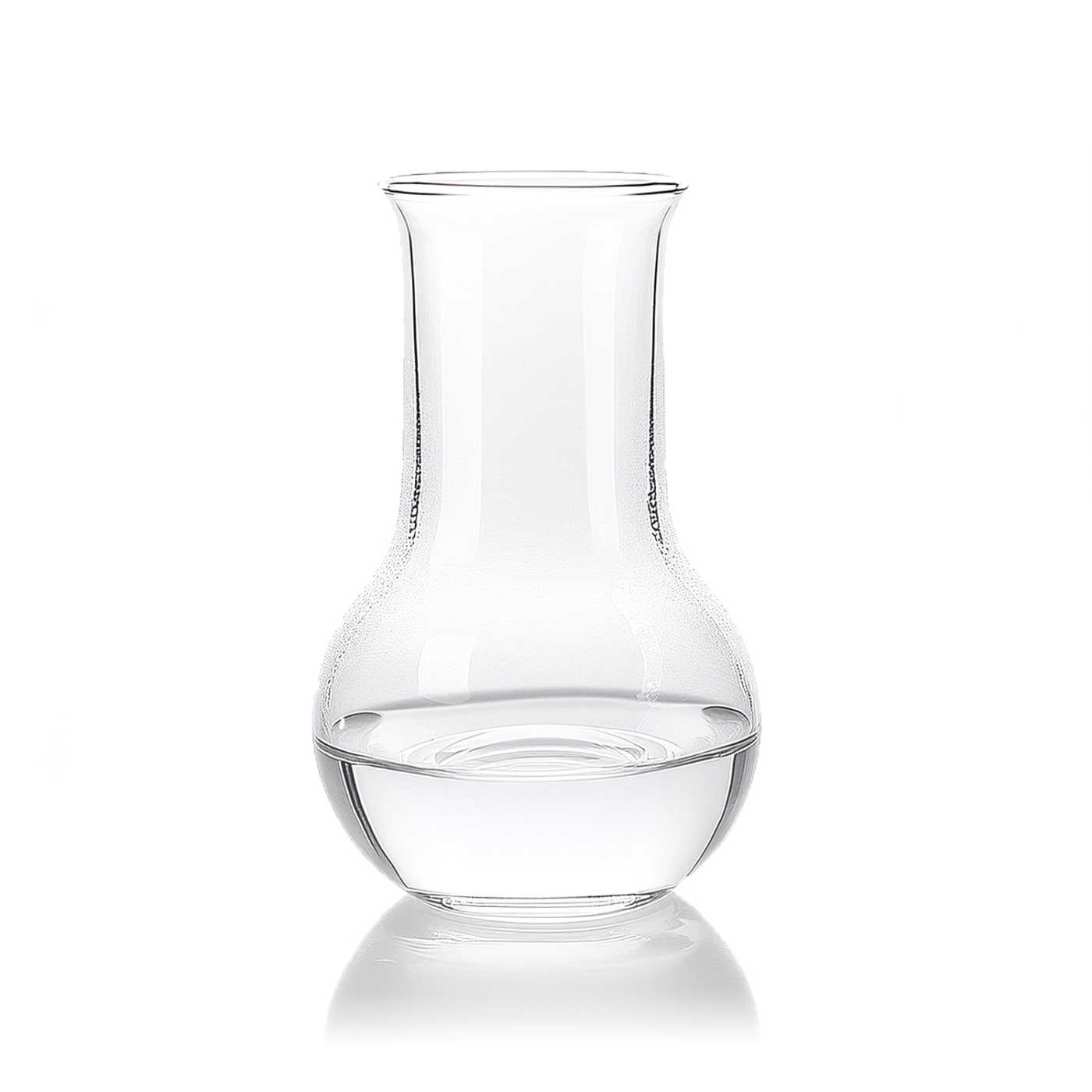
Demineralised water is the basis of both recipes — in the first serum it makes up 60%, in the second 67%. It is also used when measuring the pH: weigh 8 g of demineralised water into a new container, add 2 g of the serum you have made, stir the solution and measure the pH.
Sodium bicarbonate
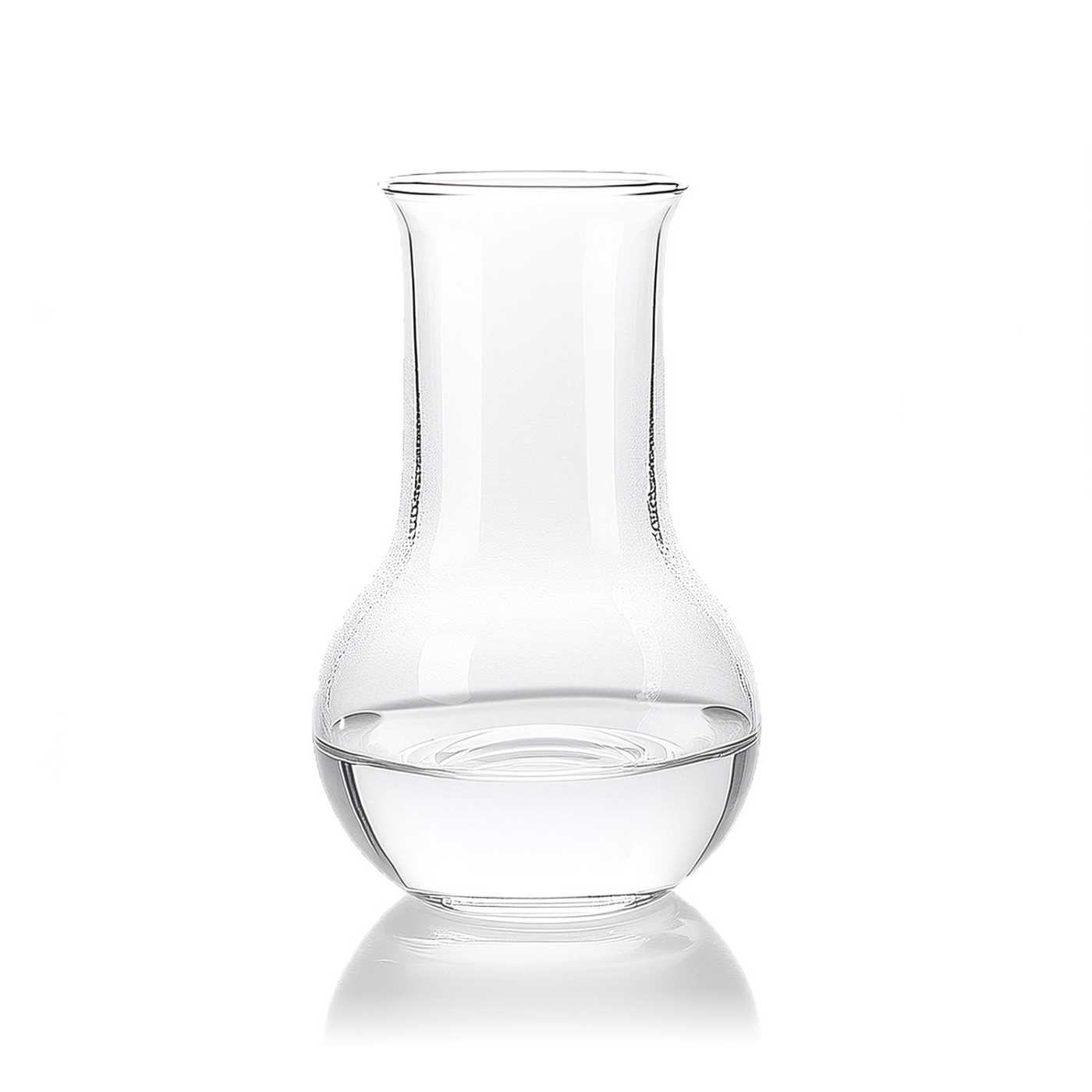
Sodium bicarbonate serves to adjust the pH of the finished serum. Vitamin C is most effective at a pH of approximately 3.5, but our skin has a pH in the range of 5–6 — so that the serum does not have irritating effects, we use sodium bicarbonate to bring the pH to 4–4.2. It is therefore added to the formula as needed, checking with pH strips, for example.
Vitamin E, liquid tocopherol 96%
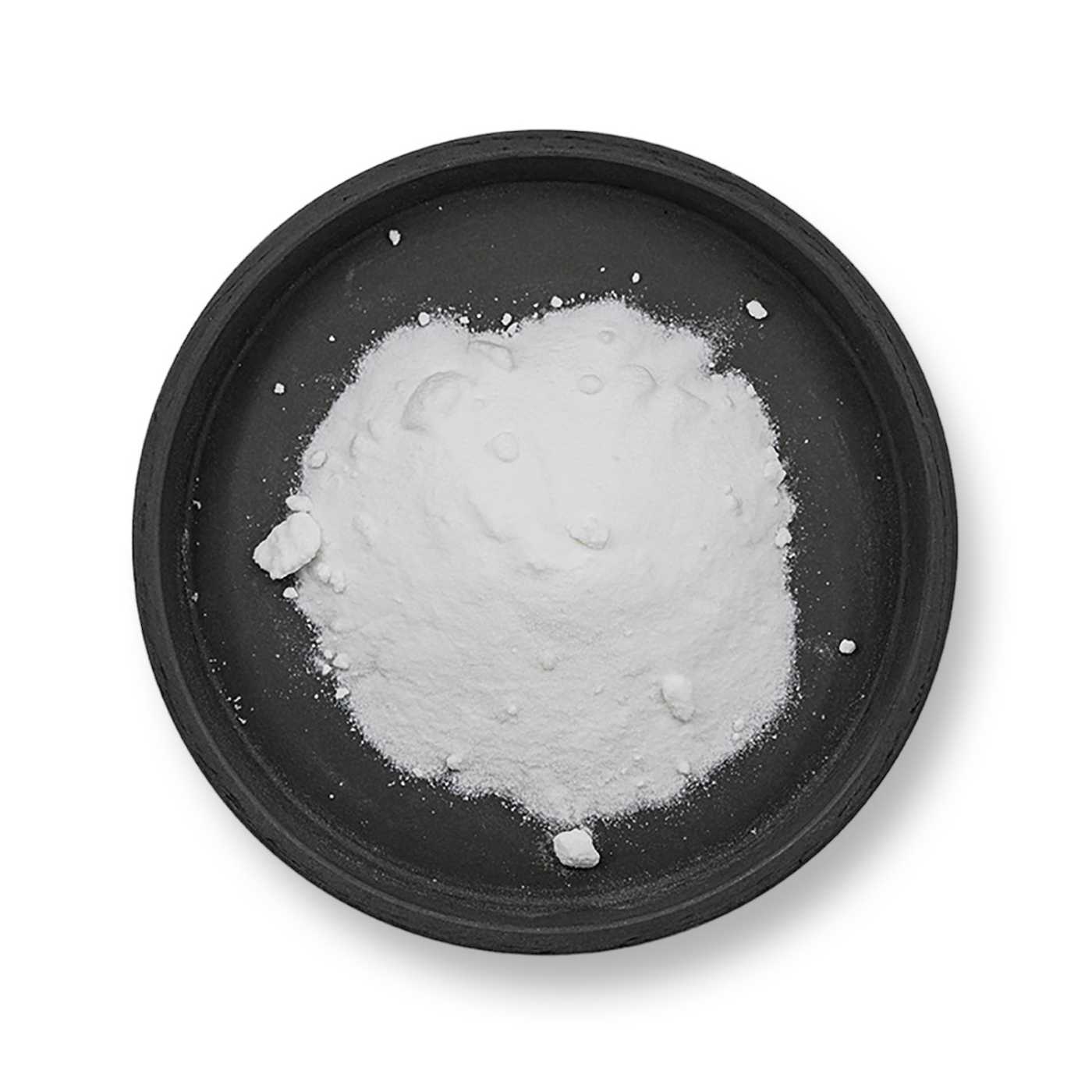
Vitamin E is the substance most commonly used to stabilise L-ascorbic acid and is contained in many popular serums. Unlike vitamin C, it is not readily soluble in water, but it is readily soluble in fats and oils — which is why you will find it only in the long-lasting recipe, at 2.0%. It is added to the oil mixture only once the mixture has cooled to approximately 40 °C.
Olivem 1000
Since vitamin E is soluble in oils and not in water, we also have to use an emulsifier to make the long-lasting serum. That emulsifier is Olivem 1000, at 4.0%. Heat the oil mixture until the emulsifier dissolves (~70 °C) and only then let it cool down for combining with the aqueous phase.
Other raw materials
Linseed oil forms the oil phase of the long-lasting serum, at 10%. Weigh it into a new container together with the emulsifier and heat the mixture until the emulsifier dissolves.
EUXYL PE 9010 is a preservative that accounts for 1% of the long-lasting serum’s formula. Without it the serum would not keep for long — it is precisely thanks to the preservative that the maximum shelf life of the second serum is up to 6 months.
pH strips are used for every measurement: stir a solution of 8 g of demineralised water and 2 g of serum, measure the pH and, if necessary, bring it to 4–4.2 with sodium bicarbonate.
Formula (100 g)
The raw material contents are given in percentages, so they correspond directly to a batch of 100 g of finished serum. We have prepared two variants — a short-lived serum and a long-lasting serum with an oil phase; each has its own shopping list, table and procedure.
The first serum — short-lived, with 10% vitamin C
Shop the ingredients for this recipe
Untick what you already have- Demineralised Water, 1 lrecipe uses 60,00 gin stock€2.79
- Vegetable Glycerol 99,5% USP/BP, 100 mlrecipe uses 30,00 gin stock€2.69
- Baking soda, Sodium Bicarbonate, 1 kgin stock€2.99
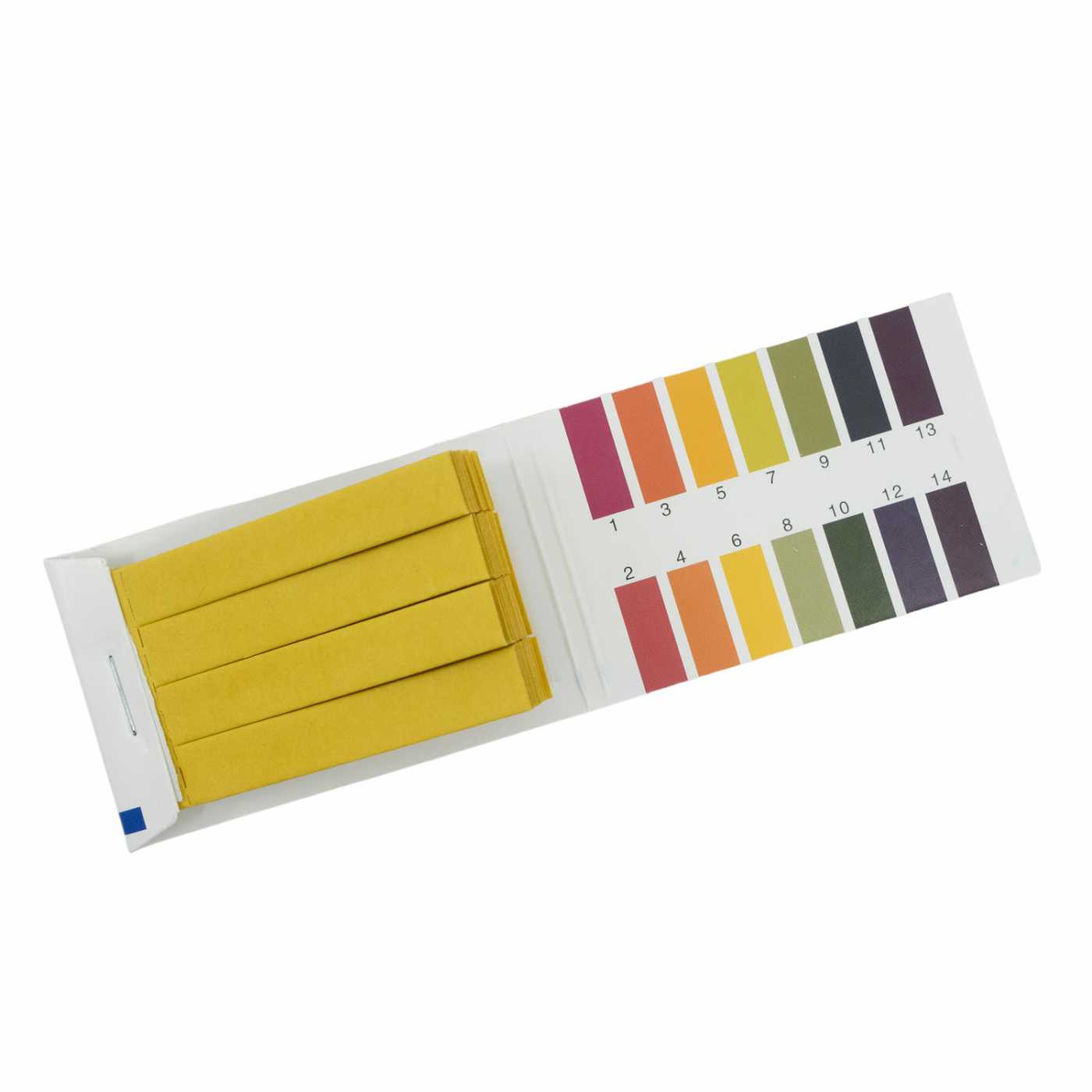 pH Indicator Strips, pH 1–14, 80 pcsin stock€2.30
| Name of raw material | Content in % |
|---|---|
| L-ascorbic acid | 10.00% |
| Glycerin | 30.00% |
| Demineralised water | 60.00% |
| Sodium bicarbonate | as needed |
The second serum — long-lasting, with 10% vitamin C
Shop the ingredients for this recipe
Untick what you already have- Demineralised Water, 1 lrecipe uses 67,00 gin stock€2.79
- Vegetable Glycerol 99,5% USP/BP, 100 mlrecipe uses 5,00 gin stock€2.69
 Linseed Oil, Cold Pressed, 100 mlrecipe uses 10,00 gin stock€2.79
- Olivem 1000, 50 guses 4 gin stock€7.34
- Vitamin E, DL-Alpha Tocopherol, Liquid 96%, 10 mlrecipe uses 2,00 gin stock€3.14
 Euxyl PE 9010, Preservative 10 mlrecipe uses 1,00 gin stock€2.49
- Baking soda, Sodium Bicarbonate, 1 kgin stock€2.99
- pH Indicator Strips, pH 1–14, 80 pcsin stock€2.30
| Phase / raw material | Content in % |
|---|---|
| Phase A | |
| Glycerin | 5.00% |
| Demineralised water | 67.00% |
| L-ascorbic acid | 10.00% |
| Phase B | |
| Linseed oil | 10.00% |
| Olivem 1000 | 4.00% |
| Phase C | |
| Vitamin E, liquid tocopherol 96% | 2.00% |
| Phase D | |
| EUXYL PE 9010 | 1.00% |
| Sodium bicarbonate | as needed |
Preparation procedure
The first serum — short-lived
- Disinfection
Disinfect all tools and containers.
- Aqueous phase
In a container, mix the weighed demineralised water and glycerin.
- Adding the L-ascorbic acid
Add the given amount of L-ascorbic acid to the mixture and stir until the cloudy mixture becomes clear.
- Measuring and adjusting the pH pH 4–4.2
Into a new container, weigh 8 g of demineralised water and add 2 g of the serum you have made. Stir the solution and measure the pH. If necessary, use sodium bicarbonate to bring the pH to 4–4.2.
- Storage
Store the prepared serum in a light-impermeable container.
Preparing this serum is very simple and takes approximately 5 minutes. But it is IMPORTANT to note that this serum must be used within approximately one week, so we recommend making it in a smaller volume.

The second serum — long-lasting
- Disinfection
Disinfect all tools and containers.
- Aqueous phase Phase A
In a container, mix the water and glycerin, add the ascorbic acid and stir the mixture thoroughly until it changes from cloudy to clear.
- Oil phase Phase B~70 °C
Into a new container, weigh the components of the oil phase and mix them. Heat the mixture until the Olivem 1000 emulsifier dissolves (~70 °C).
- Adding the vitamin E Phase Capprox. 40 °C
Once the oil mixture has cooled to approximately 40 °C, add the vitamin E and stir.
- Combining the phases
If both phases are at approximately the same temperature, add the aqueous phase to the oil phase and stir thoroughly.
- Measuring and adjusting the pH Phase DpH 4–4.2
Into a new container, weigh 8 g of demineralised water and add 2 g of the serum you have made. Stir the solution and measure the pH. If necessary, use sodium bicarbonate to bring the pH to 4–4.2.
- Storage
Store the prepared serum in a light-impermeable container.
This serum is more complex to prepare, but its maximum shelf life is up to 6 months. To achieve a creamy consistency, you can blend the serum with a mixer after adding the aqueous phase to the oil phase, but do not forget to adjust the pH beforehand.
Use and storage
We recommend applying both serums at night. And for better storage, wrap the containers in aluminium foil.
Vitamin C belongs among the photoprotective substances, which must be stored in light-impermeable containers, since it degrades in light. Use up the short-lived serum within approximately one week — which is why you should make it in a smaller volume; the long-lasting serum keeps for up to 6 months.
Frequently asked questions about the recipe
Practical questions about vitamin C serums — stability, calculating the amount, adjusting the pH and storage.
Why does the serum turn yellow-orange?
In water, L-ascorbic acid easily changes into dehydro-L-ascorbate (DHA), which is an ineffective form of ascorbic acid. Despite a light-impermeable container, up to 50% of the L-ascorbic acid is converted into DHA (pH 3.5; temperature 25 °C) within just one week of storage — and that is exactly what we observe in the colour change of the serum.
How do I calculate the amount of vitamin C in the serum?
You calculate the amount as (percentage value of L-ascorbic acid / 100) x total volume of serum. For a 10% serum with a volume of 20 ml, that means (10% / 100) x 20 ml = 2 g of L-ascorbic acid.
Why does the pH of the serum need adjusting?
According to studies, vitamin C has positive effects at a pH of approximately 3.5, but our skin has a pH in the range of 5–6. So that the serum does not have irritating effects, we bring the pH closer to that of our skin by means of sodium bicarbonate — to a value of 4–4.2.
How long does each of the serums keep?
The first, short-lived serum must be used within approximately one week, so we recommend making it in a smaller volume. The second serum is more complex to prepare, but its maximum shelf life is up to 6 months — thanks to the emulsifier and the preservative.
How do I achieve a creamy consistency?
With the long-lasting serum, you can blend the serum with a mixer after adding the aqueous phase to the oil phase. Before you do, though, do not forget to adjust the pH.
How should a vitamin C serum be stored?
Vitamin C belongs among the photoprotective substances, which must be stored in light-impermeable containers, since it degrades in light. For better storage, wrap the containers in aluminium foil. We recommend applying both serums at night.
Conclusion
Do you use vitamin C in your skincare? As we have already learned from the introduction of this post, including vitamin C in your skincare is a great step for the skin.
Do you like this guide to creating a serum with vitamin C? Be sure to let us know — it will be great feedback for us and for our customer Klára Oláhová, who prepared this post for you.
If you have any questions, leave us a message at [email protected].
Until saponification, friends.
You will find the vitamin E, glycerin, demineralised water, Olivem 1000 and the preservative from this recipe in the Handymade range of raw materials.