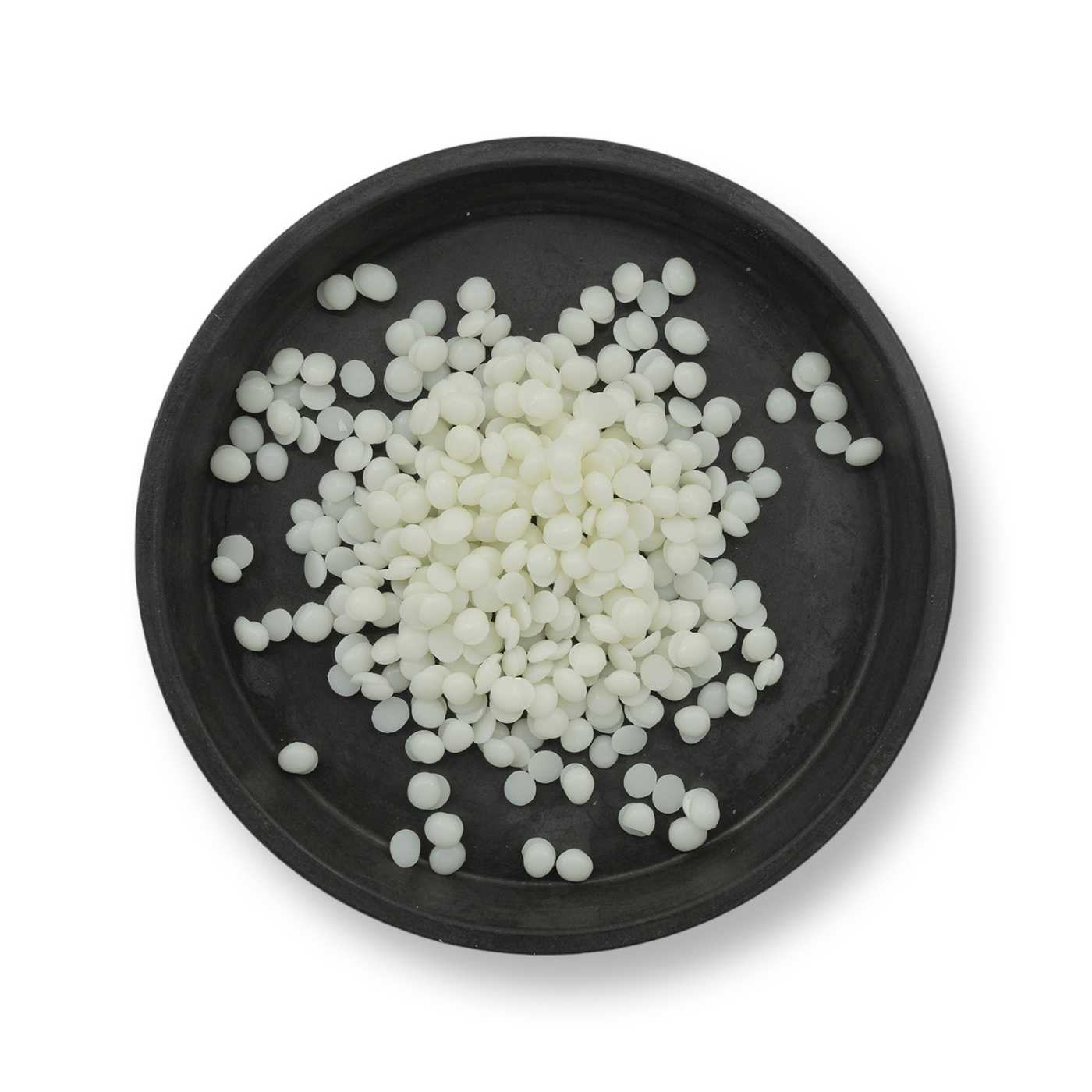
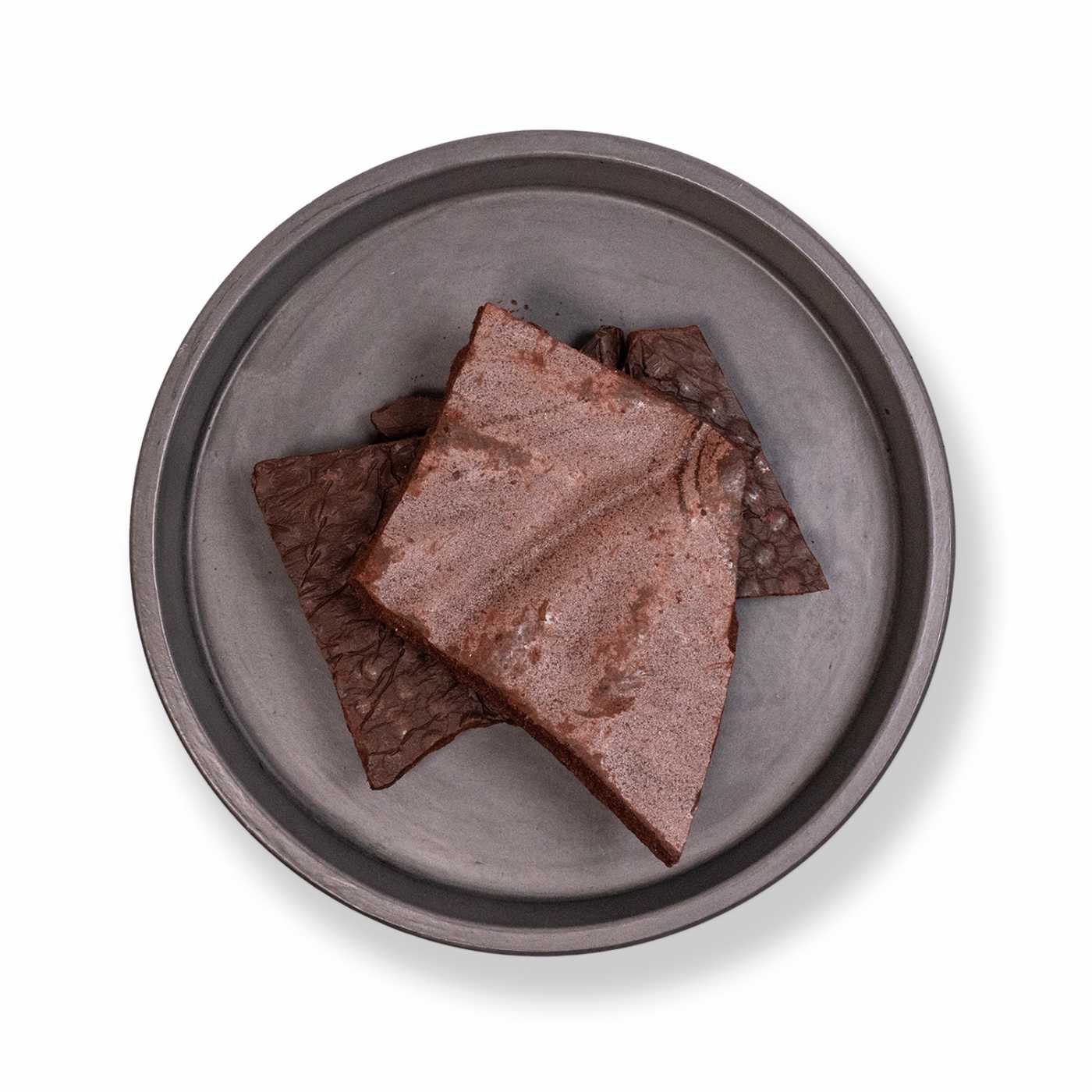
Candle dye, dark brown colours wax a shade of brown whose intensity depends on the amount used: a smaller amount gives a lighter brown, a larger amount a dark, full one. The pigments are already mixed into a wax base of stearin, soy wax and coconut wax, so the dye melts together with the wax. It is used for colouring candles in jars, moulded candles and tealights.
How the dye works
The colour comes from pigments. They do not dissolve in wax but remain in it as very fine dispersed particles. Pigments are generally more lightfast than wax-soluble dyes.
Brown is created by mixing several pigments. Yellow, red and blue form the shade itself, black darkens it and white gives it an opaque character. The colour suits earthy, woody, coffee and spicy fragrances.
The wax base makes the work easier. The pigment is already dispersed in it and does not create dust when weighed.
Use in candle making
The dye is added to fully melted wax and stirred until it has melted completely and the colour is even.
The shade also depends on the wax. Soy wax and coconut wax are white and opaque once set, so the brown comes out softer and lighter in them. In paraffin wax the colour tends to be more intense.
To see the true shade, let a drop of wax set on white paper or a saucer. Add the dye in small amounts and repeat the test.
Good to know
- Stirring before pouring – pigment particles may sink to the bottom in hot wax that stands for a longer time. Stir the wax just before pouring.
- Test candle – we recommend testing dark shades by burning before making a larger batch.
- Mixing shades – with other candle dyes the shade can be shifted towards a warmer or cooler brown. Note down the ratio so that it can be repeated.
- Classification – the dye is not subject to classification under the CLP Regulation.
Frequently asked questions
How do you add candle dye, dark brown, to wax?
Stir the dye into fully melted wax and keep stirring until it has melted completely and the colour is even. The pigments are already dispersed in the wax base, so the dye melts together with the wax and does not create dust during work. If the coloured wax stands for a longer time, pigment particles may sink to the bottom. Stir it once more just before pouring.
How much candle dye is needed for dark brown?
The amount is chosen according to the type of wax and how intense the brown should be. A proven approach is to start with a small amount, let a drop of wax set on a white surface and add the dye gradually. White opaque waxes, such as soy wax and coconut wax, need more dye than paraffin wax for an equally dark shade.
Is candle dye, dark brown, suitable for soy wax?
Yes, candle dye, dark brown, can also be used in soy wax. Soy wax and coconut wax are themselves part of its wax base. Soy wax is white and opaque once set, so the brown comes out softer and lighter than in paraffin wax. We recommend checking the final shade on a small sample.
Why does a candle with brown dye look lighter than the melted wax once it has set?
Melted wax is clear, so the colour looks darker in it. Once set, the wax turns white and becomes opaque, which lightens the shade. This is most noticeable with soy wax and coconut wax. Judge the colour on a set sample, not by the wax in the pot.
Does brown candle dye affect burning?
With very intense colouring, brown candle dye can affect burning. It contains pigments that do not dissolve in wax and in larger amounts they can clog the wick. The flame then weakens. We recommend testing dark shades on a test candle and adjusting the amount of dye or the wick size according to how the candle burns.