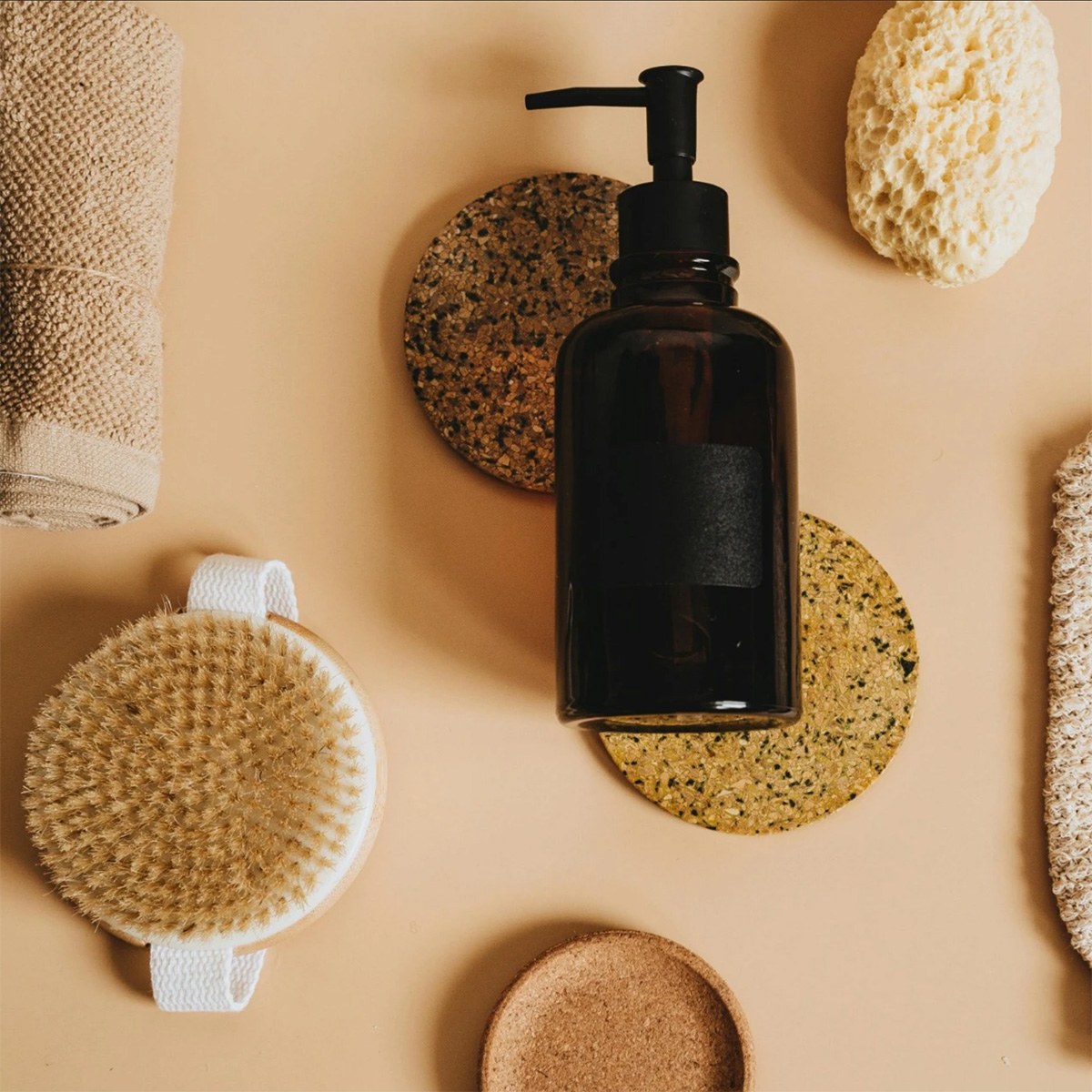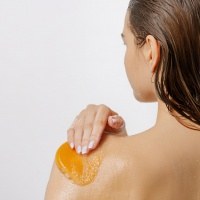
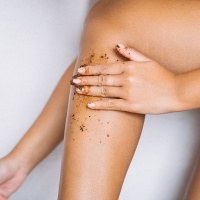
An exfoliating shower gel will soften your skin and fill you with a pleasant feeling of cleanliness and freshness. A gentle shower gel with a magnolia fragrance to brighten your skin can now be prepared in the comfort of your own home. Tiny strawberry seeds take care of the gentle removal of dead skin cells, and at the same time these exfoliating particles are biodegradable. Try the exfoliating shower gel following our instructions, or adapt it to your own preferences using the information in the section on the key ingredients and their variations.
About this recipe
This is a foaming shower gel with exfoliating particles that you can prepare at home. As usual, foaming preparations require the use of surfactants, and since the product also contains water, it is essential to preserve it. To make showering more pleasant, exfoliating particles, a gentle magnolia fragrance and a coloured mica powder have been added.
The gel consistency is provided by Sucraclear, which at the same time keeps the exfoliating particles suspended. The recipe is open to variations — in the section on the key ingredients you will find tips on what to replace the individual components with and how to adapt the product to suit you.
Key benefits
- Gentle exfoliation
Tiny strawberry seeds take care of the gentle removal of dead skin cells.
- Biodegradable particles
The exfoliating particles used in this recipe are biodegradable.
- Gentle magnolia fragrance
The scent of the product comes from magnolia fragrance oil — you can adjust the fragrance to your liking or leave it out altogether.
- The colour is up to you
Mica powder gives the gel its shade; you can choose any shade you like, or leave the mica powder out.
- A moisturising ingredient
Glycerine is a moisturising and humectant ingredient, and it also helps to hydrate powdered ingredients, so lumps disappear more quickly.
- pH matched to the skin
The pH of the gel is adjusted with lactic acid to a physiological 4.5 to 5.5.
Product properties
Key ingredients in the recipe
Do you like exfoliating shower gels, but want to give the product a touch of originality? Below you will find advice and tips with which you can adapt the shower gel to your own preferences. At the same time, you will learn more about the function of the individual ingredients and the reason why they were used in the production of the exfoliating shower gel.
Decyl glucoside
The basis for the production of shower gels are surfactants. These are foaming, cleansing and degreasing substances that combine well with water and other water-soluble ingredients. In the production of our product, glucosides were used — decyl glucoside and caprylyl/capryl glucoside — which are characterised by an alkaline pH. That is also why it was necessary to adjust their pH by adding lactic acid.
Caprylyl/capryl glucoside
The second surfactant in the formula is caprylyl/capryl glucoside, which accounts for the largest share of the surfactants in the gel. If you want to replace a surfactant in the product, be aware that this will significantly change the properties of the product. Not only do surfactants have different pH values, so the amount of lactic acid needed will change, but they also differ in foaming behaviour, compatibility and concentration — surfactants are not 100 % substances, they are sold as diluted solutions, so always check the ASM value of the surfactant to make sure your product is not too concentrated and therefore irritating to the skin.
Vegetable glycerine
The moisturising and humectant ingredient in the exfoliating shower gel is glycerine. It is a type of alcohol commonly found in cosmetics and is readily soluble in water. At the same time, it helps to hydrate powdered ingredients such as plant gums, Sucraclear or hyaluronic acid, thereby shortening the time it takes for lumps to disappear and for homogeneous gels to form.
If you leave glycerine out of the product, be aware that more lumps of Sucraclear will form in the shower gel and it will take longer for all of them to disappear.
Strawberry seeds
Strawberry seeds are an unconventional way to make your shower gel more interesting. However, they are not the only available exfoliating particles. You can reach for ground pumice powder or for various ground nut or almond shells. Choose exfoliating particles that are not soluble in water (salt and sugar are therefore not suitable). Alternatively, you can omit the exfoliating particles entirely.
Lactic acid 80 %
The acid selected for pH adjustment was lactic acid. Its advantage is that it is relatively concentrated and is sold in solution form, so you do not need to prepare your own solution or wait for it to dissolve.
An alternative to lactic acid is other organic acids, such as citric acid. Its disadvantage is precisely the fact that it is a solid substance, so you have to prepare a solution in advance with which you will adjust the pH.
Other ingredients
Demineralised water is the second major item among the ingredients of the exfoliating shower gel. You can replace demineralised water with hydrolats of your choice. However, bear in mind that hydrolats have different pH values, and therefore the amount of lactic acid needed to reach the physiological pH of the skin (4.5 to 5.5) will change as well.
Sucraclear is the thickener and gelling agent in the exfoliating shower gel. It is a fine white powder of plant origin that thickens various products and forms water-based gels. Its advantage is that it helps keep the exfoliating particles or mica powders evenly dispersed in the product. If you want to replace Sucraclear, try xanthan gum, for example. However, be aware that xanthan gum has difficulty keeping heavier particles such as strawberry seeds evenly dispersed.
Mica powder is one of the universal colourants in cosmetics — thanks to mica powders, your products can take on a wide variety of shades. Mica powders require the addition of a suitable thickener or other agent to keep them from settling to the bottom; in this case, Sucraclear was chosen. You can omit mica powders from the product entirely, or choose any shade you like.
Magnolia fragrance oil gave the product its gentle magnolia scent. Fragrance oils are synthetically prepared compounds, as not all plants provide fragrant essential oils in sufficient quantities. Instead of fragrance oils you can use essential oils, or you can omit the fragrance entirely and replace the amount of fragrance oil used with water.
Cosgard is a preservative that is necessary for the shelf life and safety of the product. Since the product contains water, which microorganisms need for life, preservatives have to be added, otherwise your product will undergo rapid microbial spoilage. Cosgard is an Ecocert and COSMOS approved preservative that is most effective in an acidic pH, ideally below 5.5. You can replace it with another broad-spectrum preservative that is effective in the acidic pH of the product.

The formula (100 g)
The ingredient contents are given in percentages by weight, so they correspond to a batch of 100 g of finished gel. The formula is divided into three phases — A (glycerine, Sucraclear and mica powder), B (water and surfactants) and C (lactic acid, fragrance oil, preservative and exfoliating particles).
Shop the ingredients for this recipe
Untick what you already have- Caprylyl/Capryl Glucoside, 100 mlrecipe uses 18,00 gin stock€1.77
| Phase / ingredient | Content in % |
|---|---|
| Phase A | |
| Vegetable glycerine | 5.00 % |
| Sucraclear | 2.00 % |
| Mica Aphrodite | 0.50 % |
| Phase B | |
| Demineralised water | 63.20 % |
| Decyl glucoside | 8.50 % |
| Caprylyl/capryl glucoside | 18.00 % |
| Phase C | |
| Lactic acid 80 % | 1.30 % |
| Magnolia fragrance oil | 0.50 % |
| Cosgard preservative | 1.00 % |
| Strawberry seeds | as needed |
| Packaging | |
| Plastic bottle, clear, 24/410, 100 ml | — |
How to make it
- Disinfection
All tools, vessels and containers that will come into contact with the product or the ingredients should be disinfected, for example with ethanol.
- A thick paste from phase A Phase A
In a bowl or other vessel, mix the glycerine, Sucraclear and mica powder and stir thoroughly until a thick paste without lumps is formed.
- Adding the water Phase B
To phase A, add the water and mix thoroughly using a milk frother, or a stick blender. The goal is to obtain a gel with as few lumps as possible. Any lumps that cannot be removed will disappear naturally after a few hours as the Sucraclear hydrates.
- Incorporating the surfactants Phase B
Add the surfactant blend – decyl glucoside and caprylyl/capryl glucoside. Stir carefully, as the mixture may foam.
- Adjusting the pH Phase CpH 4.5 – 5.5
Adjust the pH to a value of 4.5 to 5.5 by slowly adding lactic acid drop by drop and continuously checking the pH, for example using pH strips. The stated amount of lactic acid is only approximate; it depends on the accuracy of weighing, changes to the recipe or the quality of the ingredients.
- Fragrance, preservative and exfoliant Phase C
Once the pH has been adjusted, add the fragrance oil, preservative and strawberry seeds, and again mix thoroughly. Pour the product into your chosen container.
Tips and tricks
When making the exfoliating shower gel, it is worth having a milk frother at hand, or a stick blender when making larger volumes, as this will speed up and simplify the formation of a gel-like consistency.
Sucraclear is responsible for the formation of the gel; this substance also allows the exfoliating particles to remain suspended. In our tests we observed that the viscosity of the product decreases slightly on the second day, and therefore a slightly higher dose of Sucraclear was used. On the other hand, heating the gel to 70 °C (as recommended by the manufacturer) did stabilise the gel further, i.e. there was no more pronounced drop in viscosity, but the gel was not able to keep the heavier exfoliating particles dispersed and the strawberry seeds sank to the bottom; only the mica powder remained evenly dispersed.
When incorporating the surfactants, besides stirring with a spoon or spatula you can also use a milk frother, especially if you have the feeling that the gel is not combining with the surfactants. However, stir carefully, as the product will foam with intensive stirring.
The amount of lactic acid used is only approximate. Always remember to check the pH of the product before adding sensitive ingredients such as preservatives. Decyl glucoside and caprylyl/capryl glucoside have an alkaline pH, which would not be suitable for the skin, therefore pH adjustment is necessary. Add the lactic acid drop by drop, after each addition mix the blend well and test the pH, until you reach values in the range of 4.5 to 5.5.
Warning
As mentioned, you can experiment with homemade recipes to achieve the properties you want. However, the final result can be influenced by many factors, such as humidity, temperature, the quality of the ingredients or the way they are stored.
Before using any ingredient to make a cosmetic product, familiarise yourself with its properties, recommended dosage, storage conditions and safe handling. Every ingredient may have the potential to trigger an allergic reaction in sensitive individuals, therefore before using the product we recommend determining whether you are allergic to any of the ingredients or to the product as a whole, for example by means of a patch test.
If you have very sensitive or very acne-prone skin, or other skin and health problems, we recommend that you consult a medical professional before applying a new product to the skin, whether it is a homemade cosmetic product, a pure ingredient or a commercially available product.
Frequently asked questions about the recipe
Practical questions about the exfoliating shower gel — choosing the exfoliating particles, adjusting the pH, the viscosity of the gel, replacing Sucraclear and preservation.
What can I replace the strawberry seeds with?
You can reach for ground pumice powder or for various ground nut or almond shells. Choose exfoliating particles that are not soluble in water — salt and sugar are therefore not suitable. You can also omit the exfoliating particles entirely.
Why is pH adjustment necessary?
Decyl glucoside and caprylyl/capryl glucoside have an alkaline pH, which would not be suitable for the skin. Add the lactic acid drop by drop, after each addition mix the blend well and test the pH, until you reach the range of 4.5 to 5.5. The stated amount of lactic acid is only approximate — it depends on the accuracy of weighing, changes to the recipe or the quality of the ingredients.
Should I heat the gel to 70 °C, as the manufacturer of Sucraclear recommends?
In our tests, heating to 70 °C did stabilise the gel further — there was no more pronounced drop in viscosity — but the gel was not able to keep the heavier exfoliating particles dispersed and the strawberry seeds sank to the bottom; only the mica powder remained evenly dispersed. Without heating, the viscosity decreases slightly on the second day, which is why a slightly higher dose of Sucraclear was used.
What can I replace Sucraclear with?
Try xanthan gum, for example. However, be aware that xanthan gum has difficulty keeping heavier particles such as strawberry seeds evenly dispersed.
Does the gel have to contain a preservative?
Yes. Since the product contains water, which microorganisms need for life, preservatives have to be added, otherwise the product will undergo rapid microbial spoilage. The Cosgard used is an Ecocert and COSMOS approved preservative that is most effective in an acidic pH, ideally below 5.5; you can replace it with another broad-spectrum preservative that is effective in the acidic pH of the product.
Conclusion
Do you enjoy exfoliating shower gels, or do you prefer the ordinary ones? Let us know how you got on when creating the exfoliating shower gel. We will also be pleased to receive your observations and recommendations.
In case of any questions or uncertainties, feel free to write to us at [email protected].
Until saponification, friends.
You will find the surfactants, exfoliating particles, mica powders and preservatives from this recipe in the Handymade range of ingredients.