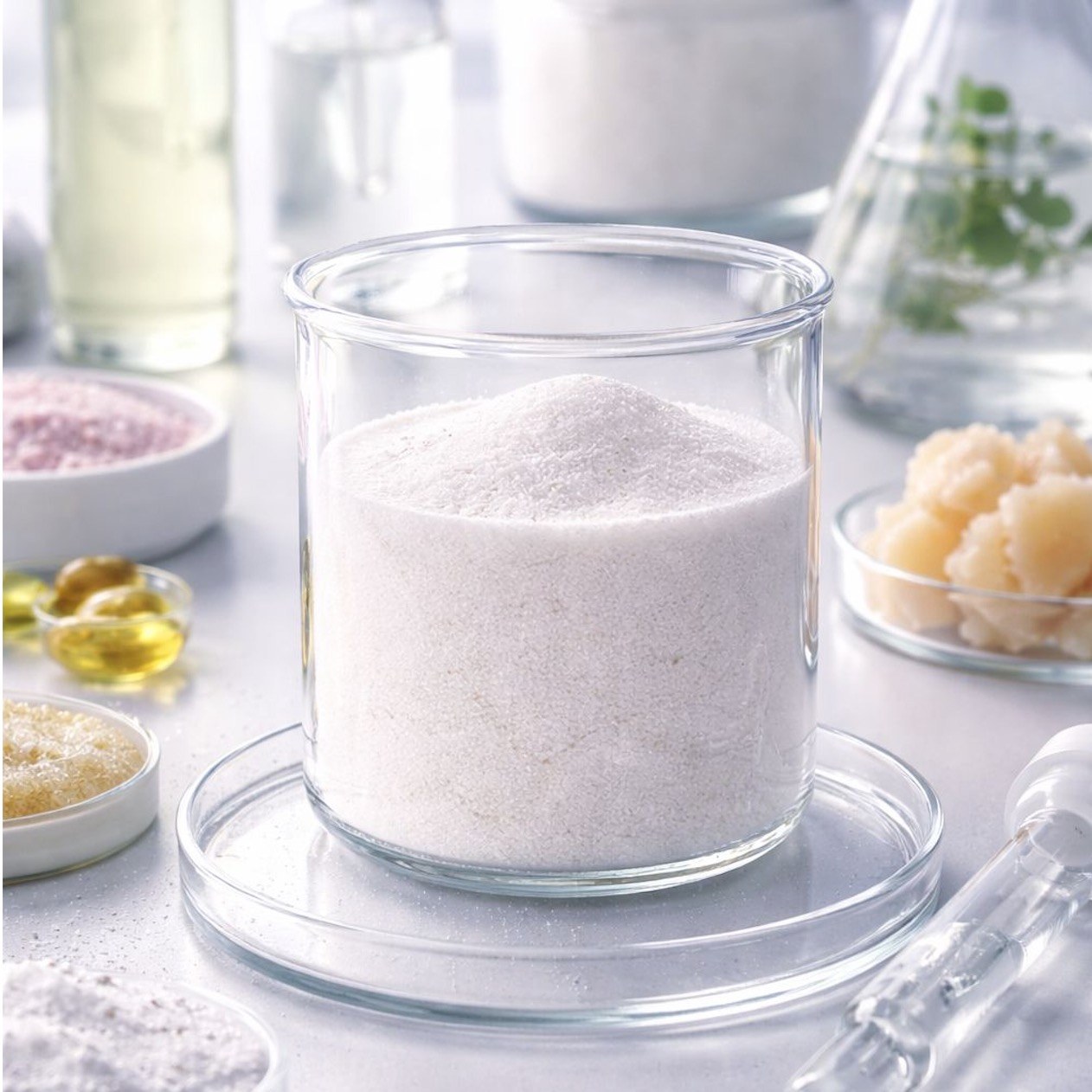

SLSA — Sodium lauryl sulfoacetate. Sounds so chemical, doesn’t it? And yet there is no need to be afraid of this substance — it is a purely natural tenside obtained from the fatty acids of coconut and palm oil. It is gentle to the environment, biodegradable and meets the criteria of the ECOCERT certification company.
About this article
This article introduces SLSA (Sodium lauryl sulfoacetate) — a tenside obtained from the fatty acids of coconut and palm oil. You will find out what SLSA is and where it comes from, why the same substance is called a surfactant one moment and a tenside the next, or a surface-active agent, how a tenside works when washing and which products it suits. It is for anyone who makes their own shampoos, shower gels, conditioners or bath bombs and wants to know what they actually have in their hands.
Key benefits
- Purely natural origin
SLSA is obtained from the fatty acids of coconut and palm oil — so it is not a substance you need to be afraid of.
- Gentle to the environment
The result is a substance that is gentle to the environment and biodegradable.
- Meets the ECOCERT criteria
SLSA meets the criteria of the ECOCERT certification company.
- Does not disrupt the skin’s pH
At the right concentration it acts on the cleansing process like soap, except that it does not disrupt the pH of the skin the way soap does.
- Not as irritating as soap
Its molecules are large enough that they do not penetrate through the skin or mucous membranes and do not irritate like soap itself.
- Creates a beautiful foam
It is precisely for its rich foam that it is used to make shampoos, shower gels, bath bombs and bath foams.
SLSA in brief
What is SLSA?
SLSA — Sodium lauryl sulfoacetate — is one of the tensides. Sounds so chemical, doesn’t it? And yet there is no need to be afraid of this substance, because it is purely natural — it is obtained from the fatty acids of coconut and palm oil. Yes, it is not about “manually squeezing a fresh coconut”, you need to run that coconut through a certain process. However, this produces a substance that is gentle to the environment and is biodegradable. Moreover, it meets the criteria of the ECOCERT certification company.
Surfactant, tenside or surface-active agent?
This raw material is called a surfactant or also a tenside — a surface-active agent. All these three terms denote the same substance, it is just that surfactant comes from French, tenside from English and povrchovoaktívna látka is already an expression from the Slovak language.
SLSA and its use in practice
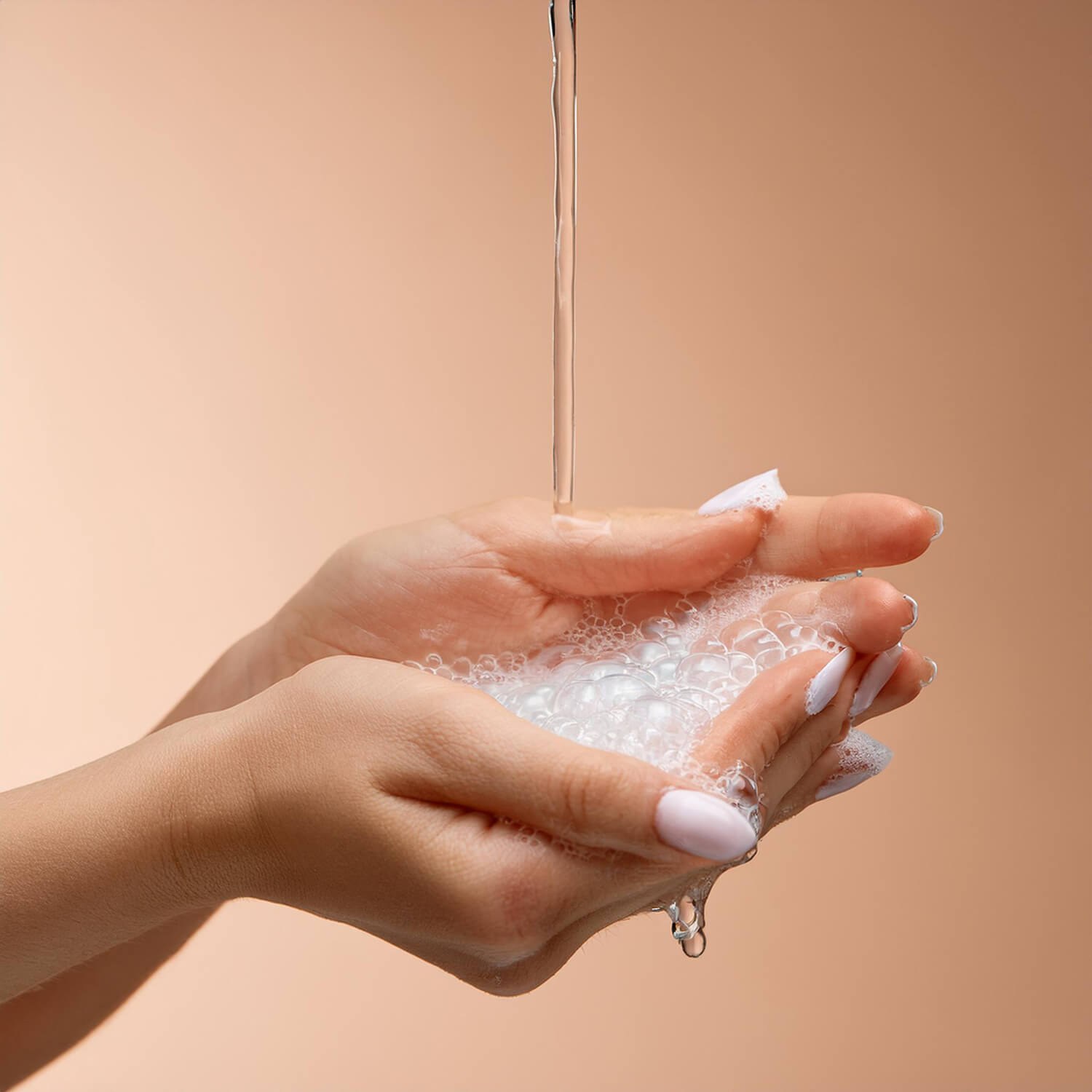
Imagine that you would go to wash greasy hands with pure water. Water will not remove the grease from your hands, because it creates a film on your skin that does not allow water to pass through. However, the molecules of the tenside are partly lipophilic (they dissolve well in fats) and partly hydrophilic (they dissolve well in water), so they are able to reduce the surface tension at the water-oil phase interface. This means that the tenside reduces the surface tension of the water as a solvent, the water no longer just rolls over the greasy hand, but binds the dirt to itself, and thus beautifully washes it off the skin.
In addition, if you choose the correct concentration, it acts on the cleansing process like soap, except that it does not disrupt the pH of the skin as soap does. Its molecules are even large enough that they do not penetrate through the skin or mucous membranes and do not irritate like soap itself.
Which products SLSA suits
Moreover, in this process tensides create a beautiful foam, and that is exactly why they are used for the production of liquid and solid shampoos, conditioners, shower gels, bath bombs or bath foams and dishwashing detergents.
Also read and try the recipe for a solid shampoo with SLSA.
In the Handymade range you will find SLSA in several pack sizes:
Frequently asked questions about SLSA
Practical questions about the tenside SLSA — its origin, naming, how it works and where it belongs.
What is SLSA?
SLSA is the abbreviation for Sodium lauryl sulfoacetate — a substance that is one of the tensides. It is obtained from the fatty acids of coconut and palm oil, so it is a purely natural raw material.
Is SLSA a natural raw material?
Yes. It is obtained from the fatty acids of coconut and palm oil — it is not about “manually squeezing a fresh coconut” and the coconut does need to be run through a certain process, but this produces a substance that is gentle to the environment and biodegradable, and moreover meets the criteria of the ECOCERT certification company.
What is the difference between a surfactant, a tenside and a surface-active agent?
None — all three terms denote the same substance. Surfactant comes from French, tenside from English and povrchovoaktívna látka is an expression from the Slovak language.
How does a tenside work when washing?
The molecules of a tenside are partly lipophilic (they dissolve well in fats) and partly hydrophilic (they dissolve well in water), which is why they are able to reduce the surface tension at the water-oil phase interface. The tenside reduces the surface tension of the water as a solvent, the water no longer just rolls over the greasy hand, but binds the dirt to itself and washes it off the skin.
Does SLSA irritate the skin like soap?
Its molecules are large enough, so they do not penetrate through the skin or mucous membranes and do not irritate like soap itself. At the right concentration it acts on the cleansing process like soap, except that it does not disrupt the pH of the skin the way soap does.
Which products is SLSA used in?
Because it creates a beautiful foam, it is used to make liquid and solid shampoos, conditioners, shower gels, bath bombs or bath foams and also dishwashing detergents.
SLSA — conclusion
Behind the chemical-sounding name Sodium lauryl sulfoacetate hides a natural tenside from coconut and palm oil that is biodegradable, meets the criteria of ECOCERT and treats the skin more gently than soap. If you make your own shampoos, shower gels or bath bombs, SLSA will give you the main thing — a beautiful foam and reliable cleansing.
SLSA and other tensides and surfactants for shampoos, shower gels, conditioners and bath bombs can be found in the Handymade range of raw materials.