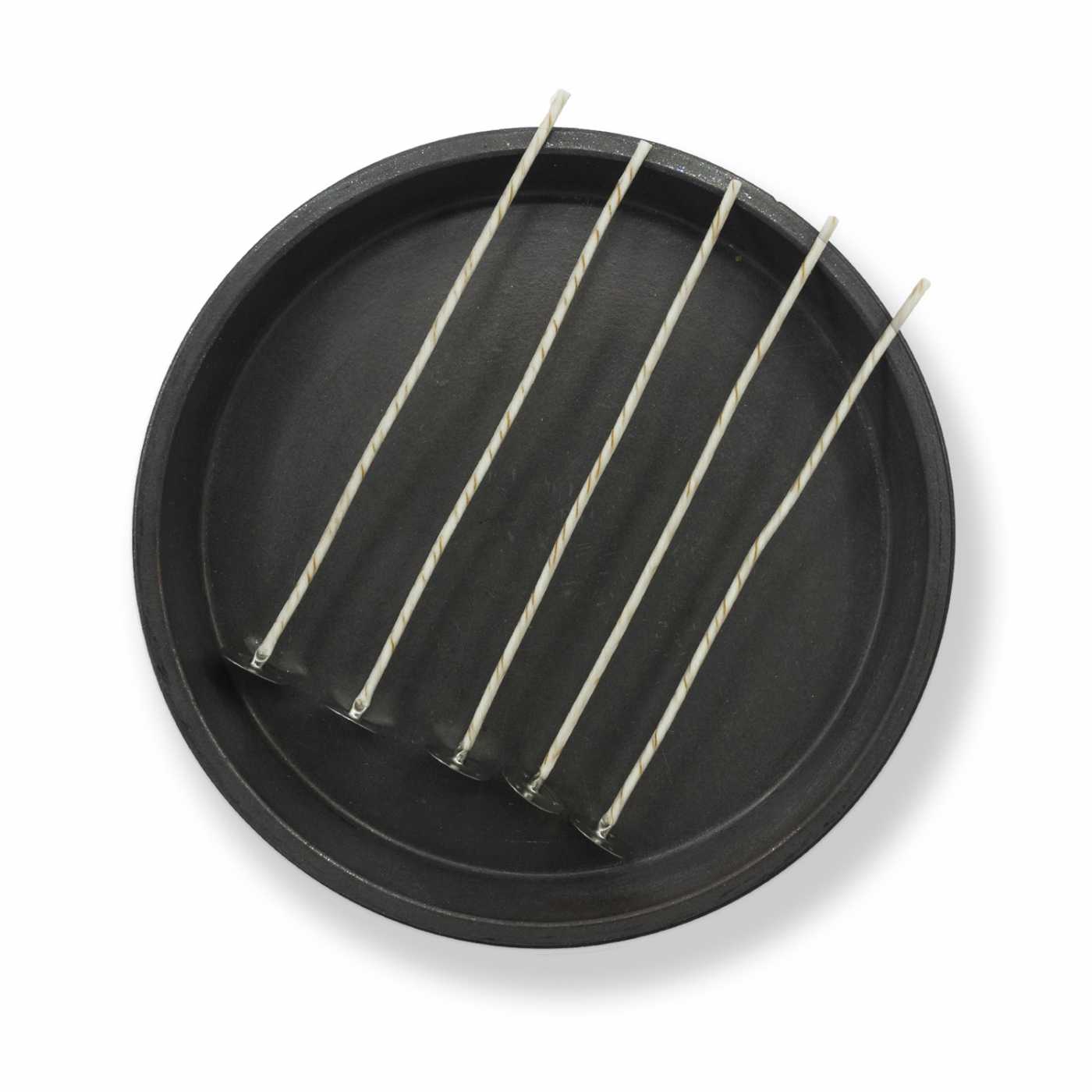
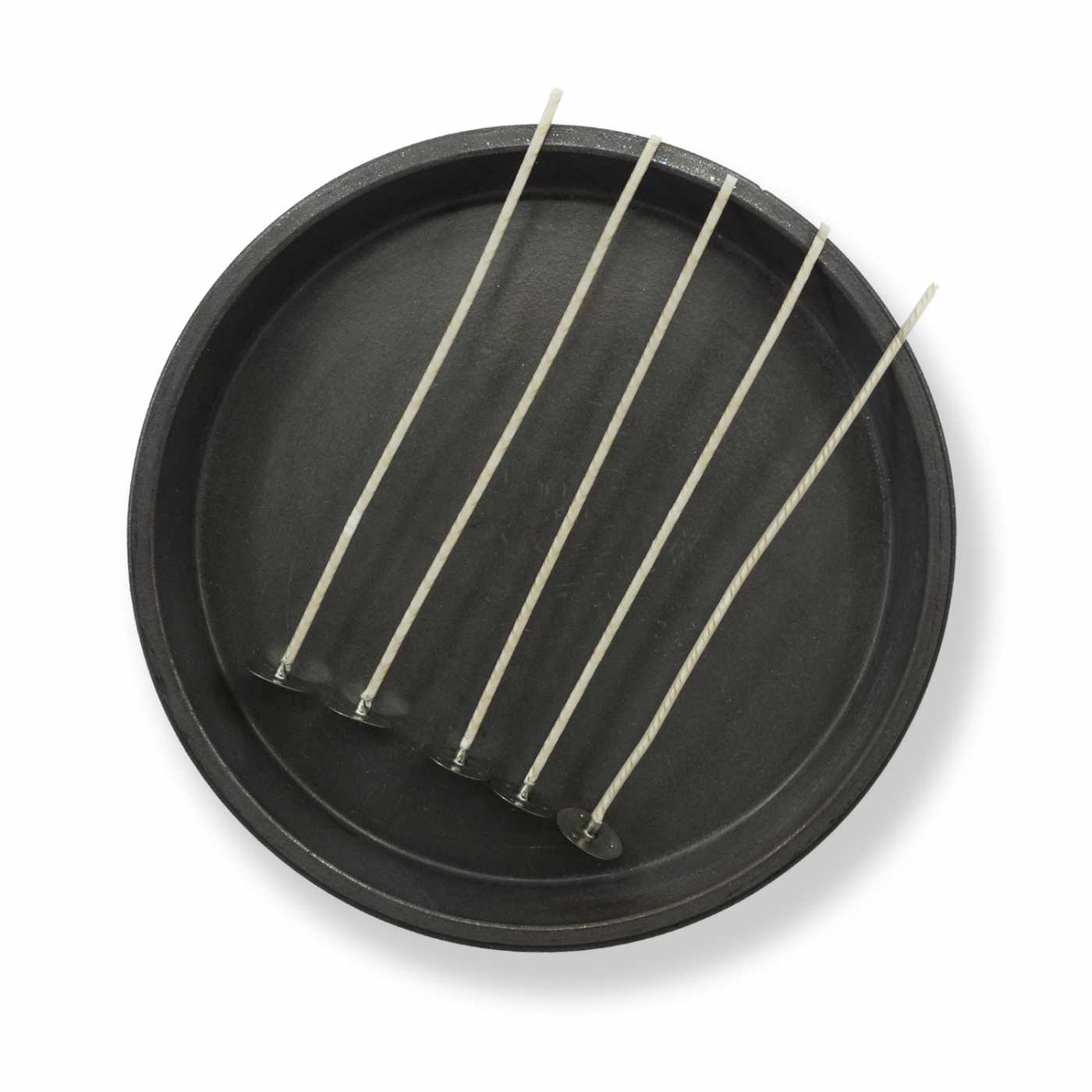
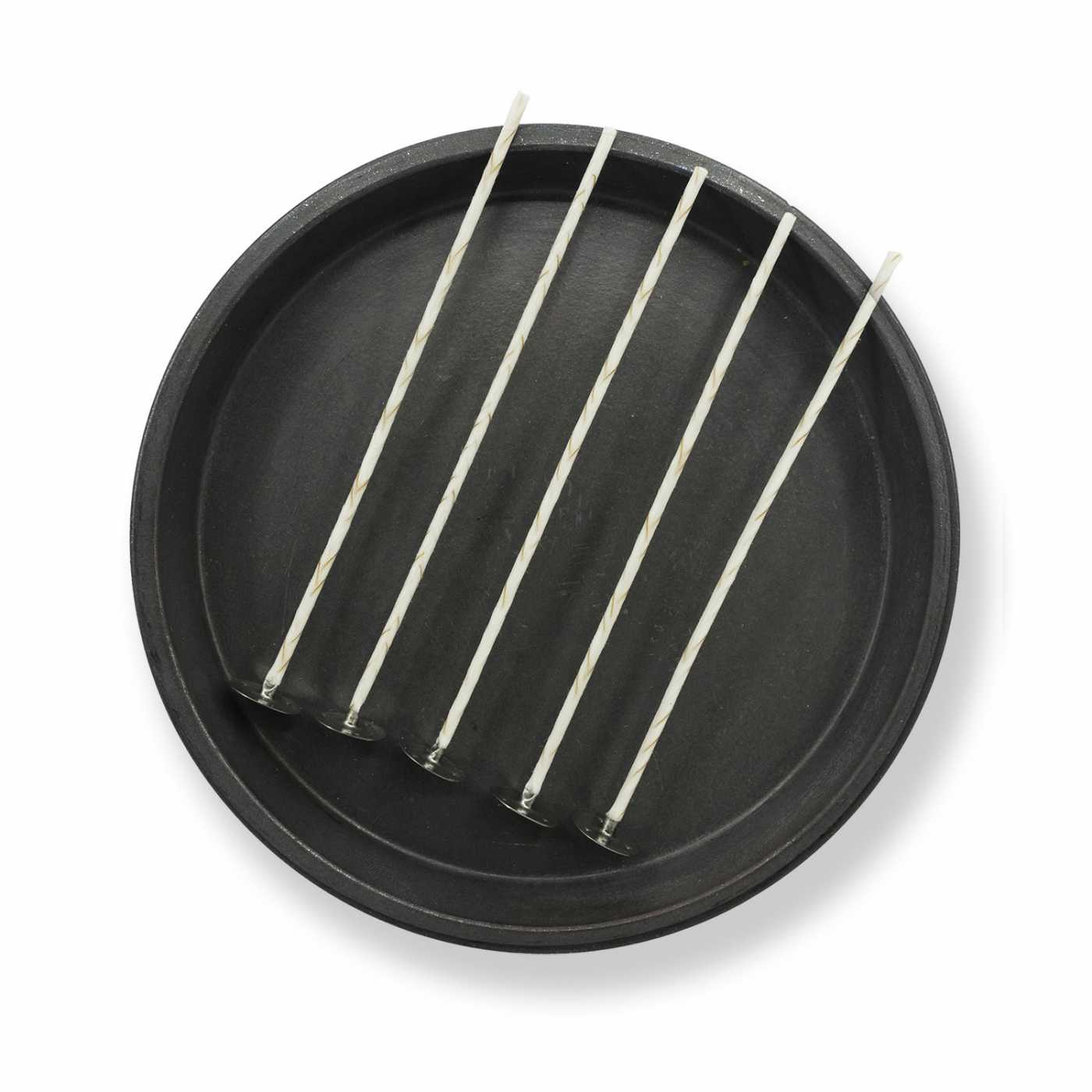
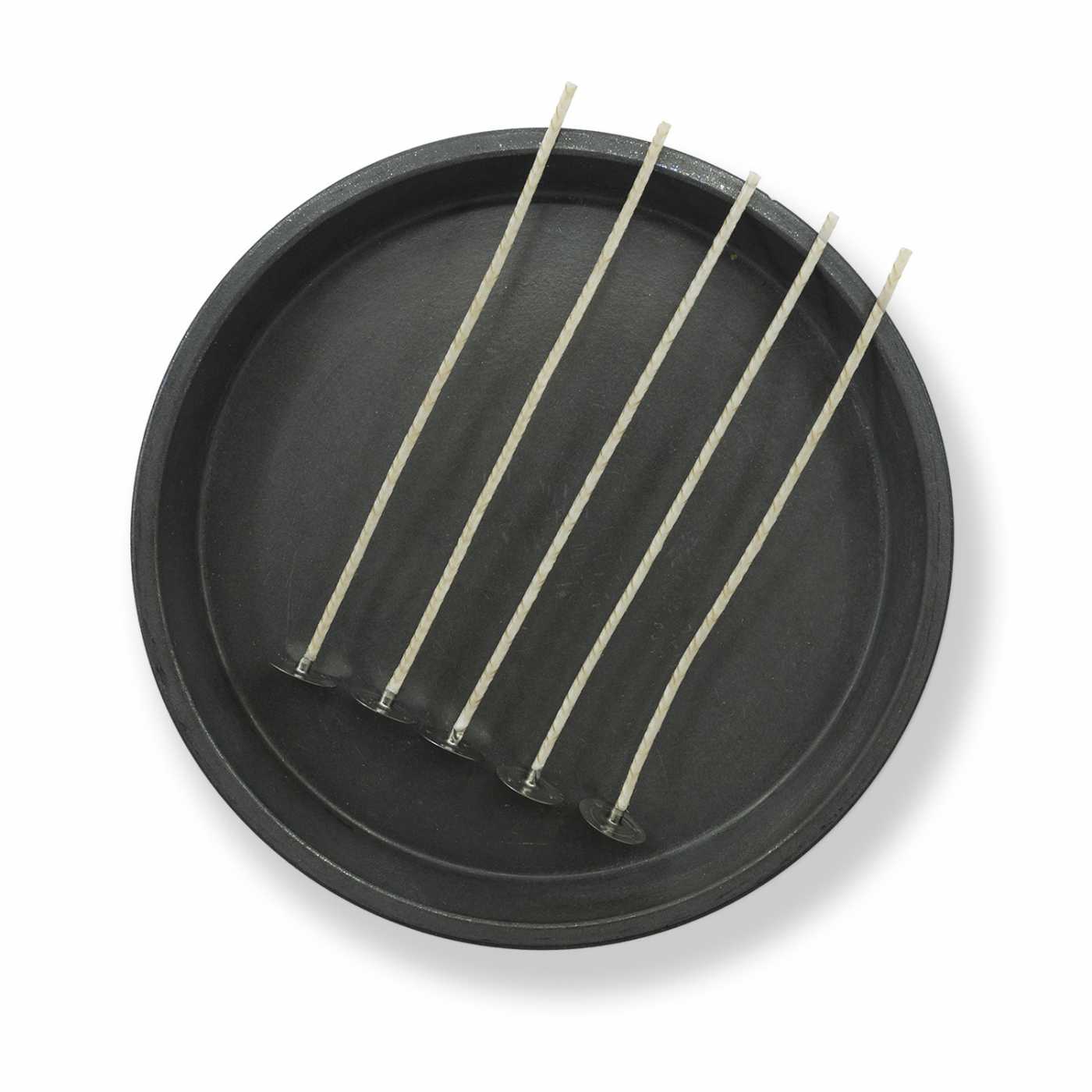
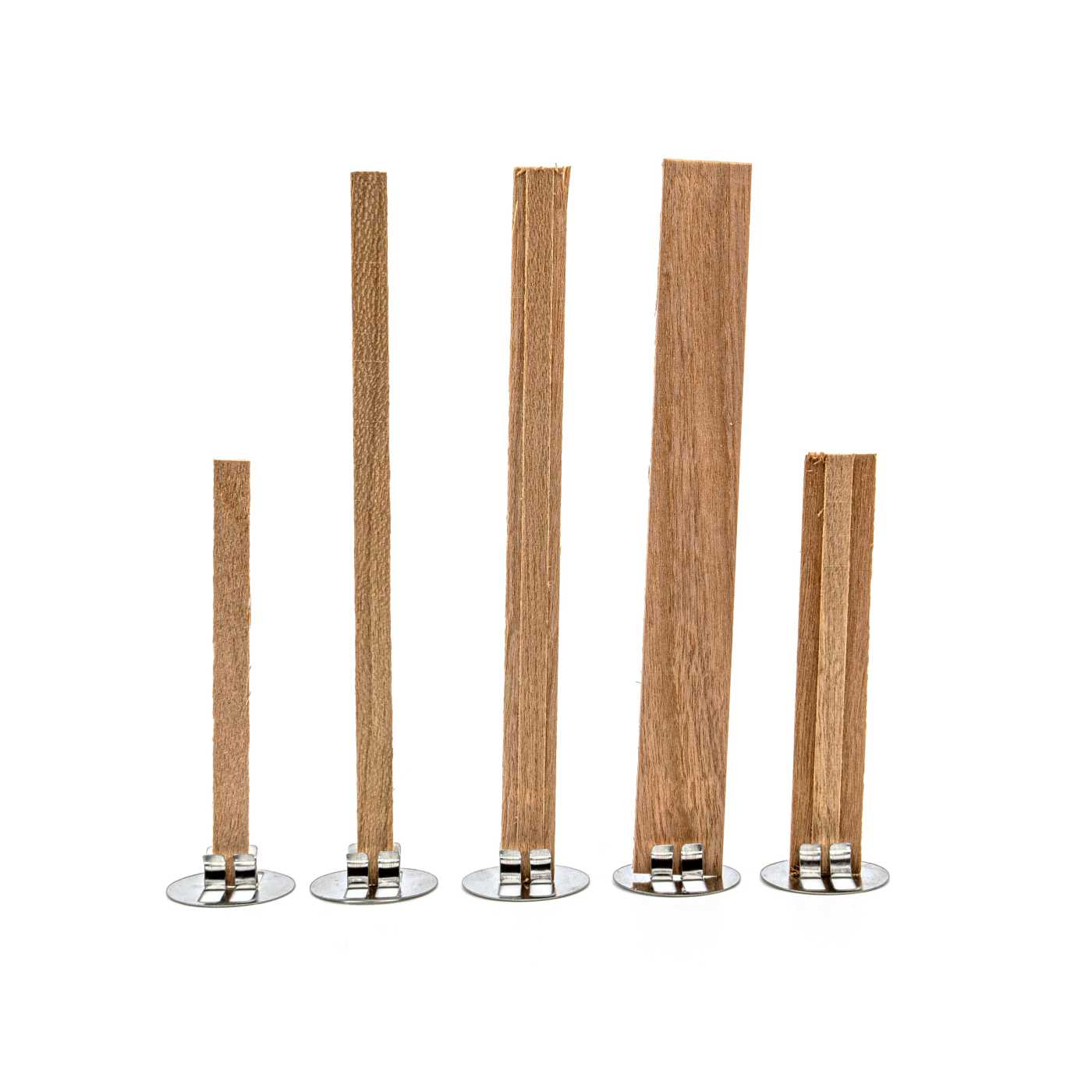
The Wooden Wick Booster is a flat container candle wick that crackles when burning, much like wood in a fireplace. It differs from a plain wooden wick by an reinforcing layer on the lamella.
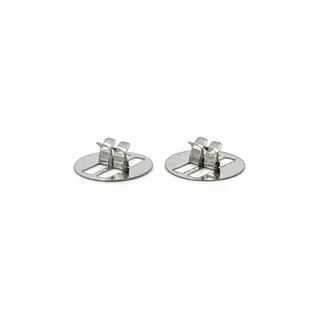
Sold as a complete set. Each pack contains 100 wicks, each with a round metal sustainer that holds the wick upright on the bottom of the container.
What makes the Booster wick interesting
- Crackling when burning – the wick belongs to the crackling Booster series. Wood is a natural material, so individual wicks may vary slightly in grain and crackling intensity.
- Lamella thickness .04 – the manufacturer's designation indicates the wood thickness. A higher number means a thicker lamella.
- Sustainer included – the metal sustainer with a circular base holds the wick in a vertical position both during wax pouring and while burning.
- Certified wood – wicks are manufactured in the USA. The manufacturer states that the material is natural, allergen-free and biodegradable.
How to choose the right wick for your container and wax
The most important factor is the inner diameter of the container, followed by the wax type, fragrance load and dye. The same wick burns differently in each wax, so the 15.9 mm width should always be verified with a test burn.
A correctly chosen wick will achieve a full melt pool across the entire diameter of the container while keeping the flame calm and smoke-free. If only a small pool forms around the wick, the wick is too weak for that container. A tall, restless flame, soot and an excessively hot container indicate the opposite — the wick is too strong.
Before producing a larger batch it is worth making a test candle with exactly the wax, fragrance and dye that will go into production. The candle should be assessed only after the wax has cured and after at least two or three burns, as the first light does not reveal the full behaviour of the wick.
Candle-making process
Insert the wick into the slot of the sustainer and glue the sustainer to the centre of a clean, dry container bottom using a wick sticker or a drop of melted wax. The wax is then poured around the wick. The sustainer keeps the wick from leaning during pouring; for taller containers a wick centring tool is also helpful.
The wick length has enough margin for taller containers too. Once the wax has set, trim the wick close to the surface. Sharp pliers or wick trimmers are sufficient; the cut should be straight.
Good to know
- Wick length – an excessively long wick is a common cause of a weak flame and extinguishing.
- Charred edge – remove it before each subsequent lighting. It can simply be broken off with fingers or trimmed.
- First burn – should last until the entire surface has melted. This prevents the candle from tunnelling afterwards.
- Fragrance and dye – a high fragrance oil load and certain dyes slow down burning.
A burning candle should never be left unattended and the container must be suitable for candle making.
Frequently asked questions
How does the Wooden Wick Booster differ from a plain wooden wick?
The Wooden Wick Booster has an additional reinforcing layer on the lamella compared to a plain wooden wick. It belongs to the crackling series, so it produces the characteristic crackling sound of wood while burning. This variant has a width of 15.9 mm and a lamella thickness of .04. Whether this combination suits a particular container and wax is best determined by a test burn.
What does the .04 designation on a wooden wick mean?
The .04 designation indicates the thickness of the wooden lamella according to the manufacturer's coding. A higher number means a thicker lamella. Thickness is the second parameter, alongside width, by which wooden wicks are differentiated, so it is worth noting both when selecting a wick and when reordering. Suitability for a specific candle is confirmed by a test burn with the final formulation.
What is included in a pack of Wooden Wick Booster 15.9 mm?
The pack contains 100 Booster wooden wicks with a width of 15.9 mm and one round metal sustainer for each wick. The sustainer is made of steel, has a circular base and holds the wick upright on the bottom of the container. The wick and sustainer form a complete set, so all that is needed to secure the wick in the container is a wick sticker or a drop of melted wax.
How is the wooden wick secured in the metal sustainer?
The wooden wick is inserted by its lower end into the slot of the metal sustainer, which holds it in a vertical position. The sustainer is then glued to the centre of the container bottom using a wick sticker or a drop of melted wax. The bottom should be clean and dry so that the sustainer does not come loose when hot wax is poured.
Why does the wooden wick keep going out and how can it be fixed?
The most common reason a wooden wick extinguishes is that it is too long or has a charred residue from a previous burn. Trimming the wick and removing the burnt edge usually resolves the issue. If the problem persists, the wick is too weak for the container or wax and a larger width should be tried, or the fragrance oil load should be reduced.




 100× Wooden wick, .04 Booster crackling, 15.9 mmDrevený knôt, .04 Booster praskajúci, 15,9 mm ZASOBA