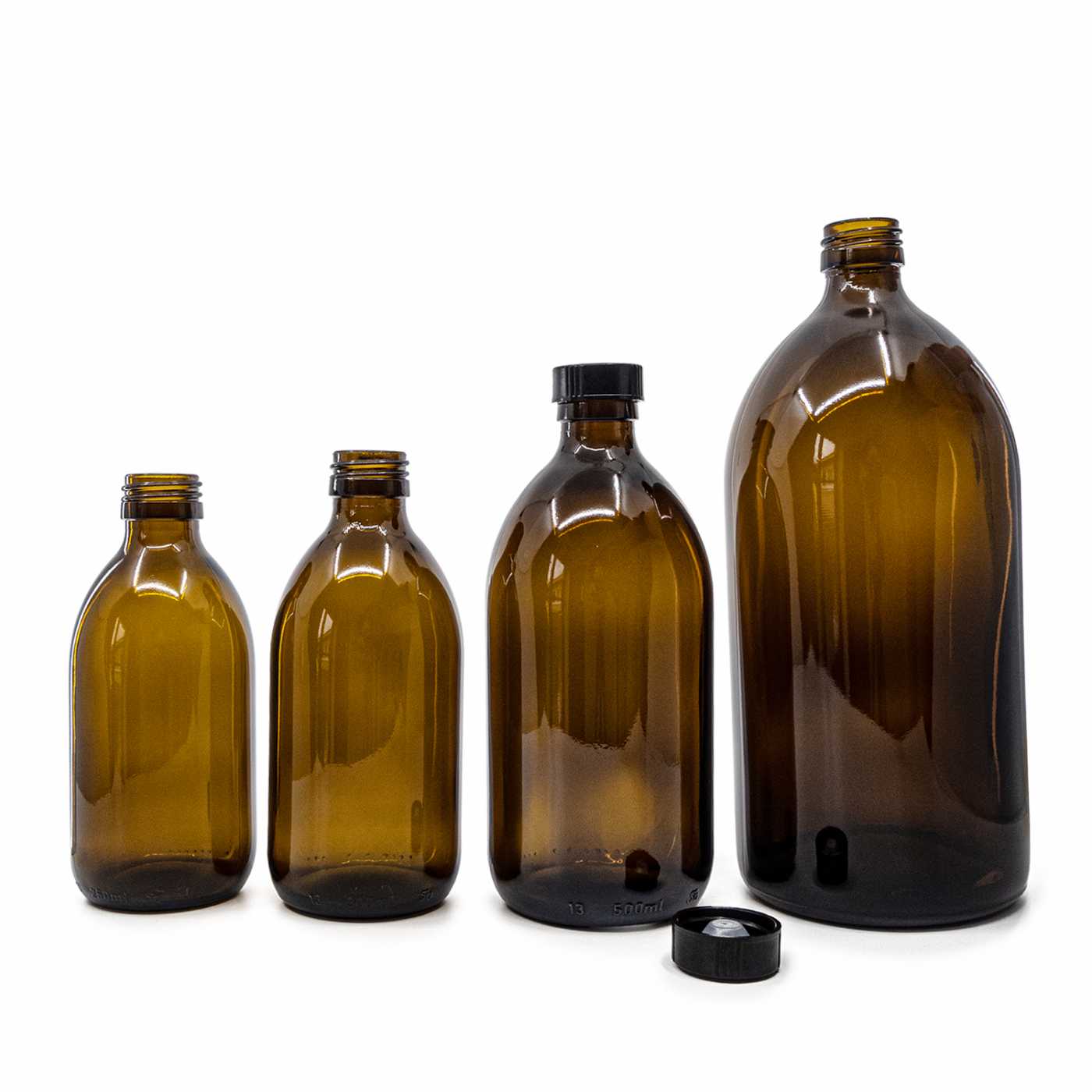
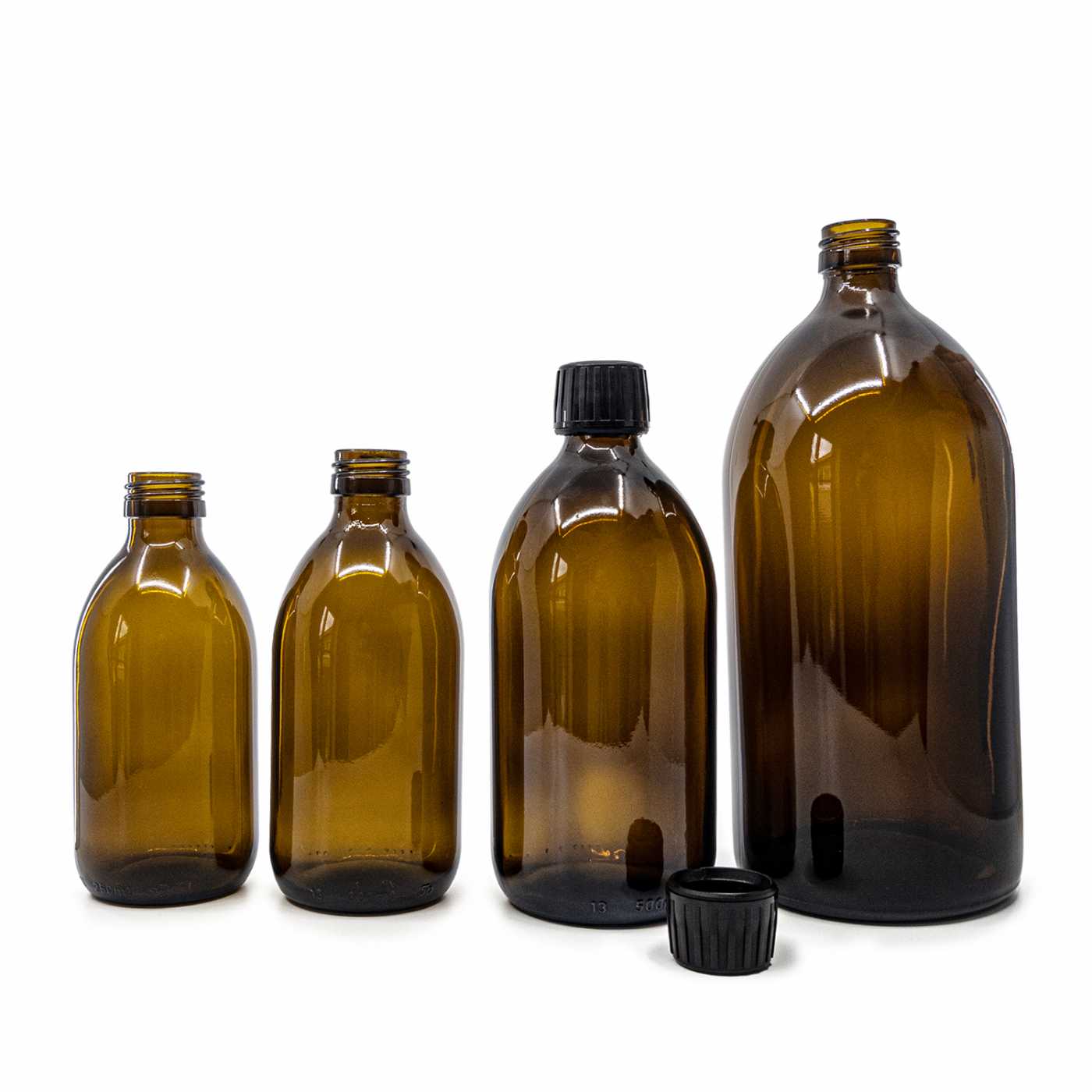
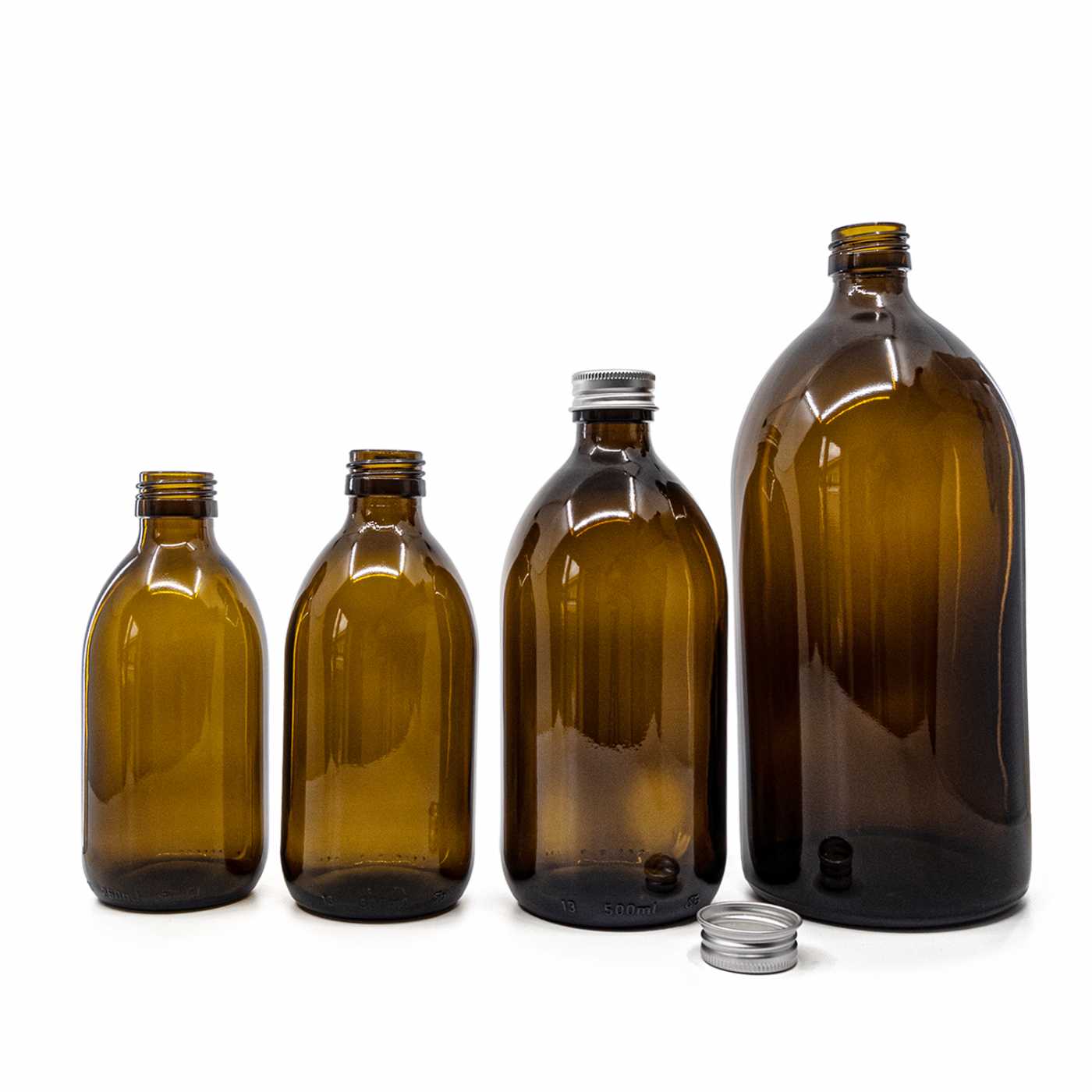
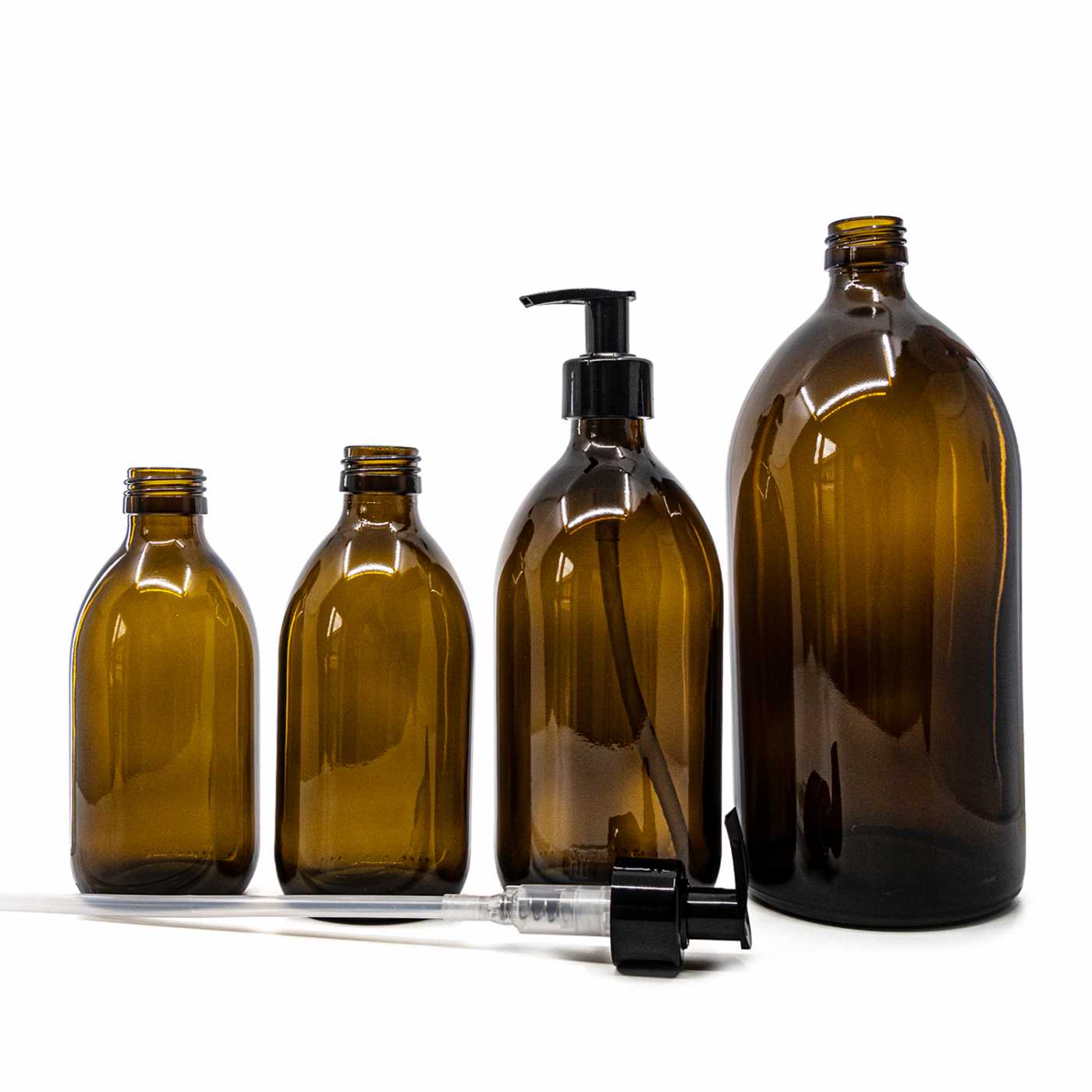
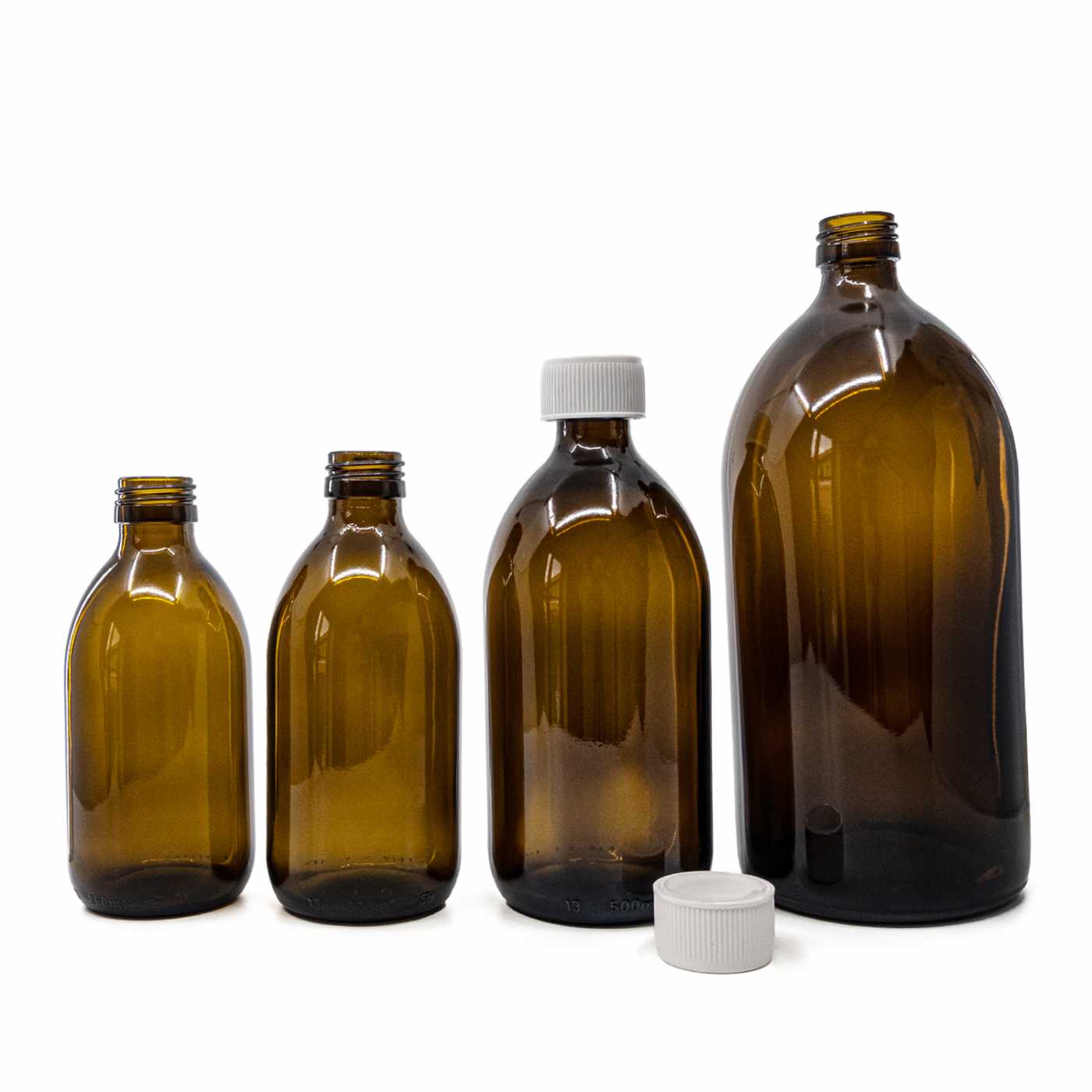
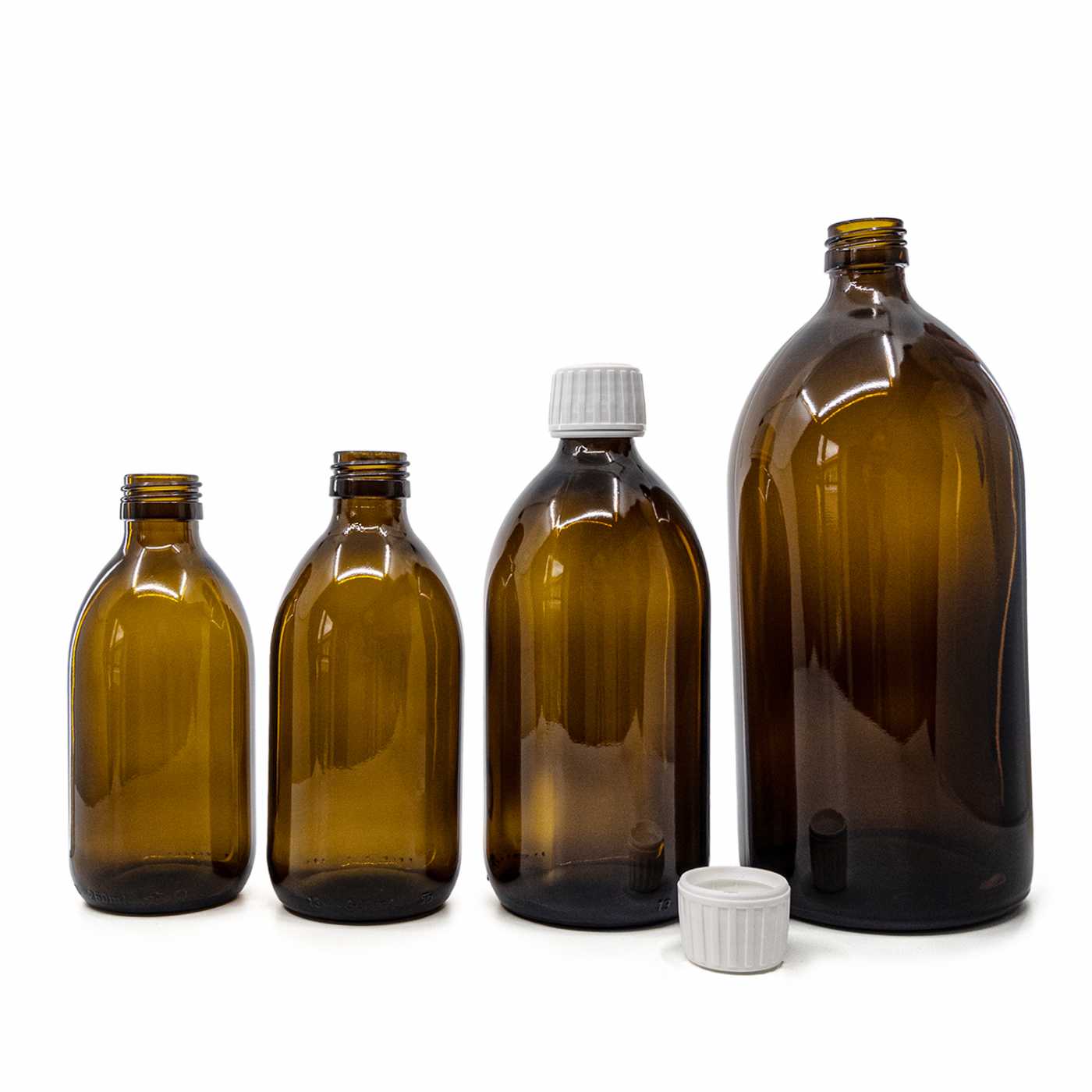
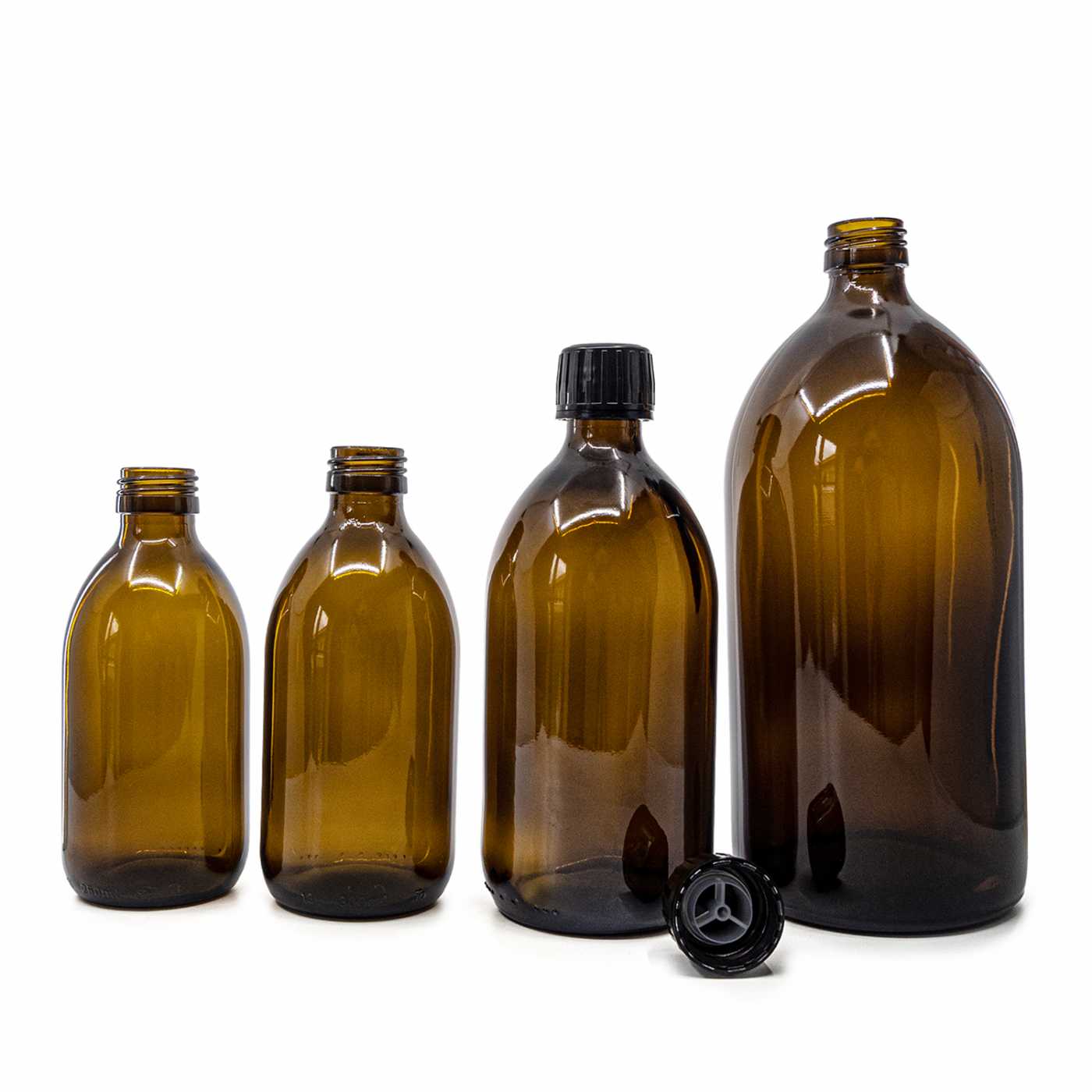
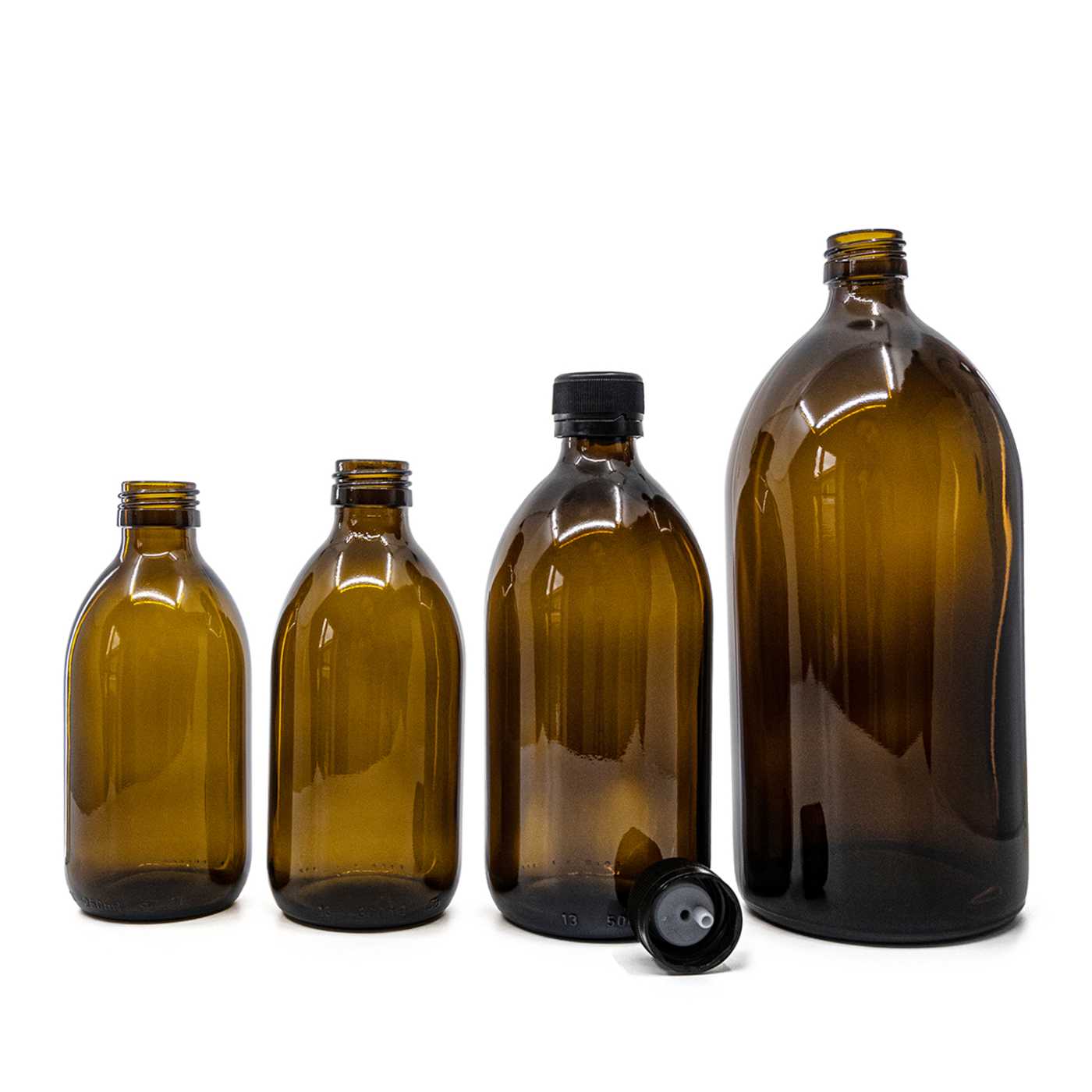
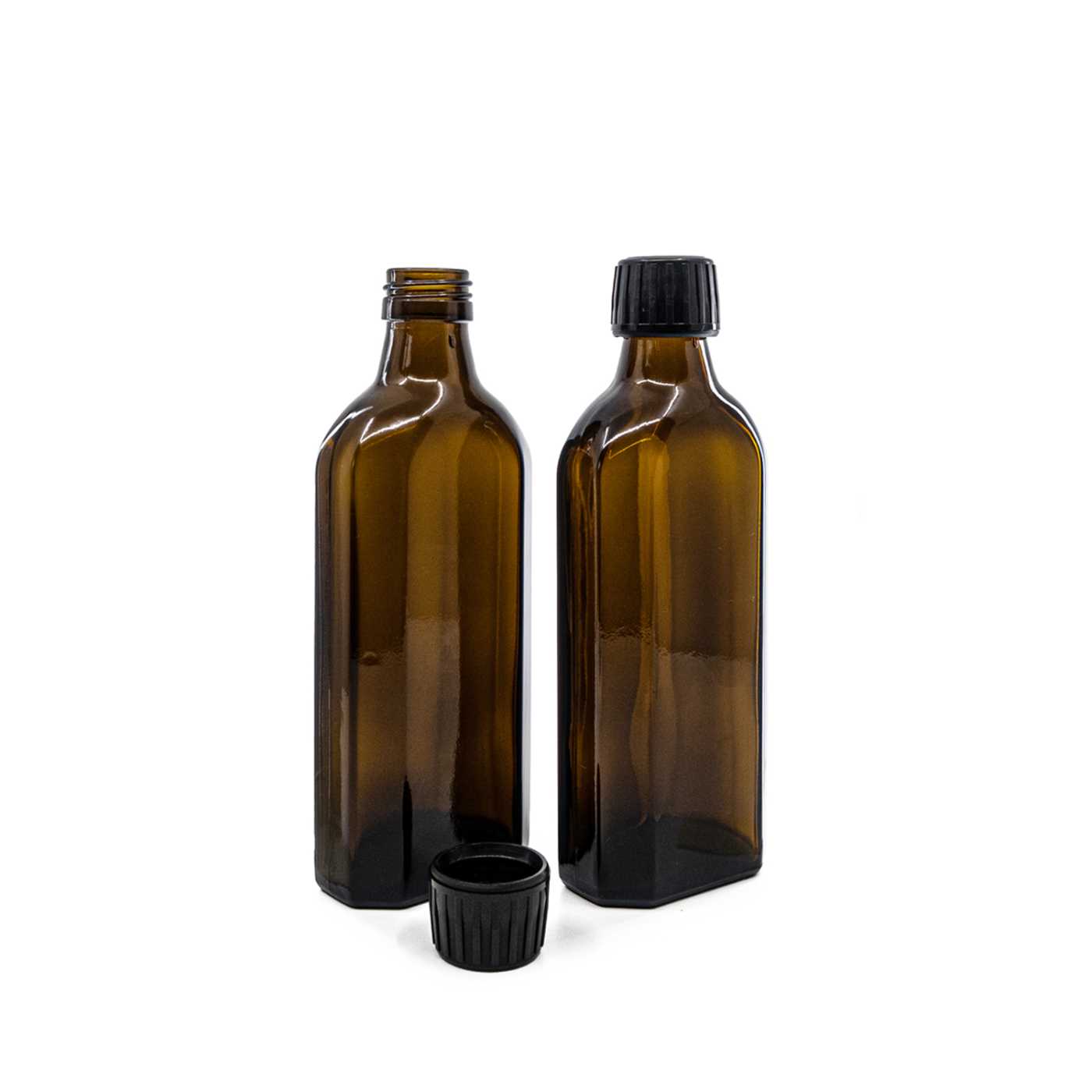
Glass bottle, medicine bottle with black cap, 1 l is a ready combination of a brown glass bottle and a tall black cap, supplied assembled and ready for filling. It is suitable for larger volumes of cosmetics that need to be protected from light and securely sealed: base and massage oils, hydrolats, tonics, face lotions, stock packaging of serums before filling into smaller bottles, liquid soaps, shampoos or cleaning concentrate solutions.
Brown glass reduces light transmission, thereby slowing down the oxidation of oils and the fading of sensitive ingredients, which occurs more quickly in a clear bottle. Glass also does not react with the contents, does not absorb scent or colour, and can be washed repeatedly. The cap made of softer plastic (LDPE) seats well on the thread and keeps the bottle reliably sealed even during handling. The set is declared as suitable for contact with cosmetic products; the declaration of conformity is available with the product.
What the set is suitable for
- Stock packaging – a volume of 1 l is practical for storing a finished batch of oil, hydrolat or tonic, from which smaller retail containers are filled on an ongoing basis.
- Oils and oil blends – brown glass protects unsaturated oils from light, which accelerates yellowing and the development of a rancid odour.
- Aqueous and alcoholic contents – glass will not alter hydrolats, tonics, tinctures and alcohol extracts. With a higher proportion of essential oils or solvents, we recommend testing the behaviour of the plastic cap after prolonged contact.
- Liquid soaps and shampoos – thicker liquid products pour smoothly from a bottle with a 28 mm neck, without splashing.
- Manufacturing and salons – the uniform medicine bottle shape is easy to store on shelves and label with a sticker.
Filling and volume
With a bottle, a distinction is made between nominal volume and total volume to the brim. The nominal volume is the quantity for which the container is designed under normal filling conditions. The total volume is the physical capacity of the bottle up to the neck. The difference between them provides a reserve for the closure and for the expansion of the contents with temperature changes, for example when oil brought from a cool environment warms up to room temperature. The bottle should therefore be filled to the nominal volume, not to the brim. Both values are listed in the parameters.
When filling at elevated temperature, for example with a still-warm extract or melted oil base, allow the contents to cool to at least room temperature first. Tighten the cap only after the contents have completely cooled; otherwise, steam will condense under the cap and a vacuum will form inside the bottle.
Closure and sealing
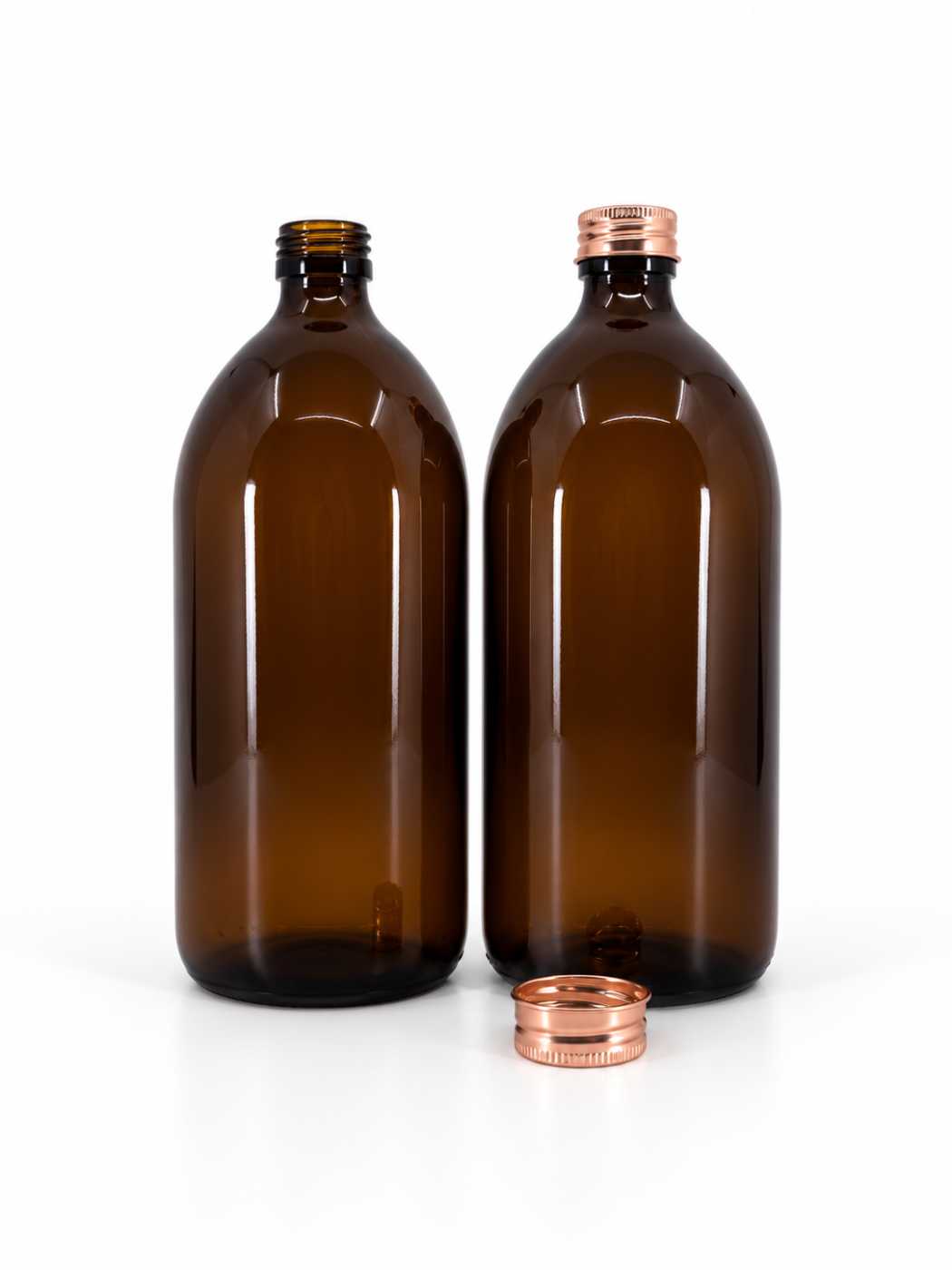
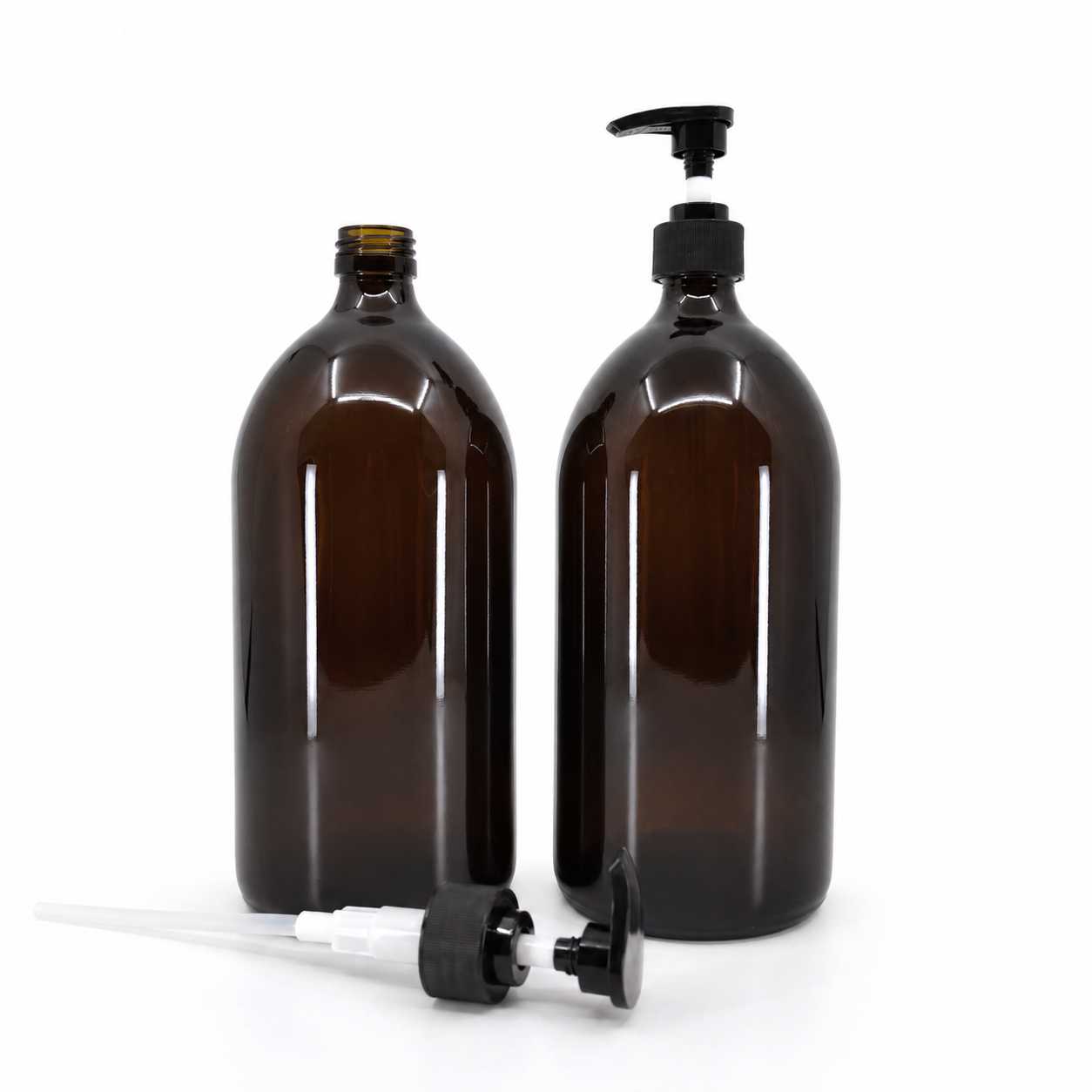
The cap has a thread matching the bottle neck, so the set does not need to be matched separately. If you wish to use the bottle with a different dispensing method, closures with the same neck type (listed in the parameters) and ready-made combinations are available in the Handymade range. With a custom combination, we recommend testing the seal, dispensing and behaviour of the container with the specific formulation.
The food contact certificate applies to the glass bottle alone. The cap does not carry such a declaration; therefore the set as a whole is intended for cosmetic products, not for food packaging.
Good to know
- Preparation before first filling – wash the bottle and cap, rinse, disinfect with isopropyl alcohol or ethanol and allow to dry completely. Residual water in an oil-based product promotes microbial growth and reduces stability.
- Repeated use – glass withstands repeated washing and disinfection without changes in properties. Inspect the cap before each new filling. If the thread is deformed or the plastic has softened after contact with a solvent, replace it.
- Glass and heat – the bottle is not intended for direct heating on a cooker or for sudden temperature changes. Hot contents into cold glass or cold water onto hot glass can cause cracking.
- Weight of a full bottle – a litre of contents in glass is heavier than in plastic. Bear this in mind when storing on shelves and when packing shipments, where the bottle must be well padded and secured.
- Labelling – the flat body of the medicine bottle is easy to label. Apply the label to a dry and degreased surface.
- Recycling – the glass bottle goes into glass recycling; the plastic cap should be unscrewed before disposal and sorted separately as plastic.
Frequently asked questions
Does a 1 l brown glass bottle fully protect the contents from light?
Not completely, but significantly. Brown glass blocks a large portion of the light that accelerates the oxidation of oils and the breakdown of sensitive ingredients, so the contents remain more stable than in a clear bottle. For complete protection, it is advisable to store the bottle in a cupboard or away from direct daylight, especially when storing stock oils for longer periods.
Is the brown glass medicine bottle set with a black cap suitable for food?
The set as a whole is not. The glass bottle alone holds a food contact certificate, but the plastic cap does not carry such a declaration; therefore the complete combination is intended for cosmetic products. For cosmetic use, both components carry the declaration and the documentation is available with the product.
How much can be filled into a 1 l glass bottle?
The bottle is filled to the nominal volume, i.e. 1 l. The physical volume up to the neck is greater, but this difference serves as a reserve for the closure and for the expansion of the contents with temperature changes. When filled right to the brim, the contents may be pushed out onto the thread after tightening the cap, leaving the outside of the bottle greasy or sticky.
Is the 1 l glass medicine bottle suitable for hydrolats and alcoholic tinctures?
Yes, glass is suitable for both aqueous and alcoholic contents, as it does not react with them and does not absorb scent. With aqueous products without preservatives, thorough disinfection of the bottle before filling is important. With tinctures containing a high proportion of alcohol or essential oils, we recommend checking the plastic cap after a few days to ensure it has not softened and still seals.
How is a glass bottle with a cap cleaned before reuse?
Wash the glass bottle with warm water and dish soap, rinse thoroughly and disinfect with isopropyl alcohol or ethanol. Hot water with dish soap works best for removing oil residues, or brief soaking. Wash the cap with lukewarm water, as hot water may deform the soft plastic. Allow both parts to dry completely before refilling.