


AMBER GLASS BOTTLES DIN28
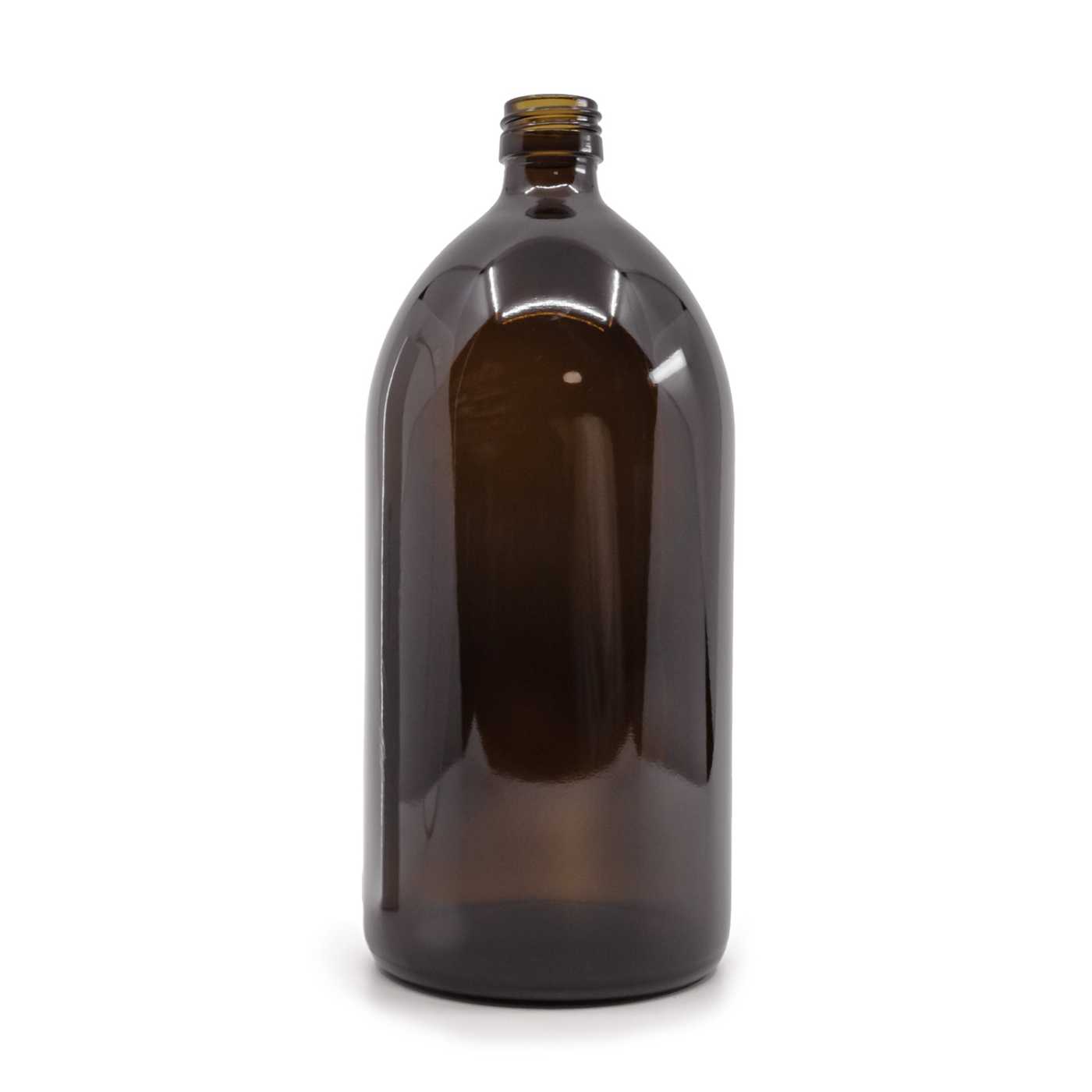
Glass bottle, apothecary, PP28S, 1000 ml
Pack size50 ml100 ml150 ml200 ml250 ml300 ml480 ml500 ml1 l
A one-litre amber glass bottle with a PP28S neck finish for storing bulk supplies of raw materials and intermediates that need light protection – plant and macerated oils, tinctures, hydrosols and finished tonics. full description
Lowest price in the last 30 days: €2.99
Total for 1 pcs: €2.99
Add 13 more pcs and the price drops to €2.74/pc.
Product description
A one-litre amber glass bottle with a PP28S neck finish for storing bulk supplies of raw materials and intermediates that need light protection – plant and macerated oils, tinctures, hydrosols and finished tonics. Amber glass absorbs UV radiation and part of the visible spectrum, so the contents oxidise more slowly and retain their scent and colour for longer. It is a storage bottle for production and home use, from which smaller containers are filled later.
Glass is chemically inert, making it suitable for contents with a higher proportion of alcohol or essential oils, where plastic containers may soften or absorb odours over time. The bottle is certified for direct contact with both food and cosmetics, so it can be used equally for home-made oils, syrups or herbal infusions and for cosmetic raw materials.
Why this bottle is practical
- Light protection – amber glass filters out UV radiation, which accelerates the oxidation of oils and the breakdown of sensitive active ingredients. Contents retain their scent, colour and efficacy longer compared to a clear container.
- Chemical resistance of glass – does not react with alcohol, acids or essential oils, does not transmit odours and does not stain from the contents. Also suitable for tinctures and perfume concentrates.
- Storage volume – one litre is a practical size for storing base oils, hydrosols or finished bases, from which smaller bottles are then filled.
- Standard PP28S neck finish – a common neck type with a wide range of closures available, from simple caps to dispensing variants.
- Reusability – glass can be thoroughly washed and disinfected, so the bottle can be used for many cycles without loss of properties.
Nominal and total volume
Nominal volume is the quantity the bottle is designed for under normal filling conditions. Total brim-full volume is the physical capacity up to the neck opening and is larger. The difference provides a margin for the closure, for expansion of the contents with temperature changes, and for the headspace above the liquid. The bottle should be filled to the nominal volume, not to the brim – filling right up to the neck may cause the contents to spill when the cap is tightened or to push past the seal when the temperature rises.
Suitable uses
- Vegetable and macerated oils – oxidation-sensitive oils (linseed, rosehip, hemp, cranberry) and macerates, where dark glass slows yellowing and the development of rancid odour.
- Hydrosols and tonics – aqueous contents into which glass releases no substances and does not alter their scent.
- Tinctures, alcoholic extracts and perfume blends – alcohol-based contents that could damage certain plastics over time.
- Finished bases and intermediates – liquid soap, shampoo base, cleansing gels or massage oils prepared in larger quantities for later filling.
- Food use – home-made oils, syrups, vinegars or herbal infusions, thanks to the food-contact certification.
For thick emulsions (creams, heavy body milks) the narrow-neck bottle is less suitable – the contents are difficult to dispense and pour. For thick textures, wide-mouth jars and pots are more appropriate.
Choosing a closure
Closures are selected according to the neck type listed in the specifications. Closures with the matching neck type and ready-made bottle-and-closure combinations are available in the Handymade range. For a custom combination, we recommend doing a test fill and checking the seal on its side and upside down, the dispensing method, and the behaviour of the packaging with the specific formulation. Contents containing alcohol or essential oils place higher demands on the closure seal – it must be resistant to them, otherwise it may harden or allow the scent to escape over time.
Fill oxidation-prone oils to the nominal volume without a large headspace. After removing most of the contents, transfer the remainder to a smaller bottle – less contact with air slows yellowing and changes in scent.
Good to know
Preparation before first use. Wash the bottle with warm water before use, optionally disinfect with isopropyl alcohol or ethanol and leave to dry completely with the neck facing down. Residual moisture in an oil-based or anhydrous content promotes microbial growth.
Glass and heat. Sudden temperature changes (pouring hot contents into a cold bottle, rinsing with cold water immediately after hot) can damage the glass. Allow warm contents to cool to a temperature close to that of the bottle before filling. A full one-litre bottle is heavy and will break if dropped – this should be taken into account when handling and storing.
Labelling. The straight cylindrical body of the bottle provides ample space for a label. Self-adhesive labels adhere well to glass; degrease the surface before applying.
Recycling. Glass goes into the glass collection bin sorted by colour. Before disposal, simply empty the bottle and remove the closure.
Do not fill the bottle with hot contents and do not place it in the freezer when full – aqueous contents expand when freezing and the glass may crack.
Frequently asked questions
Parameters
- Product color
- Amber
- Country of origin
- European Union
- Nominal capacity
- 1000
- Brimful capacity
- 1065 ml
- Diameter
- 96,5 mm
- Thread type
- PP28S
- Height
- 225,1 mm
- Product material
- Glass
Product documentation
Verified by customers.
No reviews yet.
Only customers with a delivered order can write reviews.