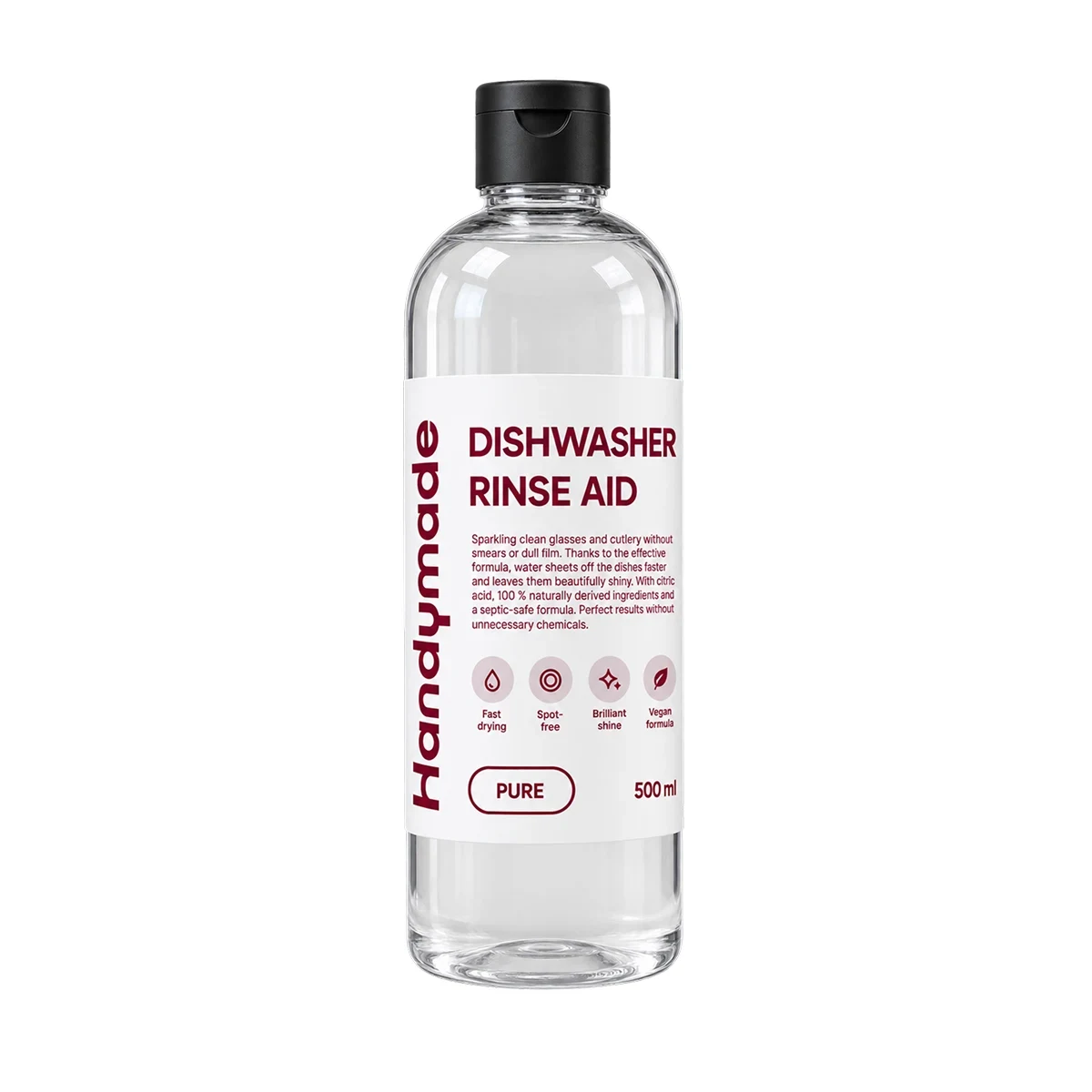
Rinse aid for dishwasher, Pure, 500 ml
Pre-order€3.99(€7.98/l)

CLEANING & WASHING
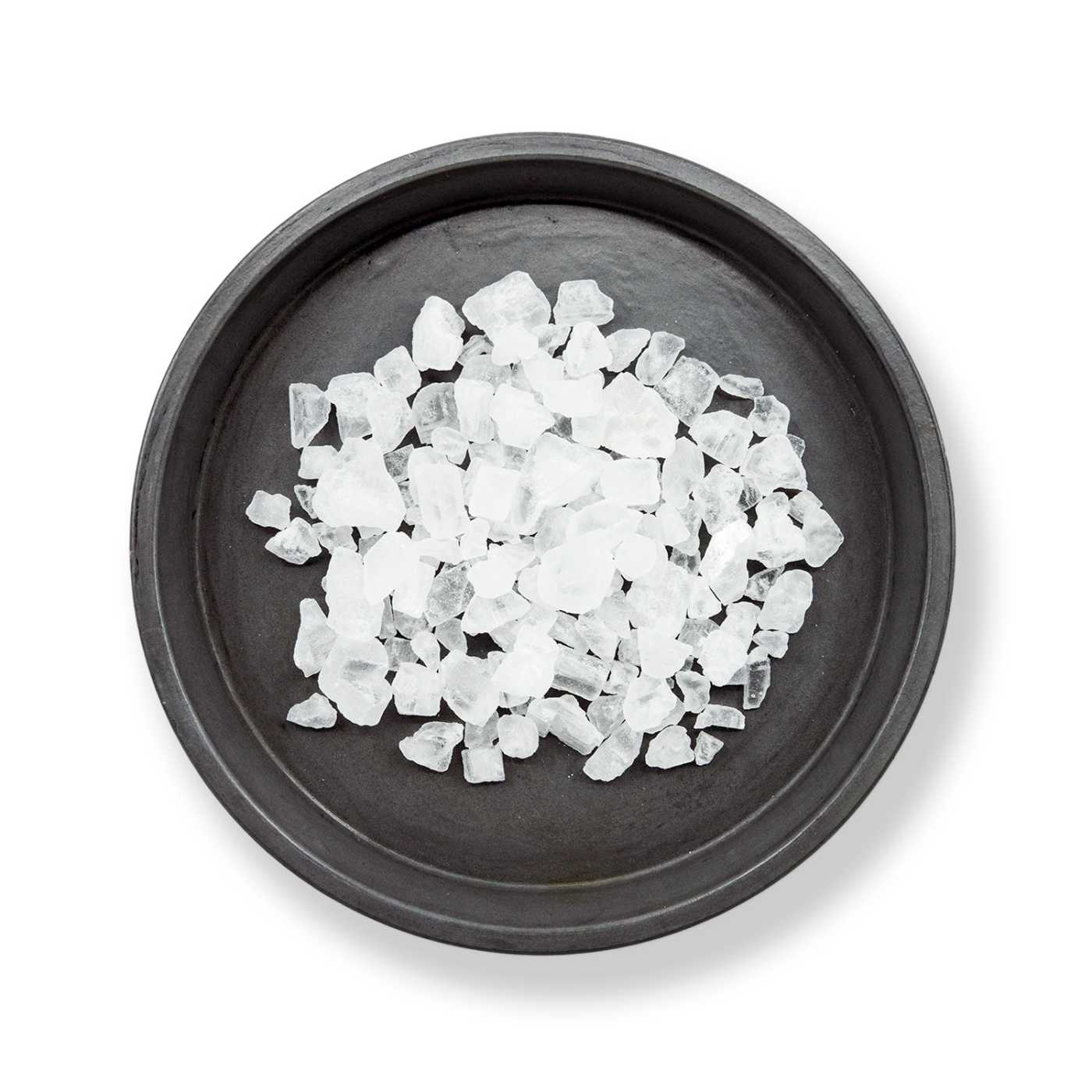
Salt for dishwashers and for drinking water treatment is sodium chloride , which restores the effectiveness of water softeners. It is used in dishwashers and in cation exchange drinking water treatment units . full description
Lowest price in the last 30 days: €2.69
Salt for dishwashers and for drinking water treatment is sodium chloride, which restores the effectiveness of water softeners. It is used in dishwashers and in cation exchange drinking water treatment units. In cosmetic production it serves as a thickener for shampoos, shower gels and liquid soaps, and as the base for bath salts.
Water hardness is caused by calcium and magnesium. A softener, whether in a dishwasher or in a home water treatment unit, captures them on an ion exchange resin (cation exchanger) and exchanges them for sodium. The capacity of the resin is gradually exhausted. A salt solution flushes the captured calcium and magnesium out of the resin, so that it can soften water again.
The salt has the purity this task requires. It contains at least 99.8% sodium chloride, less than 0.06% calcium and less than 0.03% magnesium. Insoluble matter is below 0.1 mg/kg and a 20% solution has a neutral pH.
It meets the standards for salt used to regenerate ion exchangers: EN 973 Type A, DIN 19604 and AFNOR T90-612. It complies with biocide legislation (BPR 528/2012) and the manufacturer is included in the Article 95 list (ECHA).
The raw material is sea salt obtained by crystallisation. At least 70% of the crystals are 5–16 mm in size, and the finer fraction below 2 mm is at most 5%.
At 20 °C, approximately 36 g of salt dissolves in 100 ml of water. It does not dissolve in oils.
Salt thickens surfactant systems with SLES and betaine. It is added at the end of production, usually only after the pH has been adjusted and the mixture has cooled below 40 °C. In formulations it is most often used at around 0.8%:
Large crystals dissolve slowly in a finished gel. For this reason, dissolve them first in part of the water from the formulation and add them to the product as a solution.
Add the salt solution in small portions and check the viscosity after each one. Once the viscosity stops rising, do not add any more salt.
The viscosity of a surfactant system with salt rises only up to a certain limit. After it reaches the maximum, it falls, and an overdosed gel becomes thin again.
Where this maximum lies depends on the composition. Cocamidopropyl Betaine in a system with SLES or ALS/ALES increases the viscosity that can be achieved with salt. Formulations with cocamides, for example PPG-2 Hydroxyethyl Cocamide, reach the maximum at a lower salt content. They need less salt and are overdosed sooner.
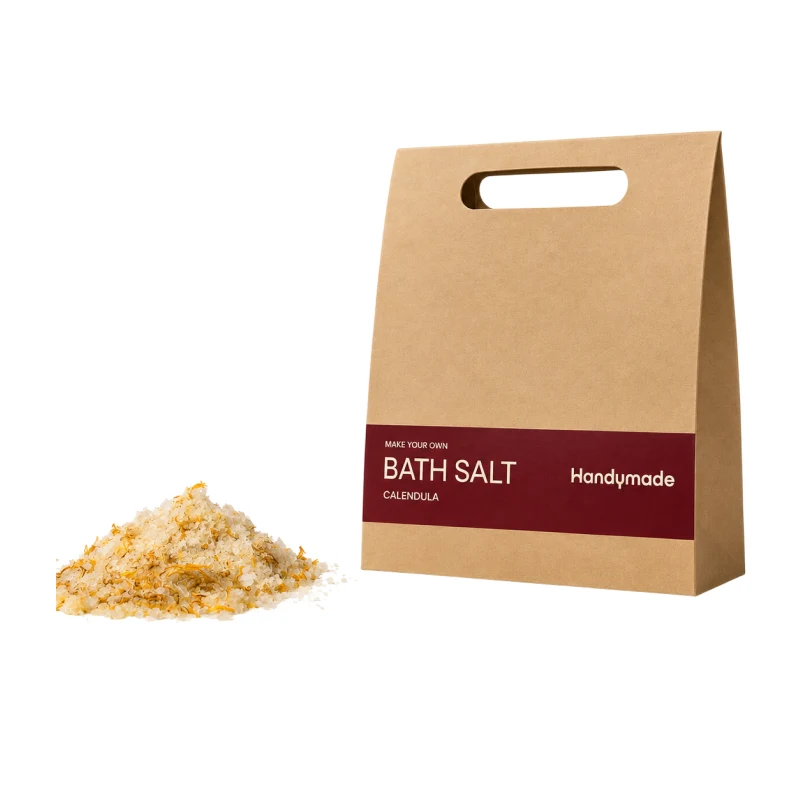
With bath salts, the procedure is the opposite. Oils and fragrances are poured slowly onto the weighed salt while stirring continuously with a spoon or spatula, so that they spread over all the crystals.
Xanthan gum tolerates salt better than most ionic polymers. With a xanthan content below 0.3%, salt may slightly reduce the viscosity, while at higher contents it tends to increase it slightly.
Salt solutions corrode base metals. For weighing, mixing and storing solutions and finished products containing salt, use stainless steel, glass or plastic, not iron or aluminium tools or containers.
The salt is sold as technical grade. It is not classified as hazardous under the CLP Regulation.