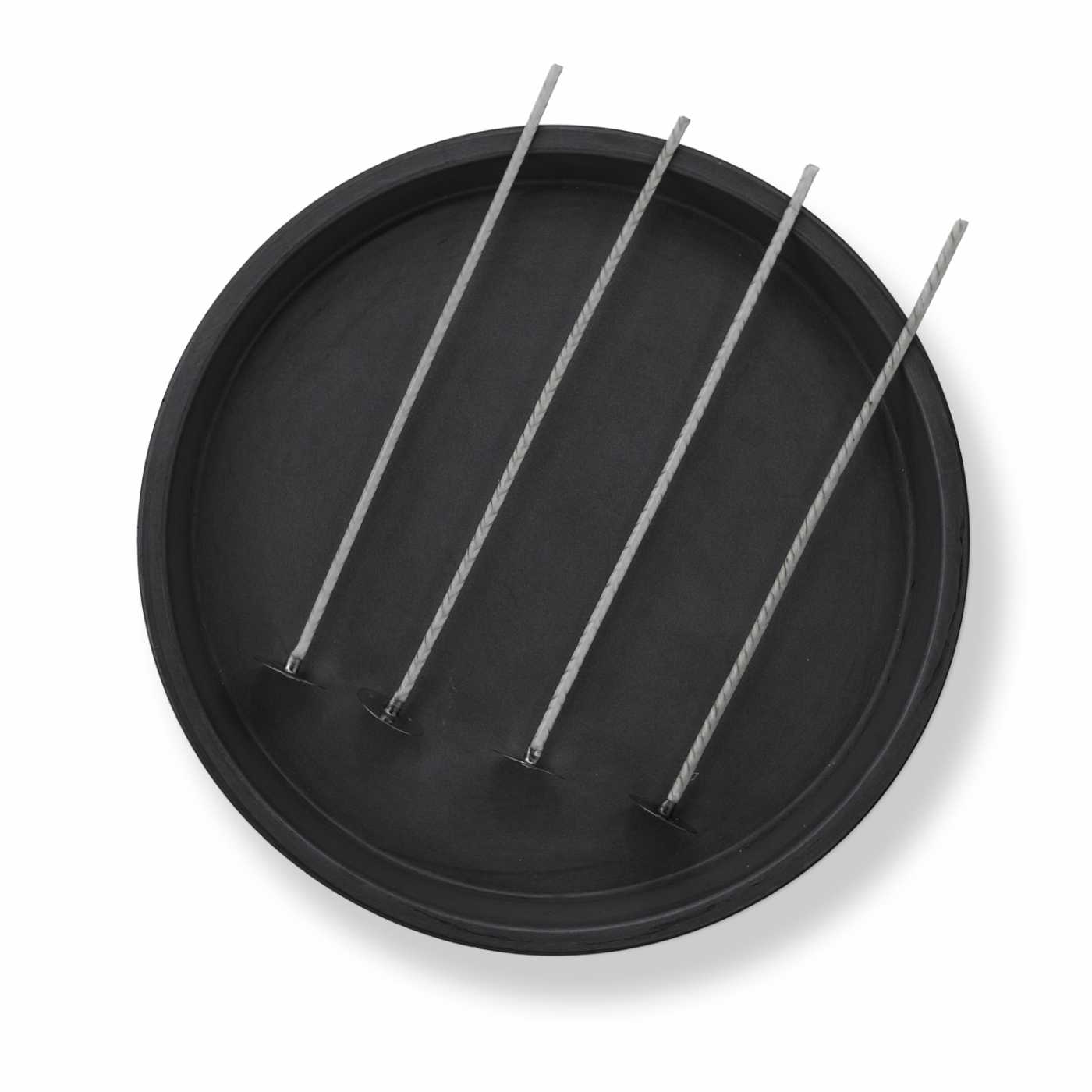
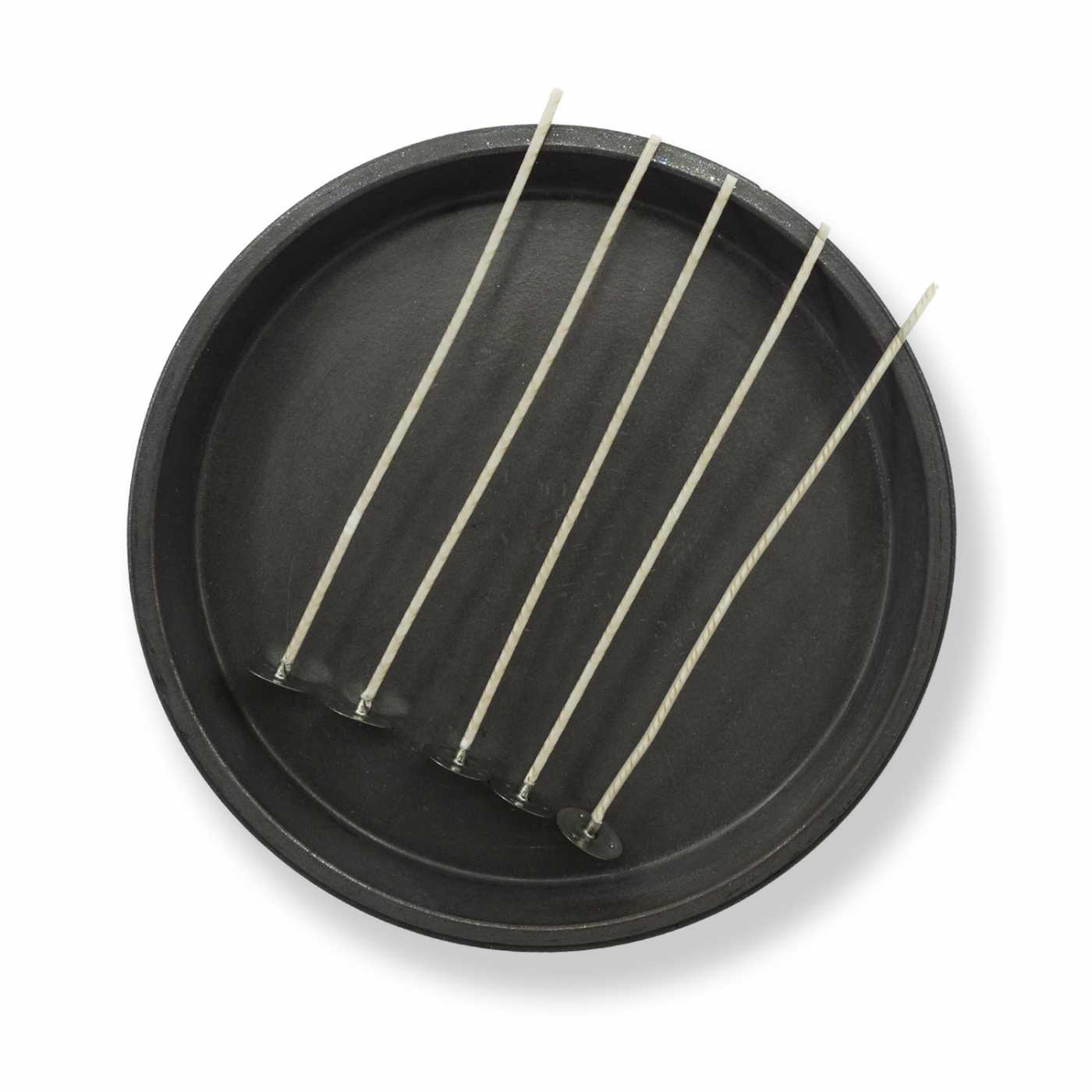
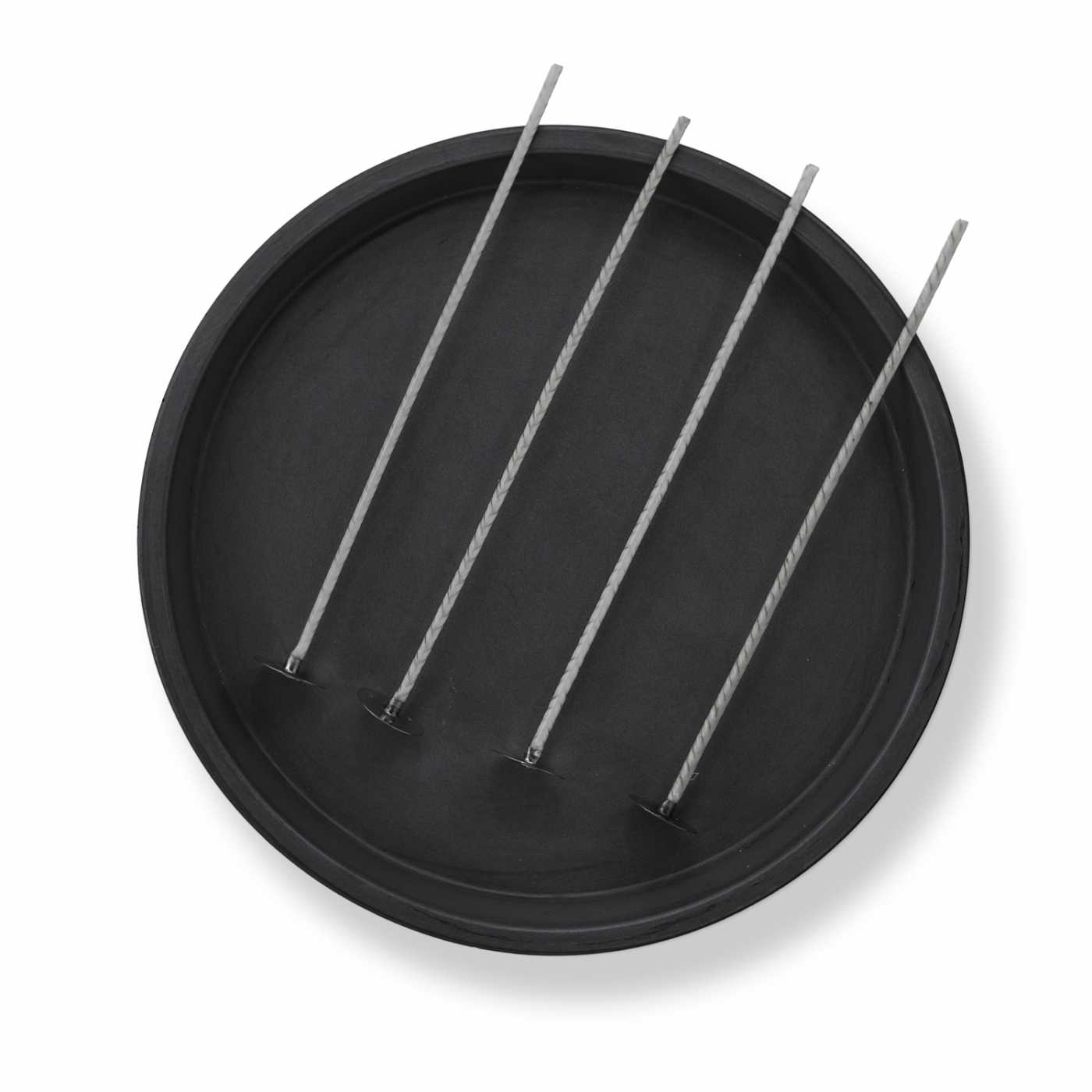
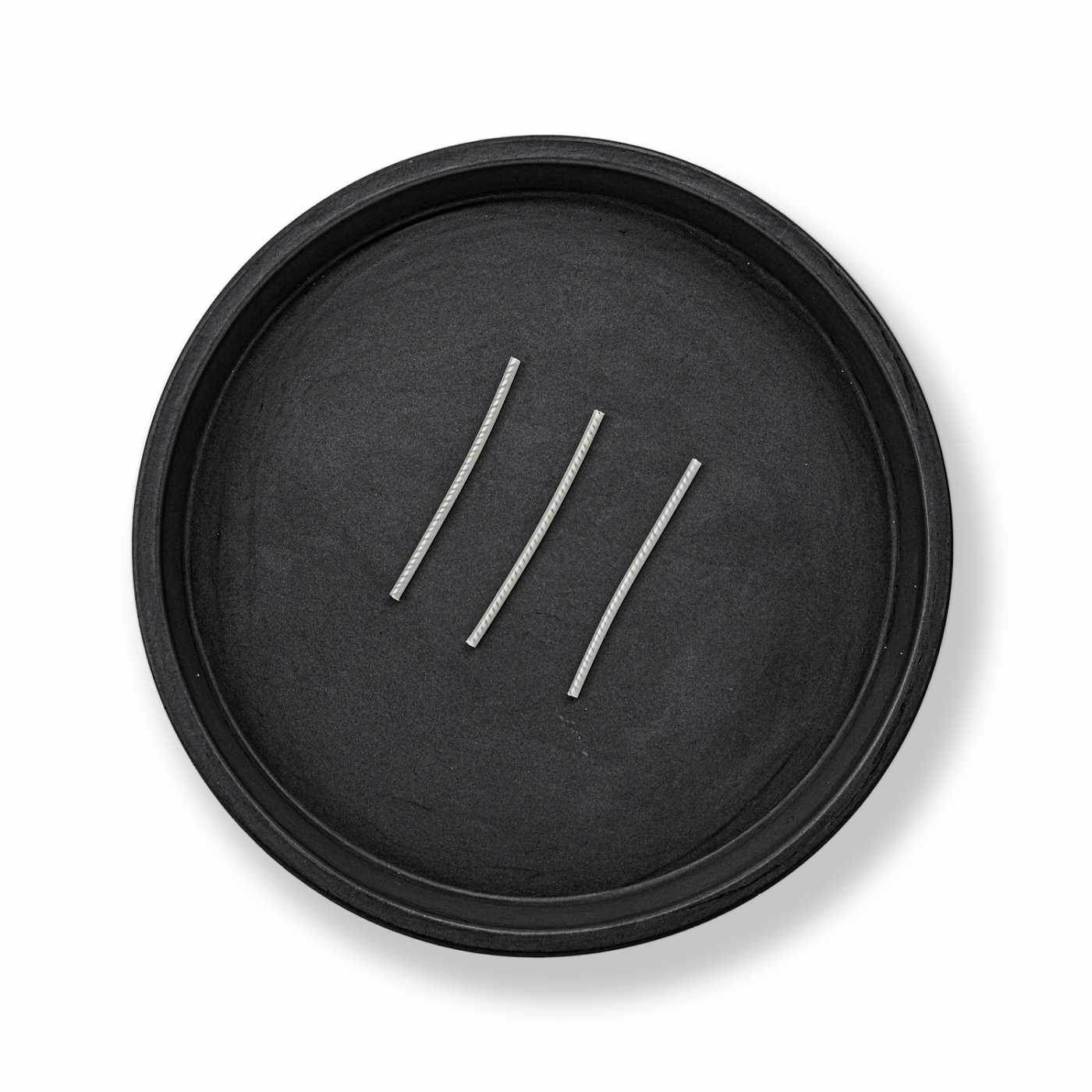
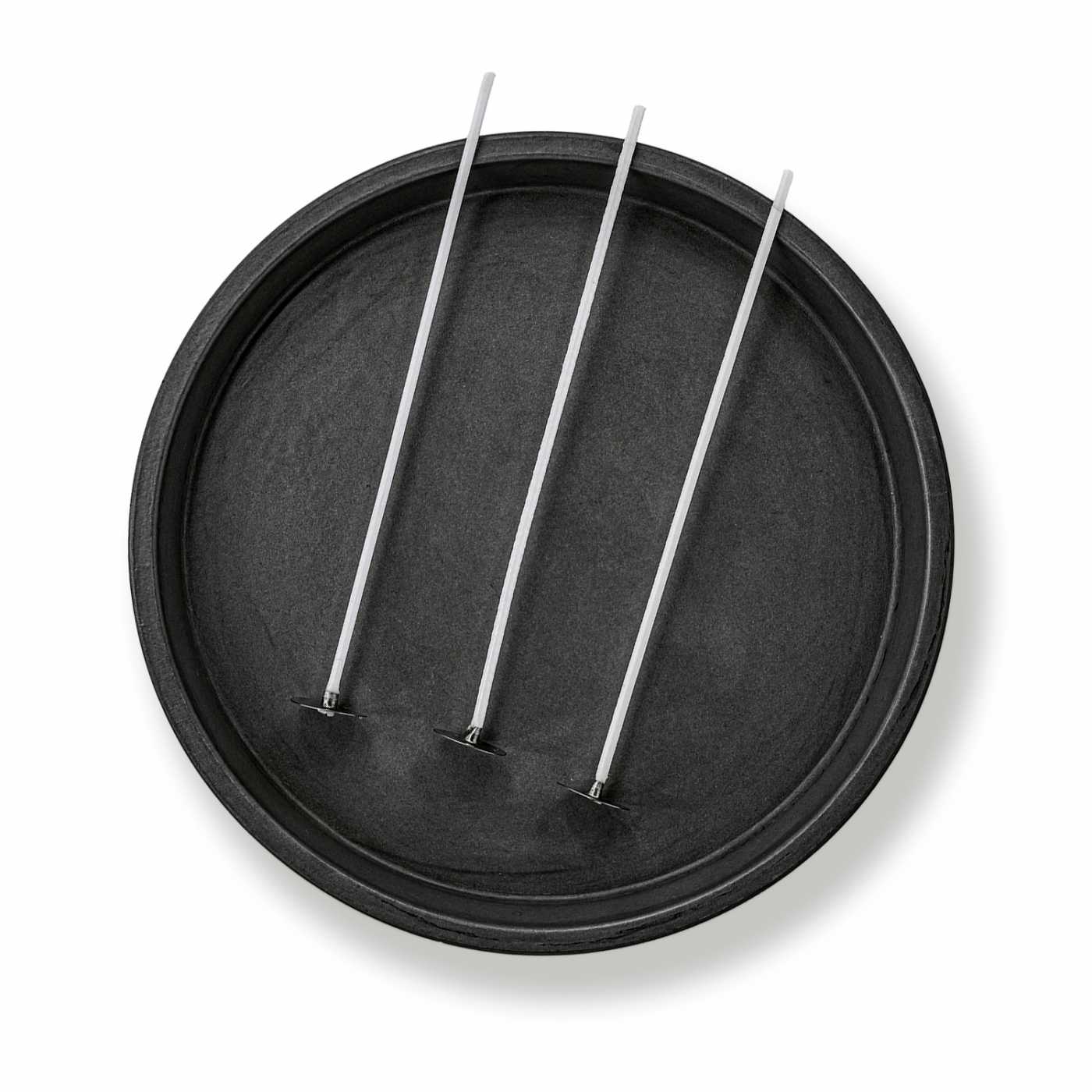
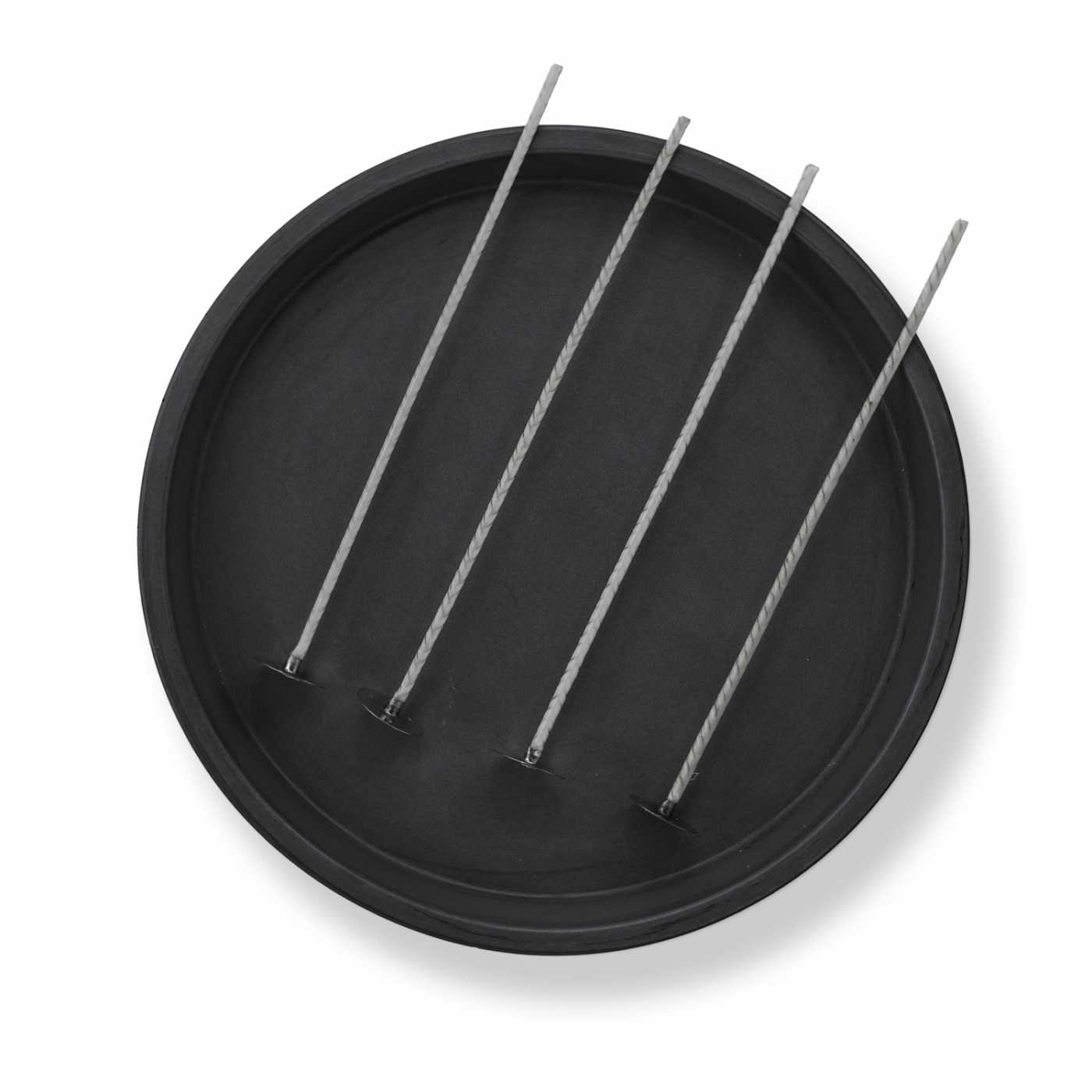
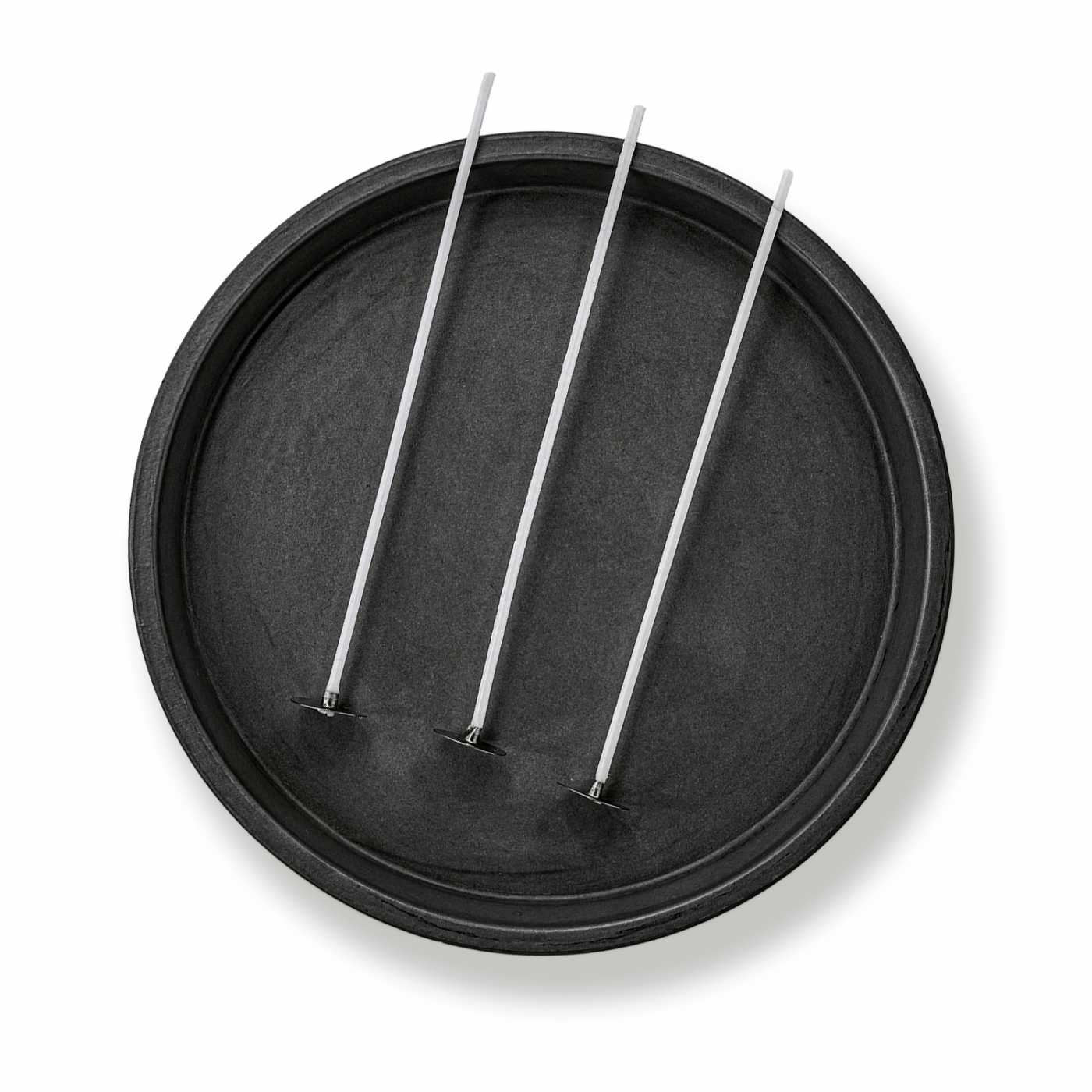
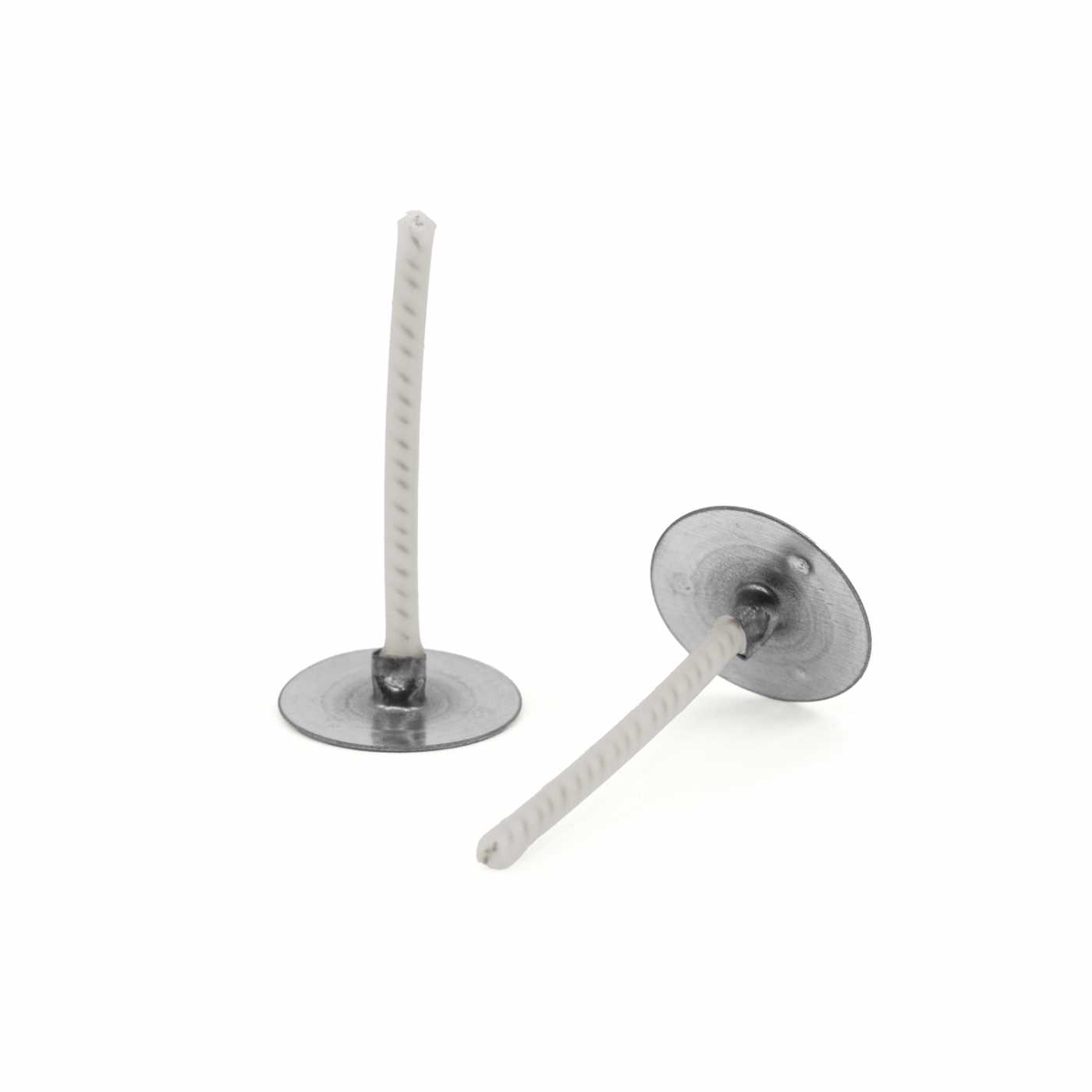
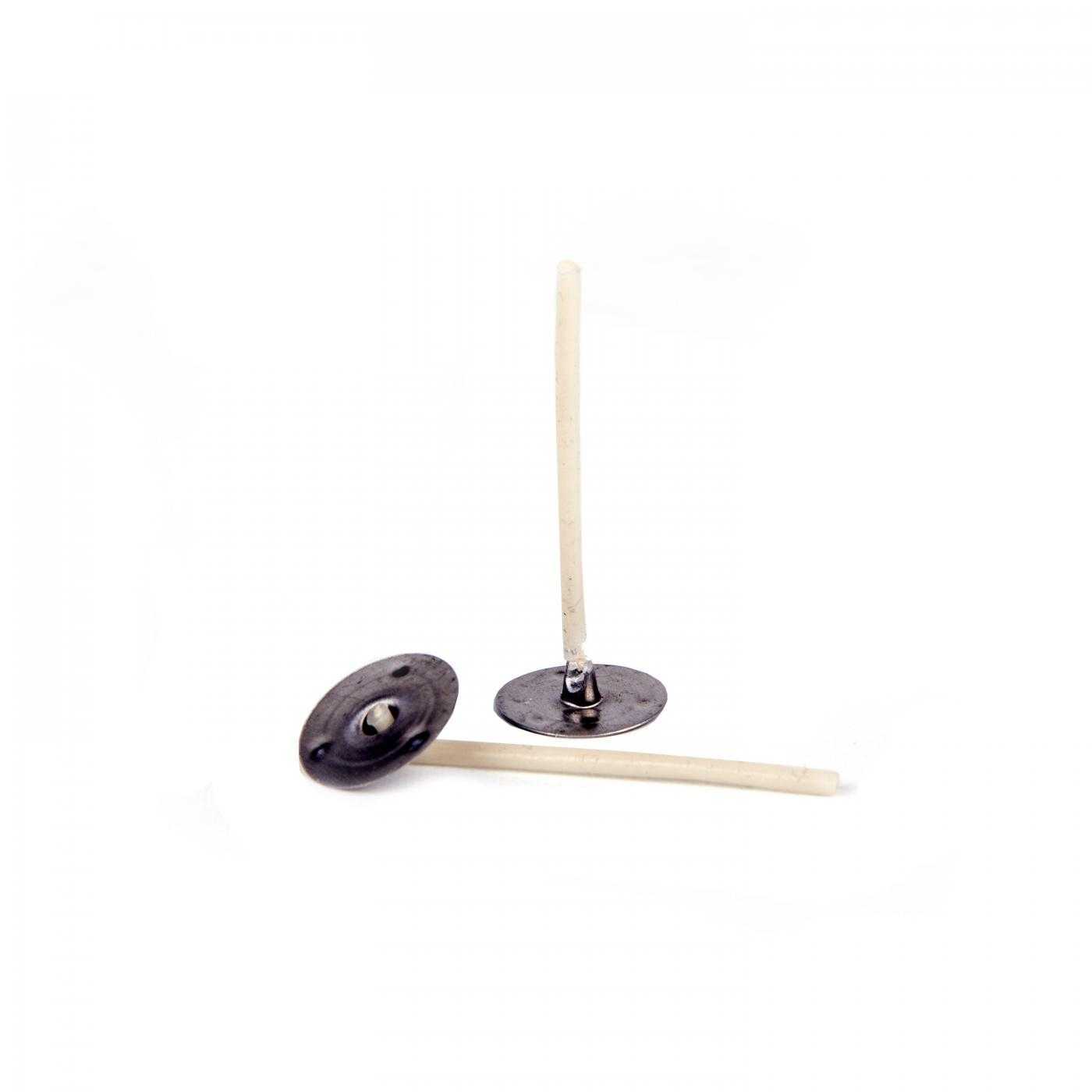
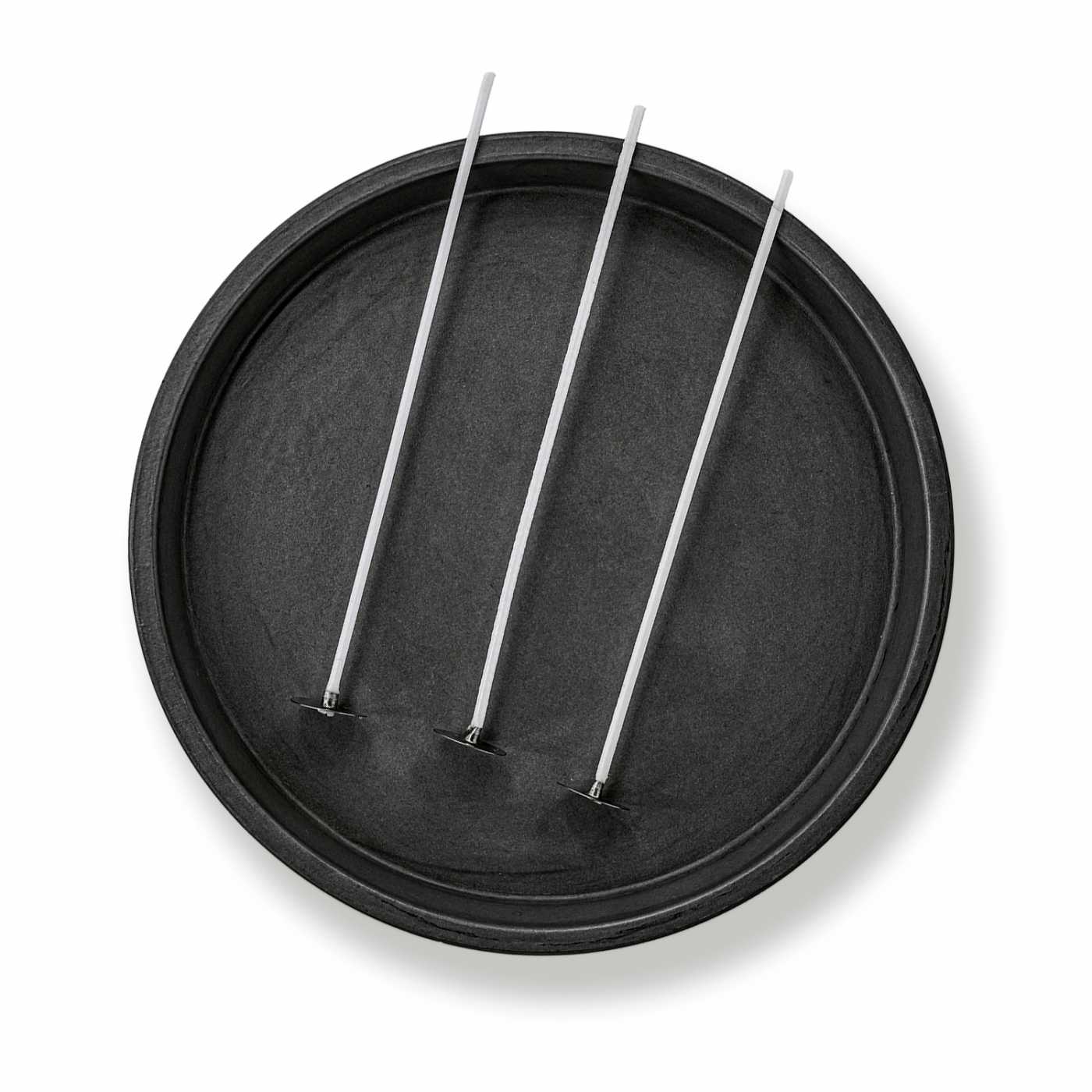
The Eko-1 cotton wick for candle making draws melted wax up to the flame. Its size determines how tall the flame will be, how widely the surface of the wax will melt and whether the candle will smoke.
It comes from a European manufacturer with ISO 9001 and RAL-GZ 041 certificates. It is sold by the piece, so you can also order a small quantity for a test before larger-scale production.
What it is suitable for
Which candle the Eko-1 is suitable for depends mainly on the candle’s diameter, the type of wax and the amount of fragrance oil and dye. We do not state a recommended candle diameter for this wick, so its suitability must be verified by a test burn in your specific recipe.
Test burn
The test candle is poured from the same wax, with the same fragrance oil and dye, and in the same container or mould as will be used in production. Once the wax has cured, it is lit and both the flame and the melt pool are observed.
- Wick too weak – the flame is small, the wax melts only around the wick and a tunnel forms. The flame may drown in the wax.
- Wick too strong – the flame is tall and unsteady, the candle smokes and a mushroom-shaped carbon deposit forms at the tip of the wick.
- Correct size – a calm flame without smoke, and the melt pool reaches the full width of the candle.
If you change the wax, fragrance oil, dye or container diameter, repeat the test burn. A wick that burns correctly in one recipe may be too weak or too strong in another.
Good to know
The wick is positioned in the centre of the container or mould. It is held upright until the wax sets, for example with a wick holder. A wick that is off-centre melts the wax unevenly and, in a candle in a glass jar, heats one side of the container more than the other.
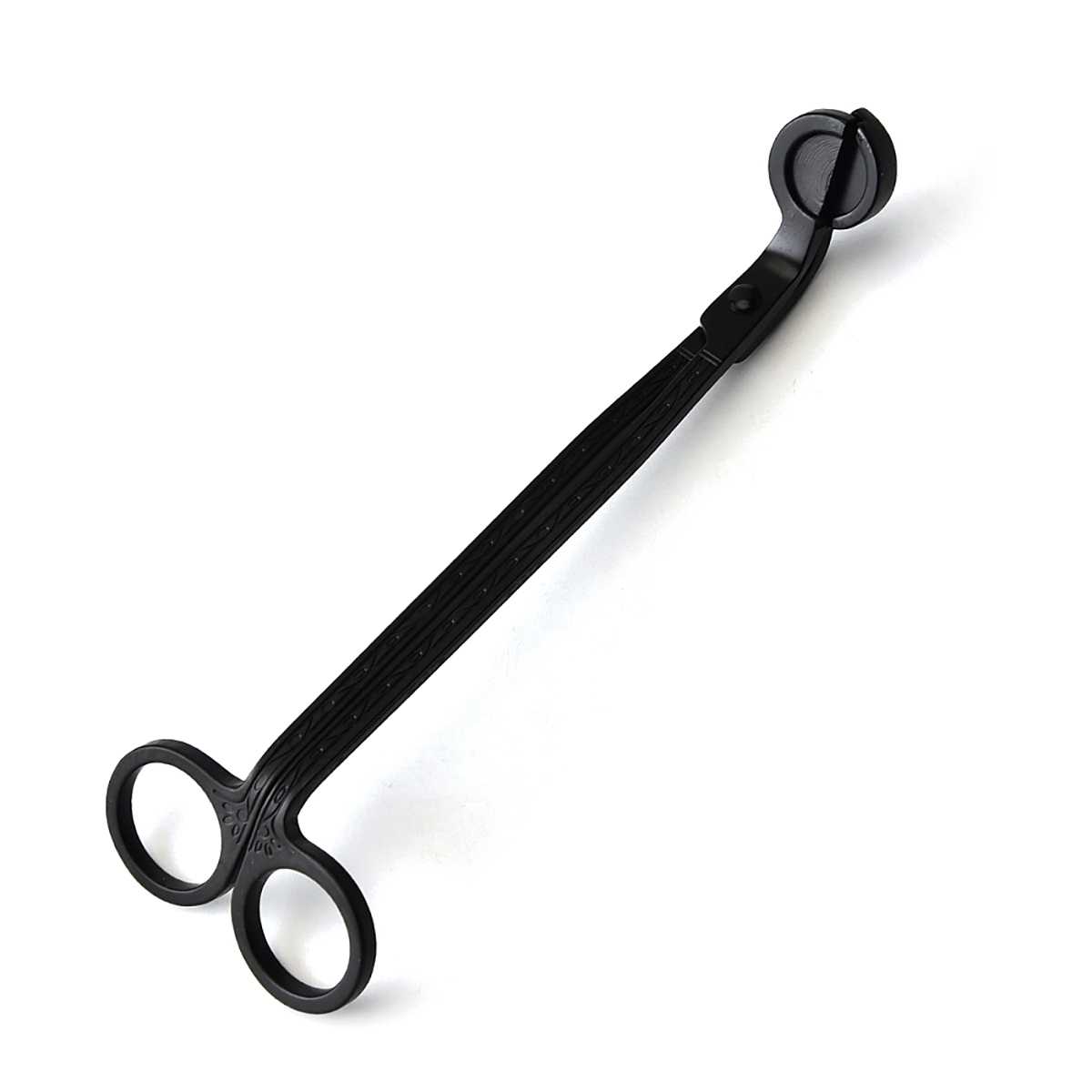
Before each subsequent lighting, the wick is trimmed. A long or charred end burns with a tall flame and leaves soot.
Carry out the test burn on a non-flammable surface, away from draughts and flammable objects. Never leave a burning candle unattended.
Frequently asked questions
What candle diameter is the Eko-1 cotton wick suitable for?
A recommended candle diameter for the Eko-1 cotton wick is not available, so its suitability must be verified by a test burn. The same wick burns differently in different waxes and with different amounts of fragrance oil. Pour one test candle in the intended container or mould and observe the flame and the width of the melt pool.
How do I tell whether the Eko-1 wick is too weak or too strong for my candle?
A test burn of the finished candle will show it. A weak wick has a small flame and melts the wax only in its immediate vicinity, so a tunnel forms. A strong wick burns with a tall flame, smokes and forms a carbon deposit at its end. With the correct size, the flame is calm and the melt pool reaches the full width of the candle.
Does the Eko-1 wick need to be tested again after adding fragrance oil or dye?
Yes, we recommend repeating the test burn after every change to the recipe. A wick that was suitable in an unscented candle may be too weak or too strong after fragrance oil or dye is added. The same applies when you change the type of wax or the container diameter. The test candle is poured from the same ingredients and in the same container or mould as will be used in production.
What certificates does the manufacturer of the Eko-1 wick hold?
The manufacturer of the Eko-1 wick holds ISO 9001 and RAL-GZ 041 certificates. Both apply to the wick manufacturer and do not cover the finished candle. How the candle burns depends on the whole recipe, that is, the wax, fragrance oil, dye and the diameter of the container or mould. The candle maker verifies this by a test burn.
Does a cotton wick need to be trimmed before lighting the candle?
Yes, a cotton wick is trimmed before each subsequent lighting. A long or charred end produces a tall flame that smokes and leaves soot on the container. A trimmed wick burns more calmly. It is worth including this advice in the instructions that the user of the candle receives.