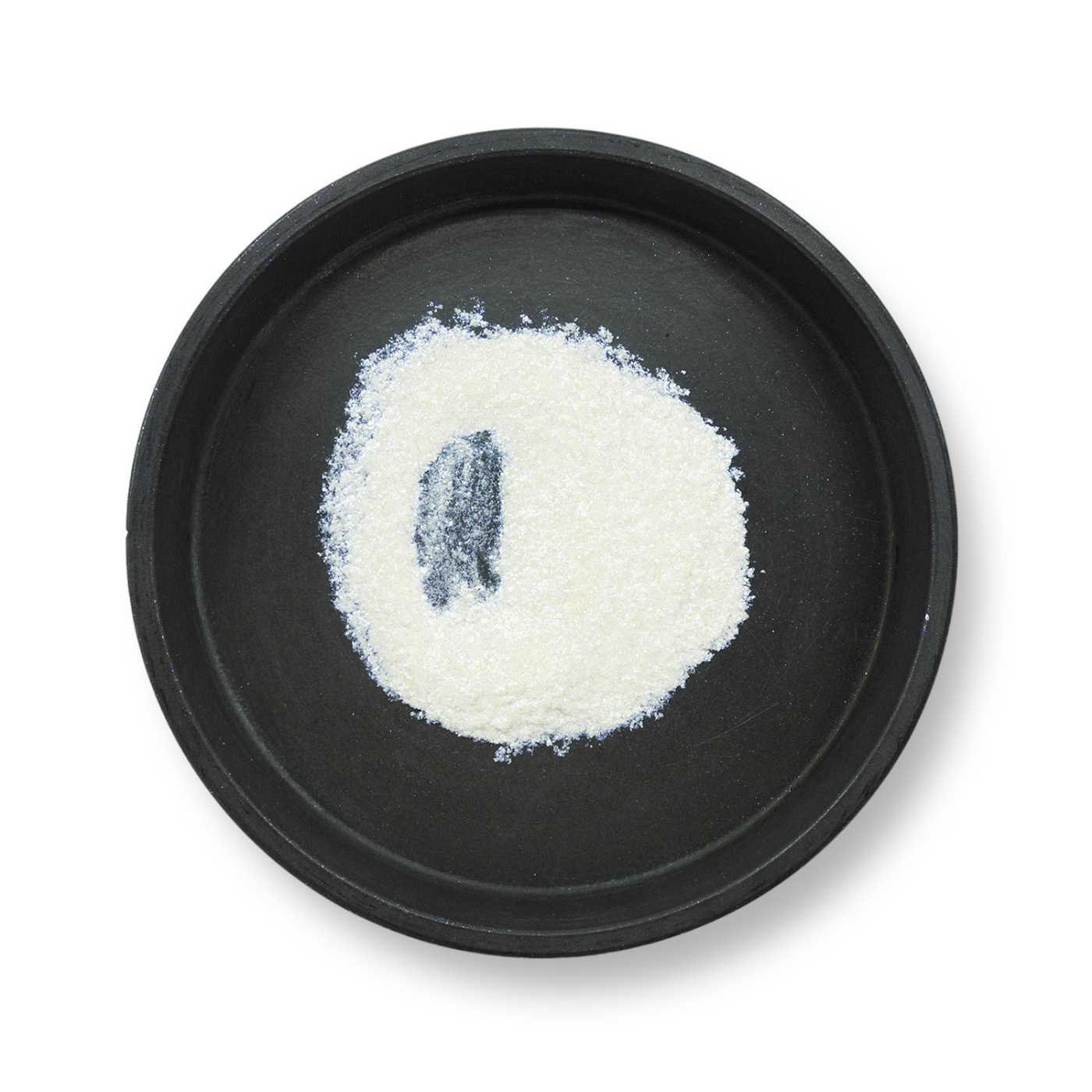
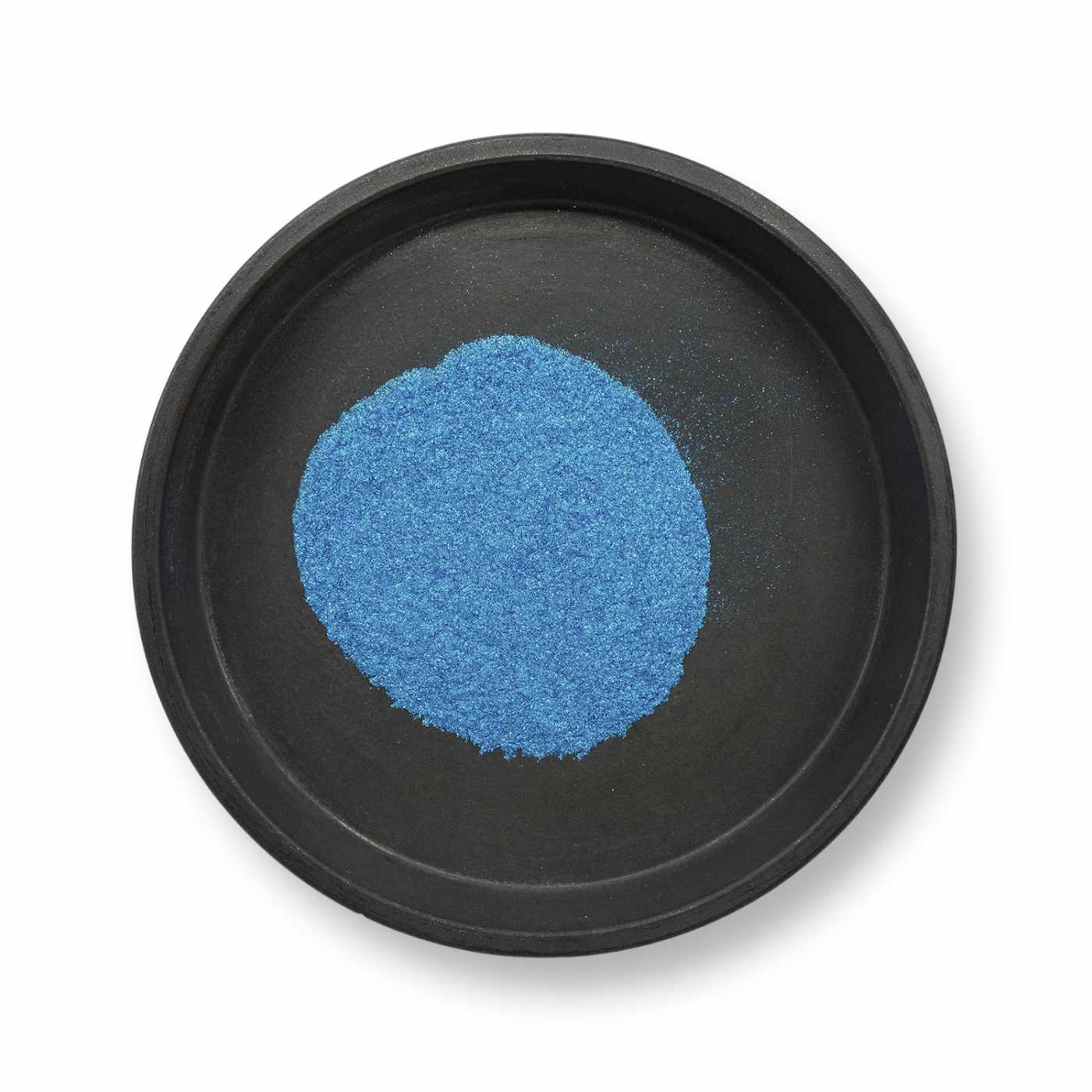
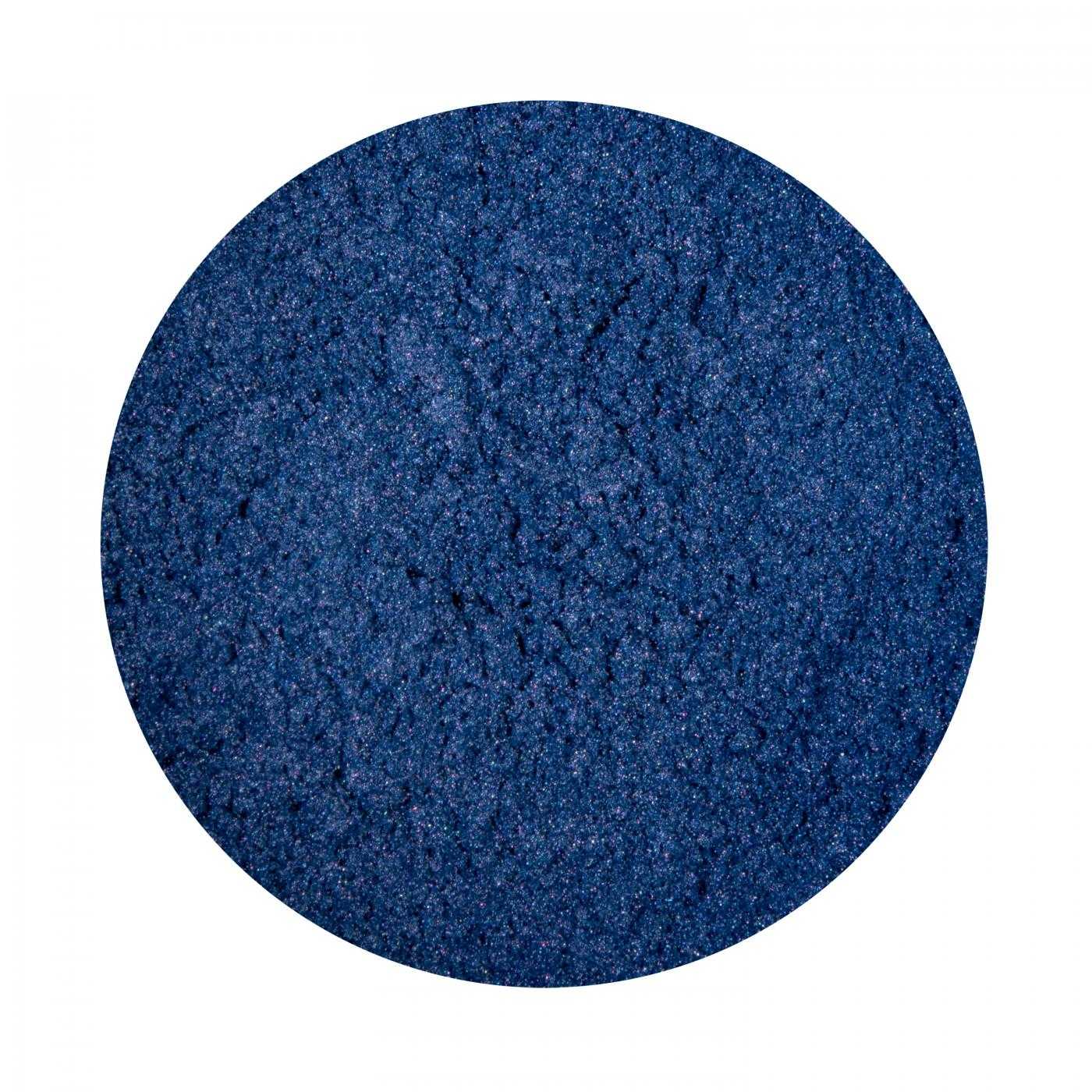
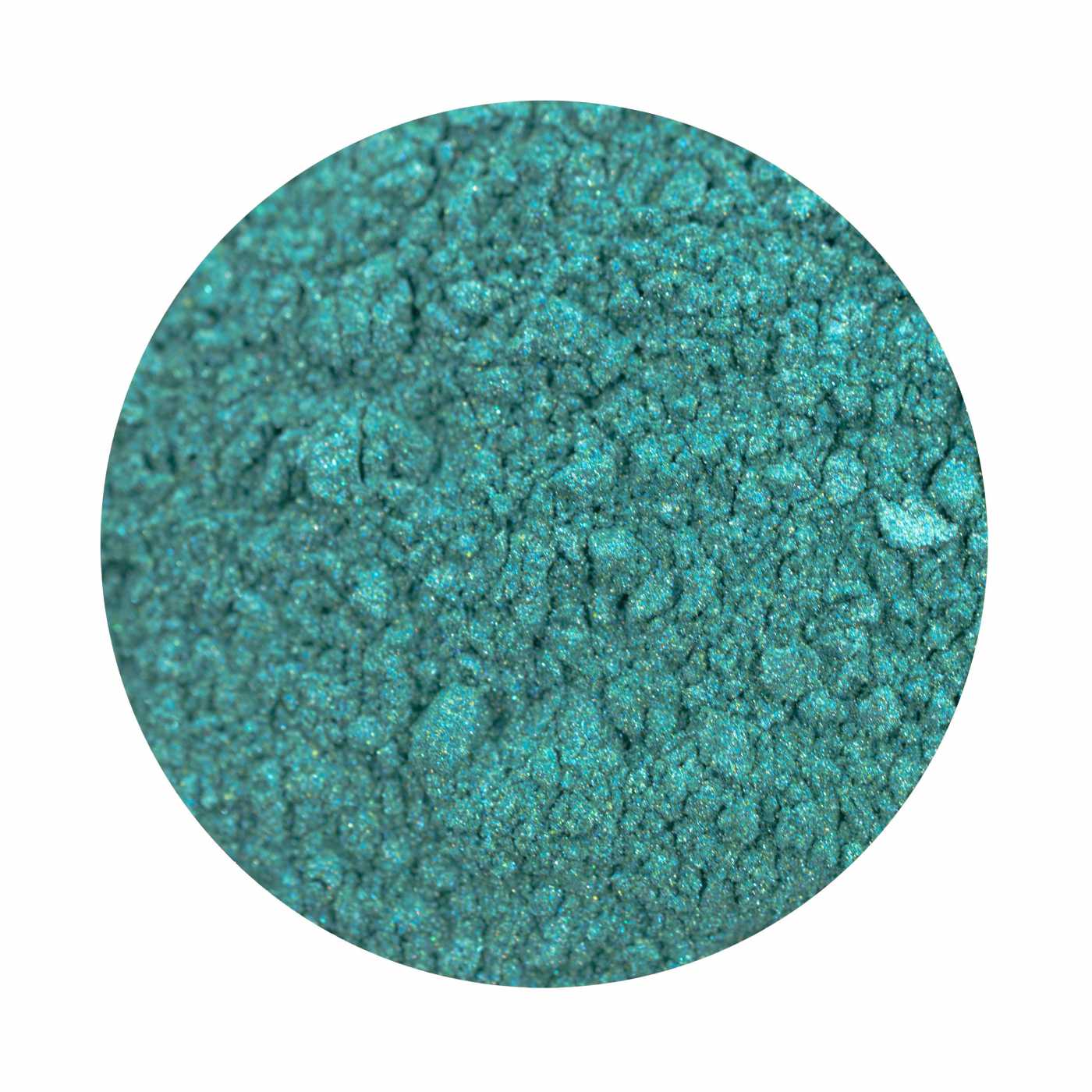
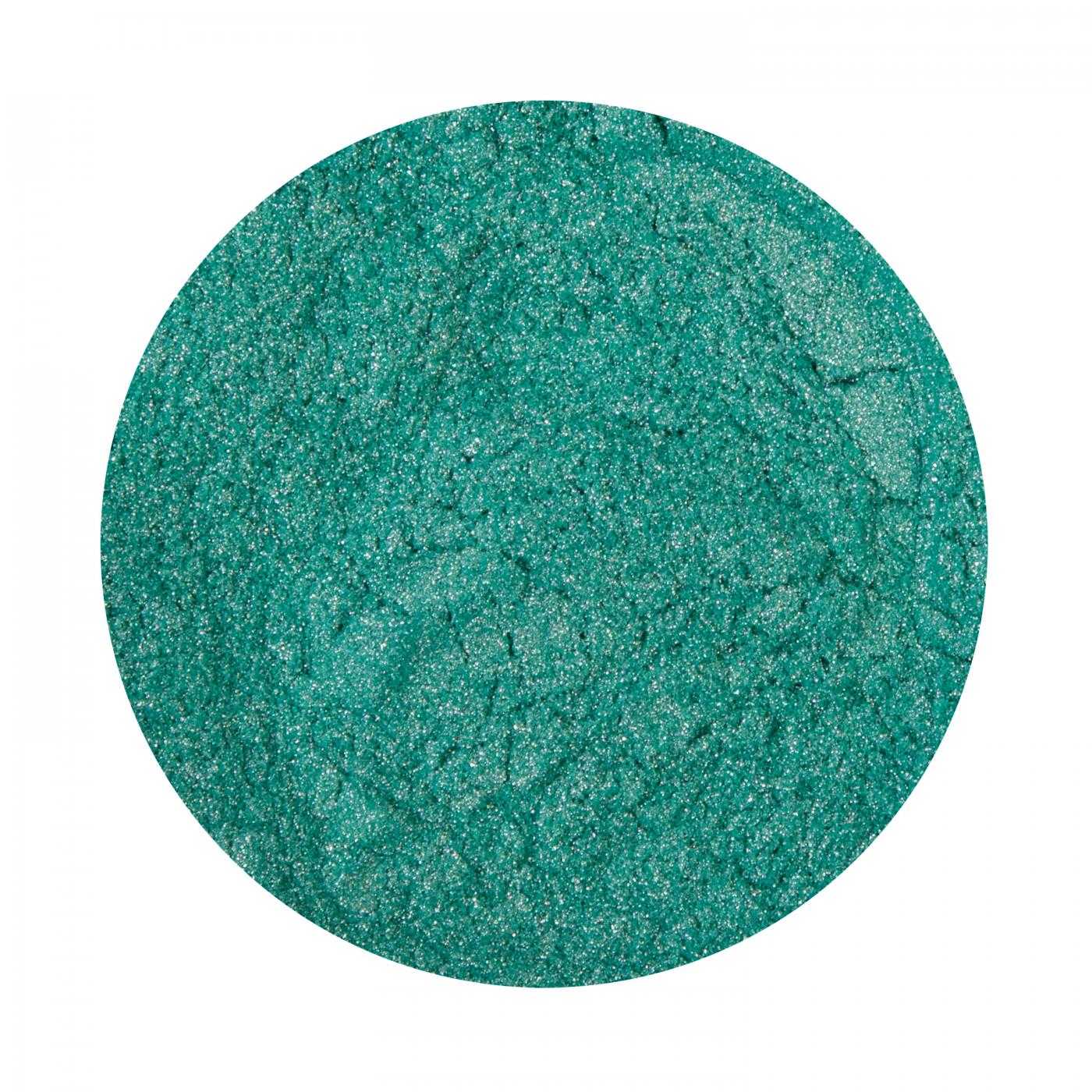
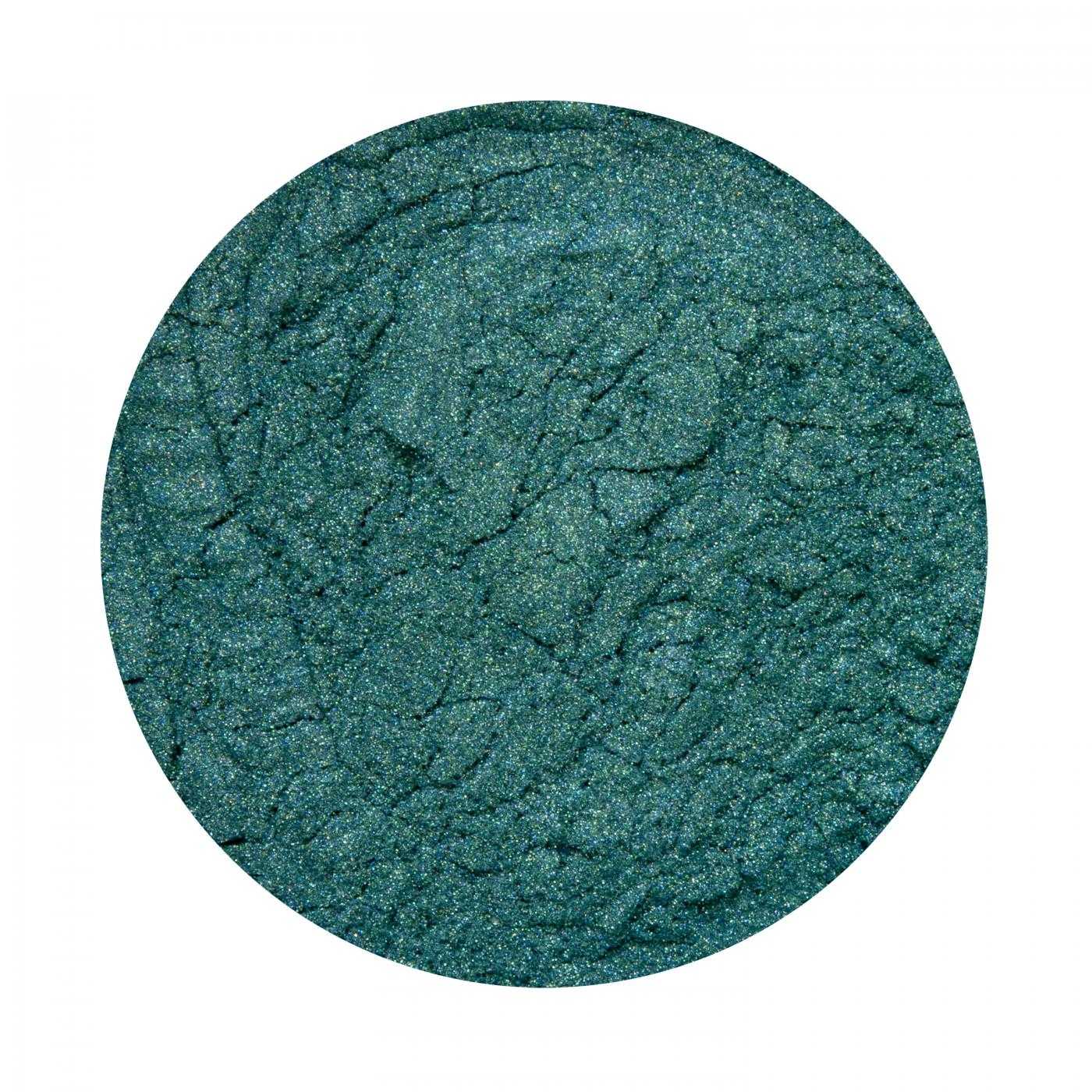
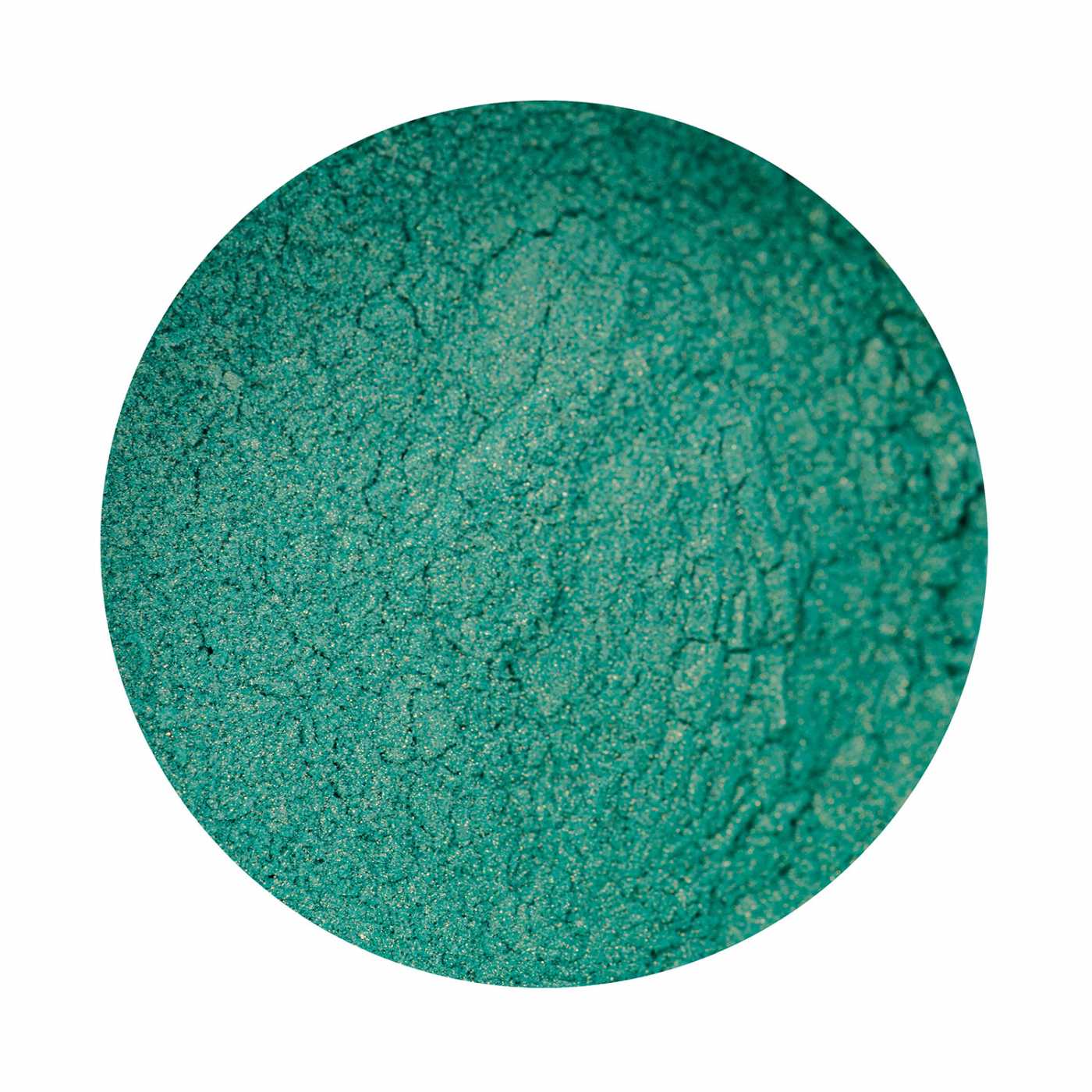
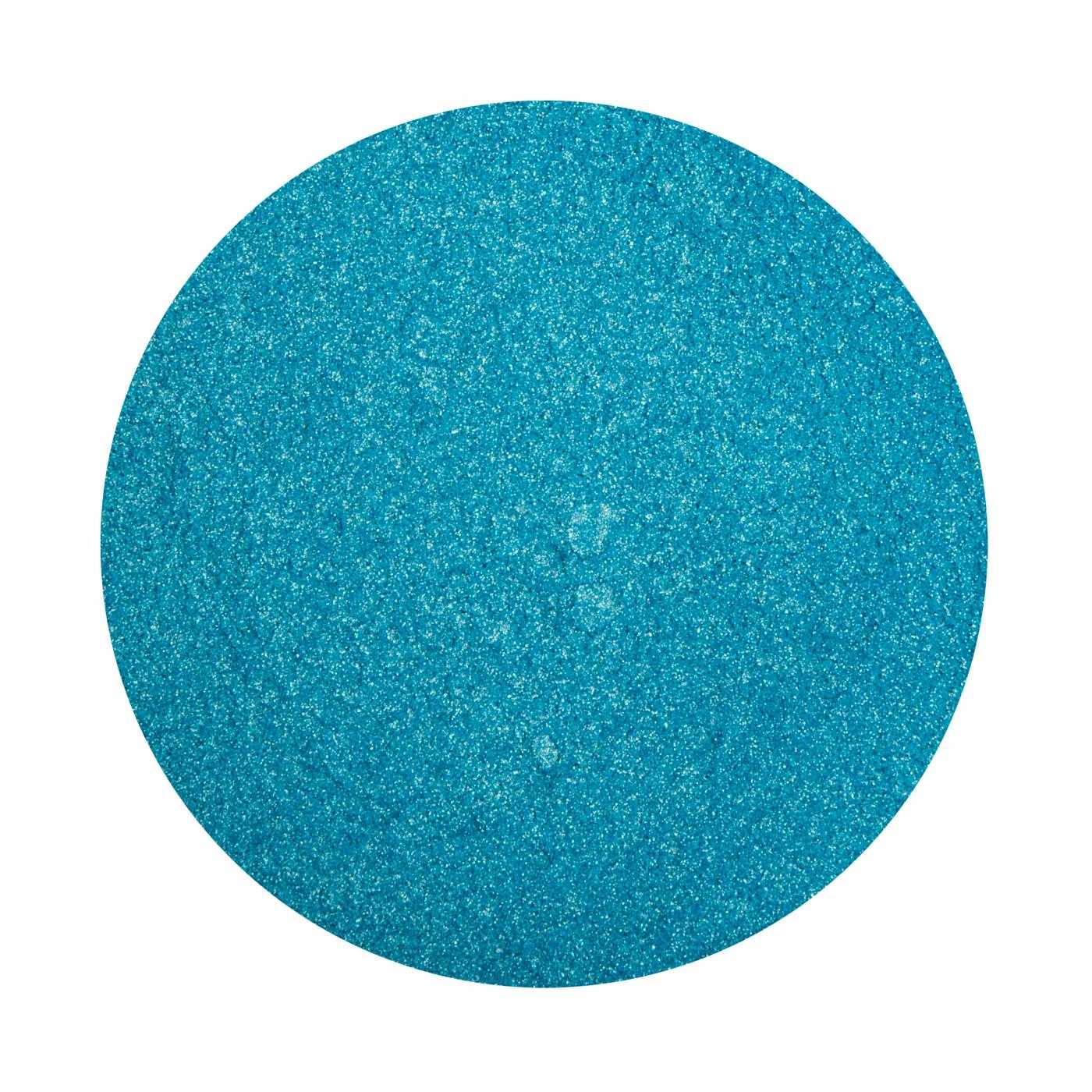
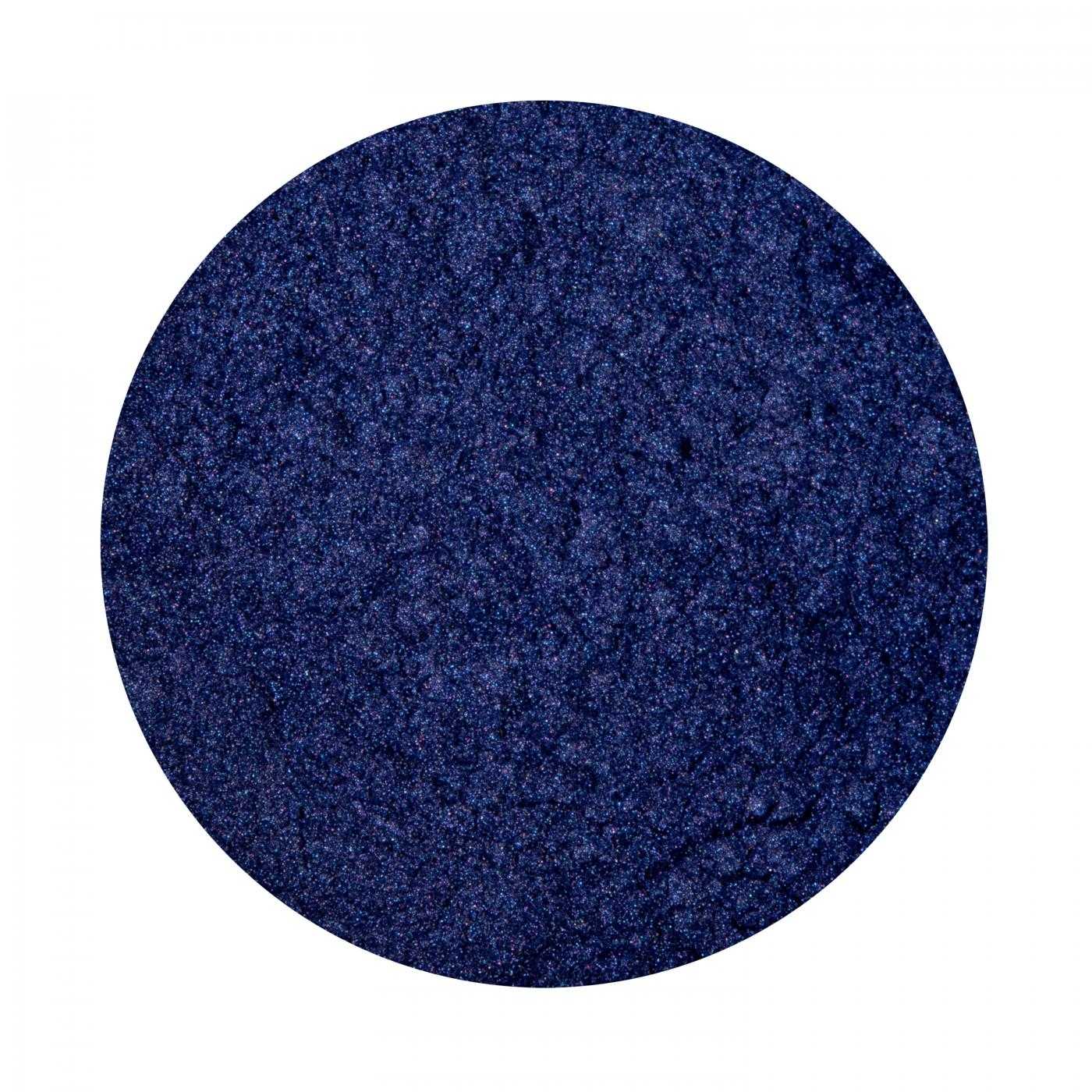
Allure eco glitter in aquamarine gives decorative cosmetics and body products a blue sparkling effect. Regular glitter is made from plastic film, whereas this one is based on synthetic mica coated with titanium dioxide. The very fine fraction creates a sparkling shimmer on the skin that is less pronounced than with coarse glitter.
It is used on the face, the eye area, lips, body and nails, in both rinse-off and leave-on products. Its blue tone comes from ultramarine, which determines the formulations it is suitable for.
What it is made of and how the effect is created
The carrier is synthetic fluorphlogopite, known in cosmetics as synthetic mica. Its platelets are coated with titanium dioxide, which reflects light and creates the shimmer. Ultramarine adds the blue colour, and tin oxide completes the composition.
The particle size is in the range of 70–210 µm, which covers 85% of the powder.
Key properties
- Very fine fraction – a sparkling shimmer without coarse glitter particles, also suitable for eyeshadows and lips.
- Odourless – the glitter does not affect the fragrance of the finished product.
- Heat resistance – the pigment is thermally stable up to 800 °C.
- Dye purity – it meets the dye purity criteria, including heavy metal limits, under Annex IV of Regulation (EC) No 1223/2009.
- Free from nanomaterials – the particles are significantly larger, and the glitter does not contain nanomaterials.
Use in formulations
The glitter does not dissolve in water or oil; it only disperses in both. It is added during the cooling phase or afterwards to the finished base, at a temperature below 80 °C. The powder needs to be mixed in thoroughly so that the particles are distributed evenly.
The recommended usage rate is 1–30%. It is chosen according to how intense the sparkle should be.
The formulation should have a pH of 6–9. In an acidic environment, ultramarine loses its structure, the blue colour fades and hydrogen sulfide may be released, which smells of rotten eggs.
Do not use this glitter in acidic products, for example those with AHA acids or toners with a low pH.
Suitable for products such as
- eyeshadows, highlighters and other decorative face cosmetics
- lip balms, lip glosses and lipsticks
- body oils, butters and lotions with a sparkling effect
- nail products
- rinse-off products
Good to know
The powder absorbs a lot of oil, 65–85 g per 100 g. In anhydrous products such as balms, oils and lipsticks, a higher usage rate may thicken the product or cause a drier feel on the skin.
With a higher usage rate in balms and lipsticks, expect to adjust the ratio of oils.
The temperatures used when melting wax or glycerine soap base do not damage the pigment. However, its behaviour in a candle or soap, that is, the settling of particles and the burning of the wick, should be tested in your own formulation.
The raw material is not classified as hazardous under the CLP Regulation. When working with the powder, avoid inhaling the dust: use a dust respirator and eye protection, and wash your hands before and after handling it.
Frequently asked questions
Is Allure eco glitter soluble in water or oil?
No, Allure eco glitter does not dissolve in water or oil; it only disperses in both. The particles remain in the product as solid platelets that reflect light. It is added to the formulation during the cooling phase or to the finished base at a temperature below 80 °C and mixed in thoroughly so that the effect is even.
How much Allure eco glitter should be added to a cosmetic product?
The recommended usage rate of Allure eco glitter is 1–30%. The amount is chosen according to the required intensity of the sparkle. In anhydrous products such as balms, oils and lipsticks, keep in mind that at higher usage rates the powder absorbs 65–85 g of oil per 100 g. The product may thicken or feel drier, so the ratio of oils needs to be adjusted.
Can Allure eco glitter in aquamarine be used in products with AHA acids?
No, Allure eco glitter in aquamarine is not suitable for acidic products. The blue colour comes from ultramarine, which loses its structure in an acidic environment. The shade fades and hydrogen sulfide with a smell of rotten eggs may be released. The formulation should have a pH of 6–9, which also rules out toners with a low pH.
Is Allure eco glitter suitable for the eye area and lips?
Yes, Allure eco glitter is intended for the face, the eye area, lips, body and nails. The dye meets the purity criteria, including heavy metal limits, under Annex IV of Regulation (EC) No 1223/2009. The specification states lead < 5 ppm, arsenic < 2 ppm, and mercury and cadmium < 1 ppm. The glitter does not contain nanomaterials and is used in both rinse-off and leave-on products.
Can Allure eco glitter be used in candles or glycerine soap?
Allure eco glitter withstands the temperature of melted wax and of glycerine soap base, as the pigment is thermally stable up to 800 °C. However, thermal stability says nothing about how the glitter behaves in a finished candle or soap. The settling of particles and the effect on the burning of the wick should be tested in your own formulation.
How does Allure eco glitter differ from regular glitter?
Allure eco glitter is based on synthetic mica, whereas regular glitter is made from plastic film. The mica platelets are coated with titanium dioxide, which reflects light, and the blue tone comes from ultramarine. The very fine fraction with particles of 70–210 µm gives a sparkling shimmer without coarse glitter particles.