


BOTTLES ONLY
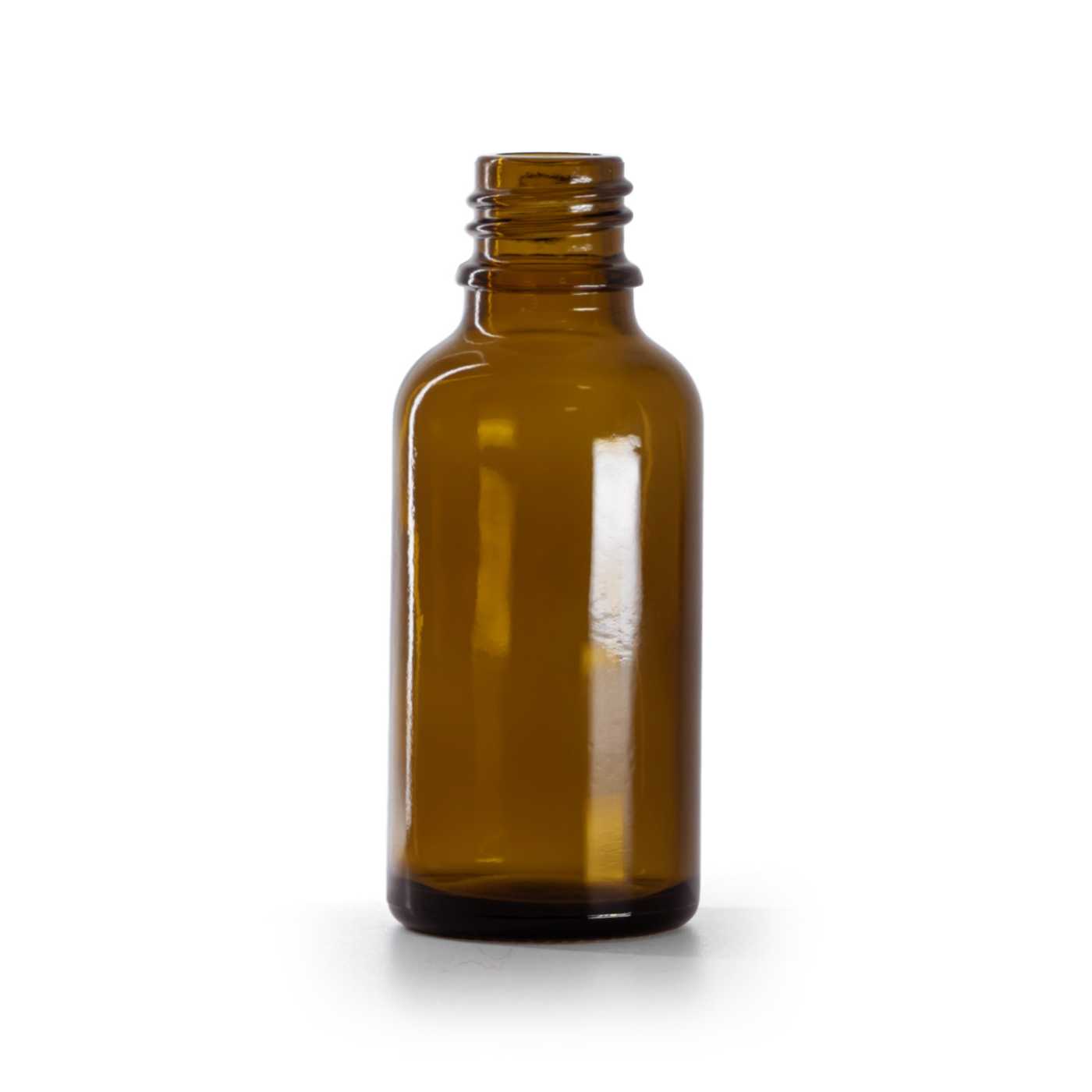
Glass bottle, vial, 18 mm, 30 ml
Pack size5 ml10 ml15 ml30 ml50 ml100 ml
Brown glass dropper bottle 30 ml is a small bottle for serums, oils and tinctures that need protection from light and are dispensed drop by drop. full description
Lowest price in the last 30 days: €0.41
Total for 1 pcs: €0.41
Product description
Brown glass dropper bottle 30 ml is a small bottle for serums, oils and tinctures that need protection from light and are dispensed drop by drop. Brown glass reduces light exposure to the contents, making it suitable for facial oils, essential oils and their blends, and concentrated active ingredients that lose efficacy or change colour when exposed to light. The small volume makes this bottle a practical container for samples, test batches and products that are used slowly.
Glass is chemically inert and does not react with its contents, so it can also be used for alcoholic extracts, essential oils and solvents where plastic containers reach their limits. The bottle is suitable for use with cosmetic products and also holds a certificate for direct contact with food. It is therefore equally suitable for home-made herbal oils, syrups and samples of food extracts.
Why choose brown glass
- Light protection – brown glass absorbs a large portion of UV radiation that accelerates oxidation of oils, breakdown of vitamins and fading of natural pigments. The contents will retain their original properties for longer without altering the formulation.
- Chemical resistance – glass does not absorb fragrances or dyes and does not leach any substances into the contents. After washing it can be reused for an entirely different product without any risk of carrying over traces of the previous one.
- Precise dispensing – the narrow neck pairs with a dropper, pump or spray, allowing the contents to be dispensed drop by drop or in small doses without waste.
- Compact size – the bottle's compact shape takes up little space on a shelf or in a cosmetics bag, and gives small production runs a uniform appearance.
Nominal and total volume
For every container we distinguish between the nominal volume and the total brim-full volume. The nominal volume is the quantity the bottle is intended to hold under normal filling conditions. The total brim-full volume is the physical space up to the neck. The difference between the two is a deliberate allowance for a dropper or pump, which occupies part of the neck once fitted, and for expansion of the contents with temperature change. The bottle should therefore be filled to the nominal volume, not to the brim. The exact values of both volumes can be found in the product specifications.
When filling with a dropper, leave free space in the neck at least equal to the length of the glass tube. If the bottle is filled to the brim, the dropper will displace the contents and the cap will not seal properly.
Use in formulation
The bottle is suitable for aqueous, alcoholic and oil-based contents. Brown dropper bottles are most commonly filled with facial serums containing light-sensitive actives, blends of vegetable oils, essential oils and fragrance blends, tinctures, oil macerates, and samples of hydrosols or tonics. For aqueous products brown glass is equally advantageous, as light accelerates the breakdown of preservatives and dyes in the water phase as well.
The narrow neck is suited to thin to medium-viscosity products. Thick emulsions and creams are difficult to fill and dispense from this bottle. A jar or a bottle with a wider neck is more appropriate for such formulations.
Caps, droppers, pumps and sprays with the same neck type as stated in the specifications, along with ready-made bottle-and-cap combinations, are available in the Handymade range. For custom combinations we recommend verifying the seal, dispensing behaviour and compatibility with the specific formulation.
Suitable for products such as
- Facial serums – both aqueous and oil-based, especially those containing vitamins, retinoids and plant extracts that require protection from light.
- Essential oils and fragrance blends – glass does not react with terpenes and the brown colour slows their oxidation.
- Tinctures and alcoholic extracts – alcohol does not leach foreign substances from glass and the container does not soften.
- Oil macerates and travel massage oils – a 30 ml volume is a practical size for testing or carry-on luggage.
- Samples and test batches – during recipe development the small volume allows multiple variants to be prepared without consuming large amounts of raw materials.
Good to know
Before the first fill, wash the bottle with warm water and a mild detergent, rinse thoroughly and disinfect with isopropyl alcohol or ethanol. Leave it to dry completely, neck down. Residual water in an oil-based or anhydrous product promotes microbial growth.
The bottle is intended for repeated use. Once empty, simply wash and disinfect using the same procedure. If it contained a strongly scented product, residue may remain on the neck and under the cap. Glass itself will not absorb the fragrance, but the plastic parts of the cap will, so when switching to a different product replace the cap or dropper as well.
Glass tolerates higher temperatures than plastic, but sudden temperature changes are not good for it. Do not fill the bottle with hot contents when it is cold. Allow the contents to cool to at least a lukewarm temperature, or warm the bottle slightly beforehand.
When labelling, bear in mind that the cylindrical section of the bottle is relatively low. Dimensions suitable for a label can be found in the product specifications. Labels adhere to dry, degreased glass — ideally after disinfection with ethanol.
The brown glass conceals the contents, so the fill level and any cloudiness will not be visible from the outside. For products where appearance needs to be monitored, keep a reference sample in a clear bottle.
Glass will crack when dropped on a hard surface. When sending samples to customers, wrap the bottle in bubble wrap or a cardboard insert and tighten the cap to prevent it coming loose in transit.
An empty bottle belongs in glass recycling. The dropper and plastic cap are sorted separately according to material.
Frequently asked questions
Verified by customers.
No reviews yet.
Only customers with a delivered order can write reviews.