


BOTTLES ONLY
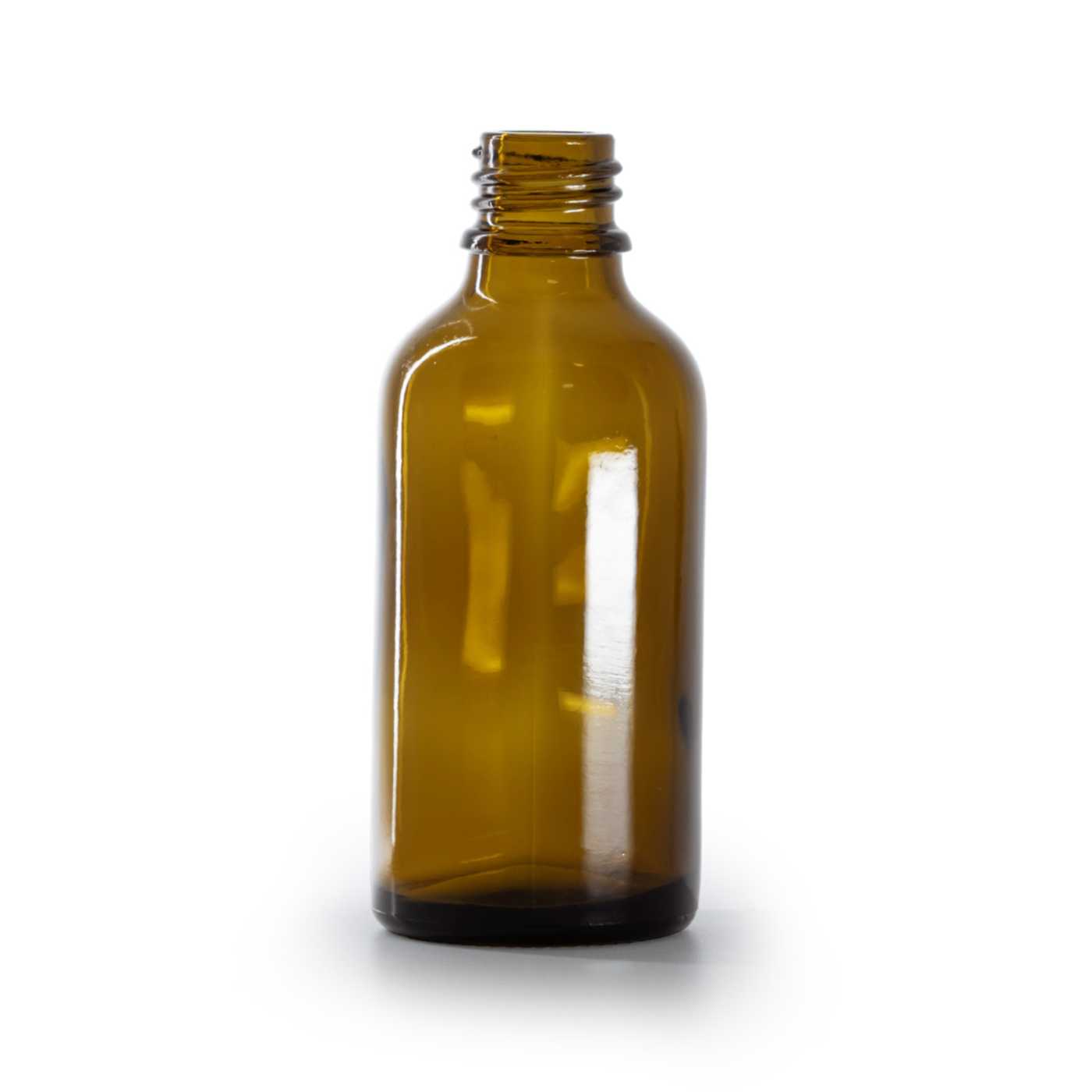
Glass bottle, vial, 18 mm, 50 ml
Pack size5 ml10 ml15 ml30 ml50 ml100 ml
A brown glass bottle with a capacity of 50 ml , designed for contents that lose stability in light – facial serums, treatment oils, essential oil blends, tinctures and herbal extracts. full description
Lowest price in the last 30 days: €0.37
Total for 1 pcs: €0.37
Product description
A brown glass bottle with a capacity of 50 ml, designed for contents that lose stability in light – facial serums, treatment oils, essential oil blends, tinctures and herbal extracts. Brown glass reduces light penetration, and the volume corresponds to a standard packaging size for a facial serum or oil, hair serum, or a test batch of a new formula.
The packaging is suitable for contact with cosmetic products and is also approved for direct food contact, making it usable for home-made oils, syrups, essences and herbal kitchen extracts. 'Vial' refers to the shape of the bottle, not its intended use.
Why choose brown glass
- Light protection – brown glass transmits significantly less light than clear glass, which helps slow down the oxidation of vegetable oils and changes in the scent of essential oils. It does not, however, replace an antioxidant or preservative in the formulation.
- Chemical resistance – glass does not react with essential oils, alcohol or solvents that can soften or cloud certain plastics. It is therefore also suitable for concentrated fragrance blends and alcohol-based tinctures.
- No transfer of scent or colour – glass does not absorb odours or pigments. After thorough cleaning, it can be reused without the previous contents affecting the new ones.
- Stable base – the bottle stands securely and does not tip over when dispensing with a dropper or pump.
Nominal and total volume
The nominal volume is the volume the bottle is designed to hold under normal filling. The total brim volume is the physical volume up to the neck and is always slightly larger. The difference between the two provides a headspace for the closure, dropper or pump, which displace some air when fitted, and also allows for expansion of the contents with temperature changes. The bottle should be filled to the nominal volume, not to the brim – otherwise the contents will overflow once the dropper is fitted, or the closure cannot be tightened properly. The exact values for both volumes are listed in the product parameters.
Closures and ready-made combinations
The bottle has an 18/410 thread, a standard neck size for droppers, pumps and simple caps. Closures with the same neck type and ready-made bottle + closure combinations are available in the Handymade range. With your own combination, we recommend verifying the seal, dispensing flow and the behaviour of the packaging with your specific formulation – thicker serums dispense more slowly from a dropper, and very thin oils may seep through an improperly tightened closure.
A dropper is particularly practical for a 50 ml vial with serums and oil blends dispensed drop by drop. For products applied in larger quantities, a pump is usually more convenient.
Preparation before filling and reuse
Before the first filling, wash the bottle with warm water and a small amount of dish soap, rinse thoroughly and leave to dry completely with the neck facing down. For cosmetics intended for use on skin, also sanitise the inside with isopropyl alcohol or ethanol and allow to evaporate. Residual water in the packaging would unnecessarily increase the risk of microbial growth in anhydrous products such as oils and oil-based serums.
Glass withstands repeated washing and sanitising, so the bottle can be used multiple times. When refilling, also replace or thoroughly clean the closure – the rubber parts of droppers and seals wear out before the glass itself.
Glass is sensitive to sudden temperature changes. Do not pour hot contents into a cold bottle and do not move it directly from freezing temperatures into hot water – there is a risk of cracking. Allow the contents to cool to approximately room temperature before filling.
Good to know
- Labelling – the cylindrical shape allows a label to be applied around the full circumference or on the front only. Suitable label dimensions are based on the bottle diameter and height listed in the parameters. For oil-based products, choose a label with an oil-resistant adhesive.
- Aqueous and alcohol-based contents – brown glass is also suitable for tonics, hydrolats and tinctures. Aqueous products require a preservative regardless of the packaging; glass alone will not slow microbial growth.
- Light is not the only factor – even in brown glass, store oils and essential oil blends away from direct sunlight and heat sources. Glass reduces light, but does not insulate against heat.
- Recycling – the bottle is made of glass; once empty and with the closure removed, it belongs in the sorted glass waste collection.
Frequently asked questions
Verified by customers.
No reviews yet.
Only customers with a delivered order can write reviews.