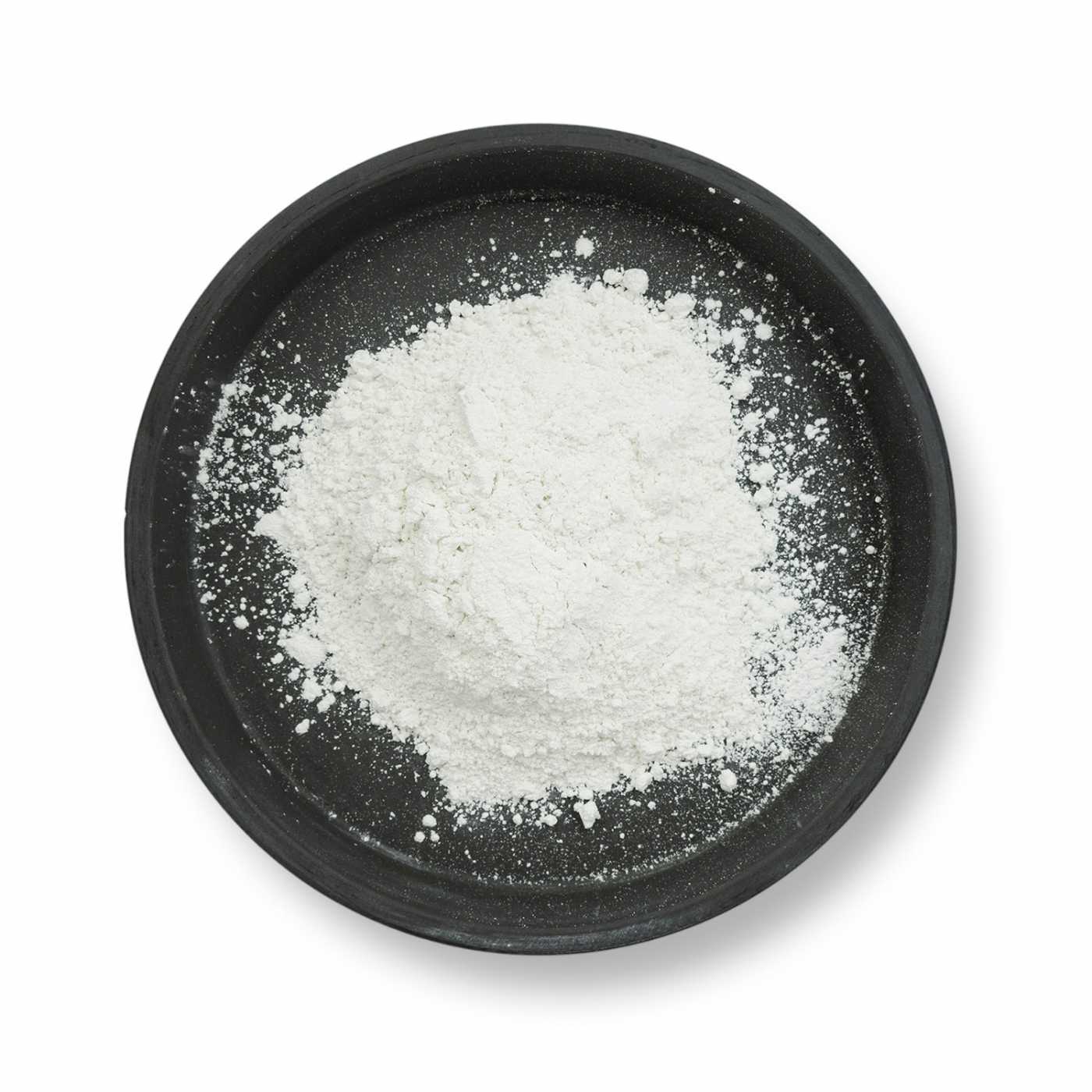
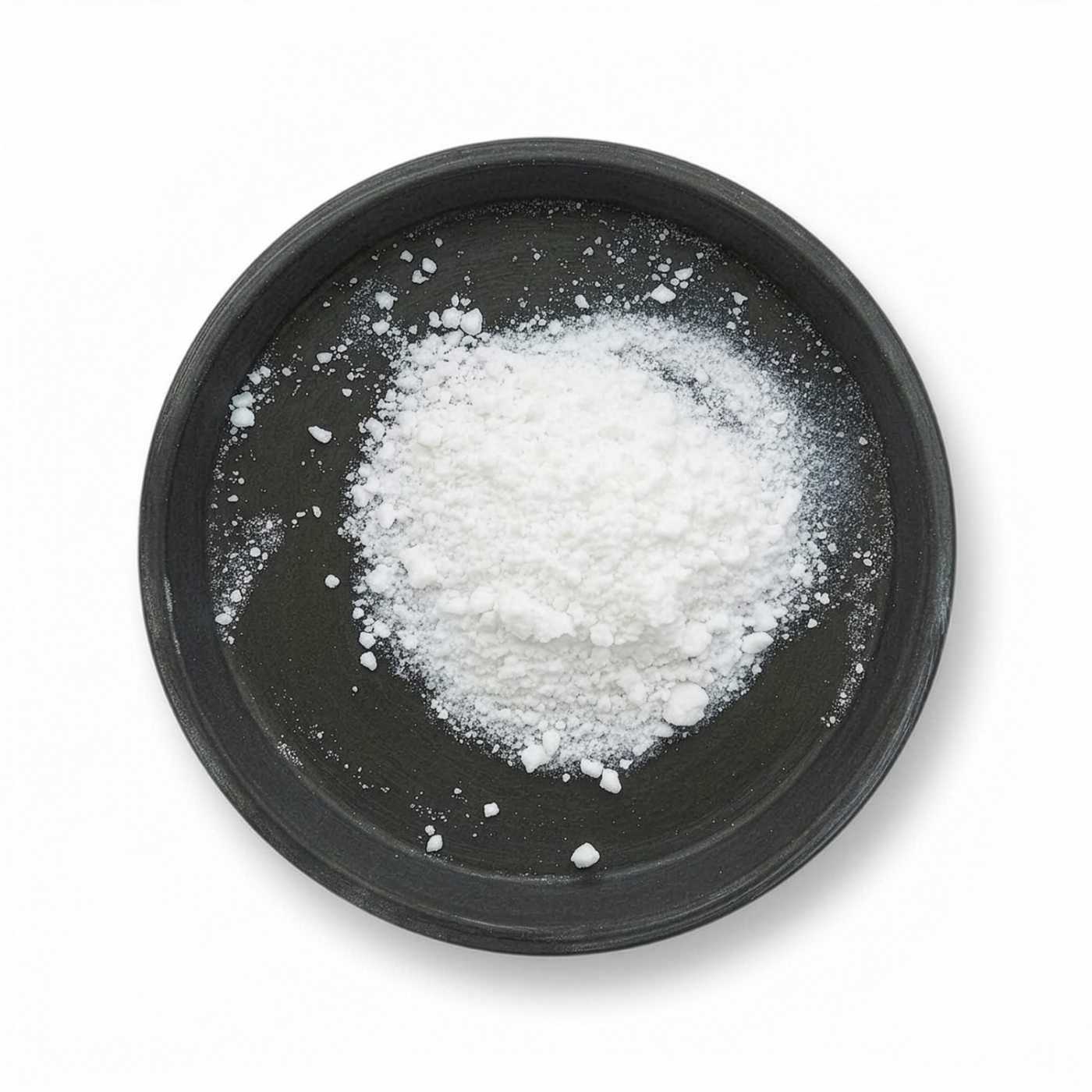
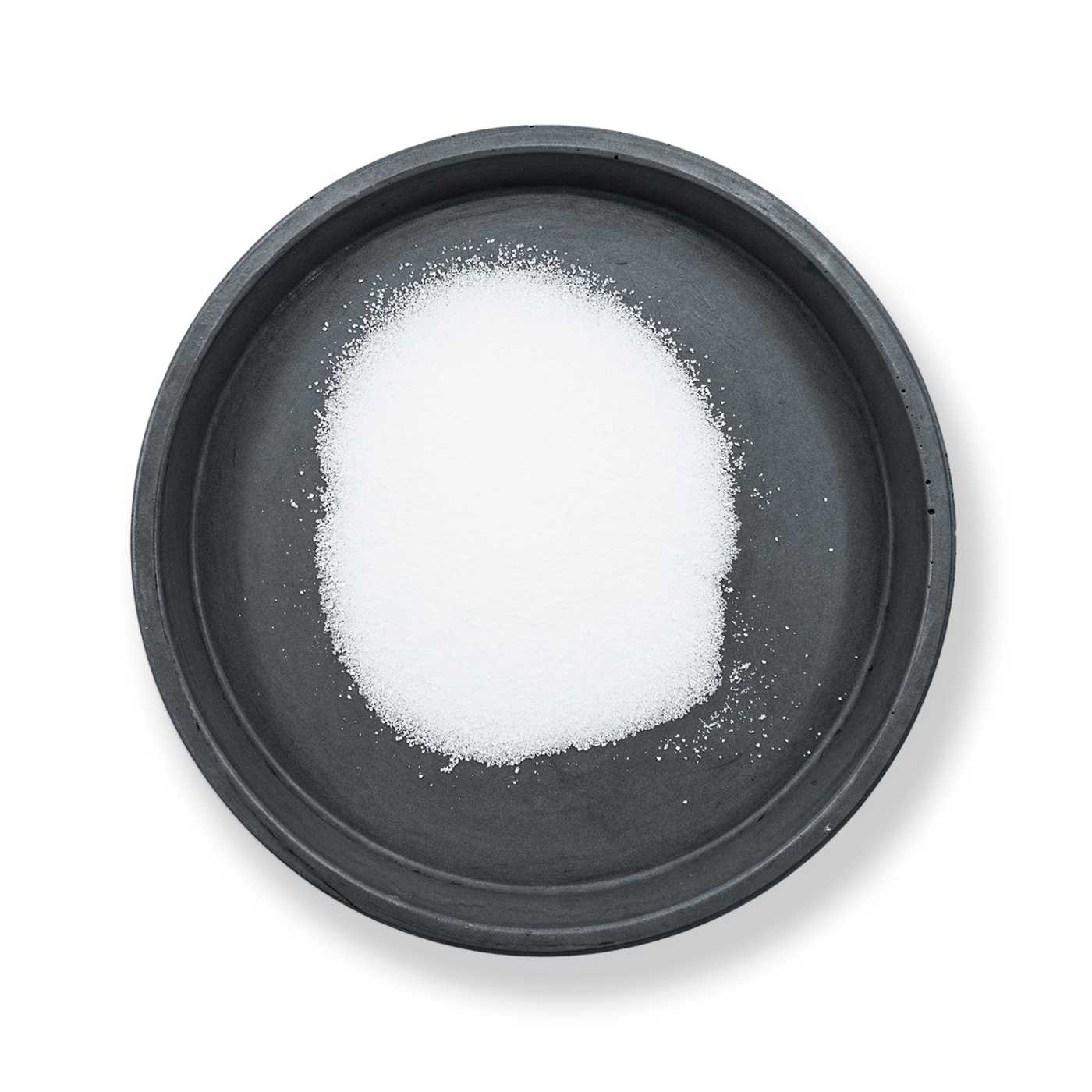
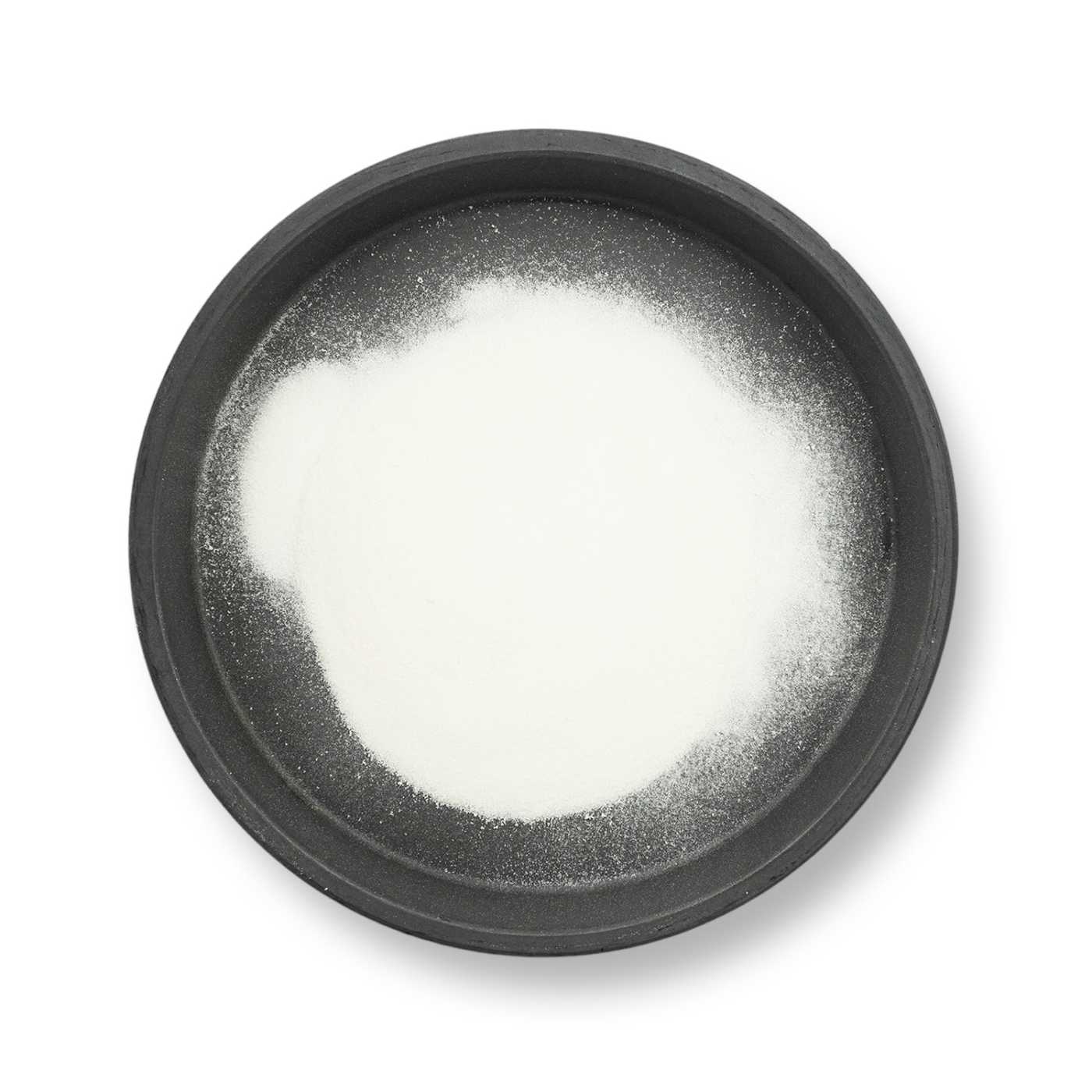
This is Silica, hydrophilic silicon dioxide, a raw material that serves as a thickener, carrier and absorbent in a formulation. It is used when an anhydrous or oil-based system needs to be thickened without wax, to mattify the skin, prevent powder caking, or to bind oily and fragrance components into a free-flowing form. It is an ingredient of European origin, chemically inert, which does not affect the colour or scent of the finished product.
Unlike hydrophobic types of silicon dioxide, this version has an unmodified surface that wets well with water. In practice, this means it disperses more easily in aqueous and polar systems and, in oils, forms a network that increases viscosity and prevents ingredient separation.
What silicon dioxide does in a formulation
- Thickens anhydrous systems – in oils, esters and silicones it creates a fine three-dimensional network that increases viscosity and gives the product a gel-like consistency. It is suitable where waxes are not desirable, for example in oil gels and cleansing balms.
- Stabilizes suspensions – prevents sedimentation of pigments, exfoliating particles or plant powders in oils and anhydrous bases.
- Absorbs oil and moisture – thanks to its large surface area it binds sebum, which is why it is used in mattifying powders, dry shampoos and products for oily skin.
- Improves flowability – in powder products it acts as an anti-caking agent that prevents clumping and improves powder flow during filling.
- Carrier for liquid ingredients – it can absorb fragrance oils, essential oils or oil extracts and convert them into a free-flowing mixture that can be further incorporated into powders or bath bombs.
Use in formulation
Silicon dioxide is insoluble in both water and oils and is processed as a dispersed substance. The key to results is thorough dispersion: the powder is added gradually with constant stirring, and the mixture is then mixed well, ideally with high shear. Poorly dispersed silicon dioxide thickens weakly and small lumps may remain in the product.
When thickening oils, viscosity does not build up immediately. The network stabilizes only after some time, so it is advisable to assess the final consistency after a few hours and adjust the dosage accordingly. A typical dosage in oil systems is approximately 1 – 5%; in powder products it is commonly used at higher levels depending on the desired absorption effect. The precise value should be verified in the specific formulation.
Silicon dioxide thickens most effectively in non-polar oils and esters. Polar components such as ethanol, glycerin or a larger proportion of water disrupt the network, so in such systems expect lower viscosity or higher dosage.
The raw material is thermally stable and can be added to a heated oil phase or cold. It does not change with pH changes and does not react with common cosmetic ingredients, so it can be combined with most emulsifiers, preservatives and active ingredients. It does not require preservation on its own, but aqueous systems to which it is added must be preserved in the usual way.
The powder is extremely light and billows when poured. When working with the dry material it is therefore practical to protect the respiratory tract, work without drafts, weigh it carefully and incorporate it directly into the oil or powder component.
Suitable for products such as
- Oil gels and cleansing balms – thickening without wax, clear or slightly cloudy texture.
- Mattifying powders and loose mineral makeup – sebum absorption, improved flowability and application.
- Dry shampoos – binding excess sebum in hair without rinsing.
- Bath bombs and bath tablets – carrier for fragrance oils, reduced stickiness and crumbling of the mass.
- Scrubs and anhydrous masks – stabilizing particles in an oil base so they do not sink to the bottom.
- Creams and emulsions for oily skin – in small amounts promotes a matte, less greasy feel on the skin.
What's good to know
In aqueous systems, hydrophilic silicon dioxide does not significantly thicken on its own; a high concentration would be needed for that. Gums or carbomers are more suitable for thickening the water phase; silicon dioxide is better applied here as an absorbent or additive for a matte feel.
At higher dosages in creams and oils, the product may feel drier or even “chalky” and oils will develop a slight haze. In light emulsions, a small amount is therefore sufficient. On the skin it leaves a velvety, matte touch, and at higher levels can be felt as a fine powder.
Silicon dioxide is never added all at once to the entire volume. When poured in quickly it forms lumps that are already difficult to break up. The correct approach is to add it in portions to a stirred base, or to pre-mix it with a small amount of oil into a smooth paste.
Frequently asked questions
Is silicon dioxide soluble in water?
No, silicon dioxide does not dissolve in water or oil. It is an insoluble powder that is dispersed in the product. The hydrophilic type wets well with water, so it disperses in aqueous mixtures without forming floating lumps, but in a static mixture it may settle over time if the system is not sufficiently viscous.
How is silicon dioxide added to oil to thicken it?
It is added gradually in small portions with constant stirring, and the mixture is then thoroughly homogenized. Viscosity builds up only after the network has stabilized, so consistency is assessed after a few hours. Thickening is most effective in non-polar oils and esters; approximately 1 – 5% is typically used, and the precise amount depends on the type of oil and the desired texture.
Is silicon dioxide suitable for anhydrous products?
Yes, anhydrous products are its primary application. It thickens oils and balms without wax, stabilizes particles in oil scrubs, improves the flowability of powders and binds fragrance oils in bath bombs. In an anhydrous system it does not require preservation and is not sensitive to temperature or pH.
Does silicon dioxide change the colour or fragrance of a product?
No, silicon dioxide is odourless and has no colour of its own. In clear oils at higher dosages it will introduce a slight haze; in powders and emulsions it has no visible colour effect. It does not react with fragrance or active ingredients, so it does not affect their stability or the character of the scent.
What is the difference between hydrophilic and hydrophobic silicon dioxide?
The difference lies in the surface treatment. Hydrophilic silicon dioxide has an unmodified surface, wets with water and disperses well in both oil-based and mixed systems. The hydrophobic type has a surface treated to repel water, and is used for water-resistant products and thickening pure oils. For everyday home and professional cosmetics production, the hydrophilic type is more versatile.
Is silicon dioxide suitable for oily skin?
Yes, it is used in products for oily skin as a sebum absorbent. Thanks to its large surface area it binds excess oil and leaves a matte, velvety touch on the skin. It is added in small amounts to light creams, powders or mattifying primers. At higher dosages the skin may feel drier, so the amount is chosen according to the product type.