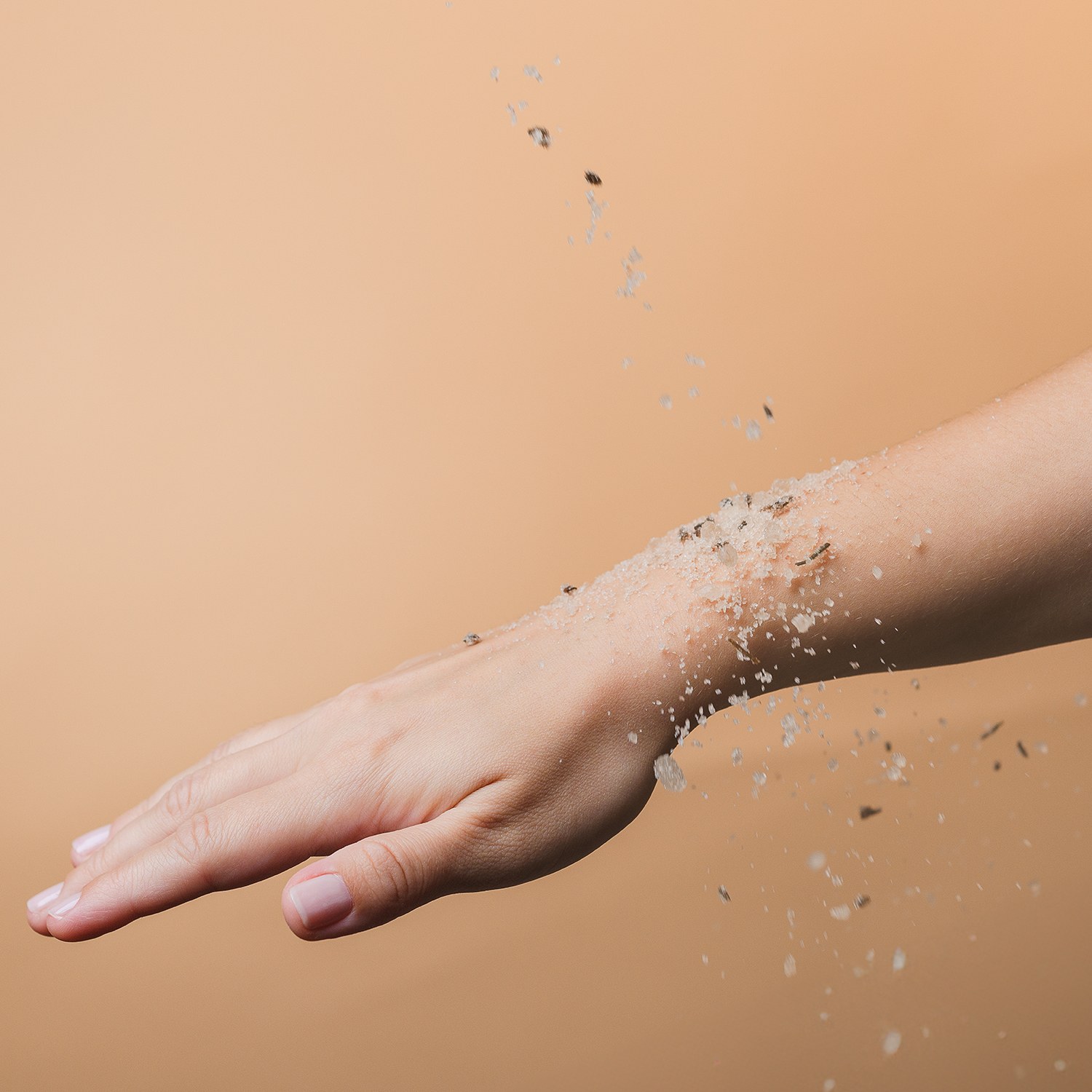
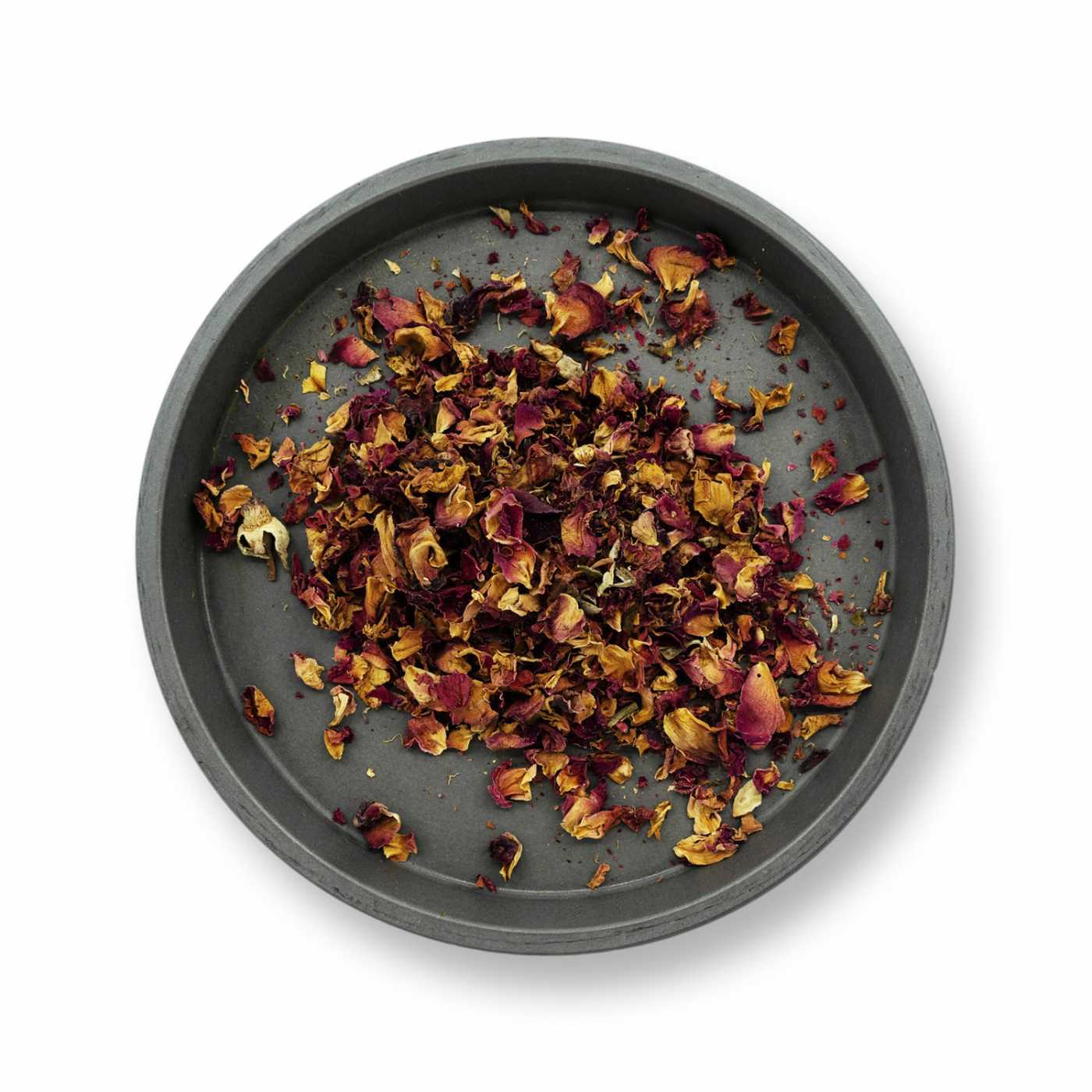
Rose petals, red are dried petals of the cabbage rose (Rosa centifolia) that give bath salts, bath bombs, soaps and body cosmetics a visible floral element. They do not dissolve in water, oil or alcohol. They remain in the product as visible particles.
The petals are suitable for products for all skin types, including sensitive, dry and mature skin. They are of European origin, processed only by drying, and are both cosmetic and food grade.
Effects of the cabbage rose
- Soothing effect – eases the signs of skin irritation.
- Toning – the skin feels fresher after use.
- Astringent effect – gently tightens the skin.
- Antioxidant action – substances from rose flowers help protect the skin against free radicals.
Use in formulations
The petals are added to the product only at the end, at a temperature below 40 °C. This applies to both powder and fat-based blends. Let the melted fat phase cool down first, and stir in the petals only afterwards.
When the product is poured into moulds, their low density becomes apparent. The melted fat lifts them, and the petals float to the top.
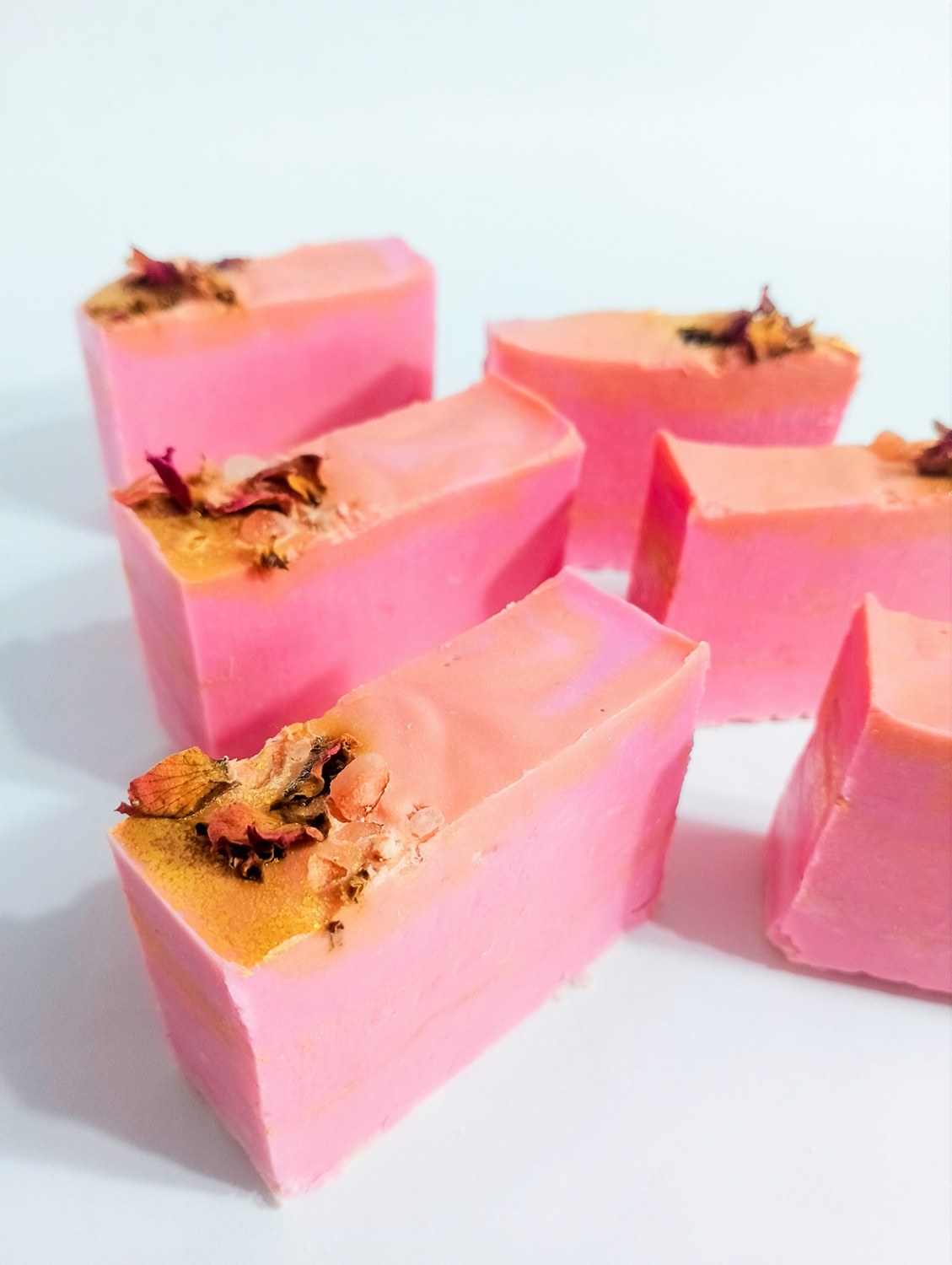
If you place the petals at the bottom of the mould and pour melted fat over them, a colour gradient forms once the product sets. Take the floating of the petals into account when planning the look of the product.
The petals are compatible with other raw materials without restrictions. Depending on the look you want, they can be replaced with other dried flowers, for example cornflower, calendula or lavender.
Suitable for products such as
- Bath salts and powder bath blends – the petals are stirred into the finished blend and float to the surface of the water.
- Bath bombs – the petals remain visible in the mixture.
- Fat-based bath blends poured into moulds – making use of the colour gradient created by the floating of the petals.
- Soaps – as a plant ingredient, where you need to expect a colour change in an alkaline environment.
- Shower and bath products, body and face care – in rinse-off and leave-on products for the face and body, wherever the petals are meant to be visible.
Good to know
The colour of the petals is sensitive. In roses it is produced by anthocyanins, plant dyes that change shade depending on pH and on contact with metal ions (iron, calcium, aluminium). They also do not tolerate heat, which is another reason to add the petals only to a cooled blend.
In an alkaline environment, including cold process soap, expect the petals to darken or even turn brown.
In the bath, the petals float on the surface. After the water is drained, however, they remain in the tub and may block the drain. Use them sparingly. You can recommend that your customers use a small cloth bag, which is removed together with the petals after the bath.
We recommend testing the finished product containing dried flowers before sale. Check that the petals do not go mouldy or change colour during storage, do not stain the tub and do not clump together in water.
Frequently asked questions
Do rose petals dissolve in water or oil?
No, rose petals do not dissolve in water, oil or alcohol. They remain in the product as visible particles. They are used where they are meant to be part of the look: in bath salts, bath bombs, soaps and fat-based blends poured into moulds. In the bath, they float on the surface of the water.
Are rose petals suitable for cold process soap?
Rose petals can be used in soap, but in cold process soap you need to expect a colour change. The soap batter is alkaline, and the dyes of rose flowers darken in such an environment. The petals may even turn brown. The shade of the dyes is also affected by contact with metal ions, for example iron, calcium or aluminium.
At what temperature are rose petals added to a product?
Rose petals are added at a temperature below 40 °C, at the very end of production. Let the melted fat phase cool down first, and stir in the petals afterwards. A higher temperature damages their colour, because the dyes of rose flowers are sensitive to heat.
Why do rose petals float to the top in a poured product?
Rose petals have a low density, so once the product is poured into a mould, the melted fat carries them up to the surface. You can use this to your advantage. Petals placed at the bottom of the mould create a colour gradient once the melted fat is poured over them and sets. Take this behaviour into account in advance when planning the look of the product.
Can rose petals from bath salts block the drain?
Rose petals can block the drain, especially if there are a lot of them in the bath. They do not dissolve in water, and residue remains after the tub is drained. Using them sparingly in the bath blend helps, as does a small cloth bag into which the blend is poured and which is removed together with the petals after the bath.
Are rose petals suitable for sensitive skin?
Yes, petals of the cabbage rose are suitable for all skin types, including sensitive, dry and mature skin. Rose flowers are credited with a soothing and toning effect. The petals are used for the face and body, in rinse-off and leave-on products.