

Spend over €100 for discounted shipping!

+421 950 333 113[email protected]

SALTS

Sea Salt, Coarse, 5 kg

Pack size1 kg5 kg25 kg

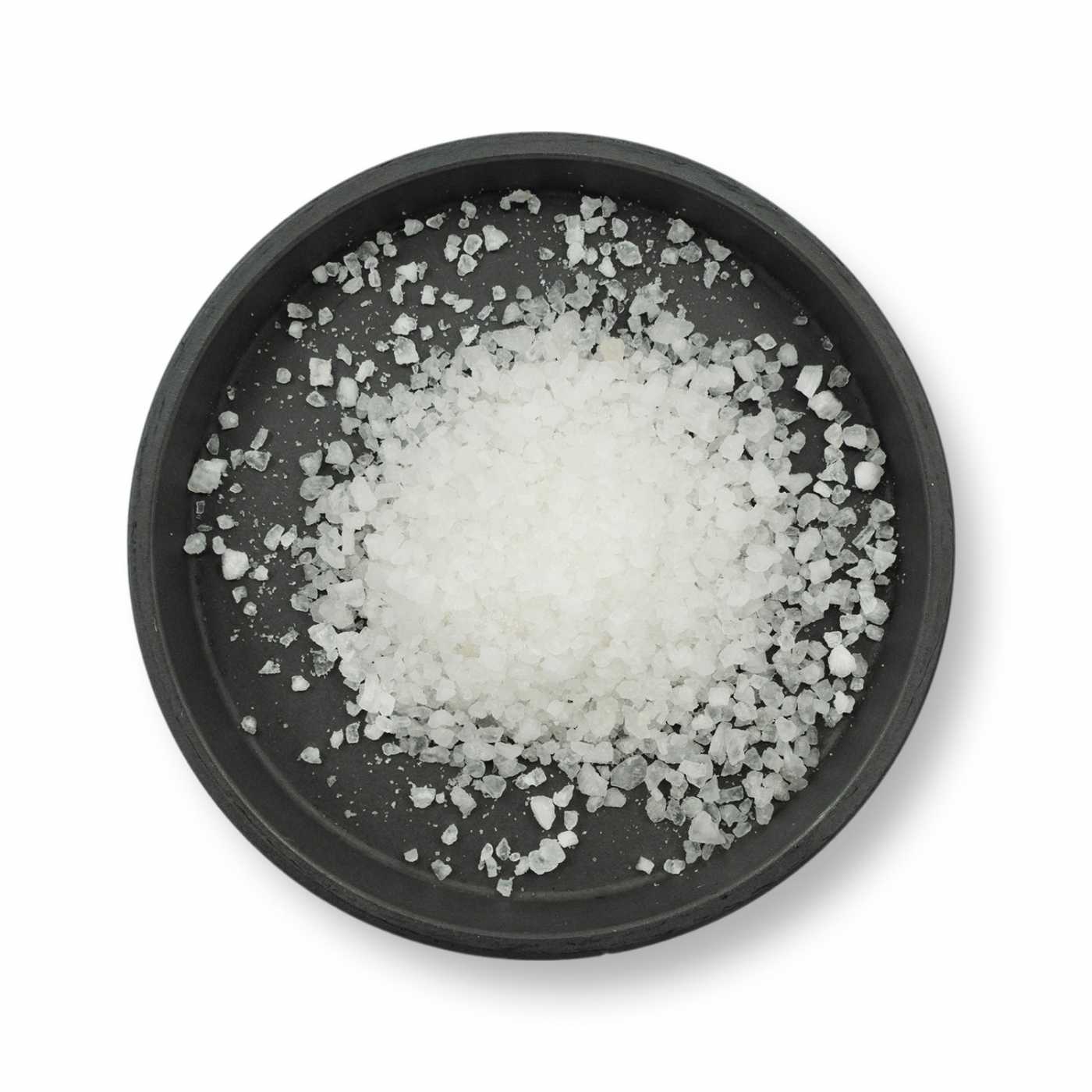
Coarse sea salt is natural sodium chloride of European origin. In a formulation it works as an active ingredient with several roles: in bath salts and bath bombs it forms the base of the recipe, in shower gels and… full description

AvailabilityIn stock · 28 packs
Product codeSOL008_5
Batch260131
Best before01/2029
€5.45incl. VAT€1.09/kg

Lowest price in the last 30 days: €5.45

Product description

Coarse sea salt is natural sodium chloride of European origin. In a formulation it works as an active ingredient with several roles: in bath salts and bath bombs it forms the base of the recipe, in shower gels and shampoos it adjusts the viscosity, in soaps it hardens the bar, and in scrubs it provides the mechanical effect. Coarse grains suit any use where the salt should stay visible, or where it is dissolved in water before use.

The salt is of food and cosmetic grade, is not classified under CLP and contains no fragrance allergens. It works equally well for making cosmetics and in the kitchen.


What it is used for

  • Bath salts and bath bombs – the coarse grains can be coloured and scented, and dissolve gradually in water. In bath bombs it serves as a decorative ingredient.
  • Shower gels and shampoos – in surfactant systems it increases viscosity. With anionic and amphoteric surfactants, a small amount of dissolved salt is enough to thicken the product.
  • Body and foot scrubs – the grains remove dead skin cells mechanically. Coarser grains are better suited to the body, feet and elbows than to the face.
  • Soaps – dissolved in water before saponification, it firms the finished soap. In a higher proportion it produces salt soaps.
  • Deodorants – at a low usage rate it dissolves in the water phase.

Use in a formulation

Salt belongs in the water phase or is incorporated afterwards, always dissolved. Coarse grains dissolve more slowly than fine salt. First prepare a solution in part of the water, slightly warmed if needed, and only then add it to the recipe. Processing is recommended at a temperature below 80 °C.

The recommended usage rate in emulsions, gels and surfactant products is approximately 0.5–2%. In bath salts the proportion is significantly higher. There the salt is usually the main ingredient, to which oil, fragrance composition or dye is added.

When thickening a shower gel, add the salt gradually in small portions as a solution and let the product rest after each addition. Viscosity rises only up to a certain point. Once this point is exceeded, viscosity starts to fall again and the product cannot simply be brought back.

Salt tolerates anionic, amphoteric and non-ionic surfactants and works at acidic, neutral and alkaline pH. In anhydrous recipes, such as bath salts or oil scrubs, it stays in its original granular form.


Good to know

Sodium chloride is an electrolyte. With thickeners and emulsifiers sensitive to electrolytes, check compatibility in a small test batch before adding the salt to the whole batch.

Do not add undissolved grains directly to an emulsion or gel. In a thick mass the salt dissolves very slowly and could feel rough on the skin where that is not intended.

In bath salts and other anhydrous products the salt does not require a preservative. In water-based recipes, however, it does not replace one; at the usual usage rate it does not provide preservation. In scrubs with a water phase, bear in mind that the grains gradually dissolve and the scrub loses its grainy texture.


Frequently asked questions

Is coarse sea salt soluble in water?
Yes, sea salt dissolves in water completely, but coarse grains need more time than fine salt. For water-based products, first prepare a solution in part of the water and add it to the recipe. In oils and anhydrous blends the salt does not dissolve and stays in granular form.
How much sea salt should be added to a shower gel?
The approximate usage rate in surfactant products is 0.5–2%. Add the salt as a solution in small portions until the product reaches the required viscosity. The effect depends on the specific combination of surfactants, so determine the right amount in a test batch and do not go past the point where viscosity falls again.
Can coarse sea salt be used in a body scrub?
Yes, coarse grains are especially suitable for oil scrubs for the body, feet and elbows. For the face, finer salt or a gentler type of exfoliant is recommended. In an anhydrous oil scrub the grains remain intact; in scrubs with a water phase they gradually dissolve.
Does sea salt in bath salts replace a preservative?
In anhydrous bath salts a preservative is not needed as long as the product stays loose and dry. In water-based products, however, salt does not replace a preservative. At the usual usage rate of 0.5–2% it does not protect against microbial growth, and a water-based recipe must be preserved in the standard way.
What is the difference between coarse and fine sea salt in a formulation?
Both are sodium chloride and differ only in grain size. Coarse salt dissolves more slowly and suits uses where it should stay visible: bath salts, body scrubs and decorative blends. Fine salt is better suited to recipes where the salt dissolves without preparing a solution.
Is sea salt suitable for cold process soap?
Yes, salt is commonly used in soap making. Dissolved in the lye solution before saponification, it firms the finished soap. A higher proportion of salt gives a so-called salt soap. With coarse grains, dissolve the salt completely before use, or take its texture into account in the finished soap.

Parameters

INCI
Sodium Chloride
CAS No.
7647-14-5
EC number
231-598-3
Product color
White
Country of origin
Croatia
Formulation phase
Water phasePost-addition
Function in formulation
Active ingredient
Recommended processing temperature
< 80 °C
Recommended dosage range
0,5 – 2, v kúpeľových soliach výrazne viac %
Application type
Leave-onRinse-off
Solubility
Water miscible
Suitable for
All skin types
Biodegradability
Not applicable
Natural Index (NI ISO 16128)
1,00
Natural Origin Index (NOI ISO 16128)
1,00

Product documentation

TDSTechnical Data Sheet
Physical parameters and processingPDF ↓
Download all (ZIP)

1 PDF files in one archive

Learn how to work with it

From our blog
Szilvia9 Aug 2026HU

Verified purchase

Sea salt — I use it as an additive

Translated automatically

Michal9 Aug 2026SK

Verified purchase

Good salt — An ingredient

Translated automatically

Peter9 Aug 2026SK

Verified purchase

It is a great product — Excellent sea salt as an additive to the bath.

Translated automatically

Marianna H.13 Oct 2026SK

Verified purchase

Variant: Morská soľ, hrubozrnná, 1 kg
Nóra S.17 Sept 2026HU

Verified purchase

Variant: Morská soľ, hrubozrnná, 1 kg
(5 reviews)