Vitamins, not just from within
In the winter period our body demands doses of vitamins more than ever, ones that are not available in their natural form as in other periods. Vitamins do not help only from within, though — in cosmetics they can serve the skin and hair directly. In this article we look at vitamins C and E, the B group and vitamin A.
- Antioxidant protection
Vitamin C scavenges free radicals and, together with vitamin E, protects the skin against the damage they cause.
- Collagen support
Vitamin C helps keep collagen molecules “together” — the skin is more elastic and fresher.
- A brighter complexion
Topically applied vitamin C reduces hyperpigmentation and pigment spots fade.
- Nourishment for skin and hair
Vitamin E hydrates, soothes sensitive skin and strengthens the hair and the scalp.
The first property you need to know about a vitamin before mixing it into a formulation is its solubility:
Vitamin C
Vitamin C, or L-ascorbic acid, is one of the vitamins that a human being cannot synthesise in the body, and therefore it is necessary to supply it to the organism either in its natural form (fruit and vegetables that contain it), or in the well-known tablet or powder form. In this case this is nutrition from within. A lack of vitamin C also manifests itself on our skin, and in case of its deficiency it is possible to supplement it from the outside as well, in the form of skin-nourishing products.
Vitamin C is essential especially in the following layers of the skin:
- Epidermis – this is the external and in fact the top layer of our skin. Here we find melanocytes, which are responsible for the formation of the pigment melanin in our skin.
- Dermis – this is the deeper layer of the skin located under the epidermis. Here we find fibroblasts, responsible for the production of collagen.
What reduces the level of vitamin C in the skin?
A loss or reduction of the level of vitamin C precisely in these skin layers can be caused by:
- Ageing – a process that none of us can fairly avoid, but it is equally up to us whether we accelerate this process by an improper lifestyle or significantly slow it down by a healthy way of living and a more responsible lifestyle.
- Excessive exposure to UV radiation – a lot has already been written about excessive sunbathing and its drawbacks. If you do not want to deprive yourself in the summer of the touch of hot sun rays and a bronze appearance, at least sufficient protection against UV rays is important.
- Excessive exposure to pollutants, which include especially cigarette smoke and ozone.
How does vitamin C work in the skin?
As an antioxidant
Free radicals can damage various vital molecules in the body, such as proteins, lipids and nucleic acids (such as DNA and RNA). They can enter the skin precisely through its disruption by toxins and pollutants, but also when the skin is excessively exposed to UV radiation, when disruption also occurs. However, they are also generated through our internal metabolism, especially with increasing age, when their production increases while natural defence mechanisms lose strength.
Vitamin C acts in the organism in two ways at once:
- it scavenges free radicals by providing the organism with electrons that destroy them,
- it maintains the level of alpha-tocopherol (vitamin E), which acts precisely against free radicals.
As collagen support
Collagen is a protein in our body responsible for beautiful, fresh, elastic and smooth skin. Its production decreases with age, and the result is especially less elastic skin and wrinkles – probably the most frequent manifestation of ageing skin.
Vitamin C helps to keep collagen molecules “together”, which in practice is reflected in rejuvenated, fresher skin.
As protection
Vitamin C cannot be used as a sunscreen cream, but thanks to the properties mentioned above it can help you limit the damage to your skin caused by ultraviolet light. In fact, the most effective combination for skin areas damaged in this way is a blend of vitamins C and E.
As a depigmenting agent
Pigment melanin, which causes the colouring of the skin, is formed in the epidermis. In the desired state this is manifested after the tanning process in the form of beautiful bronze skin. However, with age so-called age spots appear on our body, and degeneration of the skin also manifests itself at a younger age in the form of various pigment spots.
It is precisely topically applied vitamin C that has the cosmetic effect that spots disappear and the skin is brightened. It naturally influences the fading of hyperpigmented areas, but does not interfere where the skin is normally pigmented (as skin-bleaching products would do).
How to use vitamin C in cosmetics?
In formulations, the most commonly used are L-ascorbic acid (LAA) or vitamin C stabilised with Ascorbyl palmitate, which represent a chemically and synthetically active form of vitamin C. In nature, vitamin C occurs in the same portions as LAA. Both of these substances have the same molecular formula, but they have a different chemical structure (the atoms are, for example, linked to each other differently).
L-ascorbic acid is the most effective form of vitamin C on the market that you can use in your products (it is water-soluble).
Important: it is necessary, however, to point out the need for caution when using it in home conditions (professionals have this treated in their formulations), because L-ascorbic acid as such is very unstable and its incorrect use could cause you more problems than benefits. It is therefore necessary to use this form in combination with vitamin E, which keeps stability within the normal range.
Other forms of vitamin C also occur on the market – so-called vitamin C derivatives. These are actually added compounds that help prevent the degradation of vitamin C and are not dependent on pH, which is basically their main advantage, because in terms of nutrition they are less effective than L-ascorbic acid itself. You can find them in various forms, for example ascorbyl palmitate or magnesium ascorbyl palmitate.
In our range you can find vitamin C in powder form as well as in liquid form.
Vitamin E
As vitamins in cosmetics are already being discussed, we certainly cannot omit vitamin E. This liquid miracle has earned the attribute skin vitamin – of all the vitamins it is the best known and most used for maintaining skin health and strengthening immunity.
We often mistakenly think that it is one specific vitamin, but in fact it is formed by a group of several fat-soluble antioxidant vitamins called tocopherols (for interest: naturally occurring vitamin E exists in as many as eight chemical forms, namely alpha-, beta-, gamma- and delta-tocopherol and alpha-, beta-, gamma- and delta-tocotrienol, although most vitamin E products on sale are not composed of a mixture of all these forms).
In our range you can find three types, namely:
- 70% tocopherol
- 96% tocopherol
- tocopheryl acetate
Given that in its natural form it is contained in a fairly large number of foods from which carrier oils can be produced, it is possible to supplement vitamin E in your products in this form as well (since the recommended dosage of concentrated vitamin E is from 0.2% to 3%). It is present in quite a decent amount, for example, in almond, apricot kernel, olive and babassu oil, linseed oil, wheat germ oil, or poppy seed oil.
Just as vitamin C acts against free radicals, vitamin E is effective in the same way, but its greatest effect has been shown especially in the structure and regeneration of the skin and hair (it has an excellent ability to heal scars, burns and wounds). And as the main fat-soluble antioxidant in the human body, vitamin E is known for supplying nutrition to the skin and strengthening immunity.
Where and how to use vitamin E?
Topically, as a medicinal agent, it is used for nourishment. Its pronounced ability to hydrate and nourish will help you especially to soothe sensitive and damaged skin, which is usually dry skin affected by itching, flaking, inflammation, blisters, or various degenerative skin conditions such as dermatitis, mild psoriasis and eczema. Thanks to vitamin E you can thus avoid taking aggressive prescription medicines when treating various skin conditions. Its effects have also been recorded in cases of sunburn, better wound healing and a reduced incidence of scars.
In cosmetic preparations the pronounced moisturising ability of vitamin E is used (with regular use) precisely to prevent the formation of wrinkles (or at least minimise them) or skin sagging, thus supporting a youthful and radiant appearance of your complexion. It works best at night, so it is ideal to apply it in a night cream, or if you do not have a cream containing vitamin E to hand, simply drip 2-3 drops into the blend you use on your face and that is it.
Caring for dry skin applies not only to the face but also to the whole body. Full-body rinse-off treatments are an excellent choice, or you can use the vitamin in baths.
Just as vitamin E acts on the skin, it also acts on the hair and the scalp. It increases circulation in the scalp, which improves hair strength and overall hair health, thanks to which your hair will be silky, smoother and shinier, and if you have noticed more significant hair loss, it can help you in this regard as well. Again, it is enough to drip 2-3 drops of vitamin E into your shampoo and apply. Over time (usually within one to three months) your hair will reward you with a healthier appearance. If you want to give your hair even more nourishment, use a hair mask with vitamin E once or twice a week.
(Vitamin E is also a very good component in natural make-up removers. We will devote a separate article to this topic.)
Vitamin E has other uses too:
- during massage it can bring great relief, it increases energy and muscle endurance. It has also found application in sports massages, because it supports the so-called repair of muscles that have been damaged or impaired by excessively demanding exercise,
- during the actual manufacture of natural cosmetic products it acts as an antioxidant and prolongs the shelf life of oils.
Please note: in the case of any product containing water, a complex preservative agent is needed for preservation – we have already dealt with this topic, you can read more in the article Preservatives in cosmetics.
If vitamin E has not appealed to you so far, we believe that after reading this article you will not hesitate and this helper will find its place on your cosmetic shelf too.
B-group vitamins
Similarly to vitamin E, which in nature is formed by a group of eight so-called tocopherols, vitamin B is also formed by a group of several B vitamins – B1, B2, B3, B5, B6, B7, B9 and B12, which work as a complex but can also be used individually. For cosmetic purposes, vitamins B3 and B6 are used most often.
Vitamin B3
Vitamin B3, which occurs in the form of niacinamide or nicotinic acid, has very similar effects on the skin as vitamin C. It restores the skin, reduces hyperpigmentation, improves the appearance of the skin, whether it is weakened by the ageing process or is damaged or reddened and sensitive due to various skin conditions such as acne, mild psoriasis, or dermatitis. Niacinamide can also alleviate and, to some extent, help visibly repair damage caused by ultraviolet light, as well as eliminate the negative effects of various types of substances that pollute the air.
A great benefit of this vitamin compared with other beneficial and nourishing additives (not only vitamins) is its stability (physical and chemical) against the effects of heat and light.
Note: if you remember, in the post about vitamin C we mentioned that as 100% L-ascorbic acid it is very beneficial for the skin, perhaps the most of all the vitamins used in cosmetics, but its stability under the influence of external factors “fluctuates”, and therefore it is stabilised by adding vitamin E. In contrast, vitamin B3 does not need such support.
Vitamin B6
It is also called pyridoxine HCl (pyridoxine hydrochloride – it is the hydrochloride salt of vitamin B6). In medical practice it has been given the telling epithet “the nerve vitamin”, which clearly indicates what this form of B-group vitamins has the greatest merit in – in metabolism, functional metabolism, proper function of the nervous system and immunity, and as help in exhaustion and fatigue.
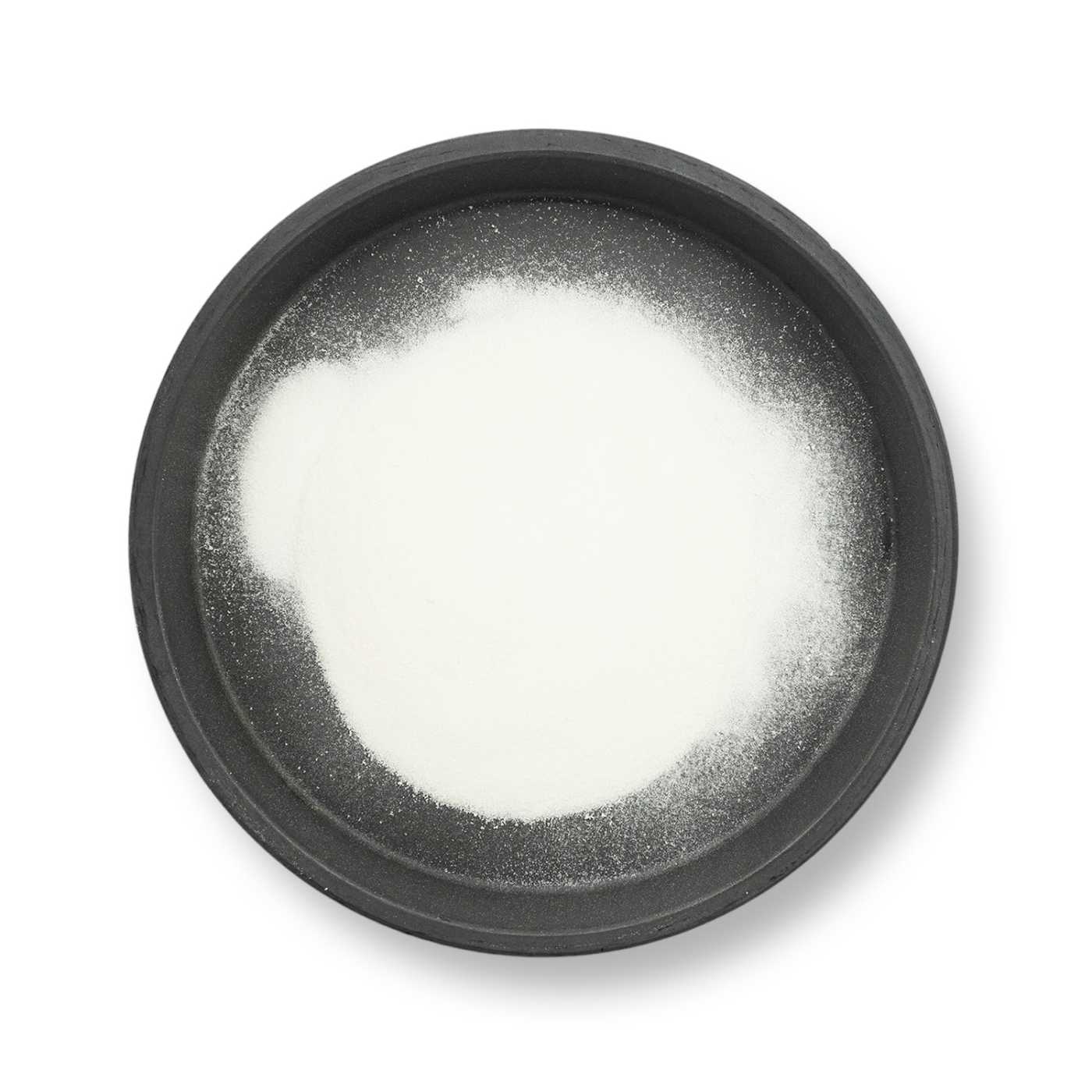
As far as physical and chemical properties are concerned, vitamin B6 is water-soluble and, just like the already mentioned vitamin B3 (niacinamide), it is stable in light and oxygen, while it is recommended to add it to formulations at a temperature lower than 40 °C (it is used from 0.05% to 0.3%).
Although all the B vitamins belong to one complex, the effects of the individual forms differ. Just as vitamin B3 has similar effects to vitamin C and essentially supplements it in its effectiveness in the nutrition, elasticity and reduction of hyperpigmentation of the skin, vitamin B6 has its main function in regulating sebum:
- it balances the level of sebum,
- it reduces excessive oiliness,
- it supports a healthy appearance of the hair,
- it increases the effect of anti-dandruff products.
You can thus use it by adding it both to hair products and to cleansing products (baths, soaps, shower gels).
Other forms of the B group
Here is a brief overview of the effects of the other forms of B-group vitamins:
| Form | Effect in cosmetics |
|---|---|
| B5, also called panthenol | It has excellent moisturising and anti-inflammatory effects on the skin, soothes it and helps to heal minor injuries and skin defects. It also hydrates the hair and the scalp and provides them with moisture. |
| B7, also called biotin | It has proved itself both in the form of dietary tablets and in cosmetic products for strengthening hair – it improves the quality of keratin structures (excellent for fine and fragile hair). |
| B9, or folic acid | In general it has the greatest effect in the care of ageing skin, it is important in the formation and repair of DNA. |
Storage tip: the last two vitamins mentioned are sensitive to oxygen and lose stability under its influence, therefore it is recommended to store products containing them in airless bottles. Of course, you will not do anything wrong if you use airless bottles for serums with any vitamins as well.
Vitamin A
We close the topic of vitamins with the last one from our range, vitamin A.
First, some terminology from the professional vocabulary, which may help you to orient yourself more easily when studying further information:
Vitamin A exists in two forms: retinoids and carotenoids. Both are converted in the organism into retinol – an important component for the formation of skin cells.
Beta-carotene is provitamin A and belongs precisely to the group of carotenoids.
Vitamin A is created in the human organism by supplementing beta-carotene – provitamin A, which in the organism serves either as a yellow-red pigment or as a so-called precursor of vitamin A (the starting substance whose conversion produces the final substance) – from one molecule of beta-carotene two molecules of vitamin A are formed.
Beta-carotene in the human organism mainly fulfils the function of an antioxidant, it also plays an important role in eye health, bone growth and the immunity of the organism. In case of its deficiency, the overall defence capacity of the organism decreases.
Interestingly, beta-carotene obtained from animal sources is not water-soluble, only fat-soluble, and therefore it is not easily excreted from the body, it is stored in body fat, and with excessive consumption it can accumulate and thus become toxic for the organism. By contrast, beta-carotene obtained from plant sources is water-soluble and therefore easily excreted from the body (toxicity caused by overdose is in this case very rare).
How to use beta-carotene in cosmetics?
In cosmetic products and personal care products, beta-carotene is mainly used for the preparation of:
- aftershave facial toners,
- bath products,
- cleansing products,
- make-up,
- hair conditioners,
- shampoos,
- facial care products and
- sun-care products.
It also improves the appearance of dry or damaged skin by reducing flaking and restoring the elasticity of the skin. In cosmetics, synthetically produced beta-carotene or natural beta-carotene is used. Both are water-soluble.
Frequently asked questions
Is it safe to use vitamin C and niacinamide in one formulation?
In the past, scientific research pointed to certain concerns about the joint use of vitamins C and B3 in formulations. They concerned a greatly increased pH – under the influence of L-ascorbic acid, B3 is converted into nicotinic acid, which causes the pH value in the formulation to rise significantly and can cause reddening of the skin. This is a true fact, but fortunately it occurs only under conditions where the formulation would be exposed to excessively high heat, and that for a long time.
There is therefore nothing to fear if you find a cosmetic product or formulation in which the combination of vitamin C and vitamin B3 appears, because under ideal conditions they increase their positive effects.
Can vitamin C for cosmetics be obtained directly from fruit and vegetables?
In nature, vitamin C is found only in fruit and vegetables. Cutting a lemon or a red pepper into a cream is probably not the most suitable form, is it? In cosmetics, unfortunately, a 100% natural form does not exist.
Do you use vitamins in your formulations? Which is your favourite?
You will find vitamin C, vitamin E and other vitamins and antioxidants for your formulations in our range.