Cajeput Essential Oil, 100ml
Pre-order€16.79(€167.90/l)

Essential oils, 100 ml
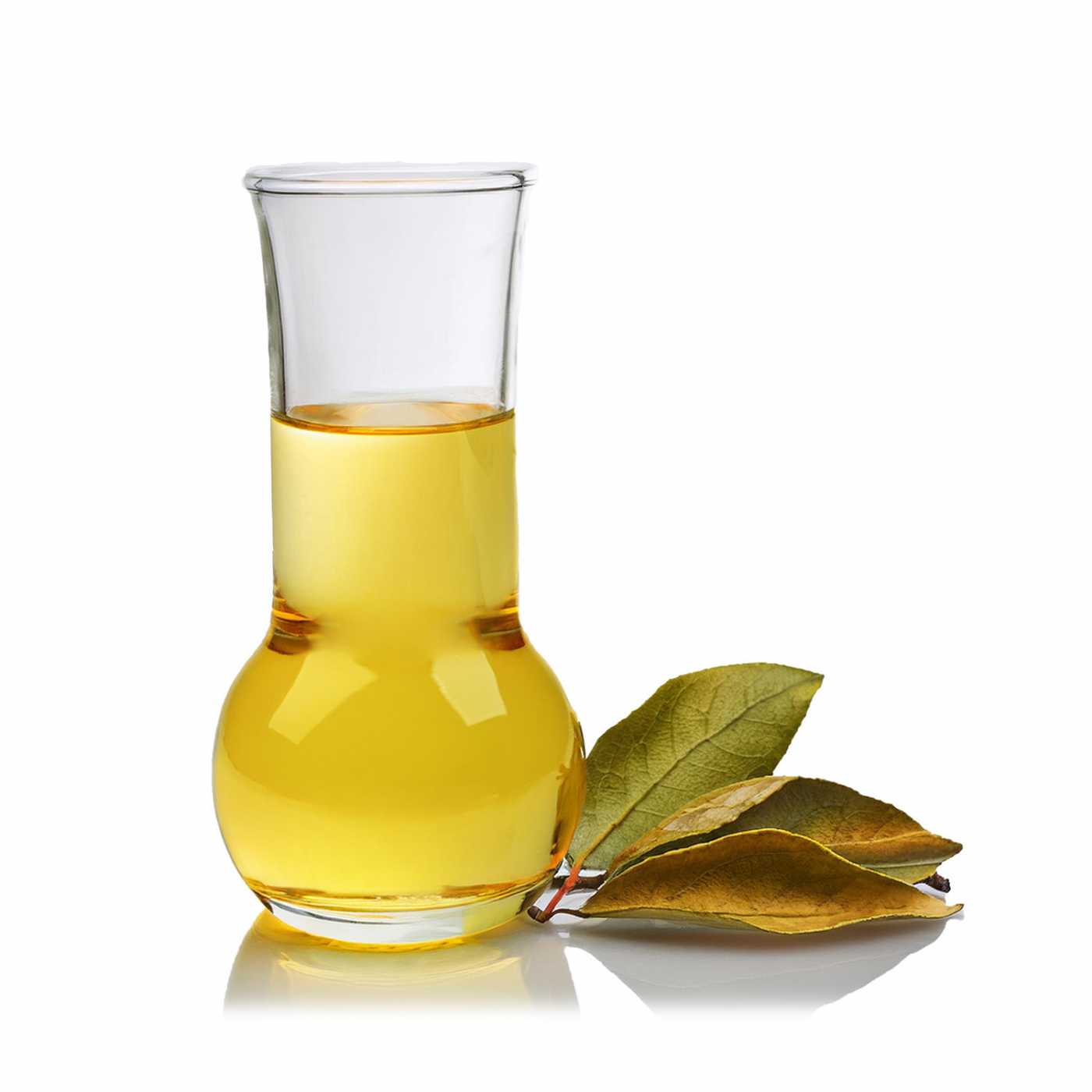
Bay leaf essential oil is a fragrance ingredient with a high eugenol content , a compound also known from clove oil. full description
This product is no longer sold.
We've retired it from our range. Take a look at our current selection — you might like it even more.
Bay leaf essential oil is a fragrance ingredient with a high eugenol content, a compound also known from clove oil. It is obtained by steam distillation from the West Indian bay tree (Pimenta racemosa), which grows in the Caribbean. It is used to fragrance soaps, shower and hair products, candles and diffuser blends. The oil is suitable for vegans.
The name bay leaf invites confusion with laurel. Bay laurel (Laurus nobilis) is a different plant and shares only a name with this oil. The oil comes from the West Indian bay tree.
The composition differs as well. Pimenta racemosa oil contains roughly 42–56% eugenol, along with myrcene and chavicol. Formulations that are based on bay laurel oil cannot be transferred to this raw material without recalculation.
The oil is added to the oil phase, to the cool-down phase or afterwards to the finished base. The temperature should always be below 40 °C so that the volatile components do not evaporate.
It blends well with alcohol and with other fragrance ingredients. In water-based products such as shower gel or spray, it is first dispersed in oil or in a solubiliser and only then added to the base.
This raw material has no fixed usage rate. The amount is determined by the IFRA certificate for the given product category. The deciding factor is whichever component of the oil gives the stricter limit. In most cases this is methyleugenol, which the oil contains at 0.1–2%.
European rules permit, for example, 0.0002% methyleugenol in the finished product for leave-on products and 0.001% for rinse-off products. An oil with 1% methyleugenol may therefore make up no more than 0.02% of a leave-on product and 0.1% of a rinse-off product. The commonly quoted usage rates of 0.5–2% for leave-on and 3–4% for rinse-off products are indicative only and cannot be relied on without recalculation.
The composition varies with origin and batch. The eugenol content can range from approximately 45% to over 75%, and the share of myrcene and chavicol fluctuates as well.
Calculate limits and allergens from the documentation for the specific batch, not from general values. The oil is sold in millilitres; when converting to grams, use the density given in the parameters.
The strict methyleugenol limit makes this oil best suited to rinse-off and fragranced products. In leave-on cosmetics, the permitted amount works out very low.
Eugenol is a skin sensitiser. It can be activated by enzymes and by light. The oil must never be applied to the skin undiluted.
Always dissolve the oil in a carrier oil or incorporate it into a product. We recommend a tolerance test before first use of the finished product.
The raw material is subject to classification under the CLP regulation. It is classified as CMR and contains components with this classification, including methyleugenol and estragole. When handling it, follow the safety data sheet.
For a finished cosmetic product, the methyleugenol restriction under Annex III of Regulation (EC) No 1223/2009 must be observed. Eugenol and other allergens must be declared on the packaging when the limits are exceeded.
Only customers with a delivered order can write reviews.