10% off everything in Base IngredientsStock up

+421 950 333 113info@handymade.store

Candle fragrance oils

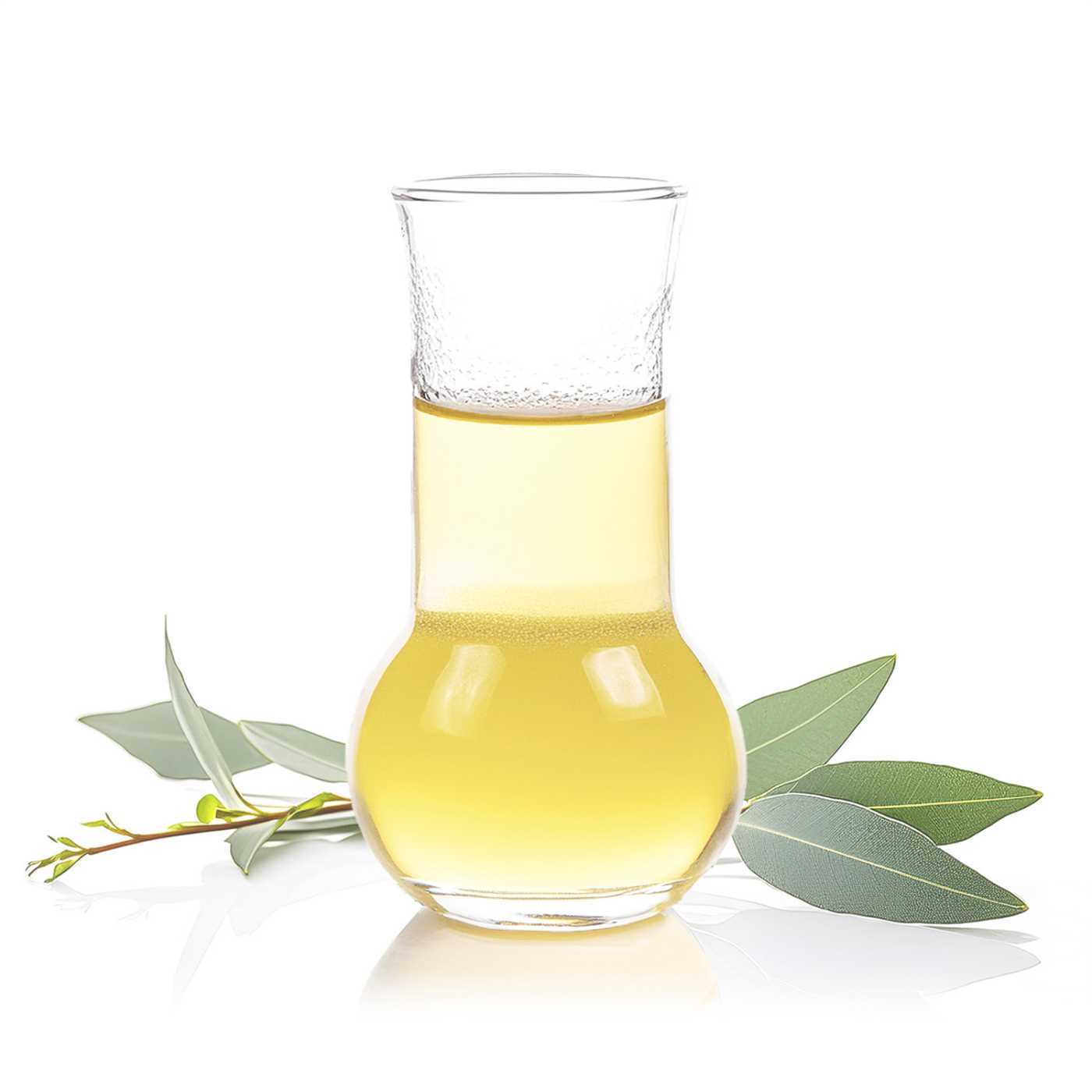
Eucalyptus Citriodora Essential Oil, 100 ml

Pack size10 ml100 ml500 ml1 l

Lemon-scented eucalyptus essential oil brings a fresh citrus fragrance to cosmetics and, according to the manufacturer, also antimicrobial and anti-inflammatory action. full description

AvailabilityIn stock · 41 packs
Product codeEON011_100
Batch21365
Best before08/2028
€13.64incl. VAT€136.40/l

Lowest price in the last 30 days: €13.64

Product description

Lemon-scented eucalyptus essential oil brings a fresh citrus fragrance to cosmetics and, according to the manufacturer, also antimicrobial and anti-inflammatory action. It is obtained by steam distillation from the Eucalyptus citriodora tree and in a formulation serves as both a fragrance component and an active ingredient. On the skin it feels cooling and refreshing, so it is particularly suited to products for oily and acne-prone skin, hair care for scalps prone to oiliness, and anywhere the fragrance is meant to invigorate. The oil is of South American origin, is vegan and has not been tested on animals.


Fragrance and character

The fragrance is distinctly citrus and fresh. The manufacturer states that its character is mainly down to citronellal and citronellol. The oil is therefore used as a citrus note in perfumes, massage oils, bath products, aromatherapy and hair care. The manufacturer also mentions its repellent properties and its use in products intended for time spent outdoors.


What the oil brings to a formulation

  • Fragrance component – a citrus, invigorating note for fresh summer recipes.
  • Antimicrobial action – according to the manufacturer, it supports clean skin, which is why the oil appears in cleansing gels and products for problem skin.
  • Anti-inflammatory and soothing action – the manufacturer states that it reduces redness and irritation. It is used in topical products for blemishes and in soothing body products.
  • Cooling and refreshing feel – after application it refreshes the skin, which you will appreciate in after-sun gel products or in body sprays.
  • Stimulation of the scalp – in hair oils and shampoos it adds a fresh fragrance and, according to the manufacturer, stimulates and revitalises the scalp.

Use in formulations

The oil is soluble in oils and in alcohol and does not dissolve in water. In anhydrous products such as body and massage oils, balms, butters or solid perfumes, it is mixed directly into the oil phase. In emulsions it is added only in the cooling phase, when the cream is below 40 °C. The oil is a blend of volatile components and a higher processing temperature is not recommended. For toners, facial waters or water-based sprays, it must first be incorporated with a solubiliser, otherwise it separates and forms droplets on the surface.

There is no single universal usage rate. The manufacturer does not state a recommended range, and the maximum amount in the finished product is determined by the IFRA limit for the given product category. For example, lip products fall into category 1, body creams and oils into category 5A, shampoos and soaps into category 9 and candles into category 12. The limits for all categories are listed in the IFRA certificate in the Product documentation section.

Before designing your recipe, first find the IFRA category of your product and its limit. Then choose the usage rate within that limit according to the fragrance intensity you want.

The oil is also used outside cosmetics: in candles, diffusers and aromatherapy, in bath bombs and bath salts, and in household cleaning products, where its fresh fragrance is put to good use.


Suitable for products such as

  • Cleansing gels and topical products for oily and acne-prone skin, where the antimicrobial character stated by the manufacturer is put to use.
  • Shampoos and hair oils for hair prone to oiliness and for sensitive scalps.
  • Body oils, butters and balms with a cooling, refreshing fragrance, for example after-sun products.
  • Soaps, bath salts and bath bombs.
  • Massage oils and fragrance blends with a citrus base.
  • Candles and diffusers.

Good to know

The substance is classified under the CLP Regulation and contains hazardous substances; it is labelled with the GHS07 pictogram (irritant, sensitisation). Detailed information on classification and safe handling is given in the safety data sheet.

The oil is an irritant and may cause sensitisation. It is incorporated into the finished product in a carrier oil, emulsion or other base, and in an amount that does not exceed the IFRA limit for the given product type.

Compatibility with common cosmetic ingredients is unrestricted, but we recommend checking the behaviour in your specific recipe in a small test batch.



Frequently asked questions

Is lemon-scented eucalyptus essential oil soluble in water?
No, it does not dissolve in water; it is soluble in oils and in alcohol. For toners, sprays or facial waters, it is therefore first mixed with a solubiliser, otherwise it separates and floats on the surface. In anhydrous products and in the oil phase of emulsions, it is incorporated directly without any additional auxiliary substances.
How much lemon-scented eucalyptus essential oil should be added to a cream or oil?
There is no uniform recommended usage rate; the maximum permitted amount is determined by the IFRA limit for the product category. Body creams and oils fall into category 5A, face creams into category 5B and lip products into category 1. You will find the limits for all categories in the IFRA certificate in the Product documentation section, and you should choose the actual amount according to the fragrance intensity you want.
When should lemon-scented eucalyptus essential oil be added to an emulsion?
It is added in the cooling phase, when the emulsion is below 40 °C. The oil is a blend of volatile components, so the recommended processing temperature is below 40 °C. After adding it, it is enough to stir the cream briefly so that the oil disperses in the fatty component of the emulsion.
Is lemon-scented eucalyptus essential oil suitable for oily and acne-prone skin?
Yes, according to the manufacturer it has antimicrobial and anti-inflammatory properties, which is why it is used in cleansing gels and topical products for oily and problem skin. It is always worked into a base and used in an amount within the IFRA limits. For sensitive skin, we recommend testing the finished product on a small area first.
Can lemon-scented eucalyptus essential oil be used in candles or a diffuser?
Yes, the oil is also intended for candles, diffusers and aromatherapy. Candles fall into IFRA category 12, whose limit is stated in the IFRA certificate for the product. In diffusers, its citrus, invigorating fragrance comes into its own, and the manufacturer also recommends it for products intended for time spent outdoors.

Parameters

INCI
Eucalyptus Citriodora Oil
CAS No.
8000-48-4
EC number
286-249-8
Product colour
GreenYellow
Country of origin
Brazil
Appearance
Liquid
Application area
FaceHairScalpBodyHands
Recommended processing temperature
< 40 °C
Application type
Leave-onRinse-off
Certifications
Vegan
Manufacturer's certificate
BRC
Natural Index (NI ISO 16128)
1,00
Natural Origin Index (NOI ISO 16128)
1,00
Organic content
0 %
Renewable Carbon Content (RCC)
100 %
Volume
100 ml

Product documentation

CoACertificate of Analysis
batch 21365PDF ↓
TDSTechnical Data Sheet
Physical parameters and processingPDF ↓
IFRAIFRA Certificate
batch 21365PDF ↓
AllergensAllergen Declaration
batch 21365PDF ↓
SDSSafety Data Sheet
Available for purchased products —
Download all (ZIP)

4 PDF files in one archive

Tatiana K.28 Oct 2026SK

Verified purchase

Viera I.25 Oct 2026SK

Verified purchase

Sara María H.R.21 Oct 2026ES

Verified purchase

Katalin C.11 Oct 2026HU

Verified purchase

Variant: Esenciálny olej, eukalyptus citrónový 100 ml

Šárka J.28 Sept 2026CS

Verified purchase

Variant: Esenciálny olej, eukalyptus citrónový 10 ml
(6 reviews)