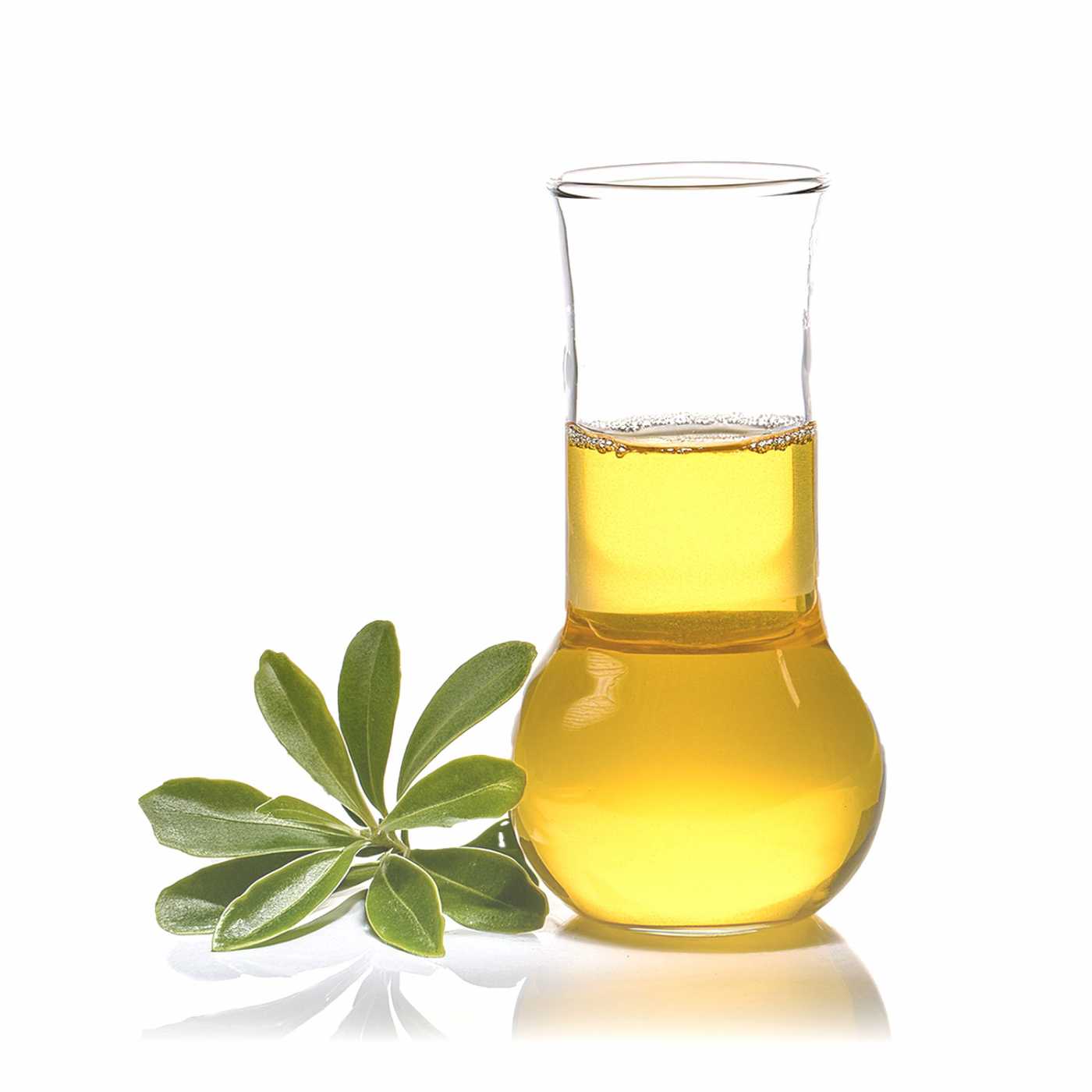
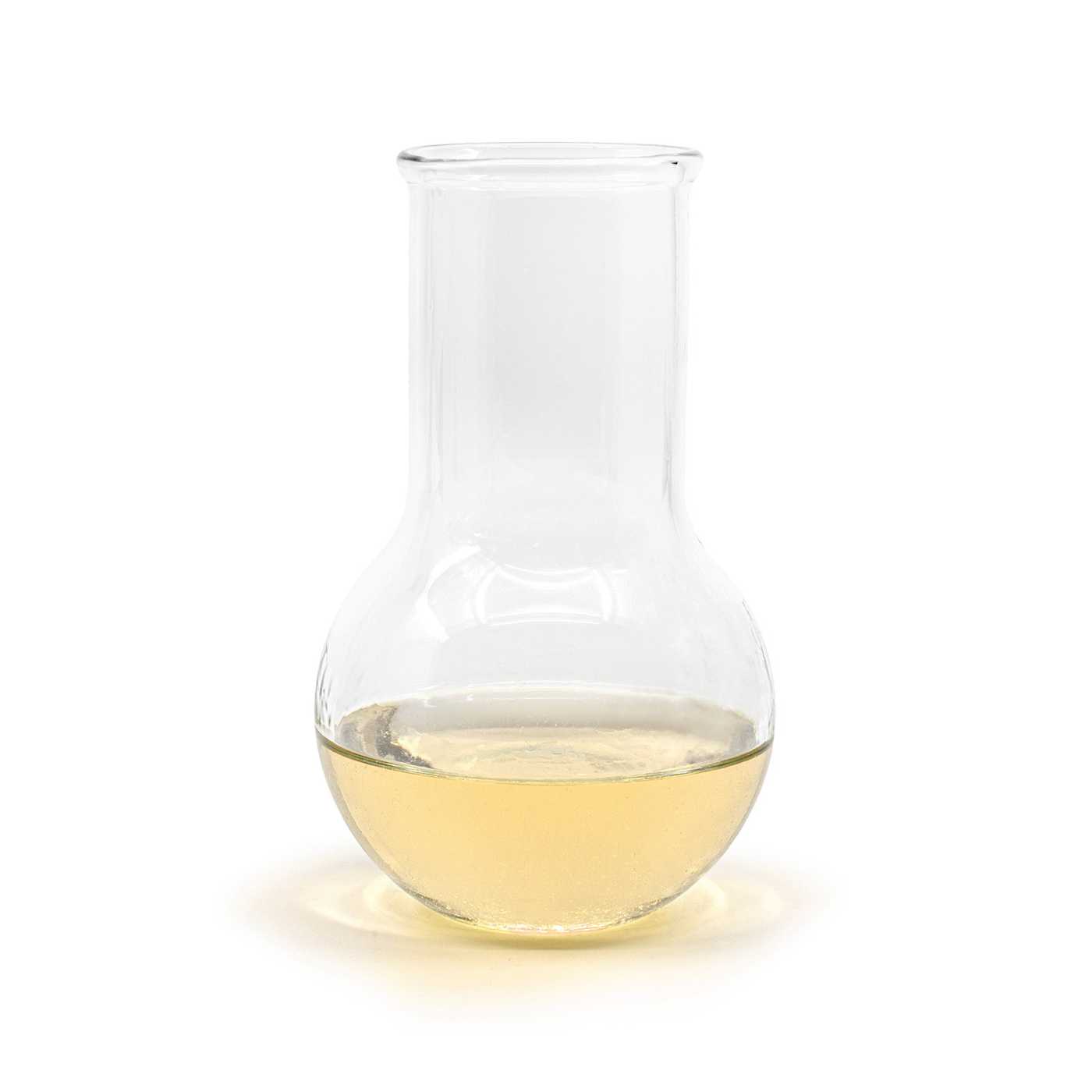
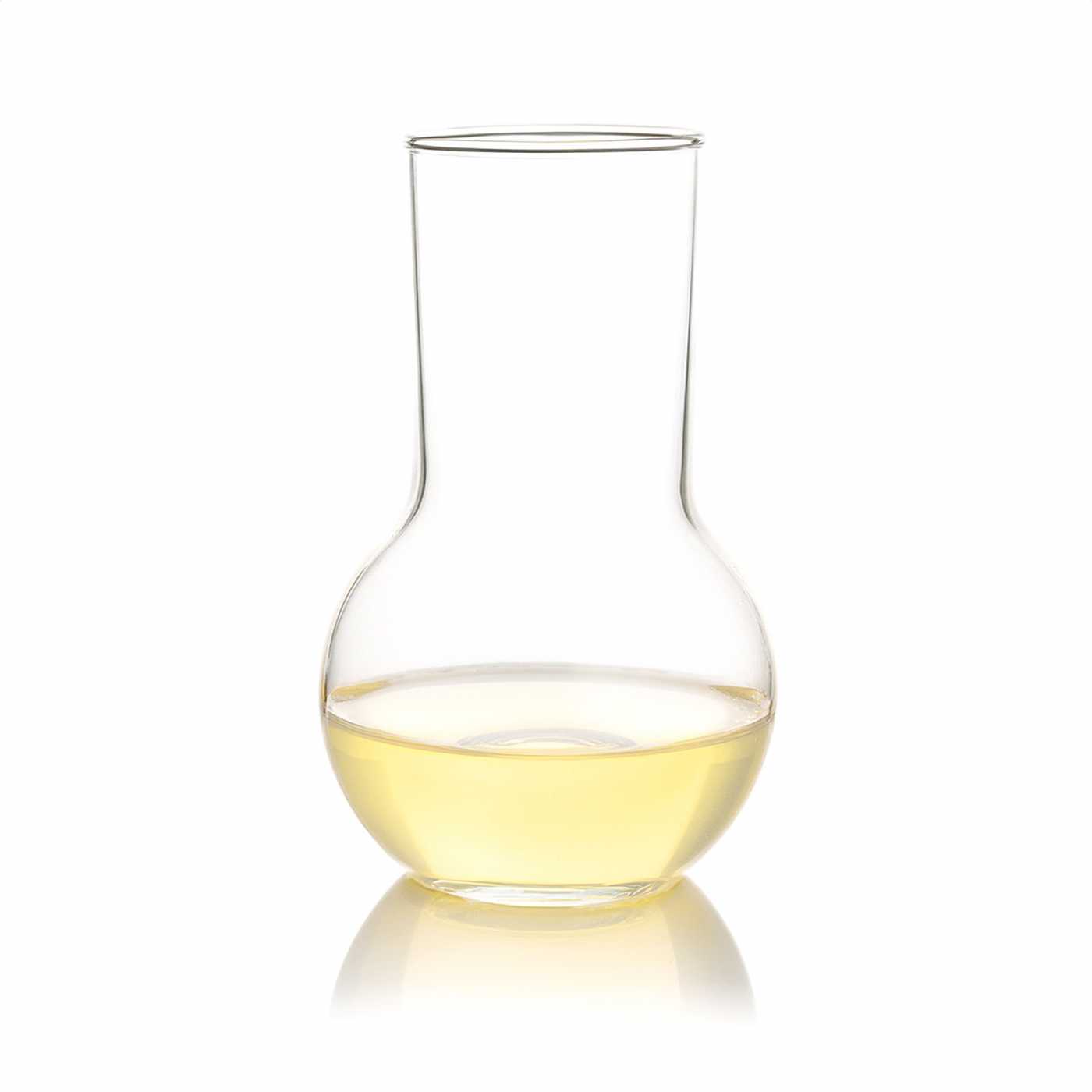
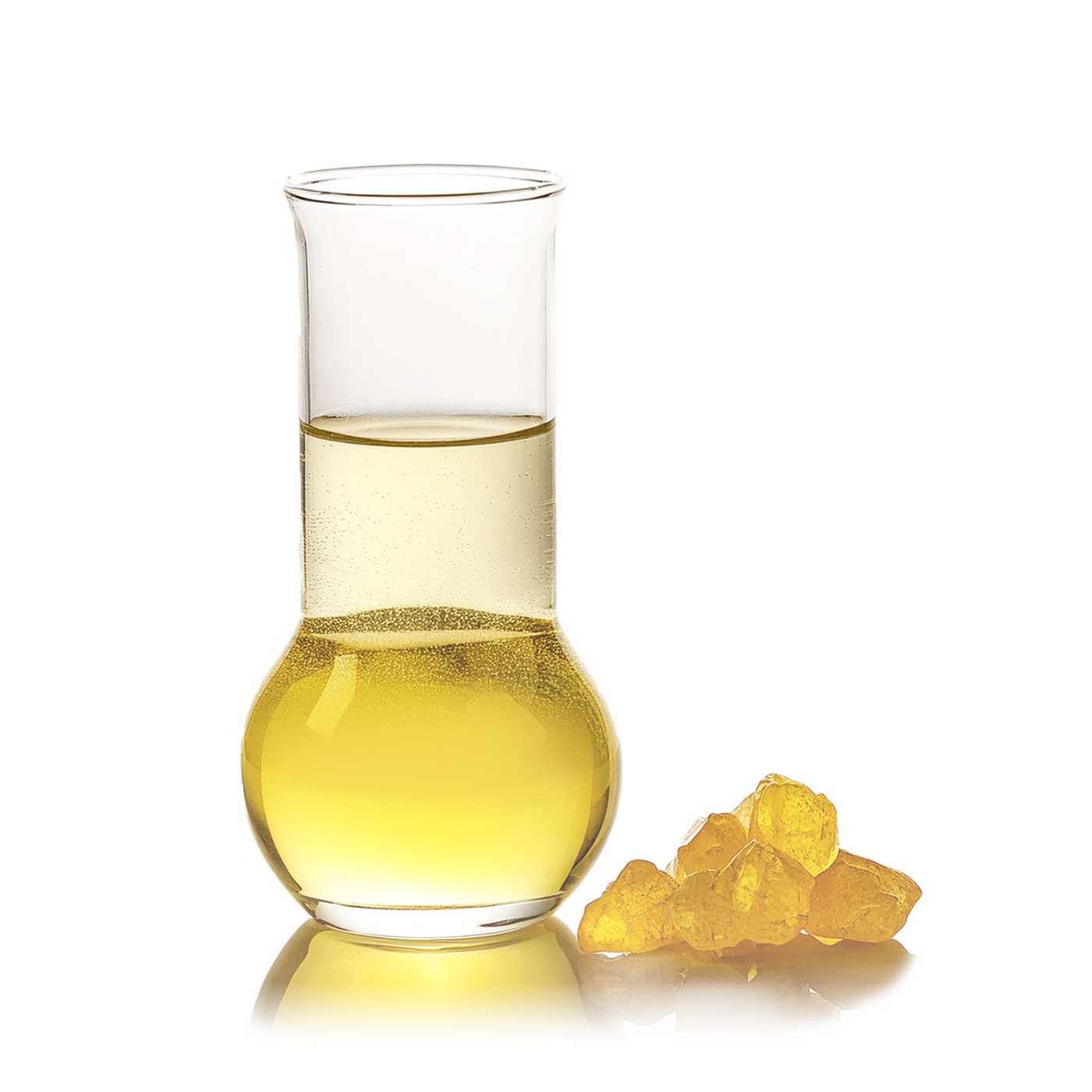
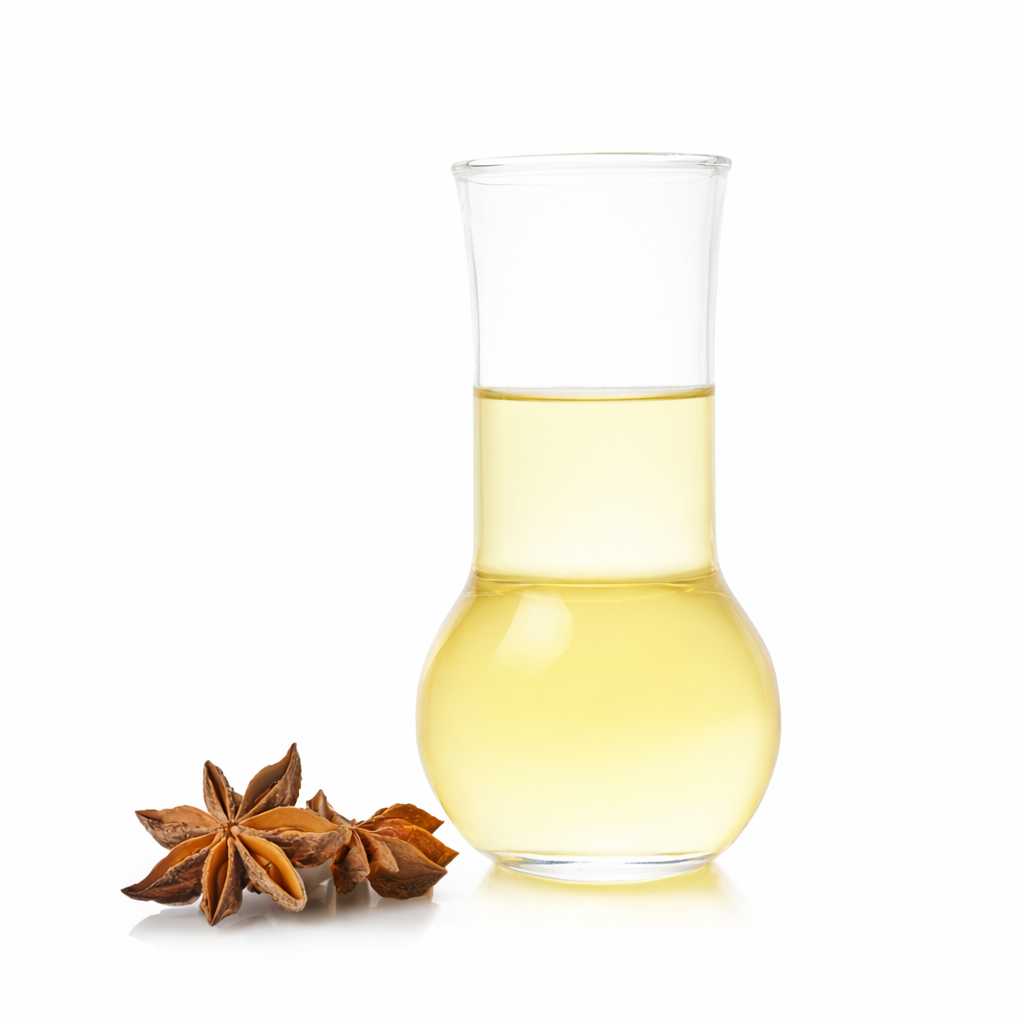
Ravensara essential oil gives cosmetics a camphoraceous, woody fragrance and acts as a fragrance ingredient in the formulation. It is obtained by steam distillation of the leaves of the Ravensara aromatica tree and is particularly suitable for massage oils, body balms and scalp products.
The manufacturer attributes a warming and soothing effect and antimicrobial properties to it, which is why it is often included in formulations for problematic and acne-prone skin and in massage products for relaxation. It is used in leave-on and rinse-off products.
What the manufacturer states about its effects
How the essential oil performs in the finished product depends on the usage rate, on the rest of the formulation and on whether the product stays on the skin or is rinsed off. The following properties are based on the manufacturer’s documentation and relate to cosmetic use.
- Soothing effect on the skin – according to the manufacturer, the oil helps to ease the feeling of irritation and redness, a property used in creams, lotions and balms for more reactive skin.
- Antimicrobial effect – the manufacturer states antimicrobial properties, which is why the oil is added to products for problematic and acne-prone skin, for example cleansing gels, toners or topical serums. In cosmetics it helps to keep the skin looking clear; it will not replace the preservative system of the finished product.
- Warming effect – it creates a mild feeling of warmth on the skin, which is useful in massage oils and creams intended for relaxation.
- Anti-inflammatory effect – the manufacturer links it to easing redness and discomfort of irritated skin. Treat this as the manufacturer’s information; the effect of the finished product needs to be verified on the specific formulation.
- Hair and scalp care – in hair oils, serums and masks it helps to soothe the scalp and gives the product a mild camphoraceous fragrance.
Use in a formulation
Like every essential oil, it is oil-soluble and fat-soluble and does not mix with water. In anhydrous products, that is body oils, balms, butters and massage oils, it is added directly to the oil base after the base has cooled. In emulsions it belongs in the cooling phase. Add it only after the two phases have been combined and the cream or lotion has cooled, then mix briefly. At higher temperatures some of the volatile components escape and the fragrance of the product becomes weaker.
In water-based products, such as toners, body sprays or hair tonics, the oil can be incorporated only with a solubiliser, for example Polysorbate 20 or PEG-40 Hydrogenated Castor Oil. First mix the oil with the solubiliser in the ratio recommended for it, and only then stir the mixture into the water phase. Without a solubiliser the oil stays on the surface in droplets and the dose in the finished product will not be even. When adding it afterwards to a finished gel or shampoo, add the oil in small amounts and watch whether the base turns cloudy or loses viscosity.
There is no single universal usage rate. The manufacturer does not state a recommended range, and the upper limit is set by the IFRA limit for the given product category. Lip products belong to category 1, body oils and lotions to category 5A, face creams and toners to category 5B, shampoos and shower gels to category 9.
Before you set the usage rate, see the IFRA certificate in the Product documentation section, which lists the limits for all product categories. In a fragrance blend of several essential oils, the limit applies to the actual share of ravensara in the finished product, so calculate its concentration across the whole formulation.
Suitable for products such as
- Massage oils and creams – the warming sensation and woody, camphoraceous fragrance work well in products designed for relaxation.
- Body balms, butters and oils – anhydrous bases in which the oil dissolves without a solubiliser and can be incorporated into the cooling mixture.
- Products for problem and acne-prone skin – cleansing gels, toners and spot serums for which the manufacturer states an antimicrobial and soothing effect.
- Hair oils, serums and masks – for a scalp that needs soothing.
- Body sprays and toners – in a water-based formula with a solubiliser, where it adds a slight camphoraceous note.
- Candles – candles of all types, including container candles, at a usage rate up to the IFRA limit for category 12.
What to bear in mind when formulating
Ravensara is often confused with ravintsara. The essential oil sold under the name ravintsara comes from the leaves of the camphor tree (Cinnamomum camphora, INCI Cinnamomum Camphora Leaf Oil). Ravensara comes from a different plant, Ravensara aromatica, also known as Agathophyllum aromaticum. The fragrance and composition of the two oils differ, so they are not interchangeable in a formulation. When buying and when calculating IFRA limits, go by the INCI name Ravensara Aromatica Leaf Oil.
The substance is subject to classification under the CLP regulation and contains hazardous substances. The warning pictograms on the packaging point to flammability, irritation and sensitisation, serious health risks with prolonged exposure, and harm to the environment. Details of the classification and safe handling are in the safety data sheet.
The oil is flammable, so work with it away from heat sources and open flames, and apply it to the skin only when diluted in a finished product. If you produce for sale, the finished product must be assessed against the IFRA limits for the given category and against the safety data sheet.
Frequently asked questions
Is ravensara essential oil soluble in water?
No, ravensara essential oil does not dissolve in water; it mixes only with oils and fats. It is incorporated into toners, sprays and other water-based products with a solubiliser, with which it is mixed beforehand and only then added to the water phase. Without a solubiliser it floats on the surface in droplets and the dose in the finished product is uneven.
How much ravensara essential oil should go into a cream?
There is no single recommended usage rate; the upper limit is set by the IFRA limit for the product category. Face creams belong to category 5B and body creams to category 5A. The limits for all categories are in the IFRA certificate in the product documentation. The manufacturer does not state its own range, so start with a lower dose and check the fragrance and skin tolerance on a test sample.
What is the difference between ravensara and ravintsara?
Ravensara and ravintsara are two different essential oils from two different plants. Ravensara (INCI Ravensara Aromatica Leaf Oil) is distilled from the leaves of the Ravensara aromatica tree from Madagascar, ravintsara (Cinnamomum Camphora Leaf Oil) from the leaves of the camphor tree. They differ in fragrance and composition, so do not substitute one for the other in a formulation, and go by the INCI name when calculating IFRA limits.
Is ravensara essential oil suitable for anhydrous products?
Yes, ravensara essential oil is suitable for anhydrous products such as body oils, balms, butters and massage oils, and it is incorporated directly without a solubiliser. It is added to the oil base after the base has cooled. In balms and butters, mix it in when the melted mixture of butters and wax begins to cool, so that the volatile components of the fragrance are not lost.
When is ravensara essential oil added to an emulsion?
Ravensara essential oil is added to an emulsion in the cooling phase, after the water and oil phases have been combined and the emulsion has cooled. Mix the oil in briefly but thoroughly so that it disperses evenly. Do not add it to the hot oil phase, because part of the fragrance would evaporate during heating.
Can ravensara essential oil be used in a shampoo or shower gel?
Yes, ravensara essential oil is added to shampoos and shower gels as a fragrance ingredient within the IFRA limit for category 9. Stir it into the finished surfactant base in small amounts and check whether the base has turned cloudy or lost viscosity. In rinse-off products the oil stays on the skin only briefly, so of the stated effects it is mainly the fragrance that comes through.