Creamy make-up tailored to you
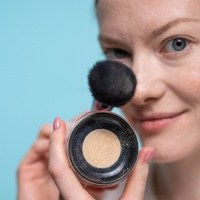
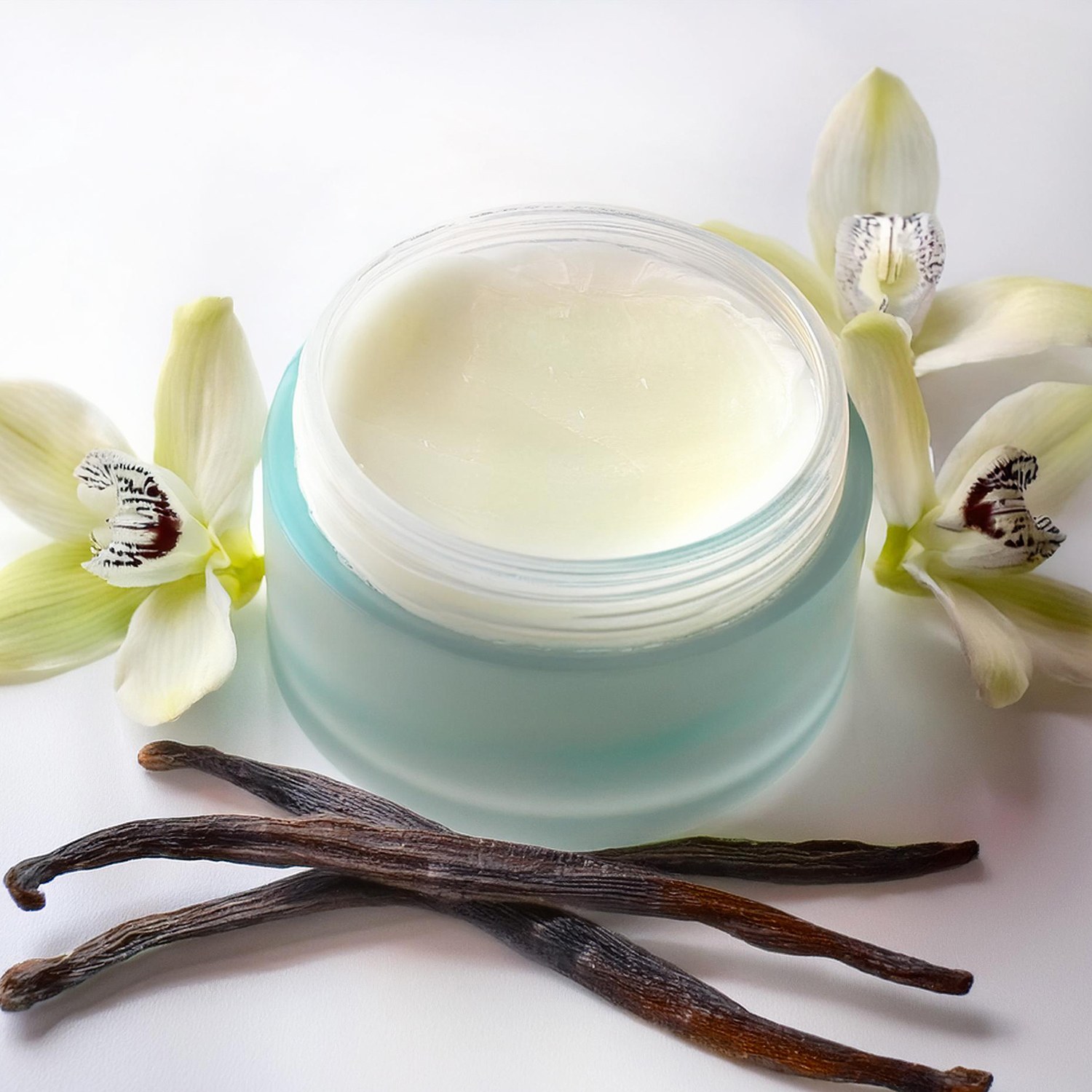
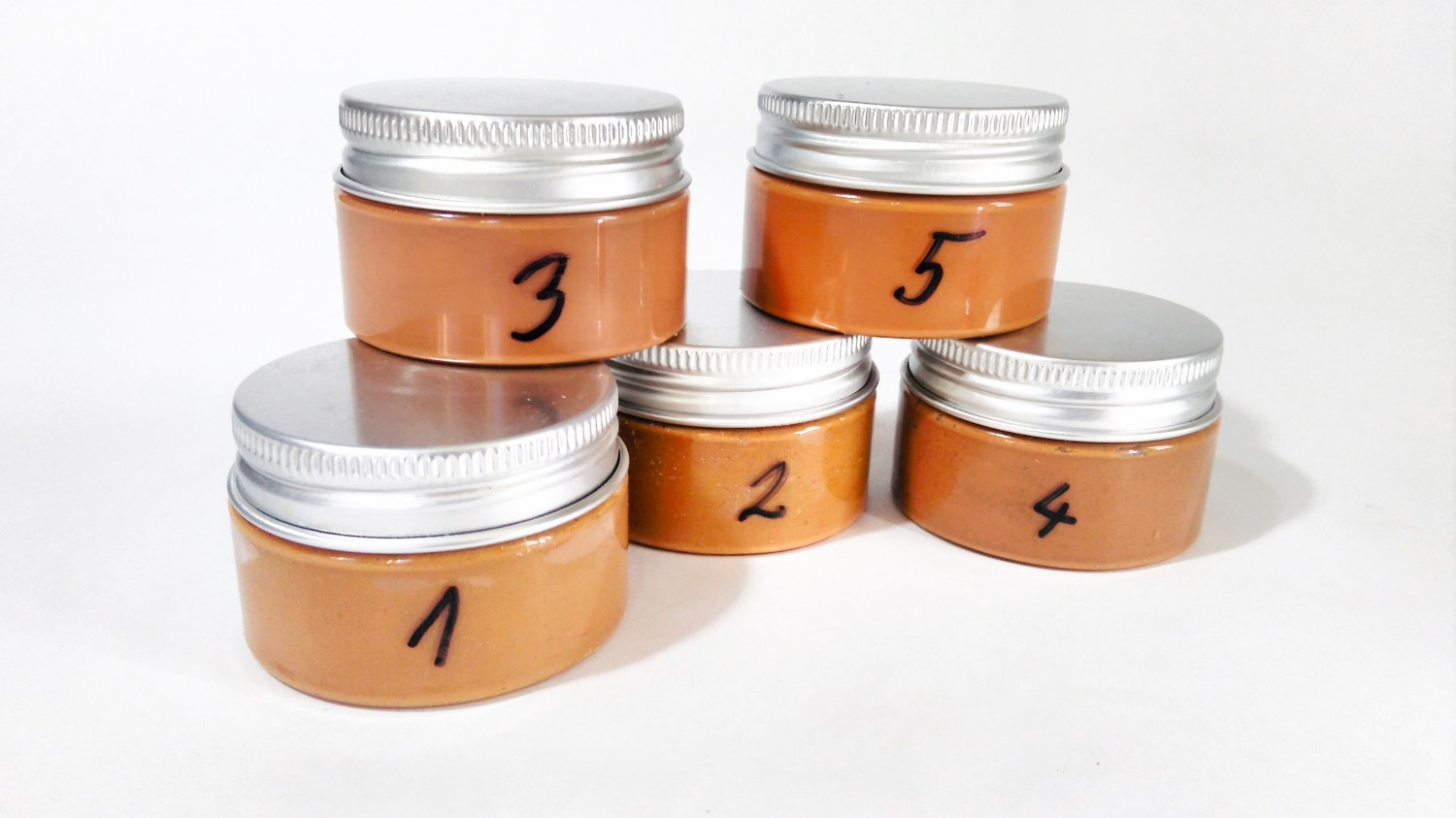
Do you prefer creamy mineral make-ups over powder ones? Make one with us. If your favourite form of make-up is a cream or a firmer balm, we have a solution for you. You can also make your own creamy mineral make-up — simply choose from our five shades or mix your own, tailor-made for you.
The resulting creamy mineral make-up is intended mainly to even out the skin tone and possibly to cover less pronounced imperfections; it has lower coverage.
- A stable base
Neutral oil MCT Caprylis is more stable than common oils and hardly oxidises at all, so the base stays fresh for a long time.
- Pigments without shimmer
Unlike mica powders, iron oxides contain no shimmering particles, which is exactly why they suit make-up for the complexion.
- A version for hot days
Slightly increasing the proportion of beeswax makes the make-up firmer, so it melts less during the summer.
- Protection against oxidation
Vitamin E as an antioxidant prolongs the freshness of the oils, and tocopheryl acetate withstands thermal load as well.
Raw materials for the base
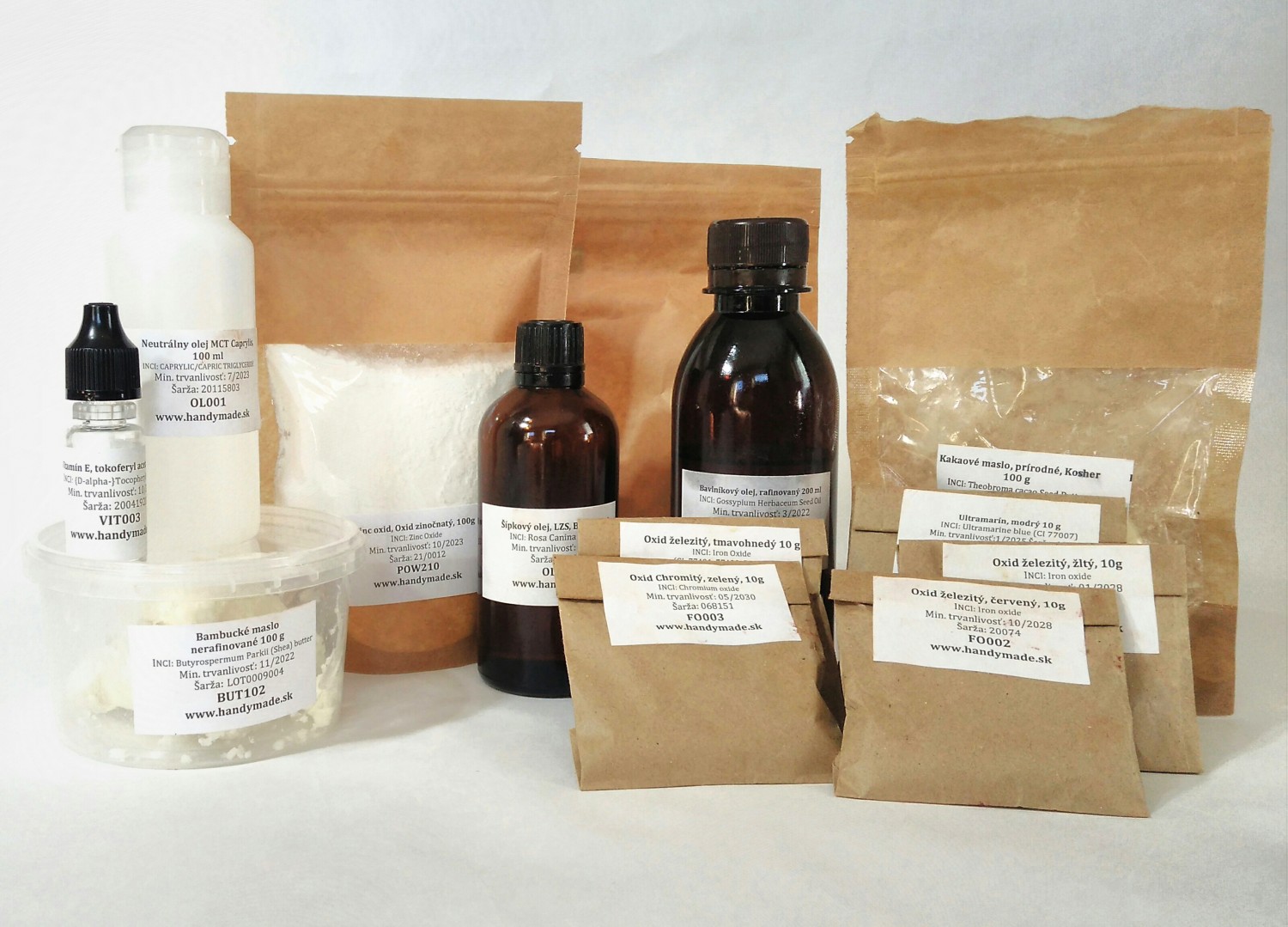
Below you will find a list of the raw materials you will need to create the base for a creamy mineral make-up; that is, the pigments are not yet listed here, because their quantities naturally differ according to the desired shade.
Further down in the article you will also find the exact quantities of pigments to achieve one of our five prepared shades, as well as instructions on how to proceed when preparing your own shade.
| Ingredient | Content in % |
|---|---|
| Oil phase — water bath | |
| Neutral oil MCT Caprylis | 14.00 |
| Cottonseed oil | 20.00 |
| Rosehip seed oil | 10.00 |
| Shea butter | 25.00 |
| Beeswax | 5.00 |
| Cocoa butter | 12.50 |
| Powder phase — mortar | |
| Zinc oxide | 12.50 |
| To finish | |
| Vitamin E | 1.00 |
| Equipment | |
| Jar with Al lid | — |
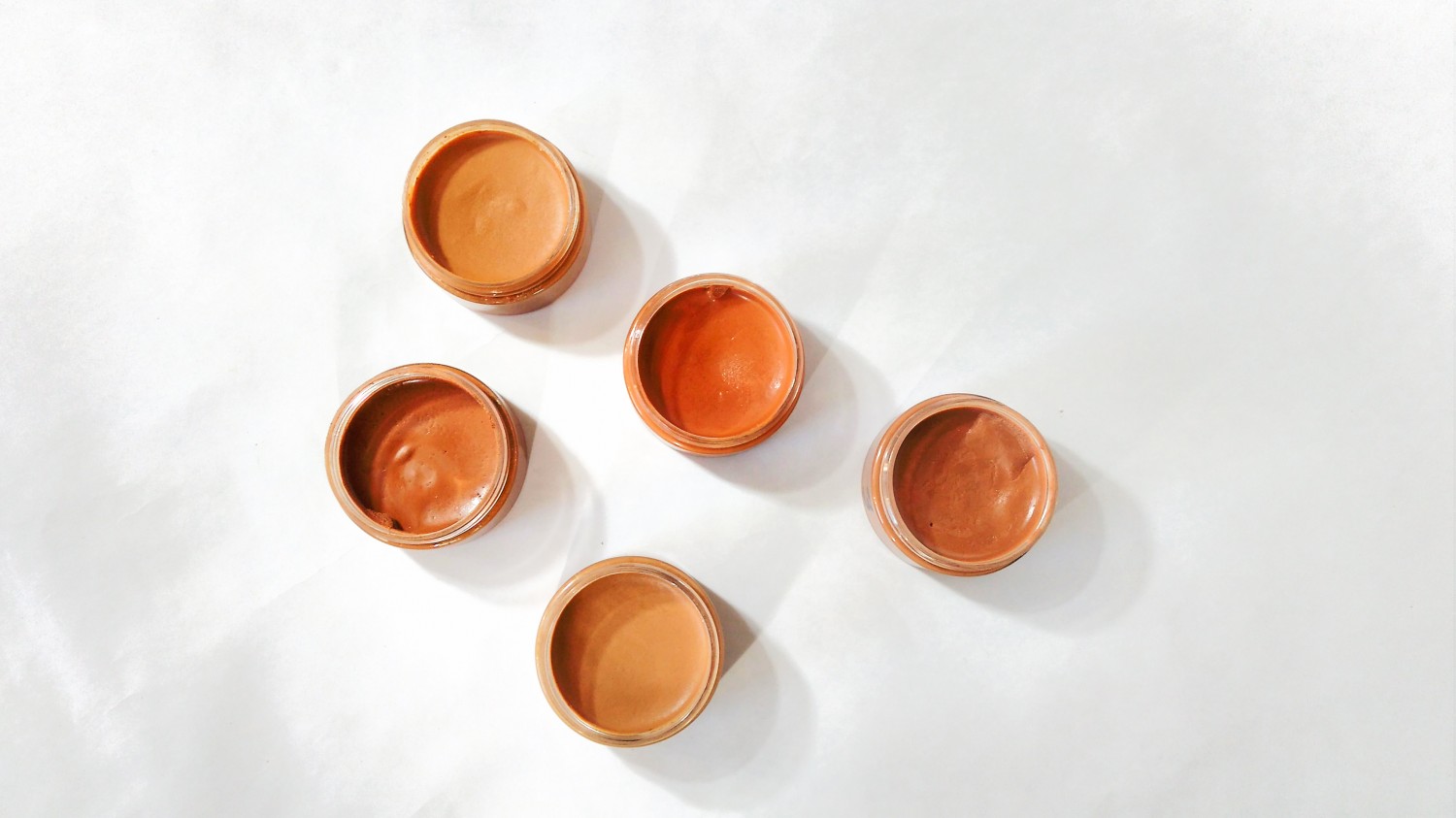
Five ready-made shades
Below you will find a list of the five shades you can choose from. These shades can also serve as a starting point when making your own shade, as you can adjust them to suit your needs.
The quantity of pigments is always calculated for 30 g of base for making creamy mineral make-up.
| Pigment | Amount |
|---|---|
| Light skin with red tones | |
| Iron oxide - yellow | 0.13 g |
| Iron oxide - brown | 0.03 g |
| Iron oxide - red | 0.02 g |
| Chromium oxide - green | 0.01 g |
| Light skin with warm tones | |
| Iron oxide - yellow | 0.26 g |
| Iron oxide - brown | 0.04 g |
| Iron oxide - red | 0.02 g |
| Light skin with neutral tones | |
| Iron oxide - yellow | 0.18 g |
| Iron oxide - brown | 0.17 g |
| Iron oxide - red | 0.03 g |
| Dark skin with warm tones | |
| Iron oxide - yellow | 0.43 g |
| Iron oxide - brown | 0.07 g |
| Iron oxide - red | 0.05 g |
| Chromium oxide - green | 0.03 g |
| Dark skin with cool tones | |
| Iron oxide - yellow | 0.56 g |
| Iron oxide - brown | 0.03 g |
| Iron oxide - red | 0.08 g |
| Ultramarine blue | 0.01 g |
Method
- Disinfection
Disinfect all the tools, vessels and containers, for example with ethanol.
- Melting the oil phase
Into a heat-resistant vessel, weigh all the raw materials except vitamin E and zinc oxide. Place this mixture of oils, butters and wax in a water bath until melted.
Oil phase - The powder pigment blend
Meanwhile, put on a respirator (you will be working with powder raw materials) and into a mortar or a similar bowl weigh the zinc oxide and the appropriate pigments (choose from our range or create your own shade). Rub thoroughly in the mortar and test the shade on the skin.
Powder phase - Combining the phases
Pour the liquid oil mixture into the powder mixture of pigments and zinc oxide and mix thoroughly with a whisk.
- Shade test and filling
Test the shade on the skin. If you are happy with the shade, add the vitamin E and, while still liquid, fill into the jar. Leave to solidify.
- Correcting the shade
If the shade does not suit you, follow our advice in the tips and tricks section below.
Tips and tricks
Make the production of creamy mineral make-up easier with our tips and tricks!
If you want to adjust the shade of the creamy make-up after mixing the powder and oil raw materials, you must always rub the added powder raw materials thoroughly in the mortar. Ideally, use a small amount of zinc oxide, to which you add the selected pigment or pigments, rub thoroughly in the mortar and work into the oil mixture.
This is especially useful when you need to add only a small amount of pigment, because you might not be able to rub such a small amount of pigment properly in the mortar, and at the same time it would be difficult to work with such tiny quantities.
Instead of a mortar, you can also use a small electric coffee grinder. Thorough mixing or rubbing of the powder raw materials is essential to ensure that no areas with unmixed pigment appear in the finished make-up.
If you want to use the product during hot days and are afraid it will melt, slightly increase the proportion of beeswax in the recipe.
Tip: it is good to dry all the vessels thoroughly before use, as water will cause problems in the recipe. If your make-up solidifies during preparation before you pour it into the container, place it in a water bath again.
Your own shade
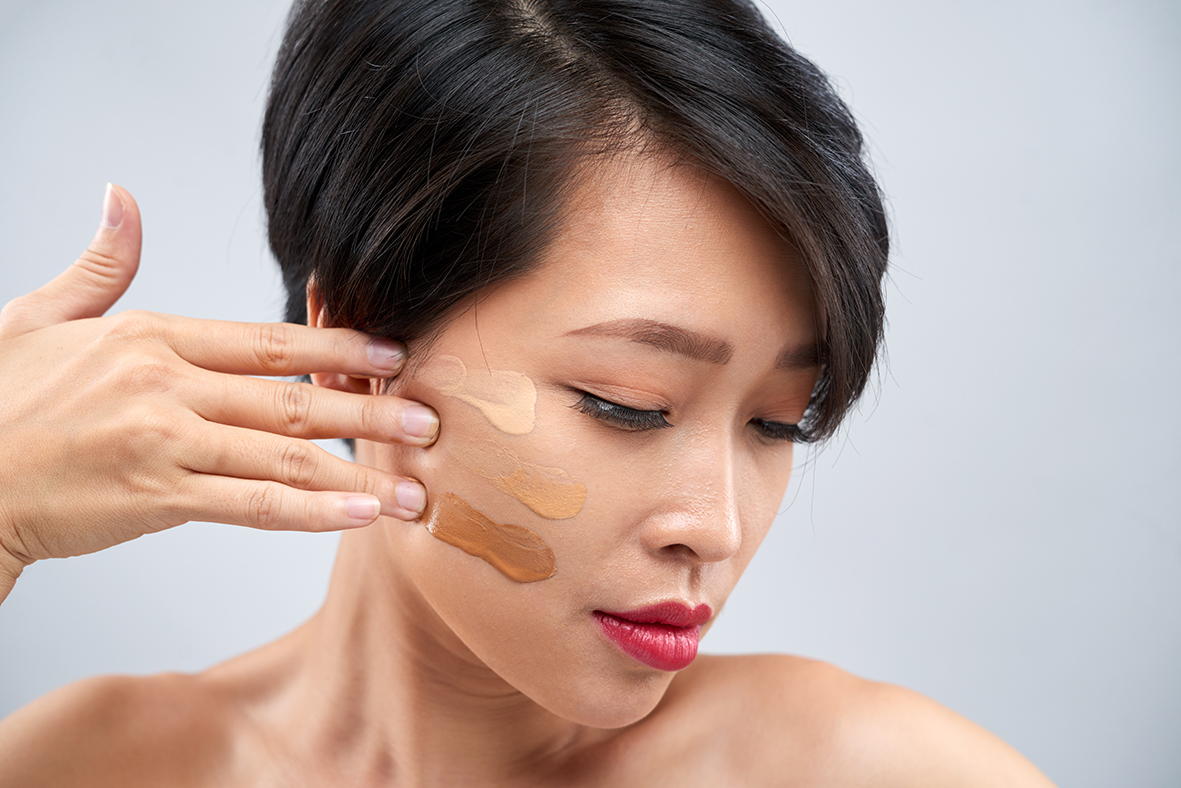
If you want to adapt the make-up exactly to your needs, here you will find instructions on how to do it. It may take a few attempts and some patience, but after a while you will certainly find your shade. Again, do not forget to record the quantities of pigments used, so that you can reproduce your shade in the future.
If you have already made powder mineral make-up and have noted down the quantities of pigments, for making creamy mineral make-up you will need roughly one third of those pigments for the same yield of base, since creamy make-up has a different composition than powder and will behave differently on the skin (for example, it does not contain titanium dioxide and serecite mica powder) – this is also why the quantities of pigments used differ.
At the same time, the final shade is also influenced by the oils and butters used, so add the pigments in smaller amounts and continuously check the shade on the skin.
Method for your own shade
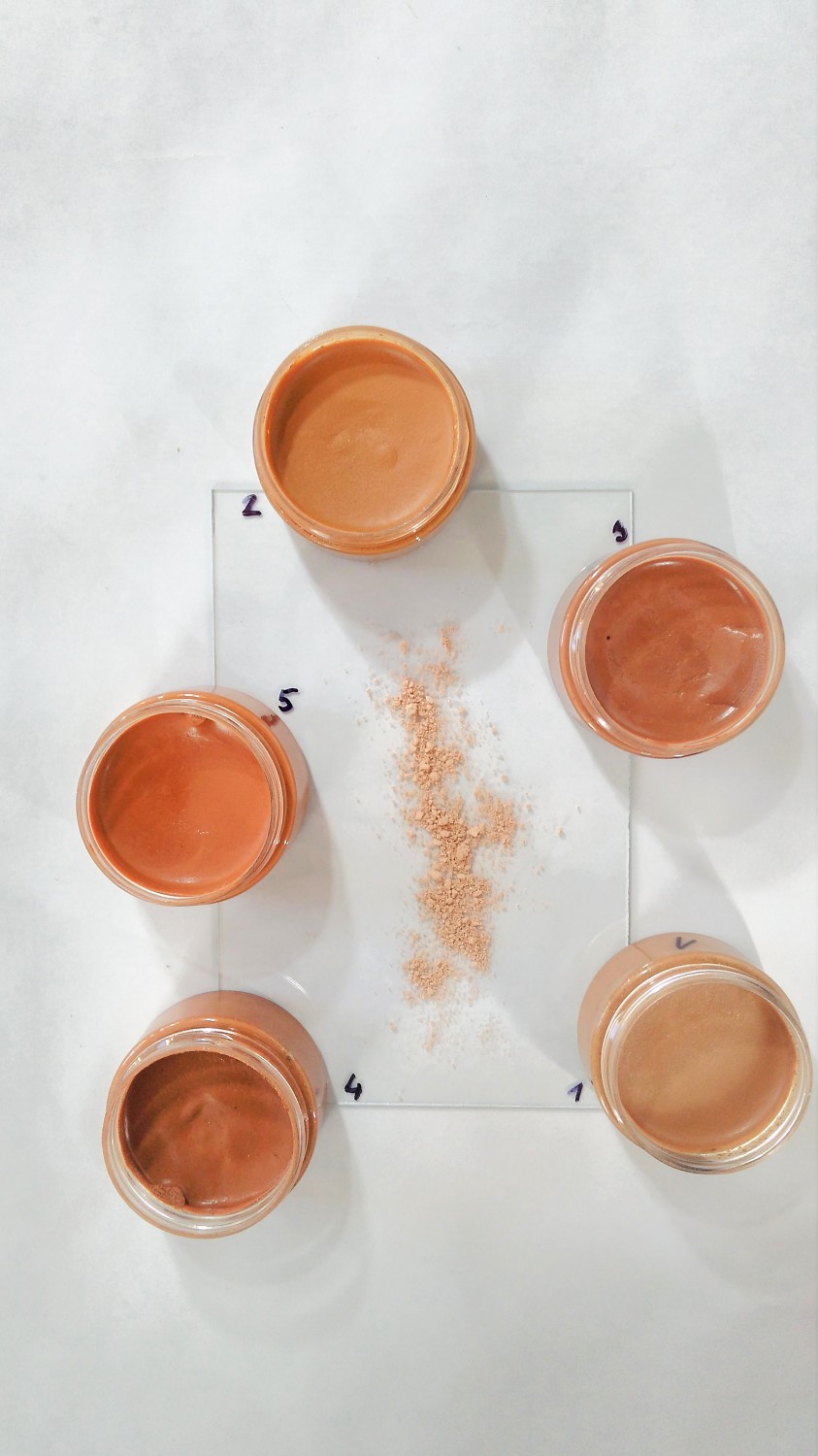
The first two steps are the same as in the basic method: disinfect the tools, vessels and containers, for example with ethanol, and then create the base for the make-up: melt all the raw materials except zinc oxide and vitamin E in a water bath in a heat-resistant vessel. Only the mixing of the pigments changes.
- Mixing your own shade
Weigh the zinc oxide into the mortar and add a small amount of yellow, red and brown pigment. Rub thoroughly and test on the skin.
The aim is to obtain a shade that is slightly lighter than your skin, as oils and butters will still be added which may influence the final colour of the product. If the shade does not suit you, adjust it as follows:
- If you tend to have redness, add a small amount of chromium oxide (green pigment) to neutralise the red.
- If you have a cool undertone (you can find this out, for example, if the veins on your wrists appear blue), add a small amount of blue pigment (ultramarine).
- If the make-up is too yellow, add a small amount of red pigment.
- If the make-up is too dark, add a teaspoon of zinc oxide.
- If the make-up is too light, add a small amount of brown oxide; if you need to darken the make-up only slightly, add yellow oxide.
- If the make-up is too pink, add yellow pigment.
- Combining the phases and testing
Before adding the oil mixture, rub the powder raw materials thoroughly in the mortar once again. Add the oil mixture, mix with a whisk and test the shade on the skin. If you want to adjust the shade, you will find advice in the tips and tricks section above.
- Vitamin E and filling
Add the vitamin E and pour the still liquid mixture into the chosen container. Leave to solidify.
The role of the raw materials
Below you will find a more detailed description of the properties of the individual raw materials, as well as information on how you can change their proportion in the recipe or replace them completely with others.
Neutral oil MCT Caprylis
To create a good base for make-up, neutral oils are excellent. These oils contain fatty acids isolated from coconut, palm kernel and palm oil. Thanks to this, this oil has high stability, and so it will stay fresh for a relatively long time, that is, without pronounced oxidation. In addition, it is a dry oil form, so it does not leave the skin unnecessarily greasy. At the same time, it has no odour.
Of course, you can replace MCT Caprylis with any other vegetable oil. Or conversely, MCT Caprylis can replace other oils in the recipe. This is especially worthwhile if your make-up will be stored in places where there are greater temperature fluctuations or where it will be exposed to the sun. MCT Caprylis is more stable than common oils and hardly oxidises at all.
Cottonseed oil
A great nourishing oil for your skin is cottonseed oil. It is obtained by pressing cotton seeds. In the recipe it is added for its hydrating properties. It is usually well tolerated and absorbed by the skin. The refined version of this oil is also free of odour and of some coloured compounds, which will therefore not interfere with the make-up.
Cottonseed oil is ideal for dry and cracked skin. Again, you can replace it with vegetable oils or use it as a replacement for the other oils in the recipe.
Rosehip oil
The beautifully orange-coloured rosehip oil is a highly valued ingredient, rich in vitamins, carotenoids and minerals. It thus provides excellent nourishment to the skin. Rosehip seed oil is slightly lighter than rosehip oil from the fruit, but it still has a high content of antioxidants and valuable fatty acids. The lighter colour is especially advantageous because rosehip oil then has a lower potential to affect the colour of the final product.
Again, you can replace rosehip oil with other vegetable oils, or use it in a higher proportion instead of the remaining oils in the recipe.
Shea butter
Shea butter is a very popular component of natural cosmetics. Again, it contains vitamins and minerals, and it effectively nourishes and hydrates dry skin. In our recipe it also serves to give the product its final firm consistency.
For making creamy make-up, you can choose a refined or unrefined version of shea butter. The unrefined version has a characteristic pale yellow colour and a light nutty scent. If this scent bothers you, choose the refined version, which is also more resistant to oxidation.
You can replace shea butter with other vegetable butters, but expect a change in consistency due to a different melting point. By increasing the proportion of shea butter in the recipe, you will obtain a firmer make-up with a thicker consistency.
Beeswax
The ingredient that ensures the firmness of the creamy make-up even at higher temperatures is beeswax. In addition to the beautiful scent of natural beeswax, this wax is rich in vitamins and minerals. Increasing the proportion of wax in the recipe makes the make-up firmer and less prone to melting during hot summer days.
Of course, you can replace beeswax with another wax intended for cosmetic use (do not use waxes that are intended solely for candle making). Such waxes are vegan and show the same properties as beeswax. If you leave the wax out of the recipe, the make-up will be more liquid and its texture will change.
Cocoa butter
Cocoa butter is a popular butter for facial products, especially because it melts immediately on contact with the skin and nourishes it intensely. In addition, if you choose the unrefined version, you can enjoy a pleasant chocolate scent. Cocoa butter, among other things, firms the product and gives it a characteristic creamy texture.
You can replace cocoa butter with other butters, but this will also change the firmness and consistency of the final product. If you have dry skin, you can slightly increase the proportion of cocoa butter, which will provide it with effective nourishment.
Zinc oxide
The basic covering oxide in our recipe is zinc oxide. It is a white powder that combines well with the coloured oxides, as it lets the colours stand out well. At the same time it makes applying the make-up to the skin easier and slightly increases the coverage.
A change in the proportion of zinc oxide in the recipe will result in an overall change in the shade of the product. So if you want to lighten the make-up, you can do so by adding small amounts of zinc oxide.
Vitamin E
To prolong the freshness of oils, antioxidants are essential, and vitamin E is one of them. In this case we have chosen tocopheryl acetate, which is more stable than pure tocopherol and can withstand a certain thermal load. Thanks to vitamin E, it takes longer for fats and oils to oxidise, so you can enjoy your product for longer.
Iron oxide
The basic pigments for achieving the desired make-up shade are iron oxides, specifically three colour variants of iron oxide. Yellow, brown and red pigments allow you to adjust the shade of the make-up to suit your needs. The advantage is that, unlike mica powders, these oxides do not contain shimmering particles, which makes them suitable for making make-up for the complexion.
Chromium oxide
Green chromium oxide is good to have on hand if your skin tends to redness and you want a make-up that helps to eliminate these problems. Chromium oxide is equally suitable for preparing green concealers for spots or other skin imperfections.
Ultramarine
The last pigment is blue ultramarine, which is suitable for skin with a cool undertone. Thanks to it, your make-up will not look orange on the skin; blue ultramarine helps to balance its shade. Dose it slowly, however, so that your make-up does not acquire a greyish cast.
Important warning
As mentioned, you can experiment with homemade recipes to achieve the desired properties. However, the final result can be influenced by many factors, such as humidity, temperature, the quality of the raw materials or their storage.
Important: before you use any raw material for making a cosmetic product, familiarise yourself with its properties, the recommended dosage, storage conditions and safe handling. Each raw material may have the potential to trigger an allergic reaction in sensitive individuals, so before using the product we recommend finding out whether you are allergic to any of the raw materials or to the product as a whole, for example by a skin test.
If you have very sensitive or very acne-prone skin, or if you have other skin and health problems, we recommend that you consult a medical professional before applying a new product to the skin, whether it is a homemade cosmetic product, a pure raw material or a commercially available product.
Conclusion
Do you like the creamy type of make-up, or do you prefer the powder type? You can make both types according to our tutorials, entirely from natural raw materials.
We try to answer all questions regarding the procedures for making natural cosmetics by e-mail. If you have any questions, write to us at [email protected].
We look forward to all your opinions and questions. Until saponification, friends.
You will find the oils, butters and beeswax in the basic raw materials, and the mineral pigments in the powder colourants.