+421 950 333 113info@handymade.storeActive Days: −10 % with code ACTIVE10Shop now

BOTANICALS

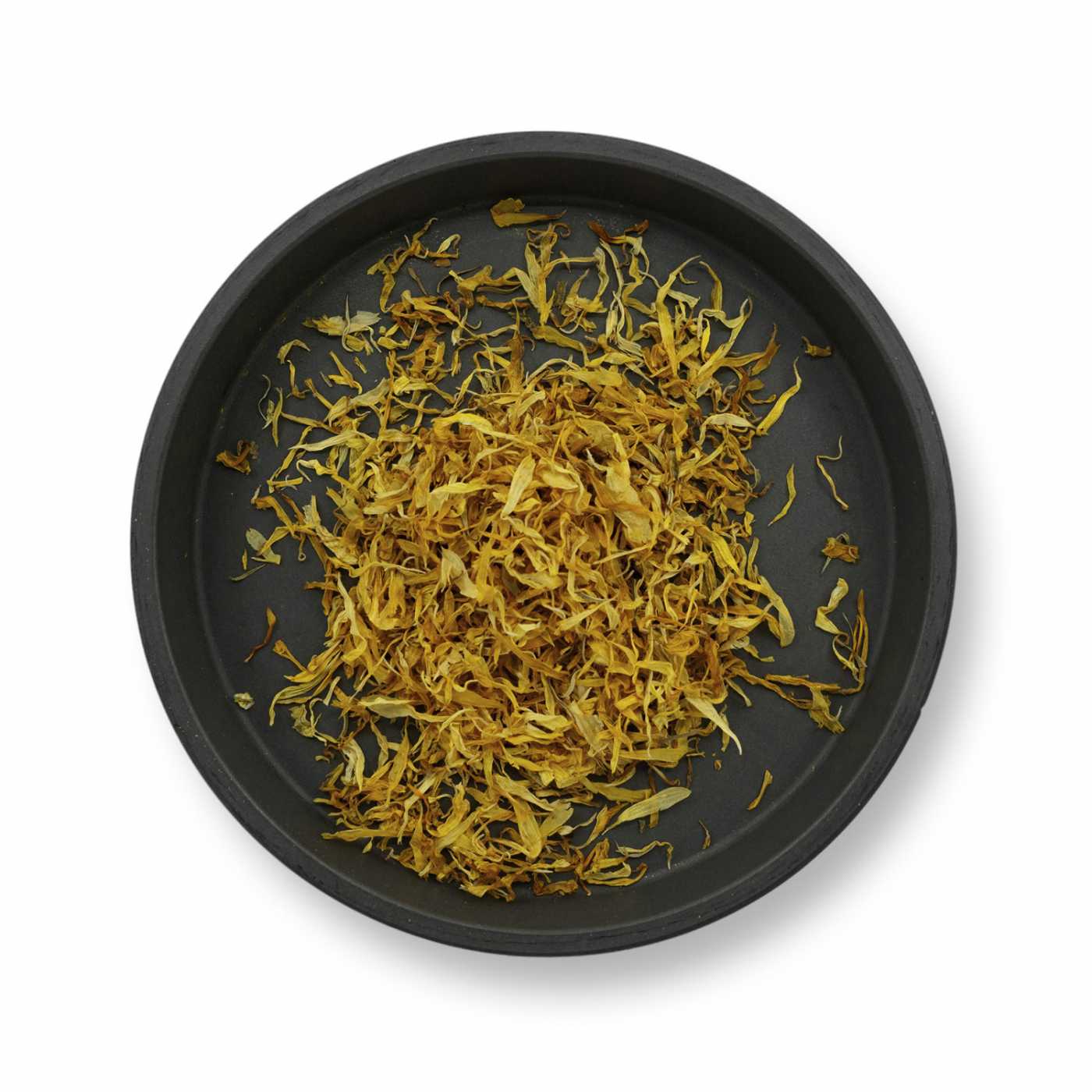
Pot Marigold, Dried Petals, 50 g

Pack size50 g500 g1 kg

Dried calendula petals (Calendula officinalis) are the basic raw material for preparing calendula macerated oil , that is, a vegetable oil into which fat-soluble components are released during steeping. full description

AvailabilityIn stock · 21 packs
Product codeBYL501_050
Batch9092624092
Best before09/2028
€4.39incl. VAT€87.80/kg

Lowest price in the last 30 days: €4.39

Product description

Dried calendula petals (Calendula officinalis) are the basic raw material for preparing calendula macerated oil, that is, a vegetable oil into which fat-soluble components are released during steeping. In skin care, calendula is associated with a soothing and regenerating effect, so the macerated oil is especially suitable for balms, ointments and oils for sensitive, dry or irritated skin, and for baby cosmetics.

The petals are supplied dried and are of pharmaceutical grade. Besides maceration, they can also be used whole as a visible ingredient in bath salts, herbal baths or soaps.


What calendula is used for in cosmetics

  • Soothing sensitive and irritated skin – calendula is used for skin that reacts with redness and tightness. The macerated oil is therefore included in products for sensitive and problem skin.
  • Supporting regeneration – calendula oil is a classic ingredient of ointments and balms for dry, chapped skin on the hands, lips and elbows.
  • Baby cosmetics – the macerated oil is often the base of baby oils and ointments.
  • Mature skin – in facial oils and nourishing creams, it supplements the oil phase with a vegetable macerated oil with a regenerating focus.
  • Colour and appearance of the product – yellow to orange petals give the macerated oil a warm yellow-orange tint, while whole petals brighten the appearance of bath blends and soaps.

The intensity of the effect depends on the amount of petals, the length of maceration and the proportion of macerated oil in the finished product.


Use in a formulation

The main method of processing is oil maceration. The petals are covered with a vegetable oil, for example sunflower, olive, sweet almond or jojoba oil, and left to steep. For maceration, dried petals are used at 5–20%. The higher the proportion, the richer the macerated oil, but the petals must remain fully submerged in the oil.

There are two ways to macerate. For cold maceration, the petals are left in a closed container in a place protected from direct light, typically for several weeks, and the container is shaken occasionally. For faster warm maceration, the oil with the petals is heated in a water bath for several hours, and the temperature should stay below 80 °C. The finished macerated oil is strained through a fine sieve or gauze and the petals are pressed out.

It is worth adding an antioxidant to the strained macerated oil, for example Tocopherol, which slows down the oxidation of the carrier oil. The macerated oil itself is then added to the oil phase of creams, balms and oils like any ordinary vegetable oil.

For subsequent incorporation, whole petals are added only to the finished mixture: to bath salts, herbal bath bags or as a sprinkle on the surface of soap. In these products they remain in solid form and are rinsed off during use.


Suitable for products such as

  • Ointments and balms – for hands, lips and dry areas, where the macerated oil makes up part or all of the oil phase.
  • Baby oils and creams – the macerated oil combined with other vegetable oils.
  • Facial and body oils – for sensitive, dry and mature skin.
  • Creams and lotions – the macerated oil as part of the oil phase of an emulsion.
  • Soaps, bath salts and shower products – whole petals as a decorative ingredient or the macerated oil as one of the oils.

Good to know

The petals are insoluble in water, oil and alcohol. During maceration they therefore do not dissolve, but only release some of their components into the oil. Only the strained macerated oil belongs in leave-on products, while whole petals stay in rinse-off products such as soaps and bath salts.

Calendula macerated oil is often confused with calendula extract. The macerated oil is a vegetable oil enriched by steeping and replaces an ordinary oil in the recipe. The extract is a concentrated raw material obtained with a solvent and is used at the rate recommended by its manufacturer. The petals we offer here are intended for maceration, not for making concentrated extracts.

For maceration, use dry, clean containers and tools and work exclusively with dried petals. With warm maceration, let the oil cool completely before decanting.

The raw material is of plant origin, with no added preservatives. We recommend testing its suitability for a specific recipe on a small sample, especially when combining the macerated oil with less stable oils.


Frequently asked questions

How do you prepare a macerated oil from calendula petals?
Calendula petals are covered with a vegetable oil at a proportion of 5–20% and left to steep. Cold maceration typically takes several weeks in a closed container away from direct light. Warm maceration in a water bath at a temperature below 80 °C takes several hours. The finished macerated oil is strained through gauze and supplemented with an antioxidant.
Are calendula petals soluble in water or in oil?
No, dried calendula petals are insoluble in water, oil and alcohol. Through steeping they release only some of their components into the oil, while the petals themselves remain solid and are filtered out after maceration. In leave-on products, only the strained macerated oil is therefore used, and whole petals belong in bath salts and soaps, where they are rinsed off.
Can calendula petals be used in soap and bath salts?
Yes, calendula petals are suitable for soaps as well as for shower and bath products. In soap they are added as a sprinkle on the surface or indirectly through calendula macerated oil included among the oils. In bath salts and herbal bags they are used whole and are rinsed off after the bath.
Is calendula macerated oil suitable for baby and sensitive skin?
Yes, calendula is commonly used in cosmetics for baby, sensitive, dry and problem skin. The petals do not contain any of the fragrance allergens listed in Annex III of the Cosmetics Regulation. However, the tolerability of the finished product also depends on the carrier oil and the other ingredients, so we recommend testing it on a small area of skin.
What is the difference between calendula macerated oil and calendula extract?
The macerated oil is a vegetable oil in which calendula petals have been steeped, and it is used in a recipe like an ordinary oil. The extract is a concentrated raw material obtained with a solvent and is used at lower rates, as recommended by its manufacturer. The petals we offer here are intended for preparing the macerated oil, not a concentrated extract.
At what temperature are calendula petals processed?
The recommended processing temperature for calendula petals is below 80 °C. With warm maceration, the oil with the petals is heated in a water bath so that the temperature can be kept below this limit and the carrier oil is not overheated. Cold maceration takes place at room temperature and is gentler on sensitive oils, but it takes longer.

Parameters

INCI
Calendula Officinalis Flower
CAS No.
84776-23-8
EC number
283-949-5
Product colour
OrangeYellow
Country of origin
Egypt
Processing method
Drying
Formulation phase
Oil phasePost-addition
Function in formulation
Active ingredient
Recommended processing temperature
< 80 °C
Application area
FaceBodyLipsHands
Recommended usage rate
5 – 20 %
Application type
Leave-onRinse-off
Biodegradability
Readily biodegradable
Natural Index (NI ISO 16128)
1,00
Natural Origin Index (NOI ISO 16128)
1,00

Product documentation

CoACertificate of Analysis
batch 9092624092PDF ↓
batch 70225120525PDF ↓
TDSTechnical Data Sheet
Physical parameters and processingPDF ↓
Download all (ZIP)

3 PDF files in one archive

REVIEWS

Verified by customers.

No reviews yet.

Only customers with a delivered order can write reviews.