DERMOSOFT 7GA is a
multifunctional antimicrobial blend intended for cosmetic formulations, where it helps to reinforce product protection, improve processing of the formula and at the same time support both the sensorial and technological properties of the finished product. It is a blend with the composition
Aqua, Glycerin, Heptylglycerin, Sodium Anisate. Functionally, it is based on the synergy of
p-anisic acid in the form of its sodium salt and
heptylglycerin, which acts as an auxiliary surface-active, wetting and antimicrobial-supporting component.
The raw material is not produced by simple extraction from a plant, but as a
formulated cosmetic blend. Sodium Anisate is the sodium salt of p-anisic acid, a substance also known from plant sources, for example anise, while heptylglycerin belongs to alkylglycerins with an amphiphilic structure – it has a part that cooperates well with the aqueous environment and a part that has affinity to the lipid phase. Thanks to this, it helps reduce surface tension, improve dispersion of components and support the effectiveness of the antimicrobial system.
The designation
MB is used for raw materials for variants with a
mass balance approach, i.e. mass balance when using renewable feedstock streams in the supply chain. In practice, this is a way of tracking the origin and allocation of renewable raw materials in chemical production, not an additional separate cosmetic active ingredient.
DERMOSOFT 7GA (MB) is particularly suitable where the manufacturer is looking for a
short INCI, antimicrobial support, deodorizing effect, improved wetting of pigments and easier incorporation. It is not a classic perfume nor an emulsifier in the sense of the main emulsifying system, but it can act as a
supporting preservative, wetting, co-emulsifying and technologically stabilizing component in a wide range of aqueous, emulsion and surfactant-based cosmetic products.
Key benefits
- Multifunctional antimicrobial support – helps limit the growth of bacteria, yeasts and moulds in the cosmetic formulation.
- Synergy of heptylglycerin and sodium anisate – combines wetting, surface-active and antimicrobial-supporting effects with the function of the organic salt of p-anisic acid.
- Suitable for naturally oriented formulations – according to available supplier data, it has a high proportion of natural origin in line with ISO 16128.
- Short and understandable INCI – suitable for formulas where a clear declaration of composition is important.
- Deodorizing effect – helps with body odour control by supporting the limitation of microbial activity associated with the formation of undesirable odours.
- Improved wetting of pigments – also suitable for colour cosmetics, where it can help achieve a more uniform distribution of pigment particles.
- Co-emulsifying properties – can support the stability and uniformity of emulsion systems, especially as an auxiliary component alongside the main emulsifier.
- Good processability – the liquid form facilitates dosing and incorporation into the formulation.
- Suitable for rinse-off and leave-on products – usable in facial, body, hair, cleansing, deodorizing and decorative cosmetics.
- Biodegradable character – suitable for formulations where emphasis is placed on a more responsible selection of functional cosmetic raw materials.
Suitable for products such as
- oil-in-water type face creams and facial milks,
- body milks, body creams and light emulsions,
- deodorants and antiperspirant products where body odour control is required,
- cleansing gels, facial cleansing products and mild washing emulsions,
- shampoos, shower gels and foaming surfactant systems,
- wipes and aqueous cleansing preparations,
- hair care cosmetics, hair milks, mists and conditioning products,
- suncare and after-sun cosmetics, if it is compatible with the entire system of filters and active ingredients,
- decorative cosmetics, tinted creams, concealers, make-up emulsions and products containing pigments,
- oral cosmetics, for example toothpastes or oral preparations, if the formulation is designed in accordance with the relevant requirements for the given application.
Use in formulations
- The recommended dosage is usually in the range of approximately 1.0–3.0 %, depending on the product type, the microbiological demands of the formulation, pH and the preservation system used.
- For simpler aqueous and emulsion products, a lower dosage may be suitable; for more demanding formulas with a high content of plant extracts, hydrolates, clays, proteins or sugar components, dosage and effectiveness must be verified through testing.
- It is miscible with the aqueous phase and can be easily incorporated into emulsions and surfactant systems.
- It is compatible with common humectants such as glycerin, propanediol, betaine, panthenol or plant extracts in the aqueous phase.
- It is compatible with many O/W emulsion systems as well as surfactant-based cleansing formulations.
- It is miscible with pigment dispersions and can help improve pigment wetting in decorative or tinted formulations.
- The effectiveness of the Sodium Anisate component should be assessed in the context of the pH of the finished formulation; for organic acids and their salts, the resulting antimicrobial support is often strongly dependent on correctly adjusted pH.
- For best stability, it is recommended to check the pH, viscosity, odour, colour and microbiological resistance of the finished product after the formulation has fully equilibrated.
- In emulsions, it can be added to the aqueous phase or during the cooling phase, depending on the specific technological process and the sensitivity of other components.
- In surfactant systems, it is incorporated under gentle stirring to reduce excessive foaming during manufacture.
- It is recommended to add it during cooling (at a temperature below 40 °C), especially if the formulation contains temperature-sensitive actives, fragrance compositions, essential oils or plant extracts.
- When manufacturing products intended for sale, a microbiological challenge test must be carried out, as the effectiveness of the preservation system depends on the overall composition, pH, packaging, manufacturing process and conditions of use.
Physical properties
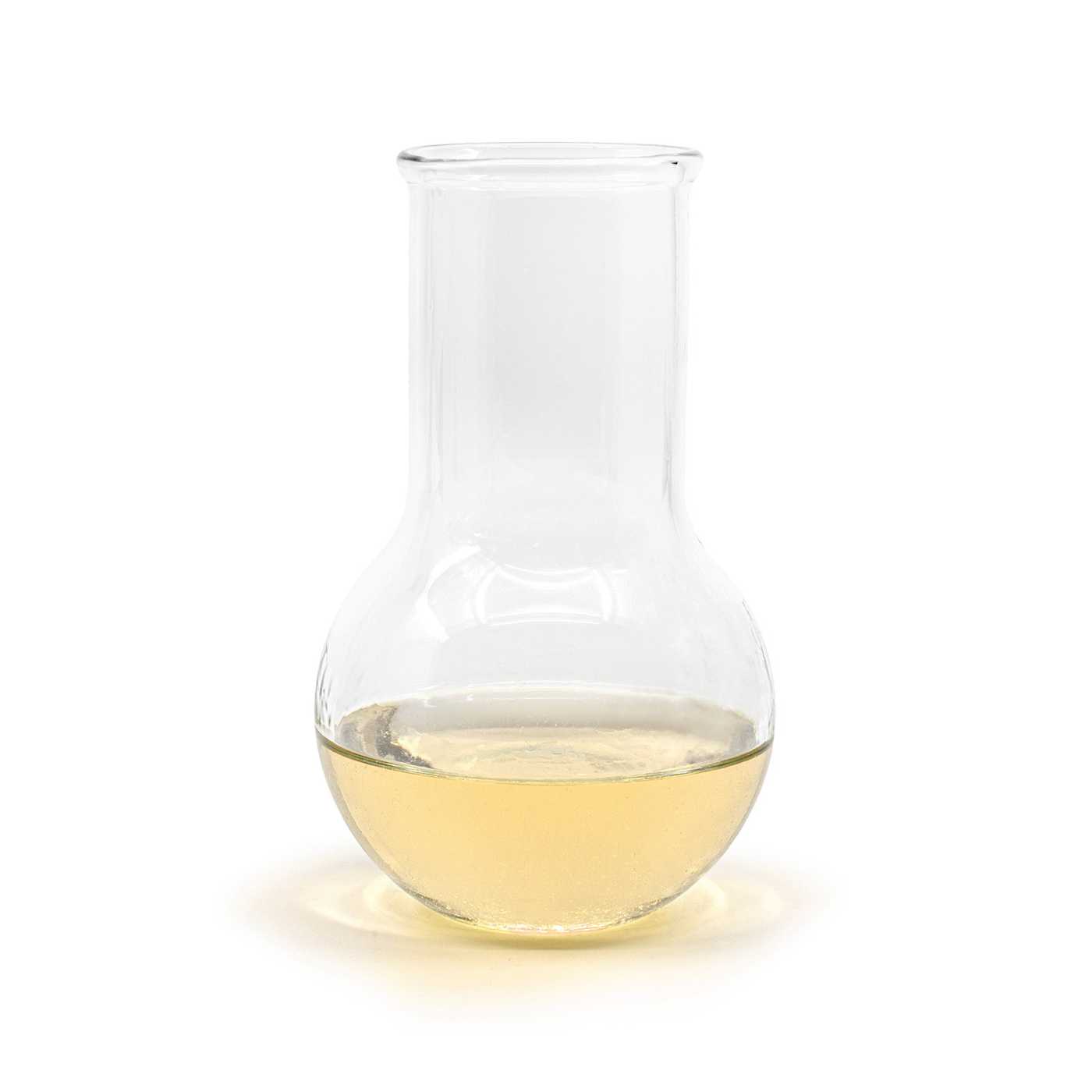
- Appearance: clear, colourless to slightly yellowish liquid.
- Character: multifunctional antimicrobial, wetting and co-emulsifying blend.
- Solubility: miscible with the aqueous phase; suitable for aqueous, emulsion and surfactant systems.
- Origin of components: blend with a high proportion of naturally derived components according to ISO 16128.
- Odour: weak, characteristic of the raw material.
- Technological contribution: improved wetting, support of co-emulsification, antimicrobial reinforcement and easier incorporation into the formulation.
Safety and storage
- When working with the raw material, follow normal hygiene rules for cosmetic manufacturing and use clean tools.
- Avoid contact of the concentrated raw material with the eyes; in case of eye contact, rinse carefully with water.
- For formulations intended for the eye area, very sensitive skin, children’s cosmetics or oral hygiene, a thorough assessment of the complete composition is necessary.
- The finished formulation containing water must be properly preserved and verified by microbiological testing according to the product type.
- Store in a well-closed container, in a dry place, away from direct sunlight, sources of heat and frost.
- After opening, always close the container carefully to prevent contamination and changes in the quality of the raw material.
- When used in products containing fragrance compositions, essential oils or a high content of electrolytes, it is recommended to verify stability and compatibility in a small pilot batch.
FAQ
Can DERMOSOFT 7GA (MB) replace a classic preservative?
In some formulas, it can form part of the preservation system, but its suitability as the only protection system depends on pH, water content, plant-derived components, type of packaging and the way the product is used. For products intended for sale, verification with a challenge test is necessary.
Why is pH important for this raw material?
Sodium Anisate belongs to the salts of organic acids, whose effect may depend on the balance between the salt and acid form in the finished formulation. Therefore, when designing the formula, not only the dosage but also the final pH of the product is monitored.
Is it suitable for fragrance-free products?
Yes, it can also be used in unfragranced formulations. The raw material has only its own mild characteristic odour, but for very minimalist formulas it is advisable to assess the olfactory profile of the finished product after it has rested.
Can it change the viscosity of an emulsion?
Yes, in some emulsion systems it can influence viscosity, because it contains a surface-active and wetting component. The change usually depends on the type of emulsifier, dosage, oil phase content and the thickener used.
Is DERMOSOFT 7GA (MB) suitable for anhydrous products?
It is not primarily intended for anhydrous oil balms, butters or sticks, because the blend itself contains an aqueous and glycerin portion. It has its greatest relevance in aqueous, emulsion and surfactant formulations.
Why can it be interesting in decorative cosmetics?
Heptylglycerin helps with wetting of surfaces, which can support a more uniform dispersion of pigments. In decorative cosmetics, it can thus contribute to a more homogeneous texture, better pigment processing and a more stable appearance of the formulation.
Also have a look at other
preservative and antimicrobial components offered by Handymade.sk.