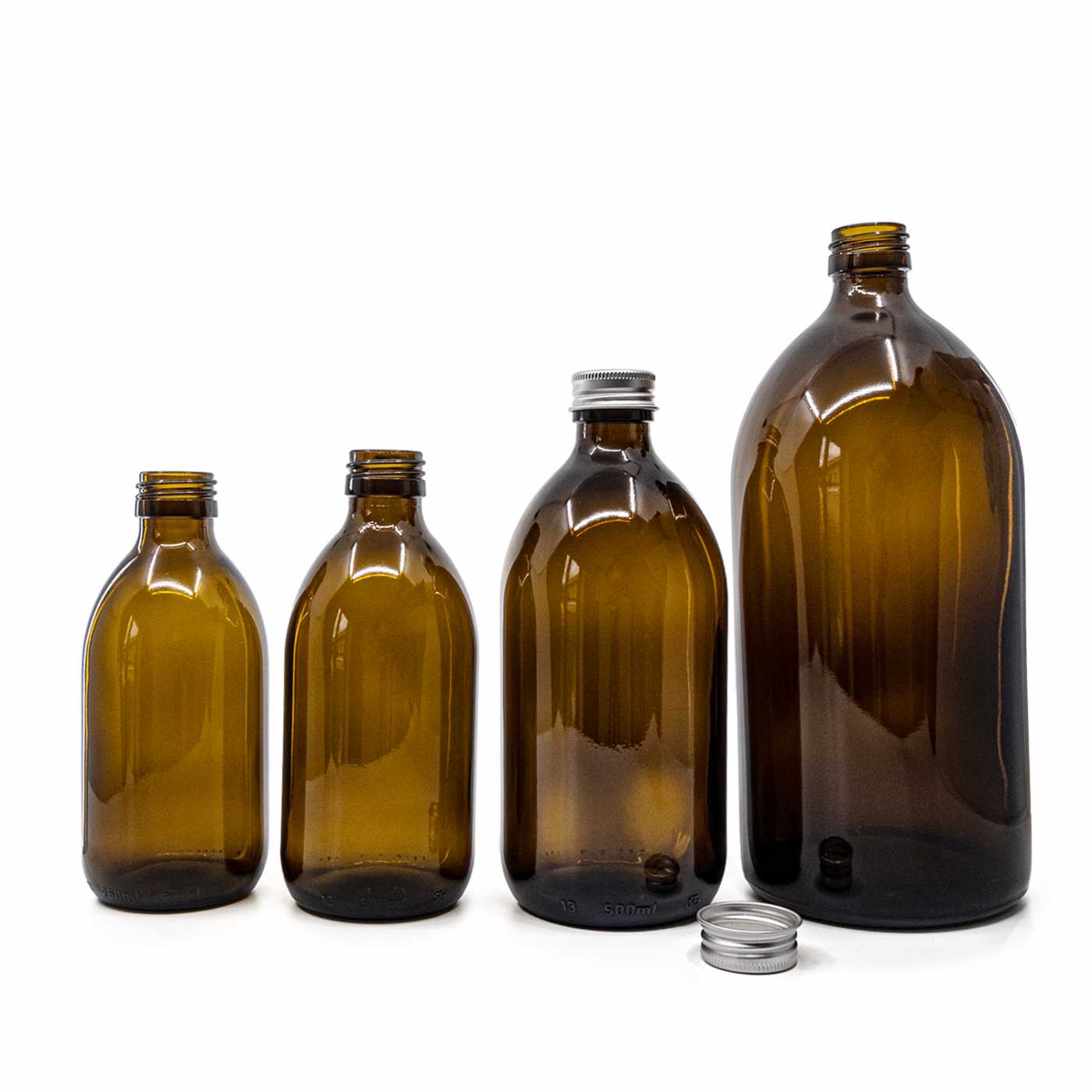
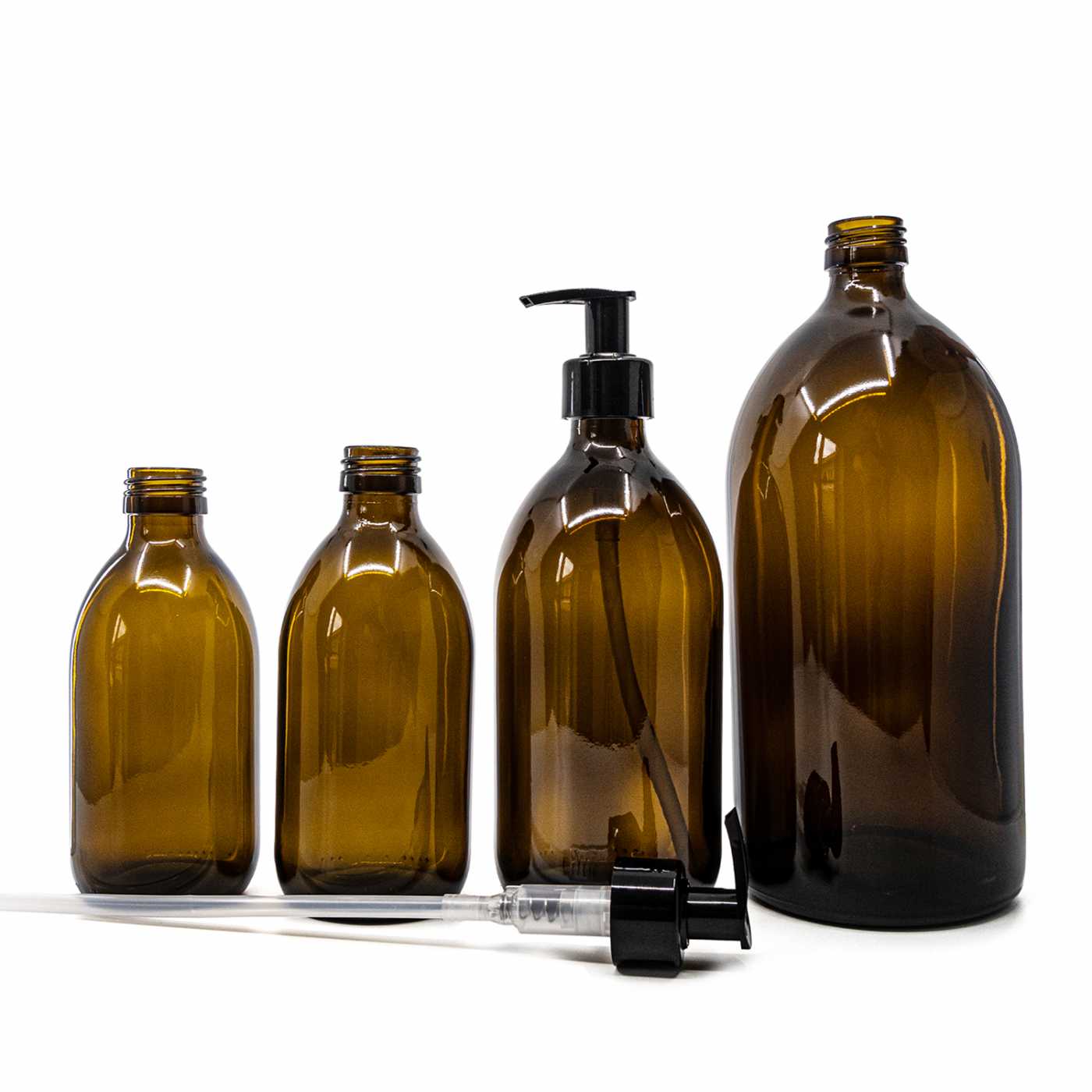
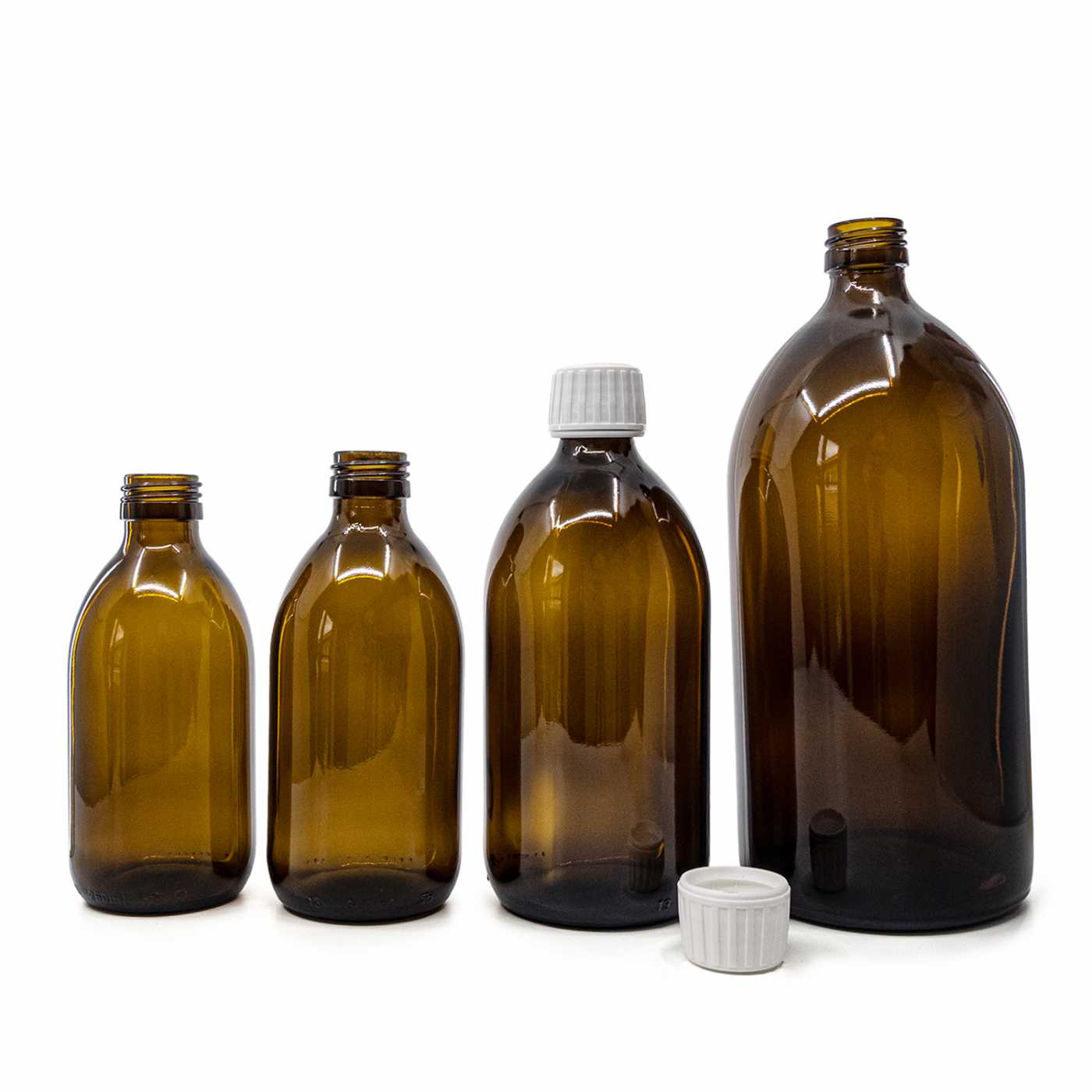
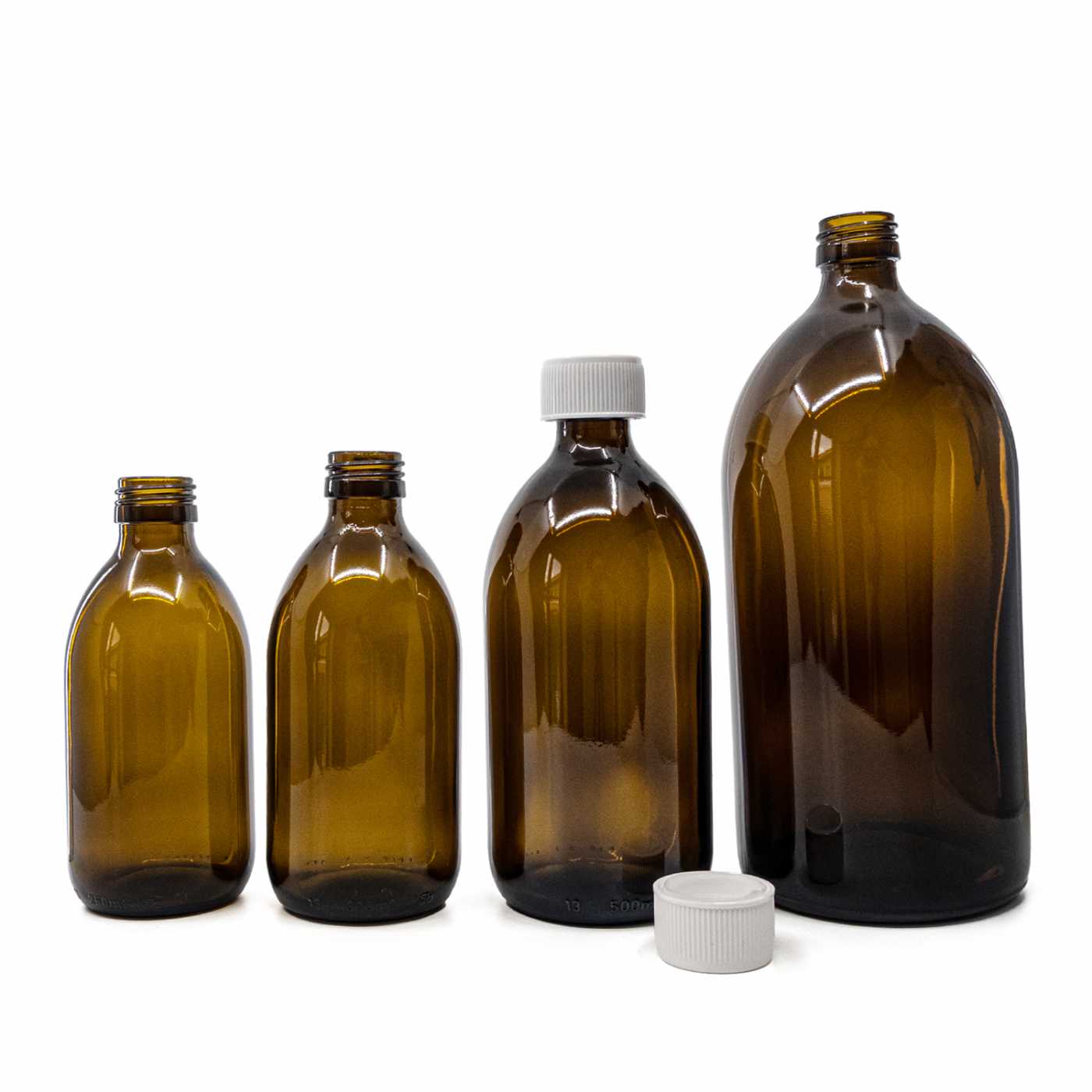
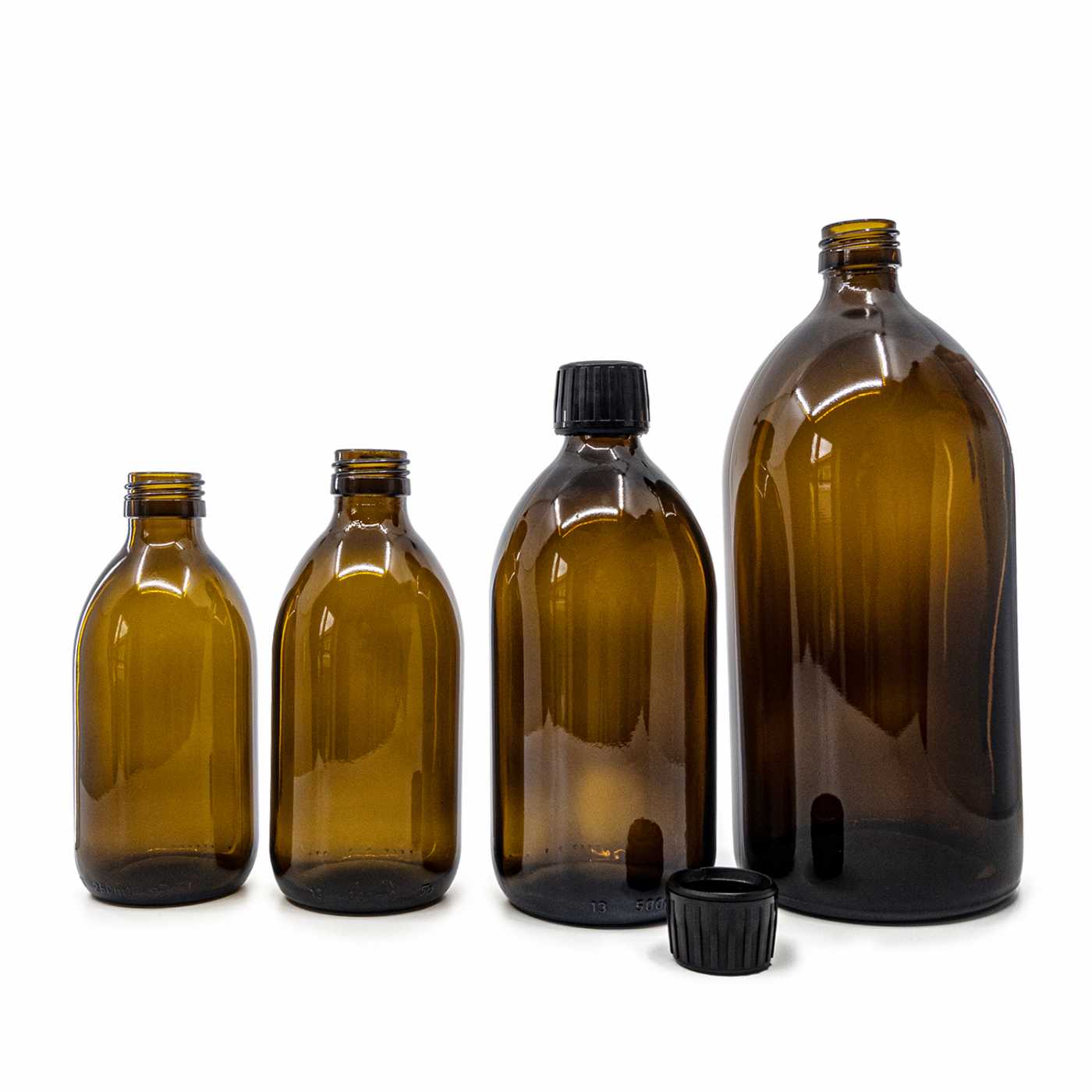
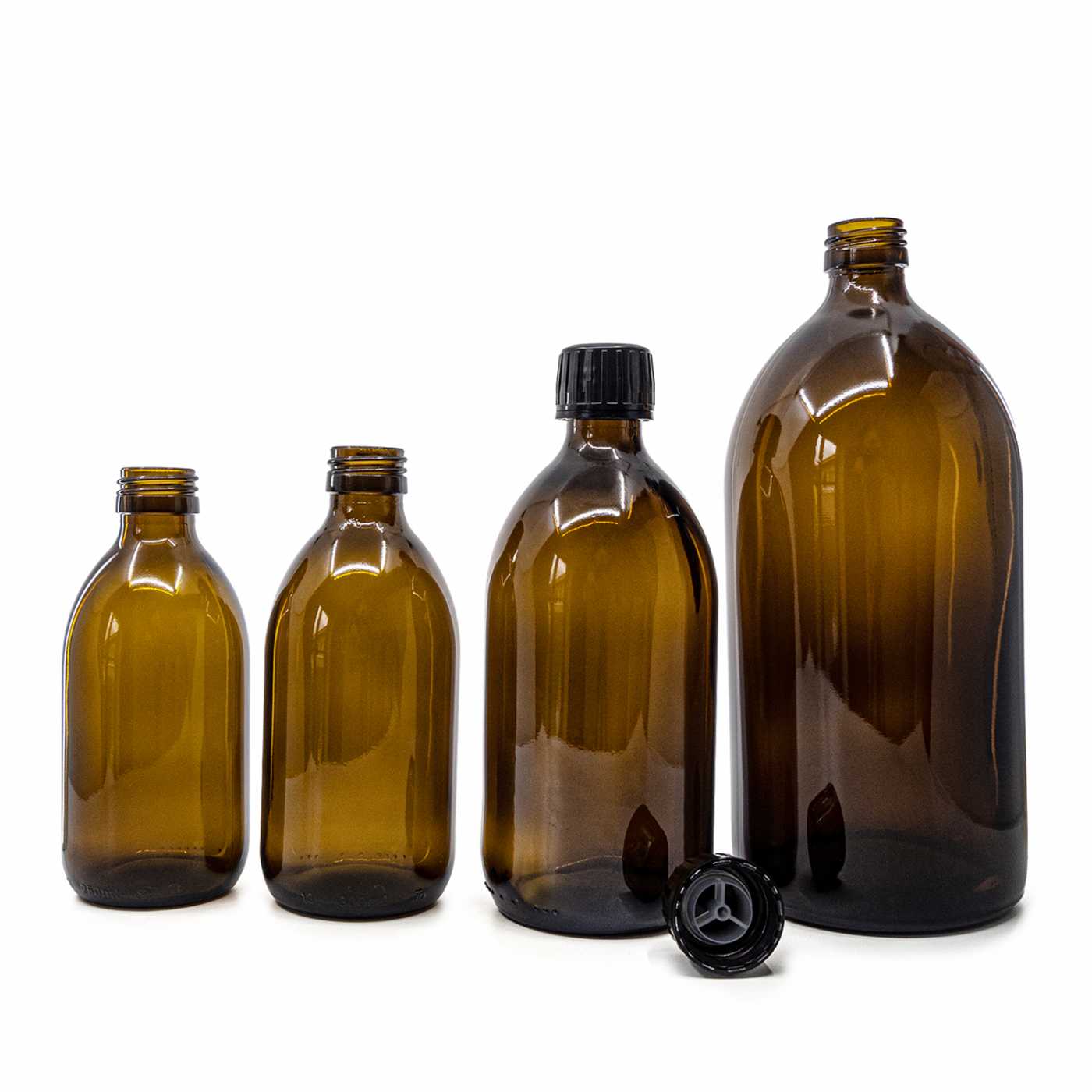
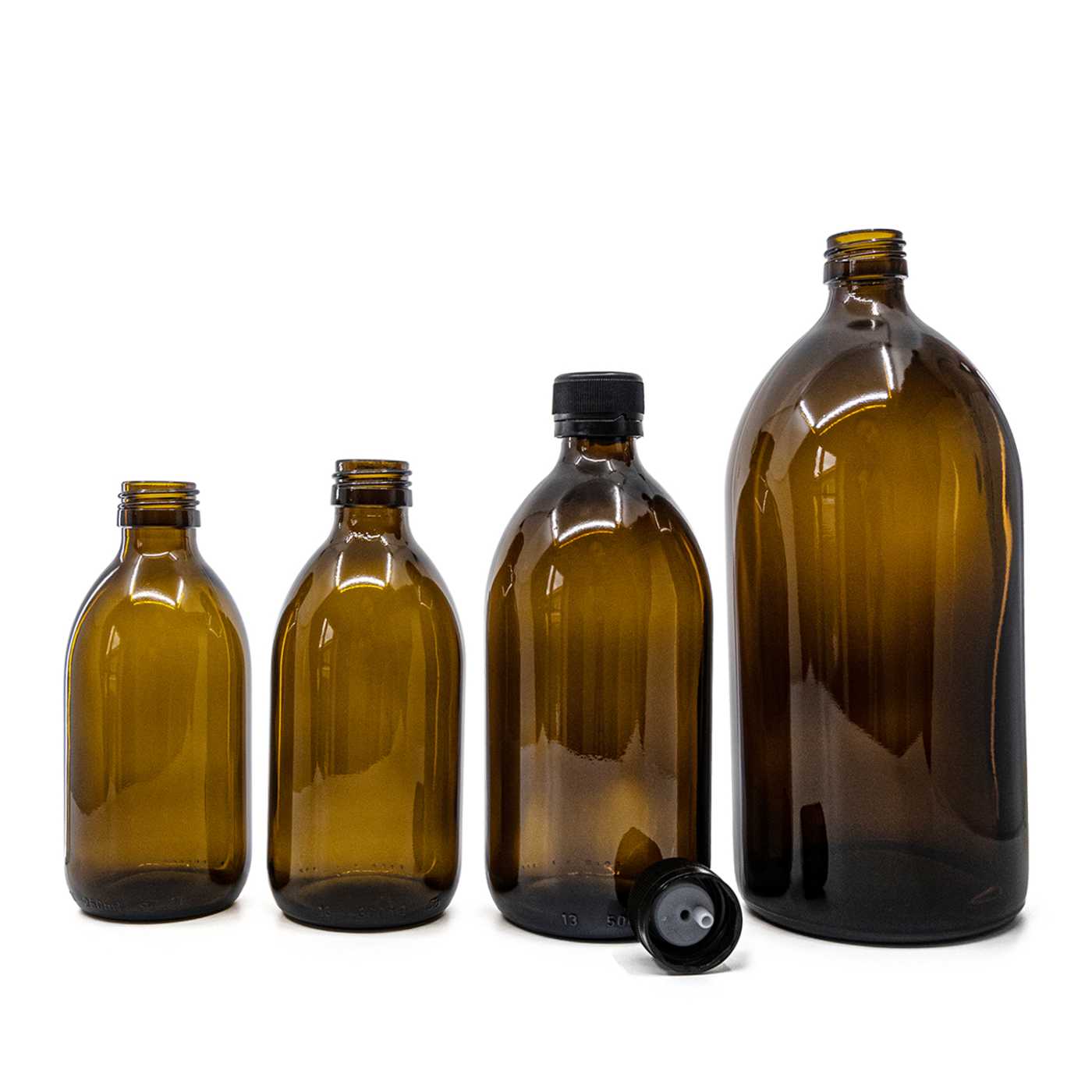
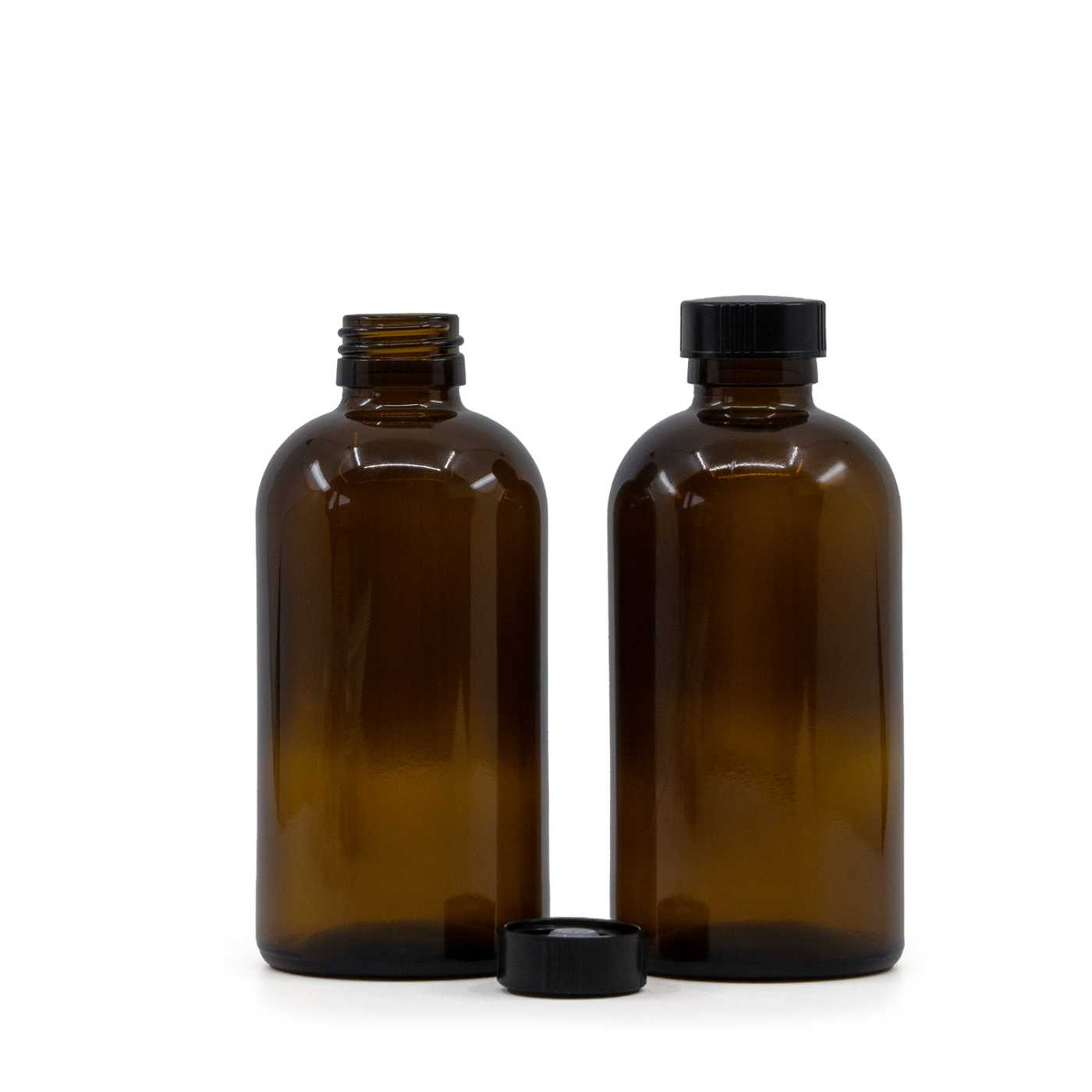
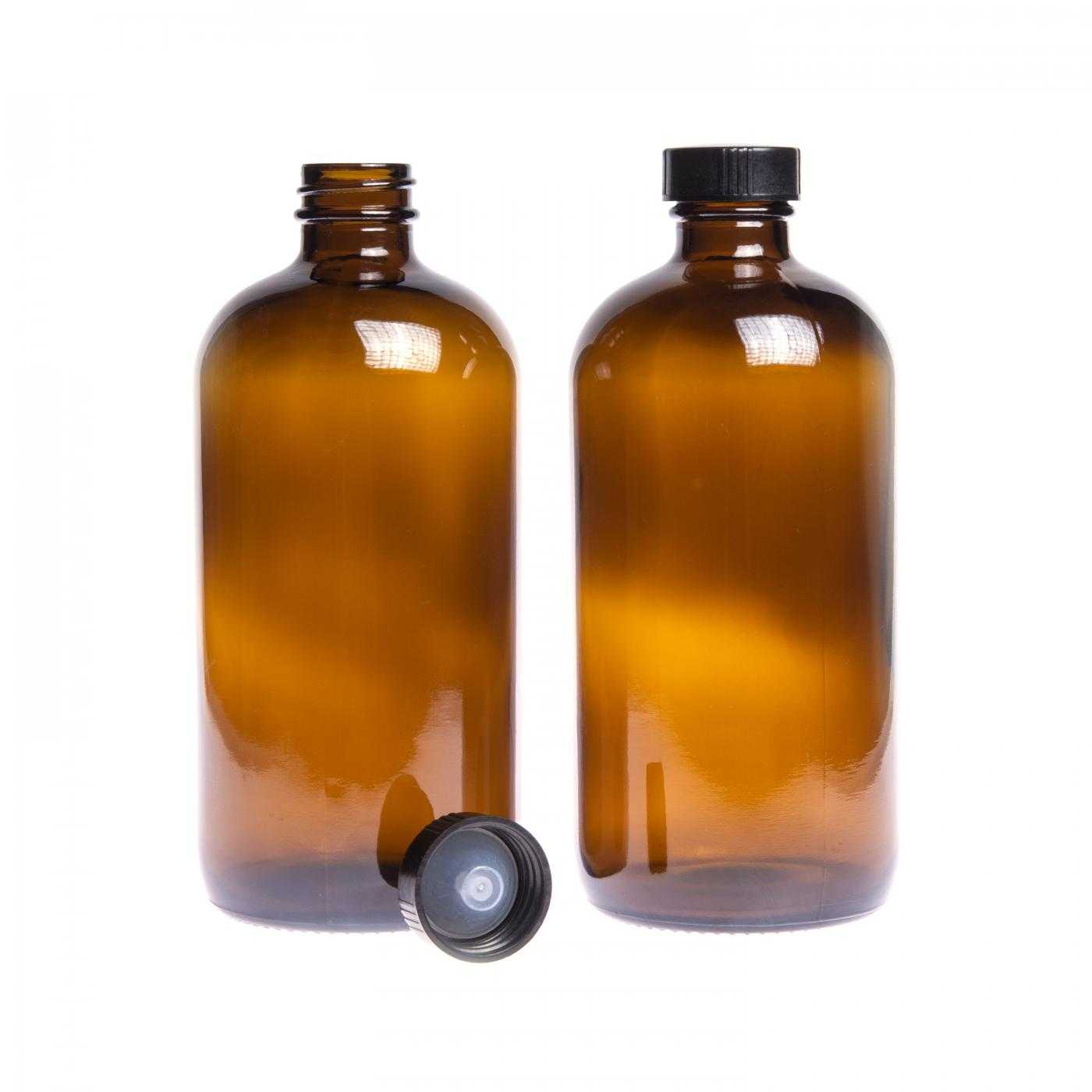
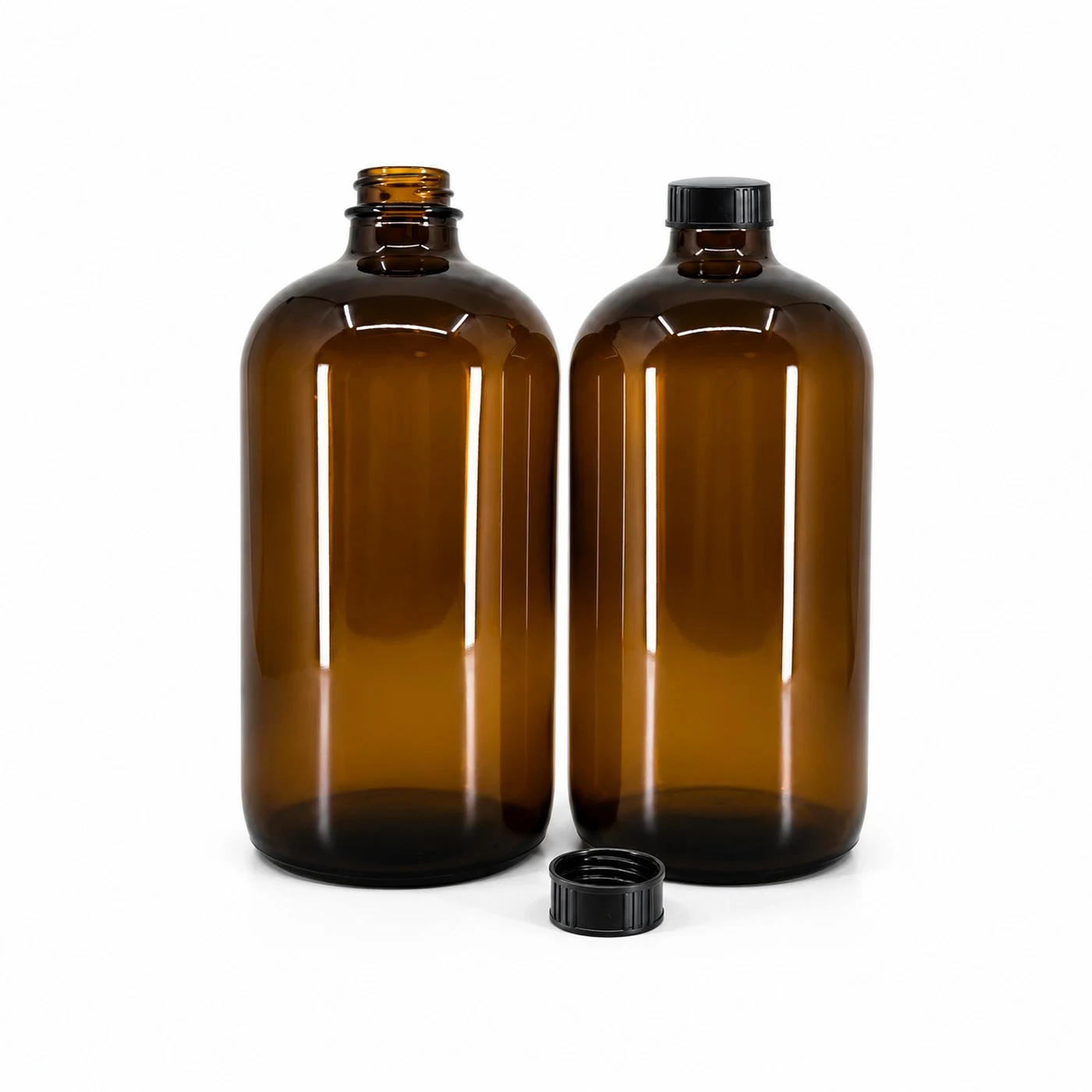
Amber glass medicine bottle, black cap, 28 mm, 1 l
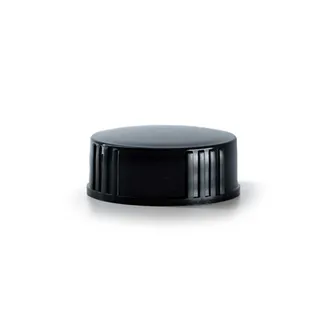
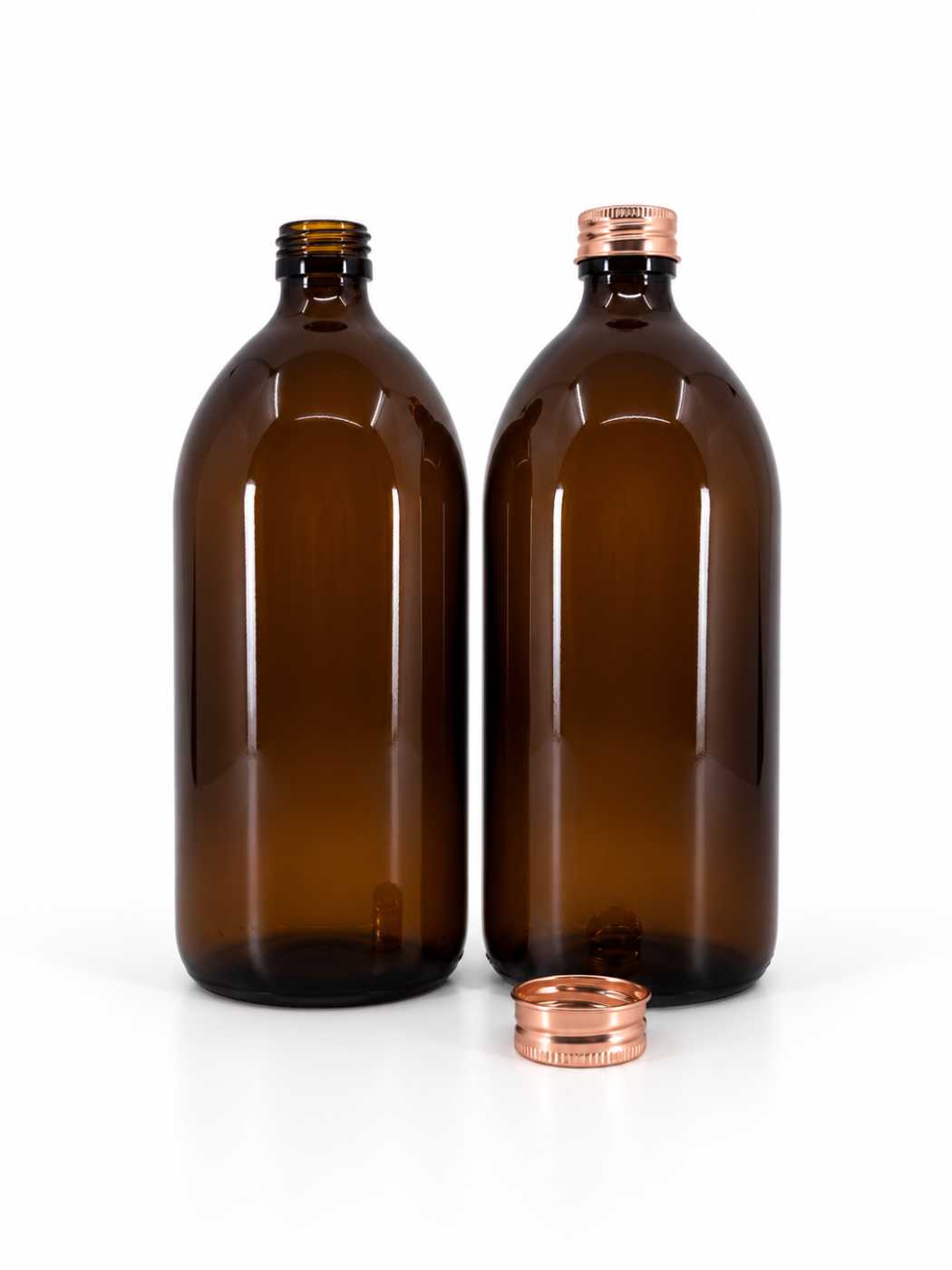
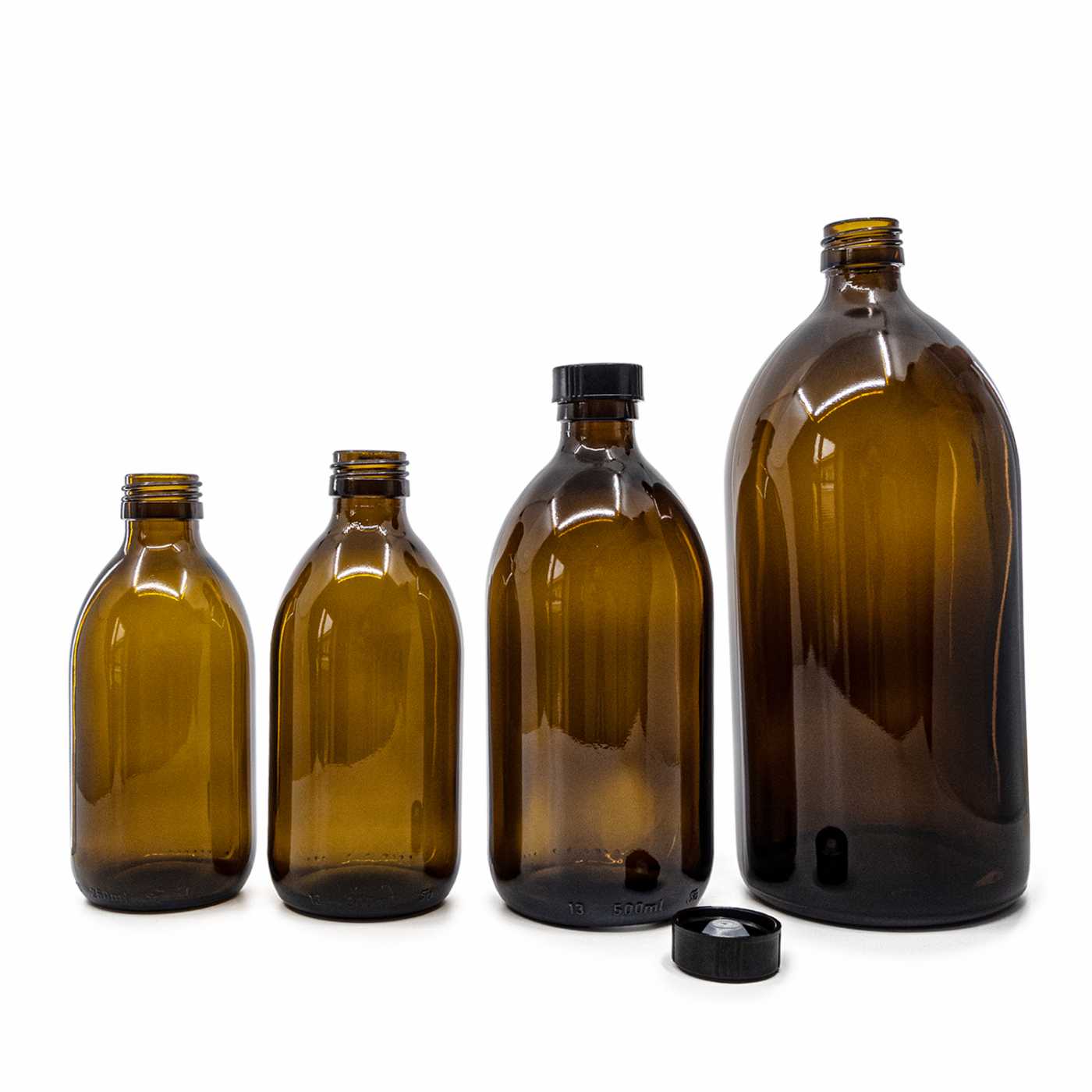
Amber glass medicine bottle, black cap, 28 mm, 1 l is a set for storing larger quantities of liquids that need to stay protected from light: vegetable and massage oils, hydrosols, tinctures, toners, facial lotions, or stocks of raw materials before decanting into smaller bottles. The amber glass medicine bottle with a volume of 1000 ml is supplied together with a black plastic cap with a PP28S thread. Glass does not react with the contents, and the amber colour reduces light exposure, so oils and extracts that are sensitive to oxidation have better conditions in this bottle than in a clear container.
The whole set, bottle and cap, is approved for direct contact with food. It is therefore also suitable for the kitchen and pantry, for homemade oils, syrups, vinegars, or herbal extracts. The packaging material of both components is also declared suitable for use with cosmetics.
What it is suitable for
- Bulk packaging of raw materials – a volume of one litre is sufficient for an oil phase or a hydrosol from which you continuously draw for production.
- Oils and macerated oils – amber glass slows the effect of light on oils and oil extracts, which turn yellow or spoil over time.
- Tinctures and alcohol extracts – glass withstands ethanol without any change to the material.
- Toners and facial lotions in larger packaging – for workshops and smaller production sites where the product is further decanted or used directly.
- Homemade food – olive oil, syrups, vinegars, or homemade liqueurs, since the whole set has food-contact approval.
Bottle and cap as a whole
The cap screws onto the bottle with a PP28S thread. The neck has no dispensing insert, so pouring from a one-litre medicine bottle takes a little practice. With oils, it works well to pour slowly with the bottle tilted. For water-based contents, it is better to draw them off with a measuring cup or to decant them into a smaller bottle with a fine mist sprayer or a pump.
If you are combining your own contents and packaging, we recommend checking the tightness of the cap with your specific formulation, especially with alcohol extracts and thin oils, which easily leak into the thread. After tightening, lay the bottle on its side on a paper towel for a while and check that it does not leak.
Nominal and total volume
The nominal volume of 1000 ml is the volume the bottle is intended for in normal filling. The total brimful volume is the physical volume of the bottle up to the neck, and you will find it in the product parameters. The difference between the two values is a reserve for the cap and for the expansion of the contents when the temperature changes. For this reason, fill the bottle to the nominal volume, not to the brim. With oils, which expand when warm, and with contents containing alcohol, this reserve is also important for the tightness of the closure.
Good to know
- Preparation before first filling – wash the bottle and the cap, disinfect them with isopropyl alcohol or ethanol, and leave them to dry completely. Residual water in a one-litre bottle takes longer to dry, and it helps to stand the bottle upside down on a clean cloth.
- Glass and heat – do not pour hot liquid into a cold glass bottle, and do not place a hot bottle on a cold surface. A sudden change in temperature can crack the glass.
- Weight of the full bottle – a litre of oil or tincture together with the glass is a noticeable load. When handling it, hold the bottle by the body, not by the neck.
- Reuse – after thorough washing and disinfection, the glass can be used again. Before reuse, check the cap to make sure the thread is not damaged and that it seals properly.
- Recycling – the bottle belongs in glass recycling, the cap in plastics.
Store the bottle in a dry, clean environment. Do not place a full bottle on the edge of a shelf or anywhere it could fall, as a one-litre glass bottle will break in a fall even from a low height.
Frequently asked questions
Does an amber glass medicine bottle protect the contents from light?
Yes, amber glass reduces the penetration of light and slows light-induced changes in an oil, tincture, or hydrosol. However, it does not replace storage in a cool, dark place. It is advisable to keep a bottle with sensitive contents in a cupboard or pantry away from direct sunlight, and the amber glass then serves as an additional layer of protection.
How much liquid actually fits in a 1 l glass medicine bottle?
The bottle is filled to the nominal volume of 1000 ml. The physical volume up to the rim of the neck is slightly larger, and this difference is a reserve for the cap and for the expansion of the contents when warm. If you fill the bottle right up to the neck, there is a risk of overflow when closing it and of poorer tightness of the cap.
Is the glass medicine bottle and cap set suitable for food?
Yes, both the bottle and the plastic cap are approved for direct contact with food, so this applies to the whole set. You can use it for homemade oils, vinegars, syrups, or herbal extracts. Declarations of conformity for both components are available with the product.
Can a tincture or alcohol extract be filled into a 1 l glass medicine bottle?
Yes, glass withstands ethanol even at higher concentrations without any change to the material. We recommend checking the tightness of the plastic cap with alcohol contents before longer storage, because thin alcohol-based liquids leak into the thread more easily than oils. Do not fill the bottle to the brim, as alcohol expands when warm.
How do I prepare a glass medicine bottle and cap before filling cosmetics?
Before first use, wash both parts, disinfect them with isopropyl alcohol or ethanol, and leave them to dry completely. Moisture in the bottle could spoil an anhydrous oil or compromise the preservation of a water-based product. Use the same procedure for every refill.
What other closures fit a 1 l glass medicine bottle?
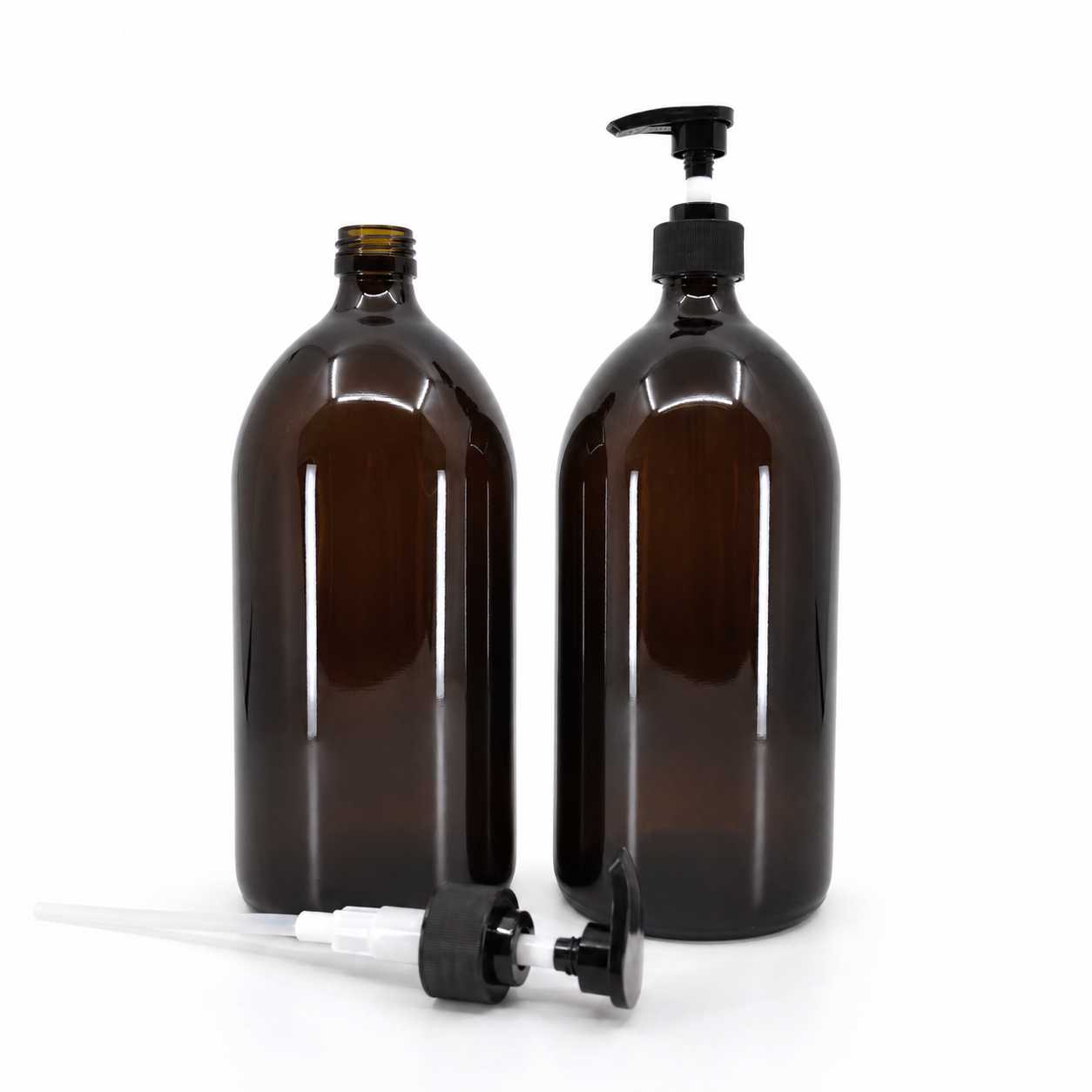
The bottle has a PP28S thread, so closures with the same neck type from the Handymade range fit it, as do ready-made combinations of the bottle with a different closure. When replacing the cap with a pump or another dispensing closure, check that the length of the dip tube matches the height of the bottle and that the closure seals properly with your specific contents.