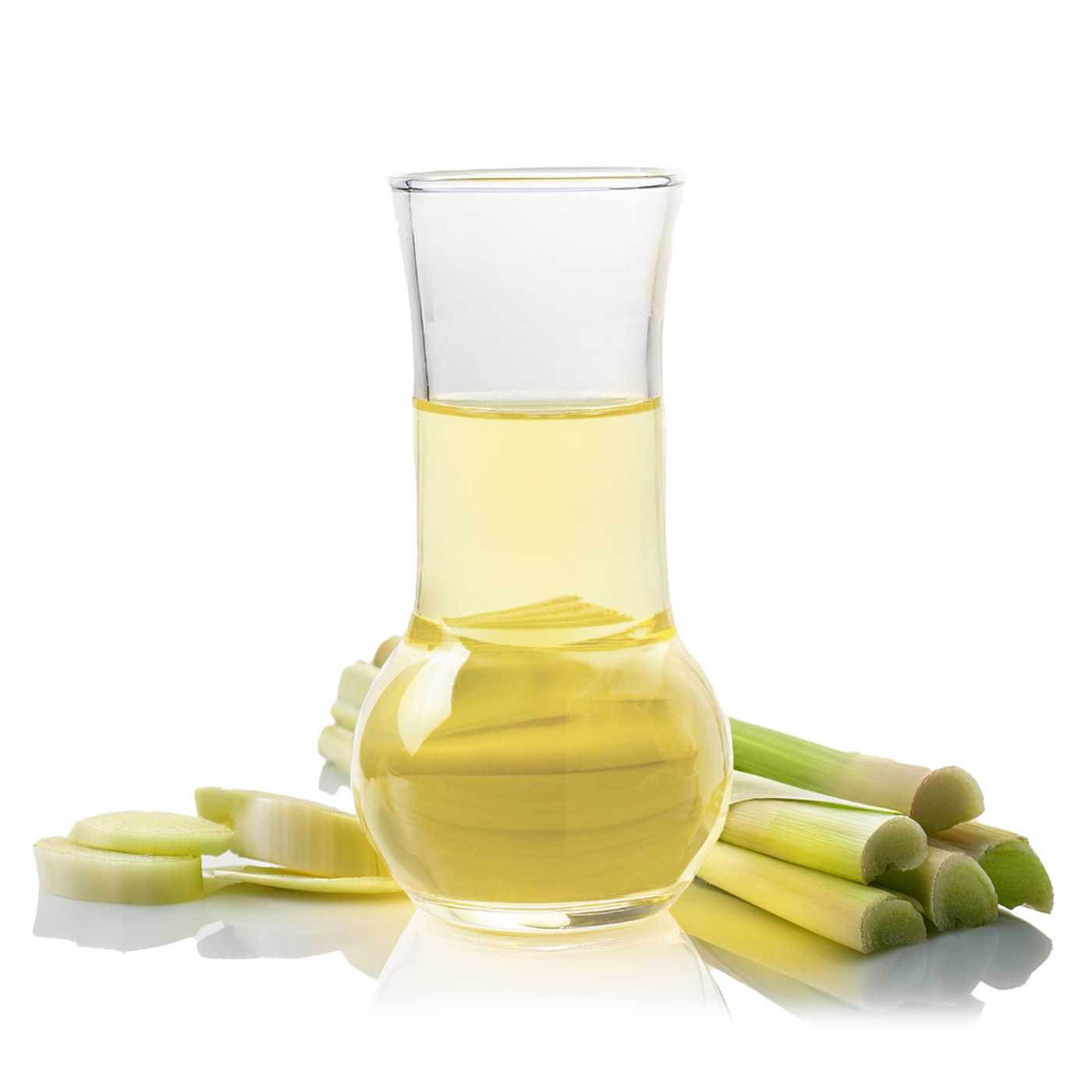
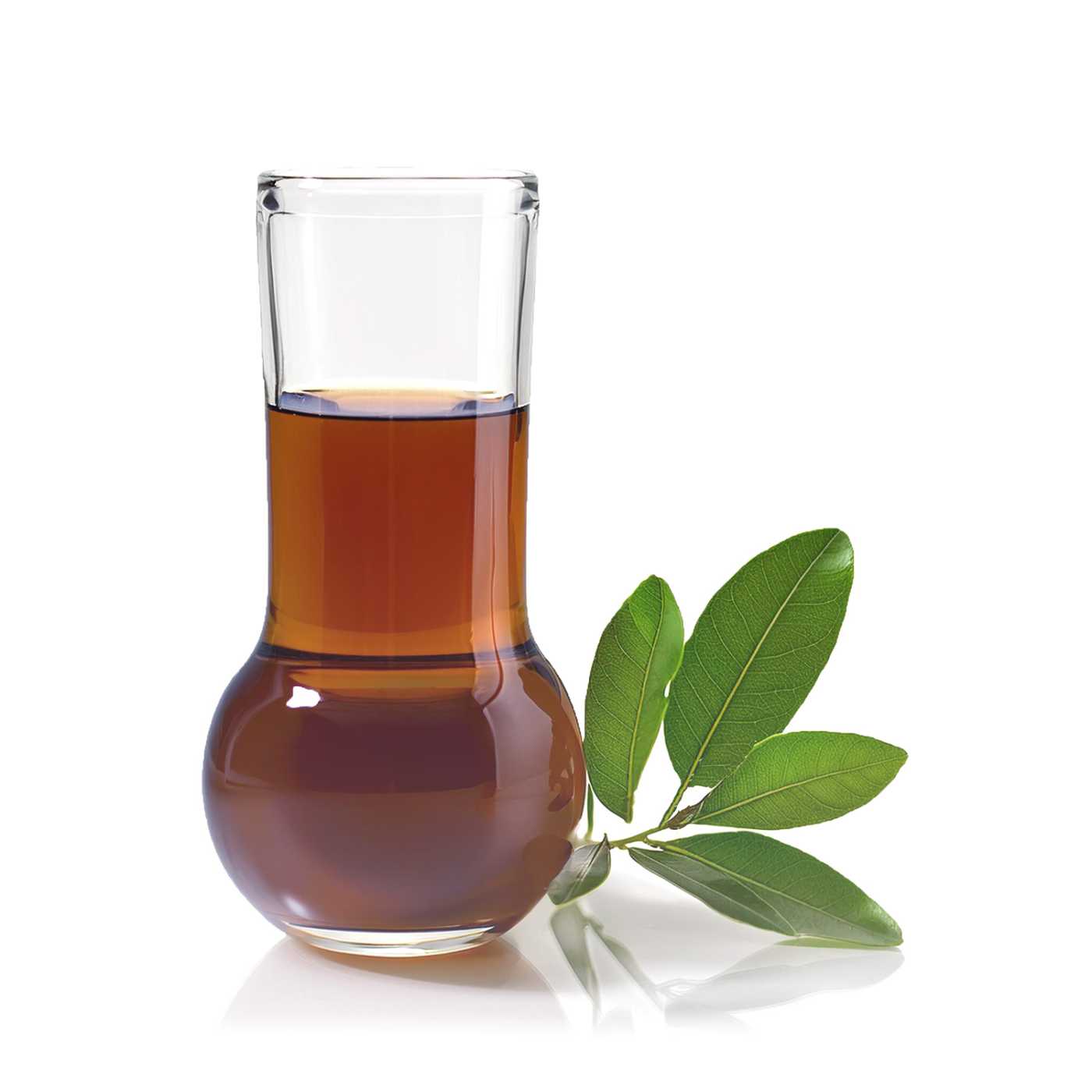
Citronella essential oil gives a formulation a fresh citrus fragrance and also masks the less pleasant odour of raw materials. It is a distillate from the aerial parts of the grass Cymbopogon winterianus, of Asian origin, also known in the trade as Java citronella. In a formulation it serves as a fragrance component. According to the manufacturer, it also has insect-repellent properties, which is why it appears in products intended for summer and time outdoors.
It is obtained by steam distillation. The raw material is plant-based, vegan and free from palm oil ingredients.
What characterises the oil
- Fragrance – the manufacturer classes it as citrus. Its character comes from the monoterpenes citronellal, geraniol, citronellol, limonene, geranyl acetate and camphene.
- Odour masking – according to the manufacturer, the fragrance helps to cover an unpleasant smell, in practice for example the natural odour of oils, butters or plant extracts in the finished product.
- Insect repellency – the manufacturer reports insect-repellent properties, which is why the oil is popular in body oils, sprays and candles for outdoor use. This is the manufacturer’s claim, not a guaranteed effect of the finished product.
- Hair and scalp – according to the manufacturer, the oil supports a feeling of freshness and cleanliness of the scalp and can be incorporated into shampoos, conditioners and scalp products.
- Soothing and antimicrobial action – the manufacturer’s marketing materials describe a soothing effect on irritated skin and antimicrobial properties. The manufacturer does not provide studies for these claims; treat them as supplementary information, not as the main effect of the product.
Use in a formulation
The oil is added to the oil phase, in emulsions most often only in the cooling phase, or it can be incorporated afterwards into the finished base. The recommended processing temperature is below 40 °C. The oil consists of volatile components that evaporate at higher temperatures, which weakens the fragrance.
It belongs to the oil phase and does not dissolve in water. For toners, body mists and other water-based systems it is therefore introduced via a solubiliser. According to the manufacturer’s data, it is compatible with non-ionic surfactants and with alcohol, so it can be used in alcohol-based sprays or in cleansing products based on non-ionic surfactants. In anhydrous products such as body oils, balms and ointments, it is mixed into the oil or into the melted base after it has partly cooled.
Add the oil only at the end of production, when the mixture is below 40 °C, and close the container straight away. Start with a smaller amount and adjust the fragrance only after mixing.
An exact recommended usage rate is not available. The upper limit is set for each product type by the relevant IFRA category: a lip balm is assessed differently from a body cream, shampoo or candle. Repellents applied to the skin have their own category together with body creams and oils. Before production, check the limit for the category your finished product belongs to and set the concentration below it.
The substance is subject to classification under the CLP regulation and contains components classified as CMR. When selling a finished product, rely on the safety data sheet (SDS) and on the IFRA limits for the given category. When handling the undiluted oil, follow the instructions in the SDS.
Suitable for products such as
- Body oils, balms and ointments – anhydrous products for summer and time in nature, where both the fragrance and the oil’s reputation as a repellent ingredient are put to use.
- Body sprays and mists – in an alcohol base or with the help of a solubiliser in a water base.
- Soaps and shower gels – the manufacturer mentions use in soaps and cleansing products; the fragrance masks the smell of fats and oils.
- Shampoos and scalp products – according to the manufacturer, for a feeling of scalp freshness.
- Candles and aromatherapy – the manufacturer lists it among the oils commonly used in candles and aromatherapy.
Good to know
The oil is yellow to brownish yellow and at a higher usage rate the finished product may take on a slight yellow tint. This shows mainly in white emulsions and clear water-based products. In sprays and toners with a low oil content, the effect on colour is usually negligible.
Its behaviour in cold process soap has not been verified by our own practical test. Before a larger batch, make a small trial batch and monitor trace and any discolouration of the soap batter.
Children’s creams, lotions and oils have a separate category under IFRA. If you are formulating a product for children, check the limit for that category, not the one for cosmetics for adults.
Frequently asked questions
Is citronella essential oil soluble in water?
No, citronella essential oil does not dissolve in water and belongs to the oil phase. It is added to toners, body mists and other water-based products via a solubiliser, or an alcohol base is used, with which it is compatible according to the manufacturer’s data. Without a solubiliser, the oil would float on the surface and the product would be fragranced unevenly.
When is citronella essential oil added to a cream?
Citronella essential oil is added to a cream only in the cooling phase, when the emulsion is below 40 °C. The oil consists of volatile components that evaporate at higher temperatures, which weakens the fragrance. It is stirred into the cooled emulsion and the container is closed as soon as possible so that the fragrance does not escape.
How much citronella essential oil goes into cosmetics?
An exact recommended concentration of citronella essential oil is not available; the upper limit is set by the IFRA category to which the finished product belongs. A different limit applies to a lip balm than to a body cream, shampoo or candle. Check the limit for your product type before production and start with a lower amount; you can adjust the fragrance after mixing.
Does citronella essential oil repel insects?
According to the manufacturer’s data, citronella essential oil has insect-repellent properties, which is why it is used in body oils, sprays and candles for outdoor use. The effectiveness of the finished product depends on the concentration and the whole formulation. It is not a guaranteed or tested effect of a specific product, and repellents for the skin have their own usage limit under IFRA.
Can citronella essential oil colour the finished product?
Yes, citronella essential oil is yellow to brownish yellow and at a higher usage rate it can give the finished product a slight yellow tint. This is most visible in white creams and clear water-based products. At a low usage rate in sprays or toners, the colour change is usually negligible.