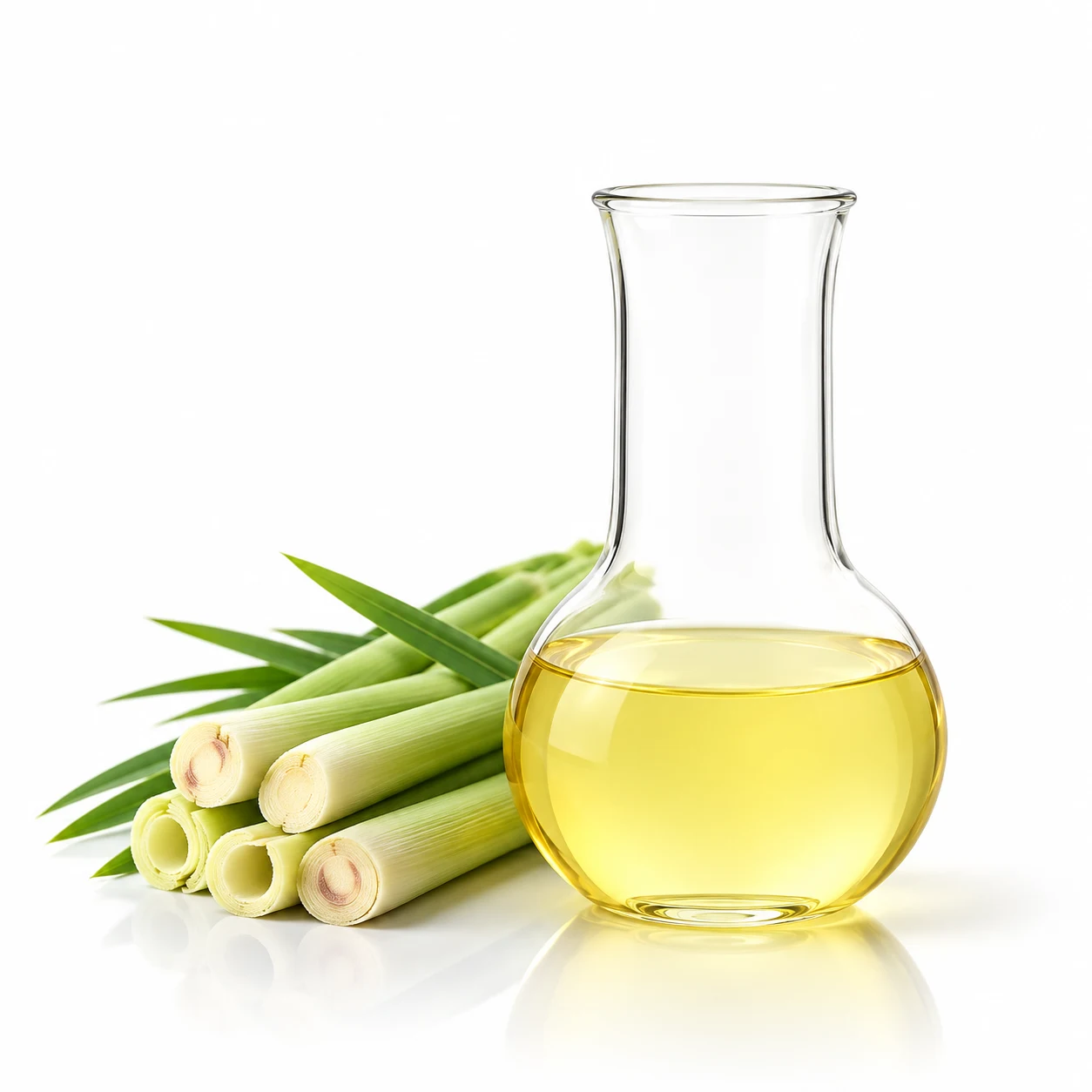
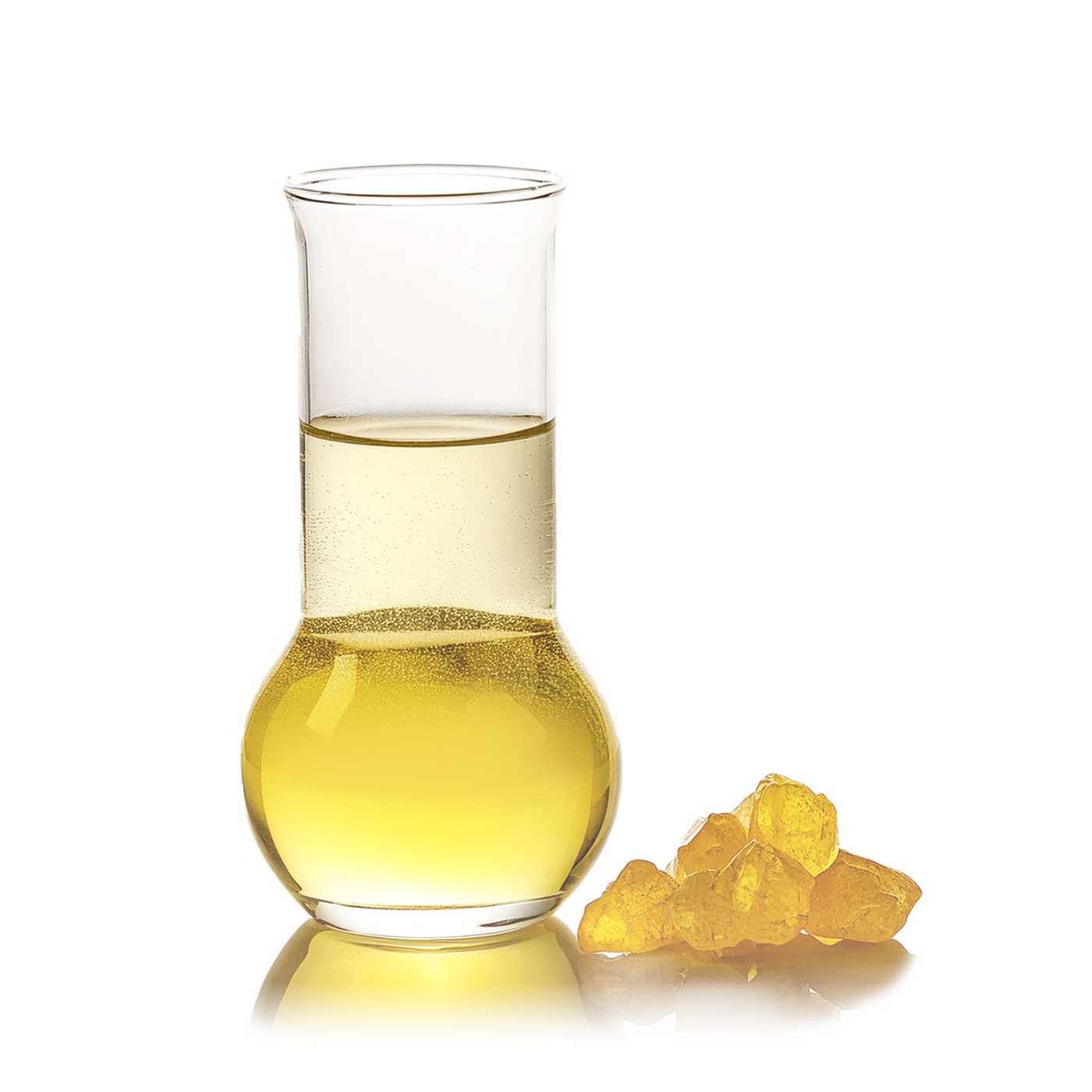
Lemon myrtle essential oil smells like fresh lemon, but it comes from the leaves of the Australian shrub Backhousia citriodora. It is obtained by steam distillation and, in a formulation, serves as a fragrance component that gives the finished product a clean citrus character without any oil pressed from citrus peel. The manufacturer describes the scent as invigorating and refreshing.
It is suitable for body and hair cosmetics, massage oils, bath products, fragrance compositions and aromatherapy blends for diffusers.
What it brings to your formulation
- Citrus scent from the leaves – the scent resembles fresh lemon, but it does not come from the fruit peel. In fragrance compositions and scent blends it is used as a fresh citrus component.
- Refreshing and cooling sensation – according to the manufacturer, it has a cooling effect on the skin. The manufacturer recommends it for after-sun products, foot care and wherever a product is meant to pleasantly cool the skin in hot weather.
- Cleansing support – the manufacturer states that it helps remove impurities and excess sebum from the skin and hair, which is why the manufacturer also includes it in cleansing cosmetics for the face and hair.
- Antimicrobial properties – the manufacturer lists them among the main functions of the oil. In your formulation, treat them as a supplement, not a replacement for a preservative system, the efficacy of which must be verified separately.
- Refreshing hair cosmetics – in hair mists, hair perfumes and leave-on products, it brings, according to the manufacturer, a distinctive citrus scent and a feeling of freshness.
The manufacturer also states that the oil brightens the skin and evens out its tone. No studies are provided for this effect, so treat it with caution when describing a finished product.
Use in a formulation
The oil is insoluble in water. In anhydrous products, that is massage and body oils, balms or oil serums, it is mixed in directly. In emulsions, it is added to the oil phase or only to the finished, cooled emulsion. For toners, hair mists and other water-based products, it must first be dissolved in a solubiliser, for example Polysorbate 20 or Polysorbate 80, otherwise it separates and forms an oil film on the surface.
Like most essential oils, it is sensitive to heat. When heated, some of the fragrance components evaporate and the scent weakens, so it is added only at the end of production, when the product is cooling.
Add the essential oil to the emulsion only after it has cooled, stirring continuously. In hot-process production, do not heat it together with the oil phase, or you will lose some of the scent.
The maximum usage rate is governed by the IFRA standard, which sets a separate limit for each product category. Different limits apply to lip products, hand creams, body lotions, shampoos and candles. You will find the values for individual categories in the product parameters. Work with them in every formulation, especially for leave-on products.
The oil is subject to CLP classification and carries the GHS05 (corrosive to skin and materials), GHS07 (irritant, sensitisation) and GHS08 (serious health hazards with long-term exposure) pictograms. Wear gloves when handling the concentrate, do not apply it to the skin undiluted, and follow the safety data sheet provided with the product.
Suitable for products such as
- body and massage oils, body lotions and creams
- after-sun products and cooling gels or creams for the feet
- hand creams and balms
- hair mists, hair perfumes and leave-on hair products
- fragrance compositions and colognes with a citrus character
- bath products and aromatherapy blends for diffusers
Good to know
The oil is classified as a sensitiser. It therefore makes sense to test the finished product on a smaller group of users before launch and to keep the usage rate at the lower end of the permitted range, especially in facial products and children’s cosmetics.
In water-based products with a solubiliser, cloudiness may appear at a higher usage rate of the oil. Test the ratio of solubiliser to essential oil in advance on a small sample and let the mixture stand for a day.
Frequently asked questions
Is lemon myrtle essential oil soluble in water?
No, lemon myrtle is an essential oil and does not dissolve in water. For toners, sprays and hair mists, it must first be incorporated into a solubiliser, for example Polysorbate 20. In oil-based products and balms, it is mixed in directly. In creams and lotions, it is added to the oil phase or to the cooled emulsion.
What is the difference between lemon myrtle and lemon essential oil?
Lemon myrtle is obtained by steam distillation from the leaves of the Backhousia citriodora shrub, while lemon essential oil is obtained by pressing the peel of lemon fruits. Both smell of citrus, but they differ in origin, composition and IFRA limits. When replacing one with the other, the formulation must be reassessed. A like-for-like swap is not enough.
When should lemon myrtle be added to a cream or lotion?
Only at the end of production, into the cooled emulsion. The essential oil is sensitive to heat, and when it is heated together with the oil phase, some of the fragrance components evaporate. It is mixed in while stirring continuously so that it disperses evenly throughout the emulsion.
How much lemon myrtle essential oil can I add to cosmetics?
The maximum amount is set by the IFRA standard and differs by product type. Different limits apply to lip products, hand creams, body lotions, shampoos and candles. The specific values for individual categories are given in the product parameters. The oil is classified as a sensitiser, so we recommend keeping the usage rate at the lower end.
Is lemon myrtle suitable for diffusers and candles?
For diffusers and aromatherapy blends, yes. The manufacturer lists it for these purposes because of its invigorating citrus scent. For candles, a separate IFRA limit for category 12 applies, given in the parameters. We have not verified how the oil behaves in wax, that is, scent stability during burning and its effect on setting. We recommend making a test candle.
Is lemon myrtle suitable for hair cosmetics?
Yes, the manufacturer recommends it for hair mists, hair perfumes and leave-on products because of its distinctive citrus scent. In water-based hair mists, a solubiliser must be used, while in oil-based hair serums it is mixed in directly. The usage rate is governed by the IFRA limit for non-spray hair products or for hairsprays and sprays.