


Bottles only
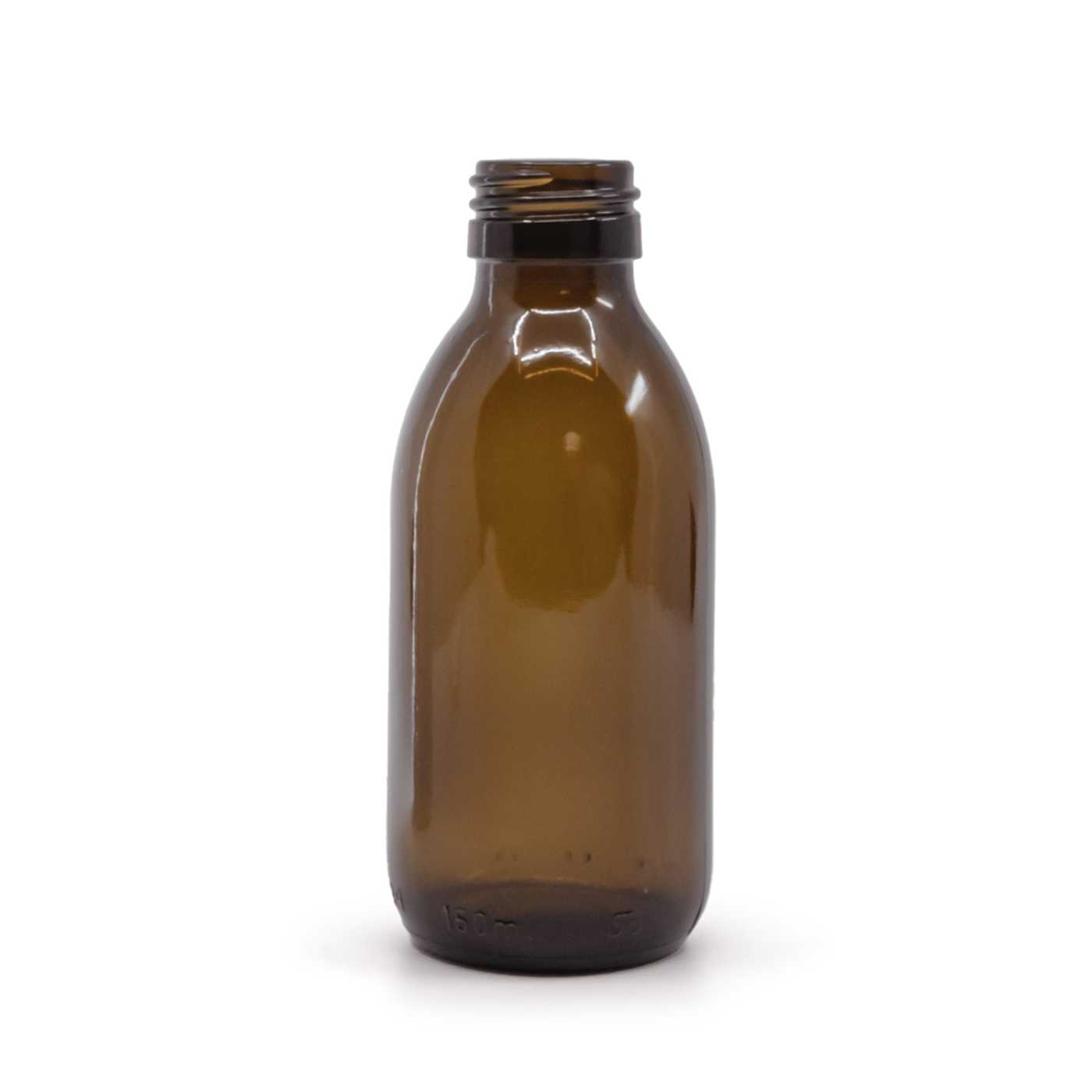
Glass bottle, vial, PP28S, 150 ml
Pack size50 ml100 ml150 ml200 ml250 ml300 ml480 ml500 ml1 l
A brown glass bottle with a threaded neck PP28S and a nominal volume of 150 ml is designed for formulations that lose quality when exposed to light – vegetable and herbal oils, tinctures, hydrolats, tonics, facial and… full description
Lowest price in the last 30 days: €0.51
Total for 1 pcs: €0.51
Add 87 more pcs and the price drops to €0.47/pc.
Product description
A brown glass bottle with a threaded neck PP28S and a nominal volume of 150 ml is designed for formulations that lose quality when exposed to light – vegetable and herbal oils, tinctures, hydrolats, tonics, facial and hair waters, or liquid shower and hair products. Glass is chemically stable, does not absorb scents or colourants, and does not react with essential oils, which is an advantage for oil blends and alcohol-based extracts.
The bottle is suitable for contact with cosmetic products and is also approved for direct contact with food, so it can serve for home-made syrups, infused oils, vinegars, or herbal extracts. It is manufactured in the European Union and supplied without a closure, so you can choose the dispensing method according to the contents.
Why choose brown glass
- Protection of contents from light – brown glass limits the penetration of light, which accelerates the oxidation of oils and the fading of natural pigments and fragrances. For leave-on products with longer use, this is a practical advantage over clear glass.
- Chemical stability – glass does not react with alcohol, acidic tonics, or concentrated essential oils, which can degrade or cloud some plastics over time.
- Reusability – after thorough washing and disinfection, the bottle can be refilled; it does not retain residual odours from previous contents.
- 150 ml volume – a suitable size for products used over several weeks: body and massage oils, tonics, hair waters, liquid soaps in smaller packaging, or bath oils.
Filling and volume
With glass containers, a distinction is made between nominal volume and total volume to the brim. Nominal volume is the amount the bottle is designed for under normal filling. Total volume is the physical internal space up to the neck. The difference between them provides a reserve for the closure, dropper, or pump, and for the expansion of the contents with temperature change. Filling should therefore be done to the nominal volume, not to the brim – otherwise some of the contents will be pushed out when closing, or the closure will not seal correctly. Both values are listed in the product specifications.
For oil formulations that will be stored in a cooler room and used in a warm bathroom, leave a slightly larger reserve at the neck. Oil expands with heat, and a fully filled neck will overflow when opened.
Closures for PP28S neck
The bottle has a standardised threaded neck PP28S. Closures with the same neck type as well as ready-made bottle and closure combinations are available from Handymade. With a custom combination, we recommend checking the seal, dispensing flow, and closure behaviour with the specific formulation in advance, especially with thicker oils and products containing alcohol.
Preparation before first filling and reuse
A new bottle from production is not sterile. Before the first filling, it is recommended to wash it with warm water and a small amount of detergent, rinse thoroughly, disinfect with isopropyl alcohol (IPA) or ethanol, and allow to dry completely with the neck facing down. Residual water in the bottle is a risk for anhydrous oils as well as for water-based products without adequate preservation.
The same procedure applies for reuse. Hot water with detergent removes oily residues; for stronger fragrances, rinse the bottle with ethanol before washing. Empty, clean glass belongs in glass recycling.
Glass handles sudden temperature changes poorly. Do not pour hot liquid into a cold bottle, or cold water into a hot one – a large temperature difference can cause the glass to crack. Allow the bottle to warm to room temperature before filling with a warm phase, or pre-warm it with warm water.
What is good to know
- Label – the cylindrical body of the bottle allows a wrap-around or smaller front label to be applied. Suitable label dimensions are derived from the bottle's diameter and height, which are listed in the specifications.
- Transparency – brown glass is transparent, so you can see the approximate fill level, but not the true colour of the contents. If the product's colour is part of its presentation, consider clear glass.
- Weight – glass is heavier than plastic; for mail-order sales, account for the higher parcel weight and protective packaging against breakage.
- Technical use – thanks to its chemical stability, the bottle is also suitable for working solutions in a workshop, for example diluted alcohol or solvents that would degrade plastic.
Frequently asked questions
Parameters
- Product color
- Amber
- Country of origin
- European Union
- Nominal capacity
- 150
- Brimful capacity
- 158 ml
- Diameter
- 51,6 mm
- Thread type
- PP28S
- Height
- 122,8 mm
- Product material
- Glass
Product documentation
Verified by customers.
No reviews yet.
Only customers with a delivered order can write reviews.