Spend over €100 for discounted shipping!

+421 950 333 113[email protected]

Food and drink fragrances 10 ml

Green Tea & Pear Fragrance Oil, 10 ml

Pack size10 ml100 ml500 ml1 l

Fragrance oil, green tea with pear Green tea with pear fragrance oil combines a fresh tea scent with the fruity note of pear and serves as a fragrance ingredient for cosmetics, soaps, candles and diffusers. full description

AvailabilityPre-order
Product codeVO249_10
Batch20260707SF
Best before07/2028
€2.49incl. VAT€249.00/l

Lowest price in the last 30 days: €2.49

Pre-orderThis variant is currently out of stock — your order will be a pre-order and delivery may take longer.

Product description

Fragrance oil, green tea with pear

Green tea with pear fragrance oil combines a fresh tea scent with the fruity note of pear and serves as a fragrance ingredient for cosmetics, soaps, candles and diffusers. It is a cosmetic-grade synthetic fragrance composition of European origin, free from ingredients of animal origin. Its only role in a formulation is to give the product its fragrance. It is therefore used in a small amount and added at the very end of production.

For every category of finished product, from lip products to candles, the maximum usage rate is set by the IFRA certificate available with the product.


Fragrance profile

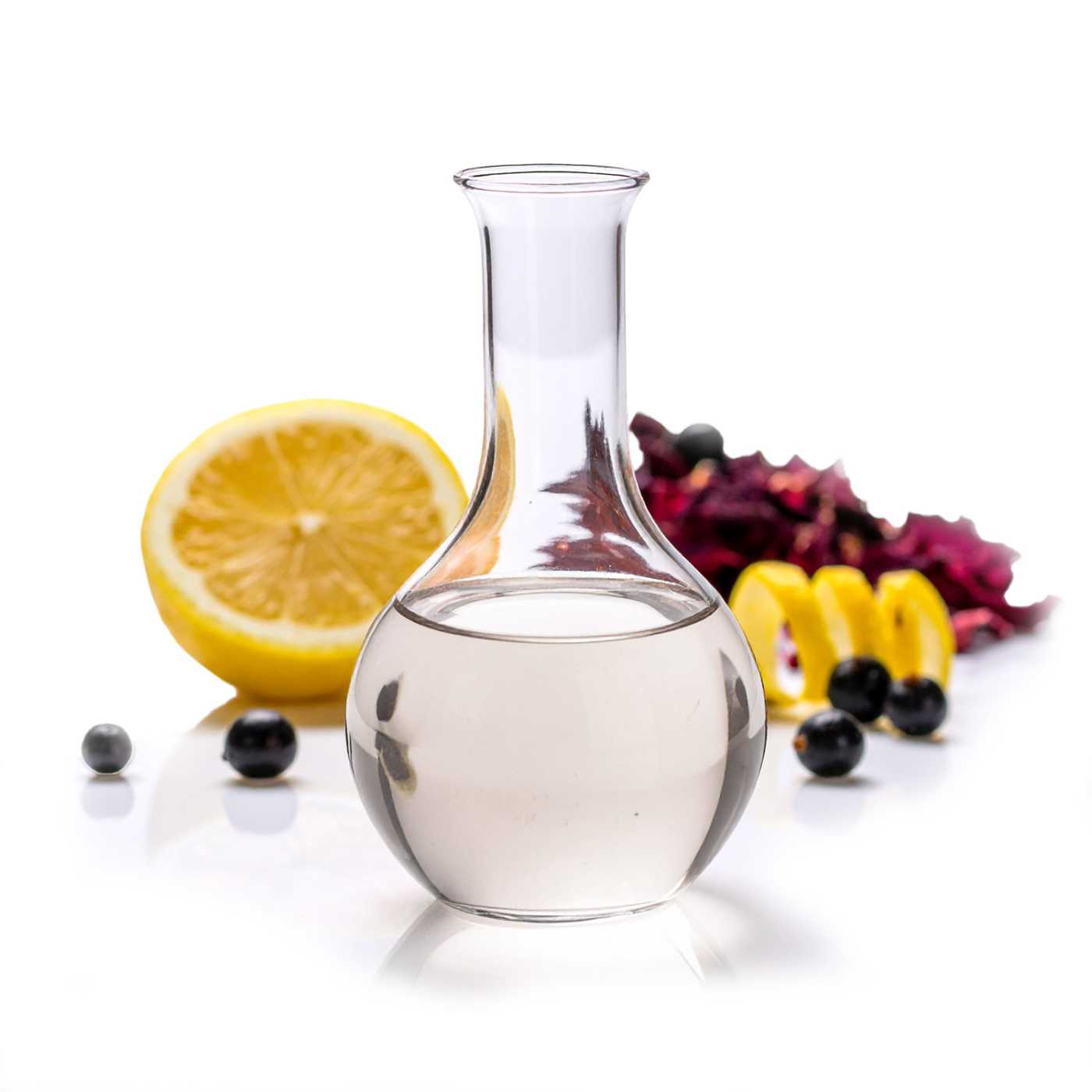
Green tea gives the composition a fresh, slightly herbal base, while pear adds a sweeter, juicier fruity note. The result feels light and clean. This profile works well with neutral bases such as shower gels, body lotions or undyed candles, where it is not overpowered by the scent of the base ingredients.


Use in formulations

The fragrance oil is oil-soluble and not water-soluble. It can be mixed directly into balms and body oils, as the oil phase dissolves it. In creams and lotions it is added during the cool-down phase, when the emulsion is below 40 °C, and stirred in briefly. At this temperature the volatile components do not evaporate unnecessarily and the finished product keeps its full profile. The composition is clear, so it does not colour an emulsion, gel or wax on its own.

Water-based products, that is toners, facial lotions, air fresheners or fragrance sprays, require a solubiliser (for example Polysorbate 20 or Polysorbate 80). The fragrance oil is first mixed with the solubiliser and only then stirred into the water phase. Without this step an oily film remains on the surface or the product turns cloudy.

Always check the usage rate in the IFRA certificate supplied with the product, according to the category the finished product belongs to. The same fragrance has a different limit for a lip balm, a different one for a body cream and a different one for a candle.

In candles, the oil is added to the melted wax at the temperature recommended by the wax manufacturer and mixed thoroughly so that the fragrance is distributed evenly. We recommend checking the cold throw and hot throw on a test candle, as every wax binds fragrance oils differently. In diffusers it is diluted in the diffuser base according to its instructions.

In cold process soap, we recommend making a test batch before a larger one and checking whether the fragrance accelerates trace and whether it changes the colour of the soap over time.


Suitable for products such as

  • Shower gels and liquid soaps – the fresh tea and fruit character suits rinse-off products, where the fragrance should feel light.
  • Body lotions, creams and oils – added to the cooled emulsion or directly to the oil base.
  • Facial creams and toners – a solubiliser is essential for toners, with the usage rate based on IFRA category 5B.
  • Bath bombs – the fragrance oil is mixed into the oil component of the recipe.
  • Candles – both container and pillar candles, within the IFRA category 12 limit and the wax manufacturer’s recommendations.
  • Diffusers and fragrance sprays – as a home fragrance, in a spray with a solubiliser or in an alcohol base.
  • Hair care products – shampoos, conditioners and styling products according to the relevant IFRA category.

Good to know

The fragrance is added as the last ingredient, after the preservative and after the pH adjustment, so that it is not lost during further heating or intensive mixing.

The substance is classified under the CLP Regulation and contains hazardous substances; it is labelled with the GHS07 and GHS09 pictograms. It contains fragrance allergens listed in Annex III of Regulation (EC) No 1223/2009, including Regulation (EU) 2023/1545, which must be stated on the label of the finished cosmetic product in accordance with that annex.

The product is not classified as CMR, but it contains one or more ingredients classified as CMR. Details on the composition and safe handling are in the safety data sheet supplied with the product. The fragrance contains no parabens, intentionally added microplastics or nanomaterials and has not been tested on animals.


Frequently asked questions

Is green tea with pear fragrance oil soluble in water?
No, green tea with pear fragrance oil is soluble only in oil and does not dissolve in water. For water-based products such as toners, air fresheners or fragrance sprays, it is therefore first mixed with a solubiliser (for example Polysorbate 20) and only then added to the water. Without a solubiliser, the fragrance separates or the product turns cloudy.
At what temperature should green tea with pear fragrance oil be added to a cream?
It is added to creams and emulsions during the cool-down phase, at a temperature below 40 °C. At higher temperatures some of the volatile components evaporate and the fragrance of the finished product is weaker or altered. After adding it, stir briefly until the oil is evenly dispersed.
How much green tea with pear fragrance oil can I add to a body cream or candle?
The maximum usage rate is set by the IFRA certificate supplied with the product, separately for each product category. Body creams and lotions belong to category 5A, facial creams to 5B and candles to category 12. For candles, in addition to the IFRA limit, follow the maximum fragrance load stated by the wax manufacturer.
Is green tea with pear fragrance oil suitable for candles?
Yes, green tea with pear fragrance oil can be used in all types of candles, including container candles, within the IFRA category 12 limit. It is added to the melted wax at the temperature recommended by the wax manufacturer and mixed thoroughly. We recommend checking the final fragrance intensity on a test candle, as every wax binds fragrance differently.
Do I have to list the allergens of green tea with pear fragrance oil on the label?
Yes, the fragrance contains fragrance allergens listed in Annex III of Regulation (EC) No 1223/2009, including Regulation (EU) 2023/1545. You can find which allergens it contains and in what concentration in the documentation supplied with the product. On the label of the finished cosmetic product they are stated according to the rules of that annex.

Parameters

INCI
ParfumParfum/Fragrance
Product color
Transparent
Country of origin
European Union
Processing method
Blending
Odour
Fruity
Appearance
Liquid
Formulation phase
Cool-down phase
Function in formulation
Fragrance component
Recommended processing temperature
< 40 °C
Application type
Leave-onRinse-off
Volume
10 ml

Product documentation

CoACertificate of Analysis
batch 20260707SFPDF ↓
TDSTechnical Data Sheet
Physical parameters and processingPDF ↓
IFRAIFRA Certificate
batch 20260707SFPDF ↓
AllergensAllergen Declaration
batch 20260707SFPDF ↓
Download all (ZIP)

4 PDF files in one archive

Jana20 Aug 2026CS

Verified purchase

Scent — Divine scent

Translated automatically