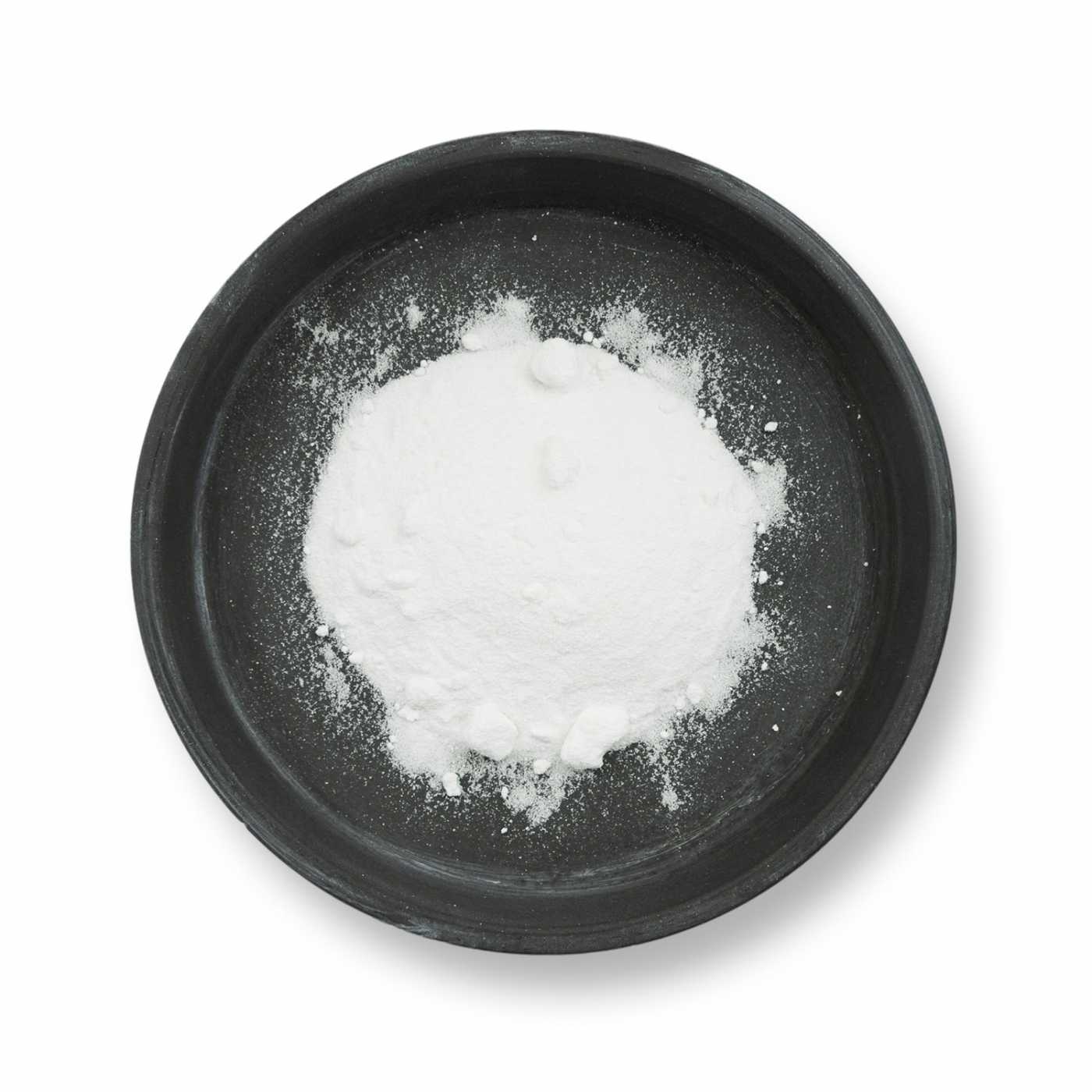
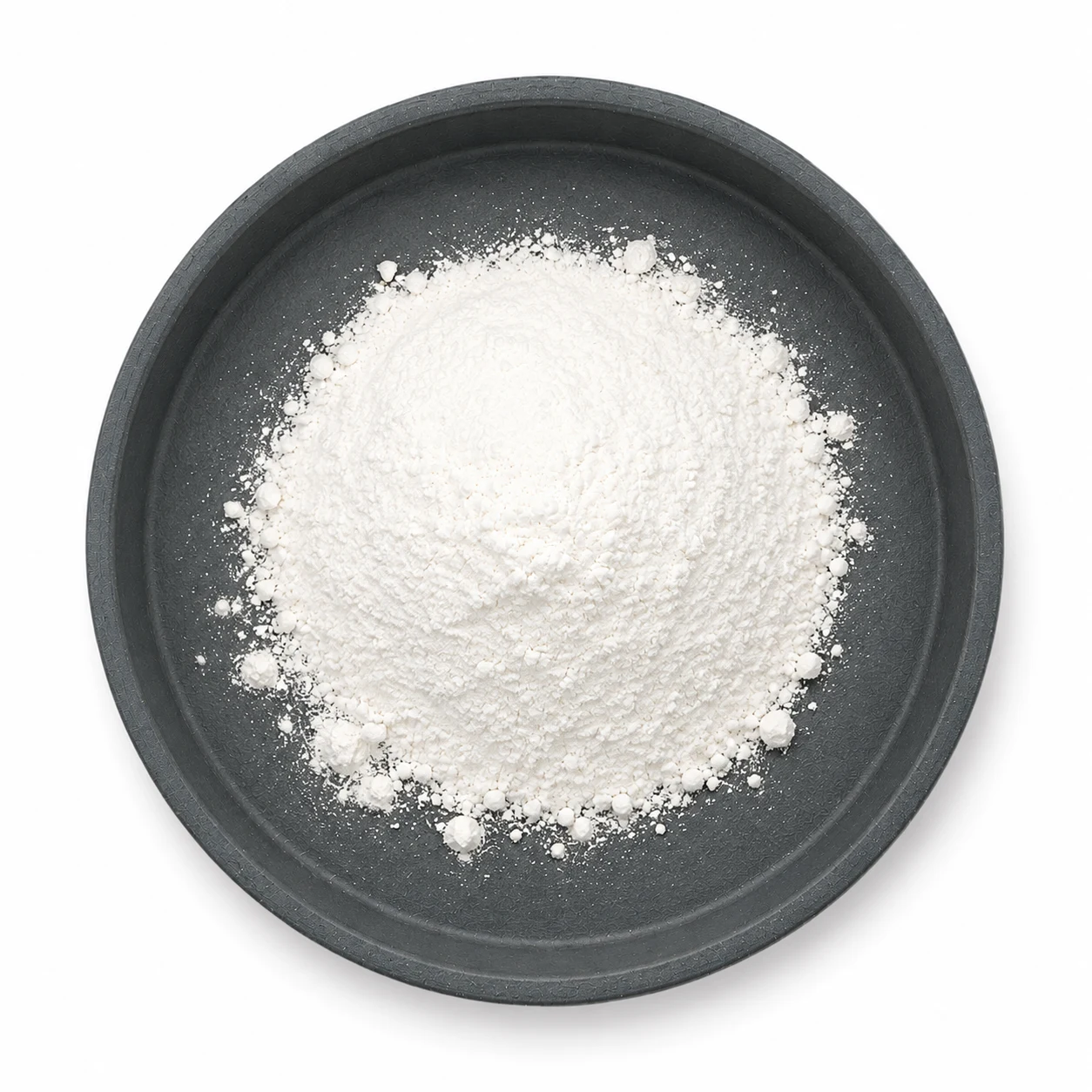
Myristyl Myristate (in Slovak myristylmyristát) is a plant-based emollient and consistency factor for the oil phase of creams, lotions and balms. Its main role is to refine the feel of the finished product: it lightens greasy oils, leaves a dry, velvety-smooth touch on the skin and slightly firms up the emulsion at the same time. It is the ingredient to reach for whenever a cream should feel rich but must not stay greasy or sticky.
It is an ester of a fatty alcohol and a fatty acid obtained from coconut and palm oil. The ingredient is 100% plant-derived, meets the requirements of the COSMOS and NATRUE standards, and the palm component comes from a certified RSPO Mass Balance source.
Key benefits
- Dry feel without greasiness – the ester dampens the oily film on the skin, so creams with vegetable oils do not feel heavy after application and absorb faster.
- Consistency factor – in emulsions it increases viscosity and gives a fuller, creamier texture without the waxy film left by some true waxes.
- Emulsion stabilisation – as part of the oil phase it helps to strengthen the structure of both O/W and W/O emulsions and improves their resistance to temperature changes.
- Gloss and covering power – in decorative cosmetics it improves gloss and the wetting of pigments, and gives emulsions a whiter, more opaque appearance.
- Safe and undemanding – the substance is not classified under CLP, is readily biodegradable and suitable for all skin types.
How Myristyl Myristate works
On the skin the ester behaves as a thin, smooth layer that softens slightly at body temperature but does not stay liquid like oils. This creates the characteristic silky feel – the skin feels smooth and conditioned to the touch, but neither shiny nor slippery. With oils that spread slowly and with difficulty (for example avocado or castor oil), it shortens the spreading phase and reduces the impression of greasiness.
In an emulsion it acts as a structural component: after cooling it forms a fine crystalline network in the oil phase, which increases viscosity and firms up the cream. It works well with emulsifiers such as Glyceryl Stearate, Cetearyl Alcohol or Polyglyceryl-3 Methylglucose Distearate.
Use in a formulation
Myristyl Myristate belongs in the oil phase. It is added together with the oils, butters and emulsifiers, and the oil phase is heated to above 50 °C so that the ester melts completely and combines with the other ingredients. Emulsification then proceeds in the usual hot process. It cannot be worked into a finished, cooled emulsion, because it does not dissolve in water or alcohol.
The recommended usage rate is 1–10% depending on the goal:
- 1–3% – a slight reduction in greasiness and a better feel in light lotions and face creams, without a significant change in viscosity.
- 3–6% – a noticeable firming of the texture of body creams and hand creams, with a fuller and creamier character.
- 6–10% – anhydrous balms, stick products, lipsticks and solid creams, where the ester also acts as a shaping ingredient.
The suitable pH range of the formulation is 4–9, which covers common face and body cosmetics. The ester is stable against oxidation, has no odour and does not change the colour of the product.
If you want to lighten a recipe with a high proportion of vegetable oils, start with 2–3% Myristyl Myristate and replace part of the oils with it. A higher usage rate increases viscosity further, but in light emulsions it can feel too waxy.
Suitable for products such as
- Face and body creams, lotions – as an emollient and consistency factor that replaces part of the greasy oils.
- Hand creams – fast absorption and a smooth, non-sticky feel that you will appreciate when working with your hands.
- Balms, butters and stick products – anhydrous recipes where the ester adjusts hardness and reduces the greasiness of butters.
- Lipsticks, solid highlighters and colour cosmetics – improves gloss, consistency and the spreading of pigments.
- Creamy cleansing products and shower creams – in rinse-off recipes it increases creaminess and softens the feel after washing.
What to keep in mind when formulating
- Melt it thoroughly – the ester must be completely clear and dissolved in the oils during emulsification. Incompletely melted material will cause small hard particles in the cream.
- Cool balms quickly – in anhydrous products the ester tends to crystallise. If a balm cools very slowly or is repeatedly reheated, it may become coarse over time and feel grainy. Faster cooling and combining it with waxes or soft butters help.
- Allow for its effect on viscosity – Myristyl Myristate thickens the emulsion. If you add it to a proven recipe, reduce the proportion of other consistency factors (Cetearyl Alcohol, Cetyl Alcohol), otherwise the cream will be firmer than you planned.
- Compatibility – it mixes well with vegetable and mineral oils, esters and butters. In recipes with silicones, it is advisable to check the clarity of the melted oil phase at a higher usage rate.
- No preservation needed – the ingredient contains no water and does not need preservation itself. Preserve the emulsions you add it to in the usual way, according to the water phase.
- Not an emulsifier – it firms up and stabilises, but it does not create an emulsion. The formulation always requires a separate emulsifying system.
Myristyl Myristate is not suitable for sprays, oil serums and liquid facial oils that should stay clear at room temperature. After cooling it separates from the oils and makes the product cloudy or solid.
Myristyl Myristate and Cetyl Palmitate – what is the difference
Both ingredients are plant-based esters with a similar use, but they differ in chain length and feel on the skin. Myristyl Myristate has shorter chains, melts at a lower temperature and feels softer, smoother and less waxy on the skin. Cetyl Palmitate is harder, thickens more and leaves a drier, slightly powdery touch. For delicate face creams and lotions Myristyl Myristate is usually the better choice, while for firm balms and products where hardness should prevail Cetyl Palmitate is generally preferable.
Frequently asked questions
Is Myristyl Myristate soluble in water?
No, Myristyl Myristate does not dissolve in water or alcohol. It is soluble only in oils and fats, so it is always added to the oil phase of an emulsion or to anhydrous products. It cannot be worked into toners, hydrosol sprays or water-based gels.
How do you add Myristyl Myristate to a cream?
It is added to the oil phase before emulsification and heated together with the oils to above 50 °C until it melts completely. The oil phase is then combined with the water phase in the usual hot process. The ester cannot be worked in cold or into a finished cream, as hard particles would remain in it.
What percentage of Myristyl Myristate is used?
The usual usage rate is 1–10% of the recipe weight. To slightly lighten greasy oils in light creams, 1–3% is enough, and for a creamier and firmer texture of body creams 3–6%. Higher rates of 6–10% belong in balms, lipsticks and stick products, where the ester also helps to shape the consistency.
Does Myristyl Myristate thicken an emulsion?
Yes, Myristyl Myristate acts as a consistency factor and increases the viscosity of the emulsion. After cooling it forms a fine structure in the oil phase, which firms up the cream and gives it a fuller character. It is often combined with Cetearyl Alcohol. When adjusting a proven recipe, the proportion of other thickeners should be reduced accordingly.
Is Myristyl Myristate suitable for anhydrous balms?
Yes, it is suitable for anhydrous balms, butters and stick products, and it reduces their greasiness. However, it tends to crystallise during cooling, so it is best to cool the balm quickly and not reheat it repeatedly. If the product becomes coarse or feels grainy over time, combining it with soft butters or a small proportion of wax will help.
Is Myristyl Myristate natural and vegan?
Yes, Myristyl Myristate is 100% plant-derived, obtained from coconut and palm oil, and is vegan. The palm component comes from a certified RSPO Mass Balance source. The ingredient meets the requirements of the COSMOS and NATRUE standards, is Halal and Kosher certified, is readily biodegradable and is not classified as hazardous under the CLP Regulation.