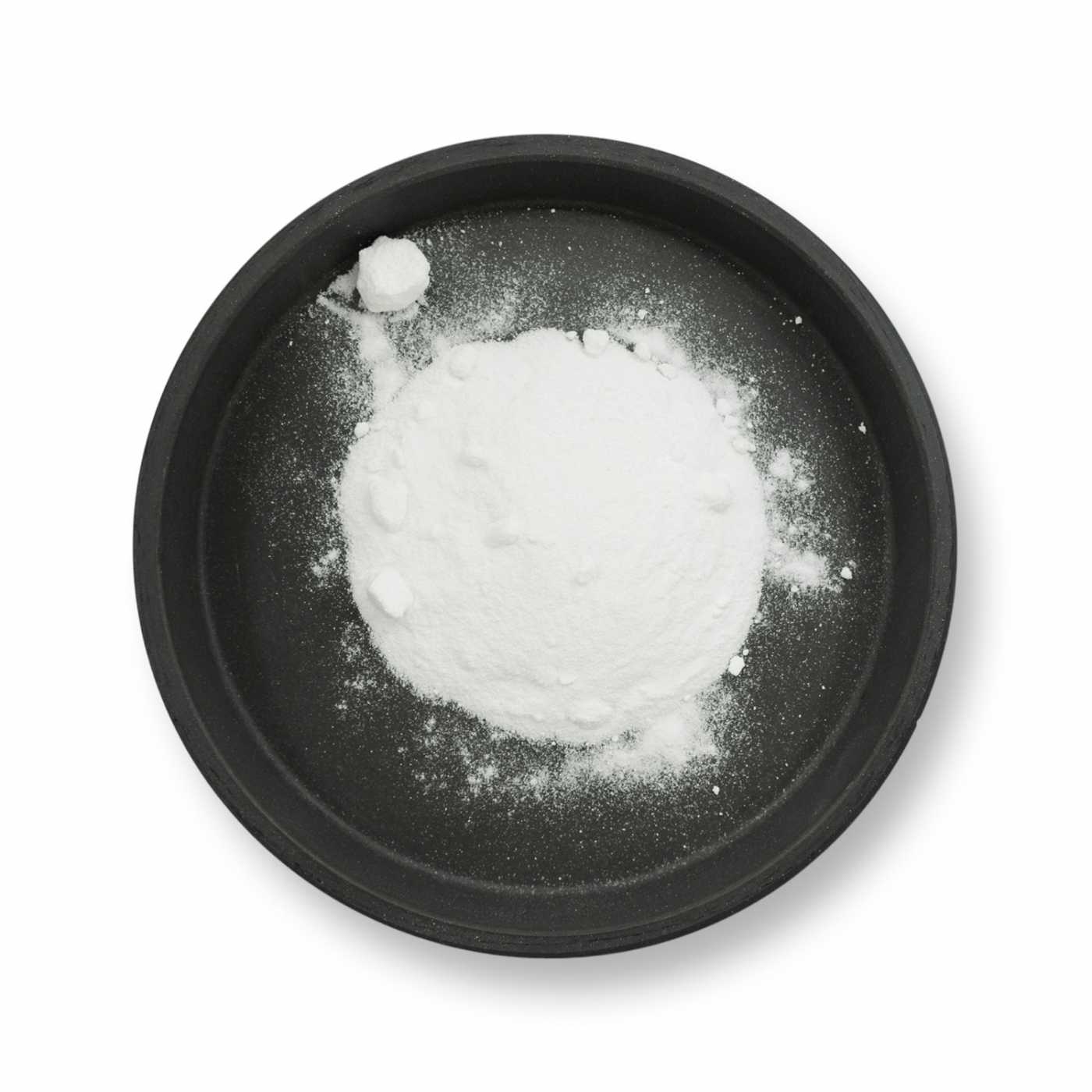
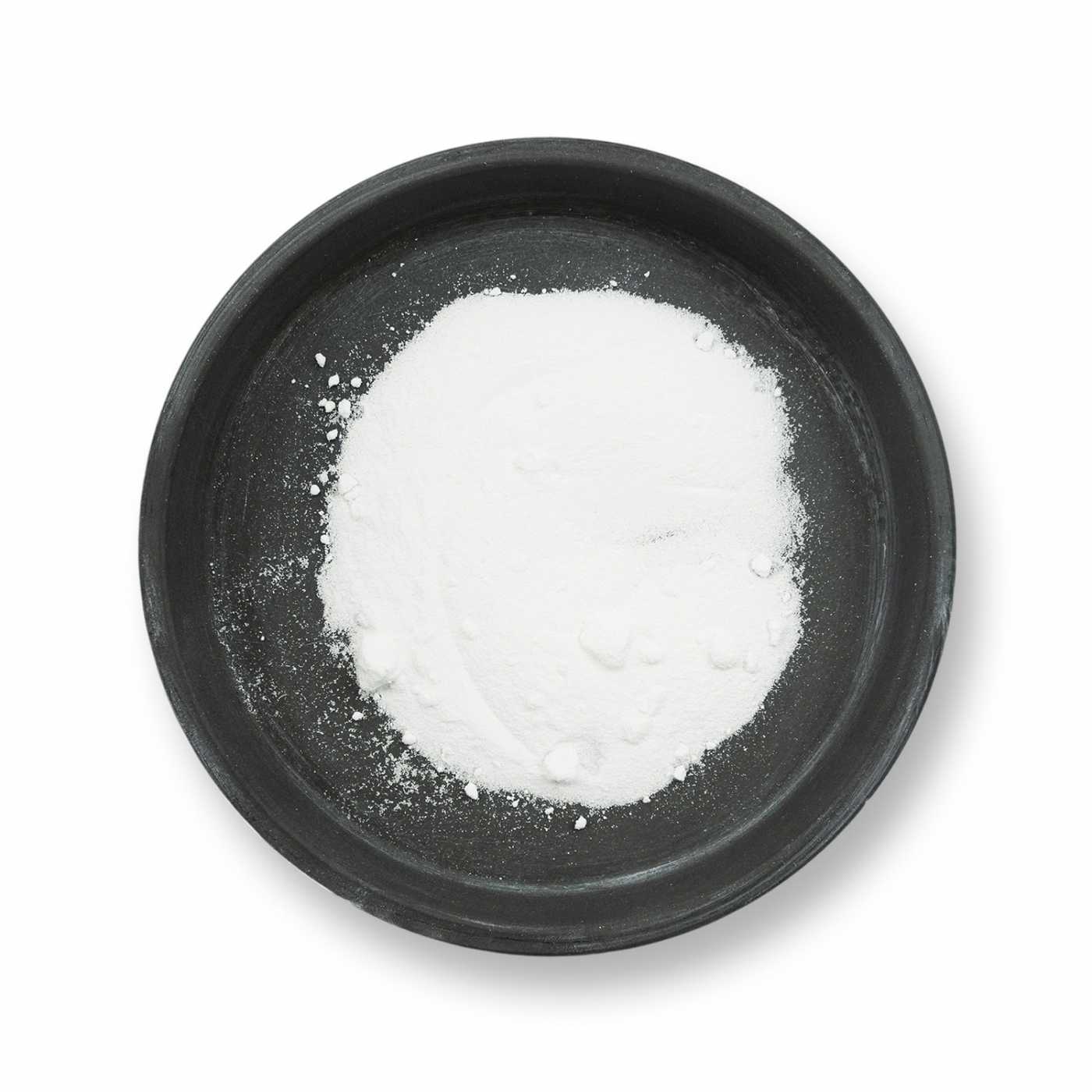
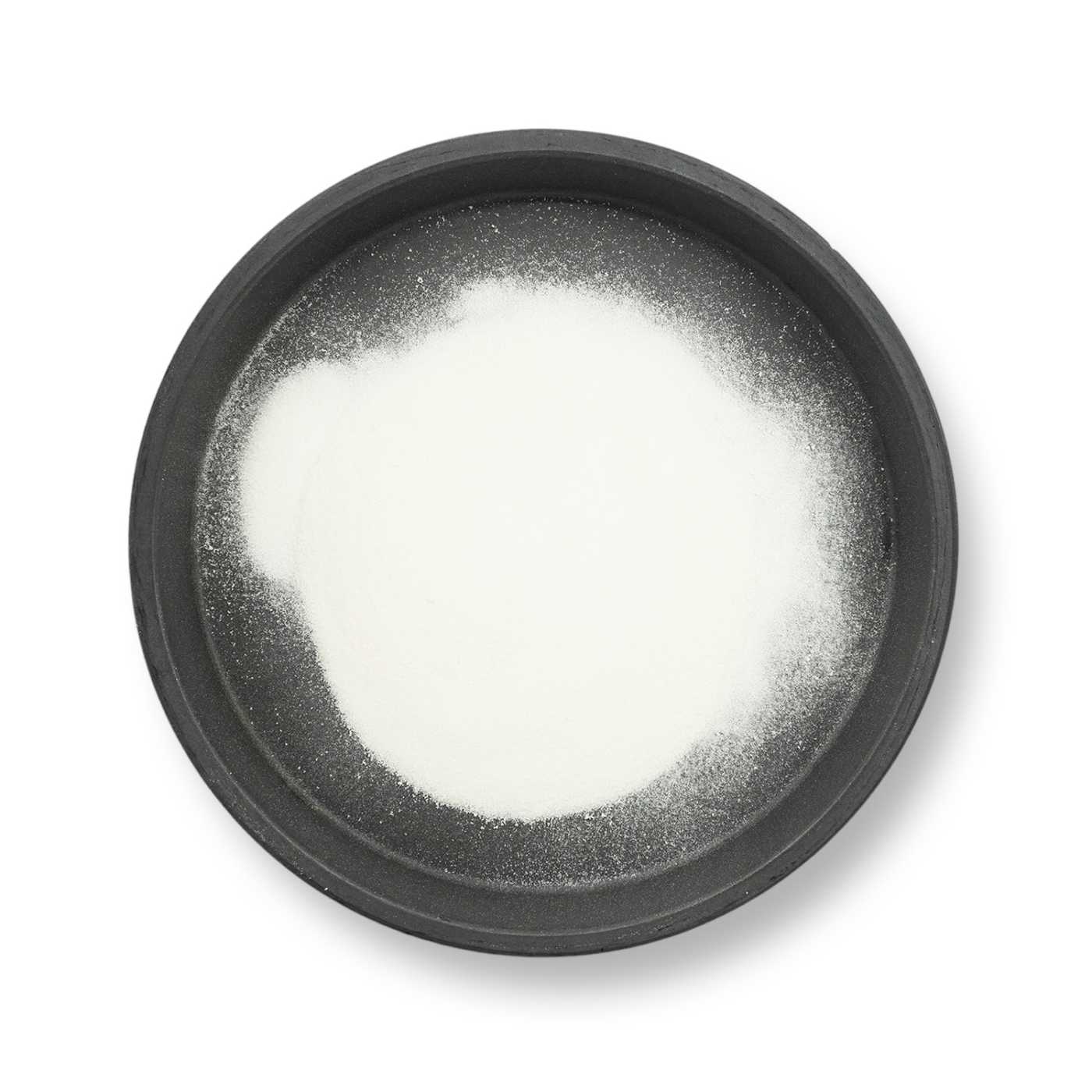
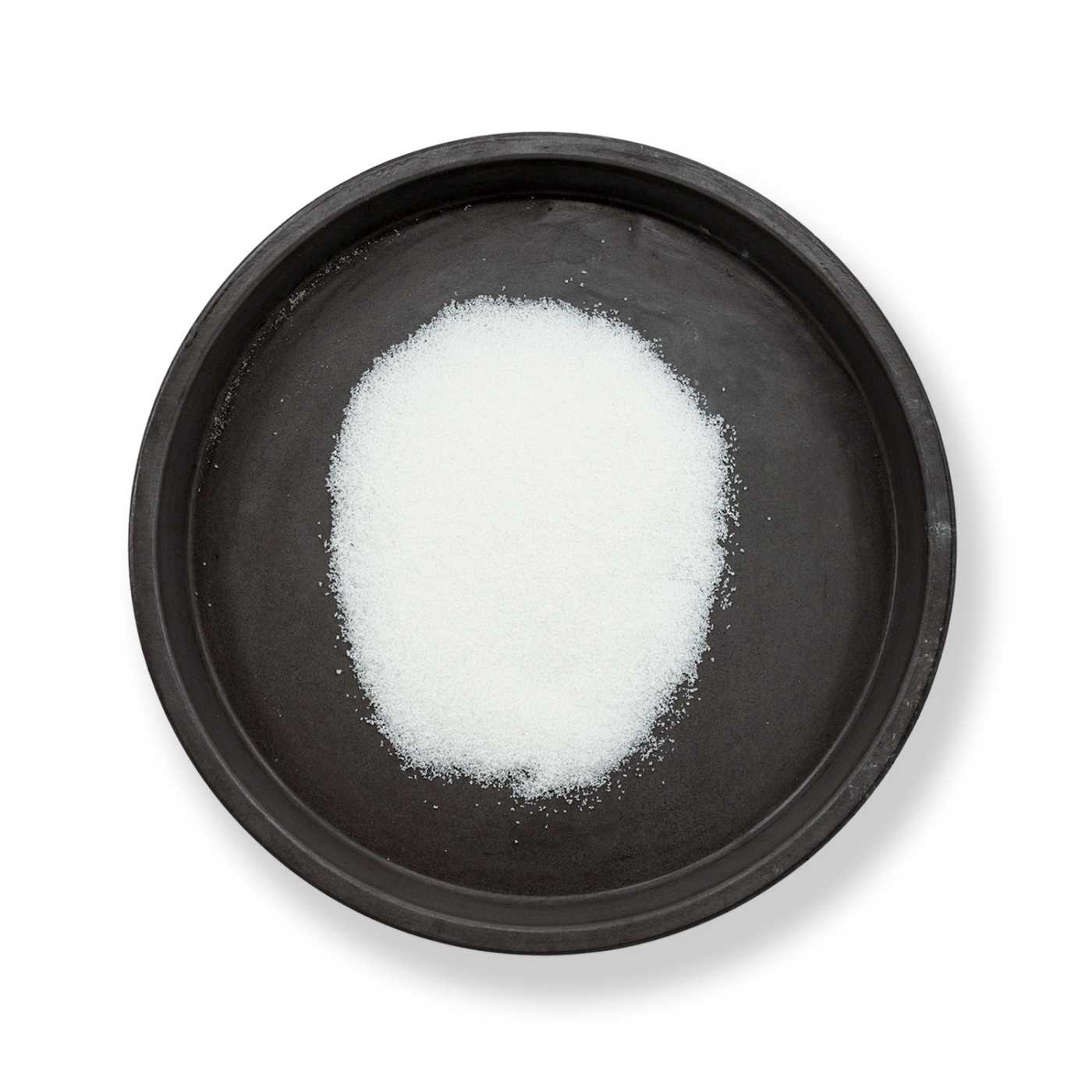
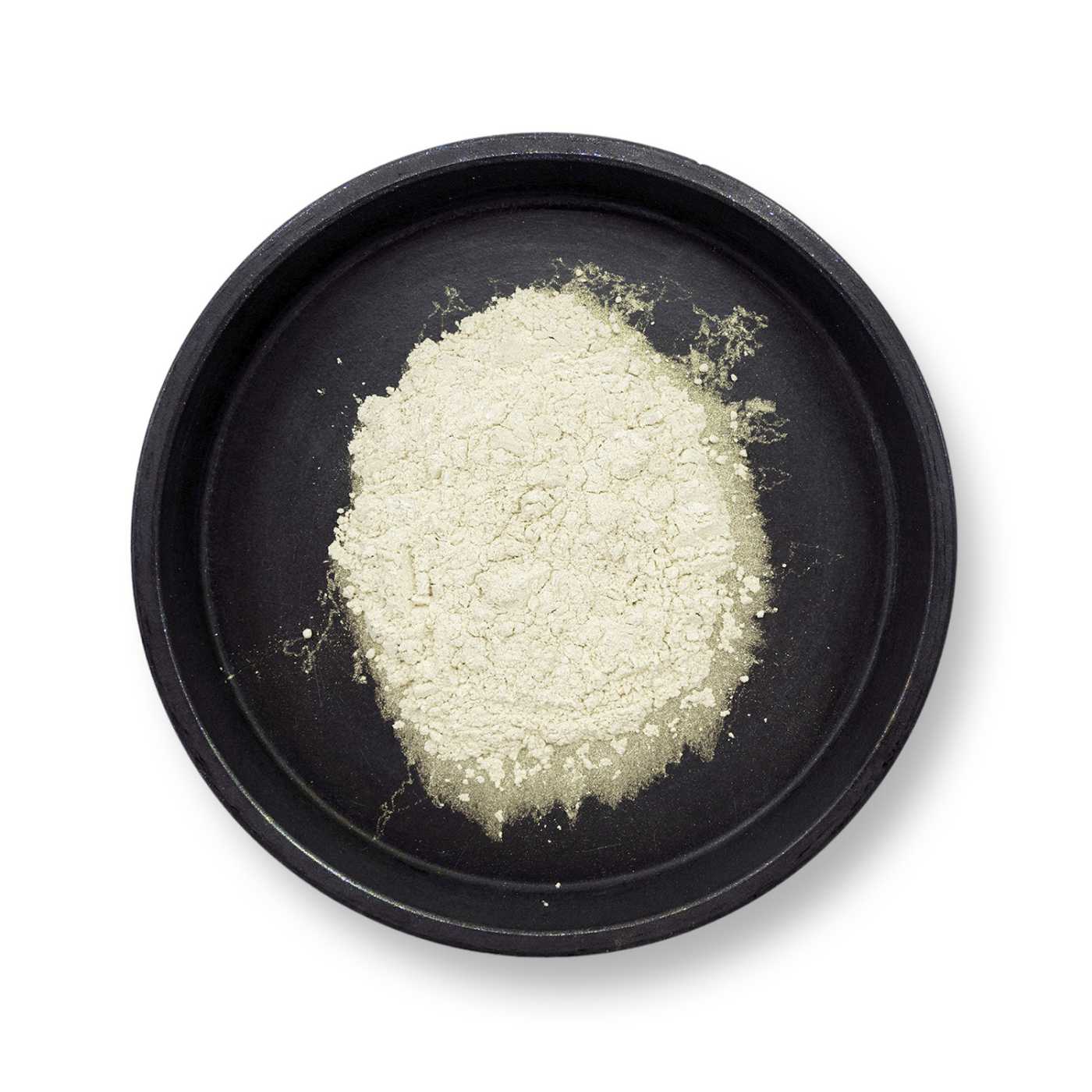
Caffeine in pure powder form is an active ingredient for anti-cellulite preparations, eye area serums and scalp hair tonics. In formulations it acts as a stimulant and antioxidant: it tones the skin and helps protect it against oxidative stress, making it suitable also for mature skin products. As a pure substance it is dosed precisely by percentage, without conversion calculations based on the active content in an extract.
Effects and applications
- Anti-cellulite – the most common use of caffeine in body cosmetics. It is added to firming gels, creams and massage preparations for thighs, abdomen and hips, where it helps improve skin appearance and tone.
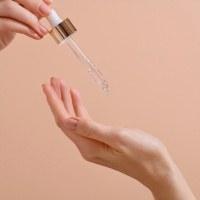
- Stimulating effect – energises and refreshes the skin. It is therefore a common ingredient in eye serums and gel roll-ons for a tired-looking eye area, as well as in refreshing facial and body tonics.
- Antioxidant and mature skin care – supports skin protection against free radical damage. In anti-aging preparations it promotes a smoother skin appearance. The effect on wrinkles is cosmetic and relates to skin appearance.
- Against hair loss – in shampoos, hair tonics and scalp serums caffeine is used for weakened, thinning hair. Here too the product acts cosmetically on the appearance and condition of hair and scalp.
Use in formulation
Caffeine belongs in the water phase. It is sparingly soluble in water and partially soluble in alcohol, so it is dissolved in heated water with constant stirring. The recommended processing temperature is up to 80 °C. Once fully dissolved, the water phase is processed in the usual way: in emulsions it is combined with the oil phase during emulsification; in gels the caffeine solution is prepared before the thickener is added.
The recommended dosage is 0.5 – 3 % depending on the product type. It can be used in rinse-off and leave-on products.
When dosing around 2 – 3 %, dissolve caffeine in the full volume of the water phase, not in a small portion of water. After cooling, check that the solution has remained clear and that no crystals have precipitated at the bottom.
Verify stability and clarity in the finished formulation, especially at higher doses and in cold-process preparations. The powder itself does not contain preservatives, so aqueous products with caffeine require their own preservation system.
Suitable for products such as
- Body gels and anti-cellulite creams – often with massage application.
- Eye serums and roll-ons – lightweight aqueous or gel bases to refresh the appearance of the eye area.
- Facial serums and tonics – aqueous and hydroalcoholic preparations for all skin types, antioxidant and toning role.
- Shampoos and hair tonics – rinse-off and leave-on preparations for the scalp.
- Lightweight O/W emulsions – caffeine is dissolved in the water phase before emulsification.
Pure caffeine requires an aqueous portion in which to dissolve. It is therefore not suitable for anhydrous products such as oil serums, balms and butter-based creams.
Good to know
In alcoholic tonics, dissolve caffeine first in the aqueous portion and add the alcohol only afterwards, as it dissolves only partially in alcohol alone. In sprays, ensure complete dissolution; otherwise undissolved particles will clog the nozzle.
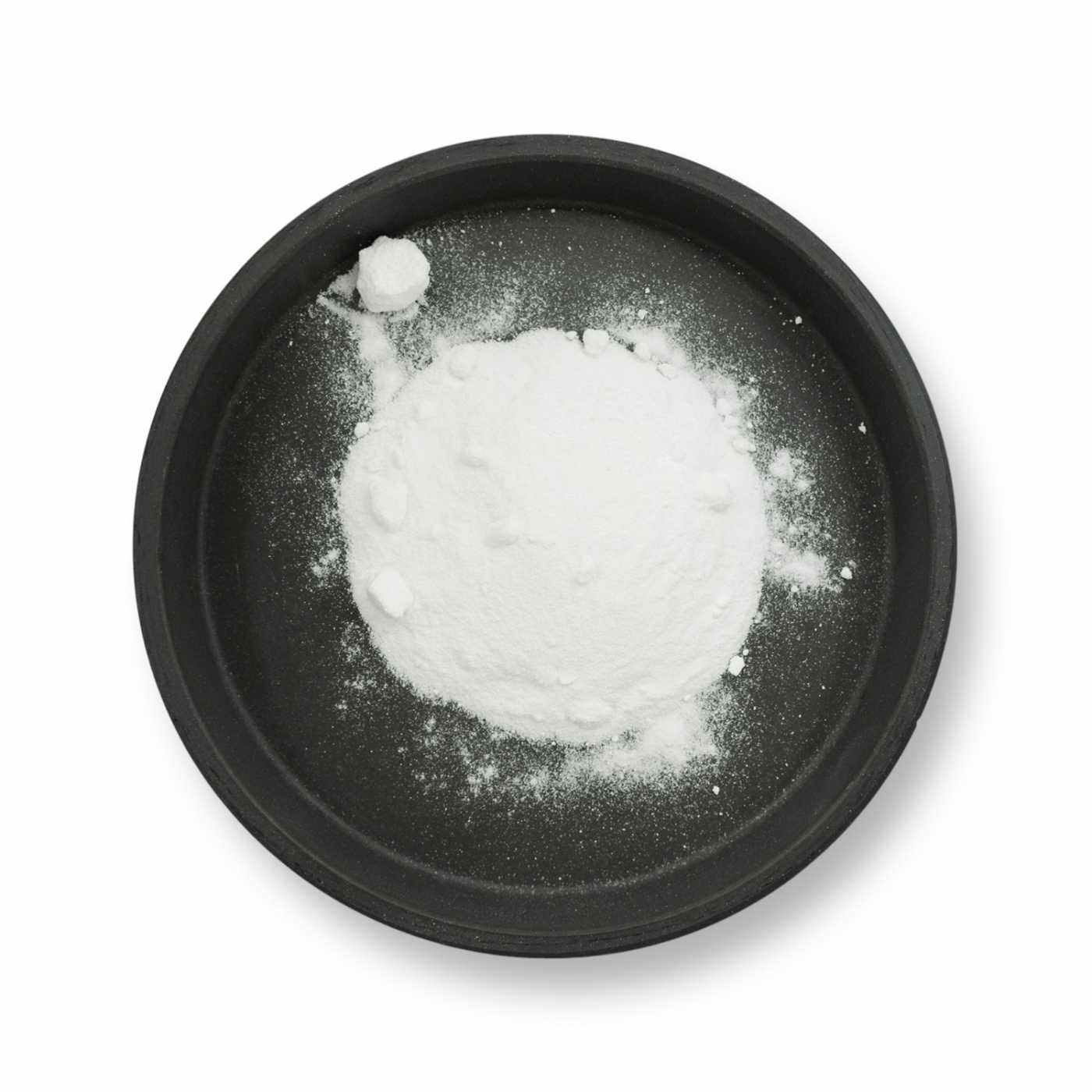
Caffeine powder is a 100 % active substance in both cosmetic and pharmaceutical (pharmacopoeial) quality, produced by chemical synthesis. The white powder does not alter the colour of the finished product and is dosed directly by percentage, which distinguishes it from plant-based caffeine extracts (green coffee, guarana, green tea) that also introduce their own colouring into the product.
Caffeine is classified as a substance under the CLP regulation, GHS07 pictogram. When working with the powder, follow the instructions in the safety data sheet and observe the recommended dosage of 0.5 – 3 %.
Frequently asked questions
Is caffeine soluble in water?
Caffeine is sparingly soluble in water and only partially soluble in alcohol. In formulations it is therefore dissolved in the heated water phase at a temperature of up to 80 °C with constant stirring. At higher dosages it is necessary to check after cooling that the solution has not turned cloudy and that part of the caffeine has not re-precipitated as crystals.
How is caffeine added to a cream or gel?
Caffeine is dissolved in the water phase before emulsification or before the thickener is added. In a cream, the water phase with dissolved caffeine is heated and combined with the oil phase; in a gel, a clear caffeine solution is prepared first and thickening follows. The recommended dosage is 0.5 – 3 % depending on the product type.
Is caffeine suitable for an oil serum or anhydrous balm?
No, pure caffeine powder is not suitable for anhydrous products. It belongs in the water phase and will not dissolve without an aqueous portion. If you want to incorporate caffeine into a richer preparation, choose a water-containing base — for example an emulsion — in which caffeine dissolves in the water phase before emulsification.
Can caffeine be used in eye area preparations?
Yes, caffeine is commonly used in eye serums, gel roll-ons and creams for the eye area. Its stimulating and refreshing effect on the tired appearance of the eye area is utilised. It is dosed within the recommended range of 0.5 – 3 % and the product requires standard preservation like any aqueous preparation.
What is the difference between caffeine powder and green coffee extract?
Caffeine powder contains 100 % of the active substance, has no colour and is dosed precisely by percentage. With green coffee or guarana extract, the caffeine content depends on the specific extract and the extract also introduces its own colouring into the product. For targeted caffeine dosing, pure powder is the simpler choice.