−15 % with codePre-orderSold out
Rejuvaveen, soothing oat complex, 10 g
€5.39(€539.00/kg)

Candle fragrance oils
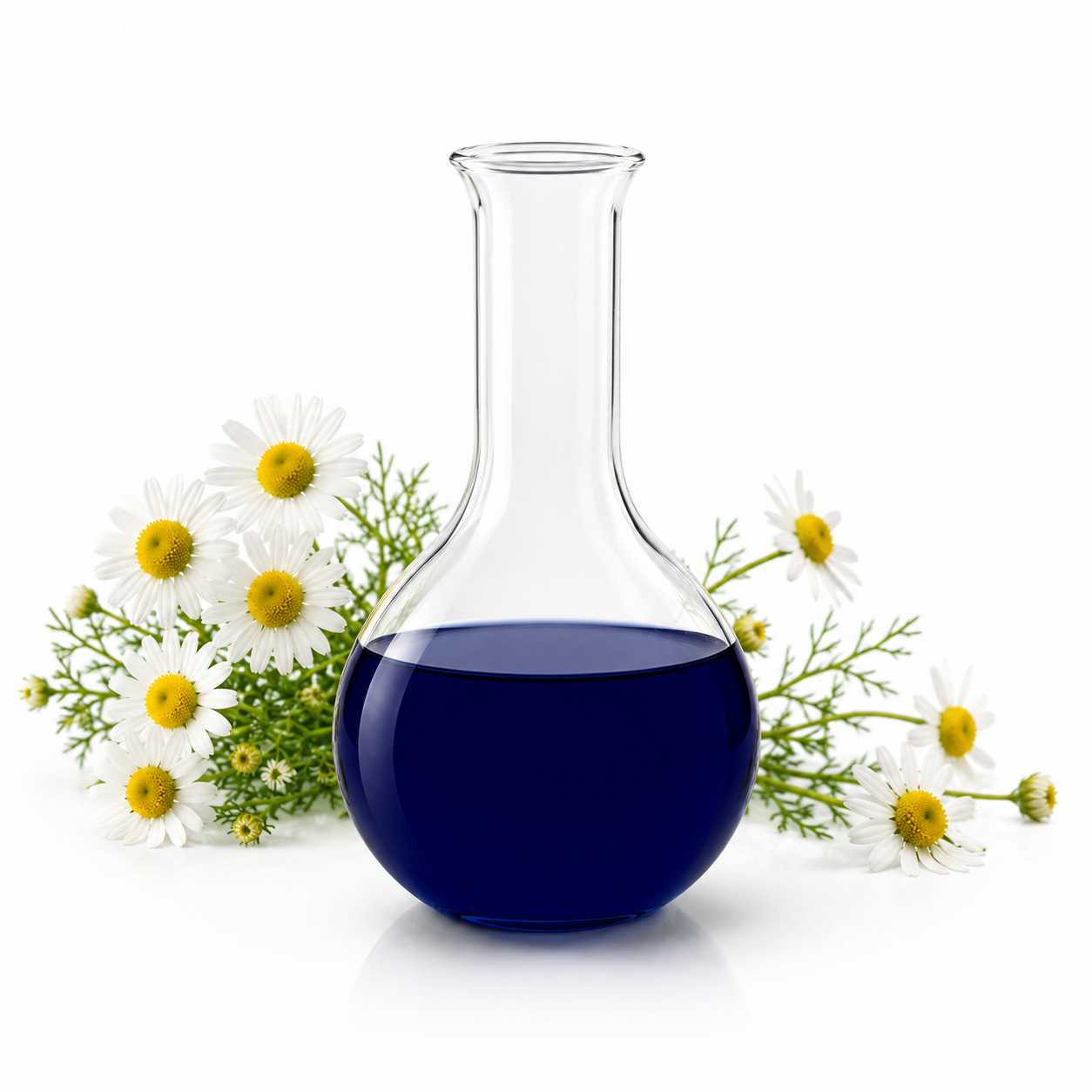
German chamomile essential oil is added to cosmetics to soothe irritated skin and to fragrance products with a sweet, floral-herbal scent. full description
Lowest price in the 30 days before the discount: €34.99
German chamomile essential oil is added to cosmetics to soothe irritated skin and to fragrance products with a sweet, floral-herbal scent. It is obtained by steam distillation of the flowers of Chamomilla recutita and consists of pure oil without carriers or additives. It is suited above all to products for sensitive, dry and problem skin, to massage oils and to scalp care.
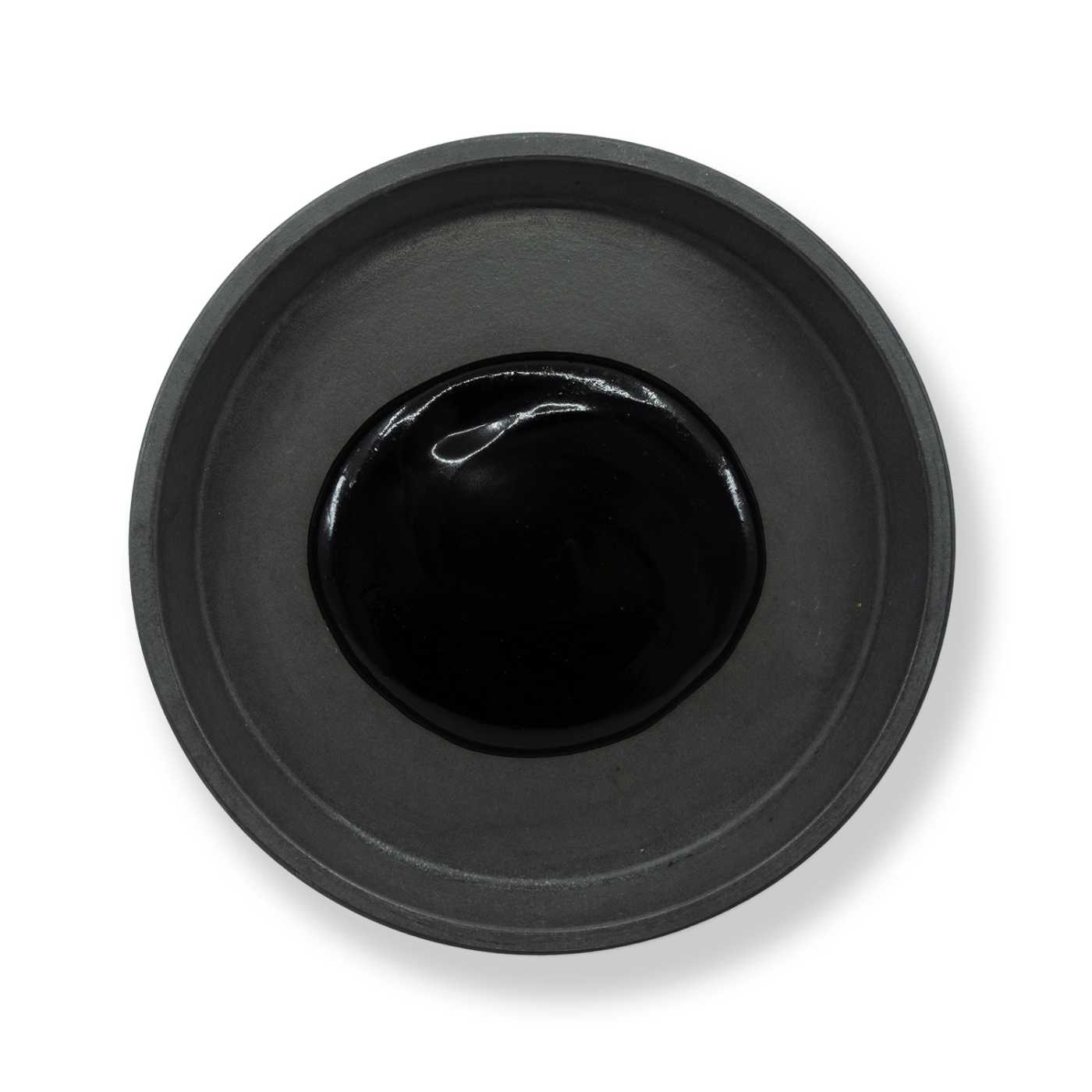
Its colour sets it apart from most essential oils at first glance. The oil is blue-black to blue, sometimes with a green tinge, and slightly viscous. The colour comes from chamazulene, which is not present in fresh flowers and only forms during distillation. The vivid blue can also carry over into the finished product.
Chamazulene is unstable. It breaks down mainly under the effect of light together with atmospheric oxygen. Under UV radiation the colour changes from blue to green and then fades to yellow, which is a sign of degradation. An opaque container and as little air as possible above the surface help protect the finished product.
On the skin it has a soothing effect. It helps to reduce redness and the feeling of irritation. It also has its place in care for mature skin. In massage oils and creams it can leave a mild warming sensation.
It is used in a similar way in hair care. In shampoos, conditioners and scalp products it soothes an irritated scalp and gives the product a floral scent.
The oil is added to the oil phase or only in the cooling phase below 40 °C, always among the last ingredients. Heat alone does not damage chamazulene in the dark. However, a lower temperature limits the evaporation of volatile fragrance components.
There is no single universal usage rate. The maximum amount in the finished product is set by the IFRA limit for the given category, for example category 1 for lip products, category 9 for soaps and shampoos or category 12 for candles. The limits for all categories are listed in the IFRA certificate in the Product documentation section. In face creams and hand creams, 0.1–0.25% is used as a guide for fragrance and soothing.
In formulations it is often combined with lavender essential oil, with lavender or chamomile hydrosol and with light vegetable oils or butters.
Tocopherol proved the best at protecting chamazulene in tests. We recommend adding it to every product containing this oil. Ascorbyl Palmitate, on the other hand, accelerated the degradation and is not suitable as an antioxidant for it.
In products with UV filters, differences emerged between individual filters. Ethylhexyl Methoxycinnamate protected the colour and stability of the oil, and Bis-Ethylhexyloxyphenol Methoxyphenyl Triazine did so even better. Octocrylene did not provide protection.
The oil comes from Egypt. It contains no materials of animal origin and is also suitable for vegan products.
For products for sensitive skin, the whole formulation is what matters. Chamomile ingredients are considered safe when the product is formulated so that it does not sensitise. When combining several plant raw materials, we recommend keeping track of the total of shared allergens. People sensitive to plants of the daisy family (Compositae) may also react to chamomile.
The oil is subject to classification under the CLP regulation and contains fragrance allergens listed in Annex III of Regulation (EC) No 1223/2009, which must be declared on the product label above the set limit. Details on classification and safe handling are given in the safety data sheet.
Two different essential oils are sold under the name chamomile oil. Roman chamomile oil comes from a different plant (Anthemis nobilis), is pale and has a fruitier scent. German chamomile oil is dark blue and has a more herbal scent. They differ in scent and in the colour they give the product. In a formulation they cannot be swapped one for one.

excellent smell and colour

Variant: Esenciálny olej, Harmanček pravý, 10 ml