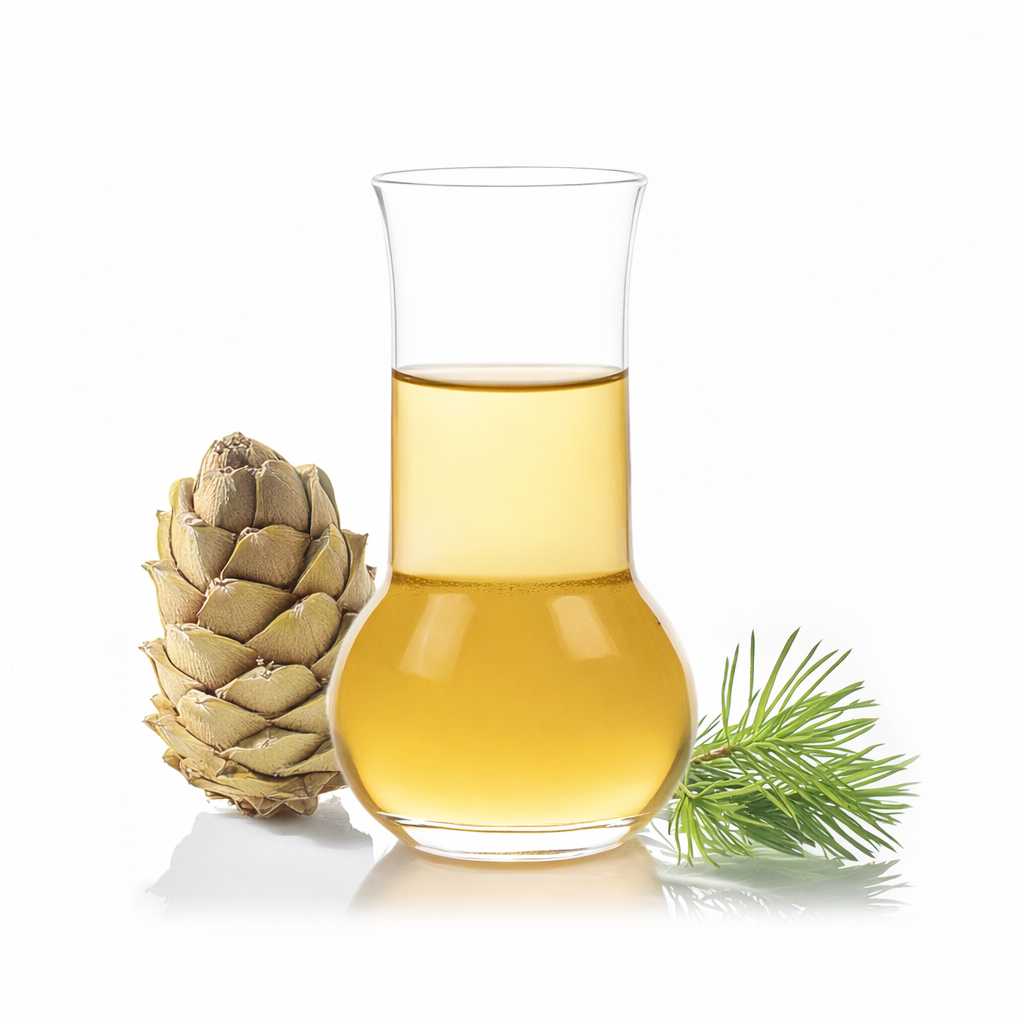
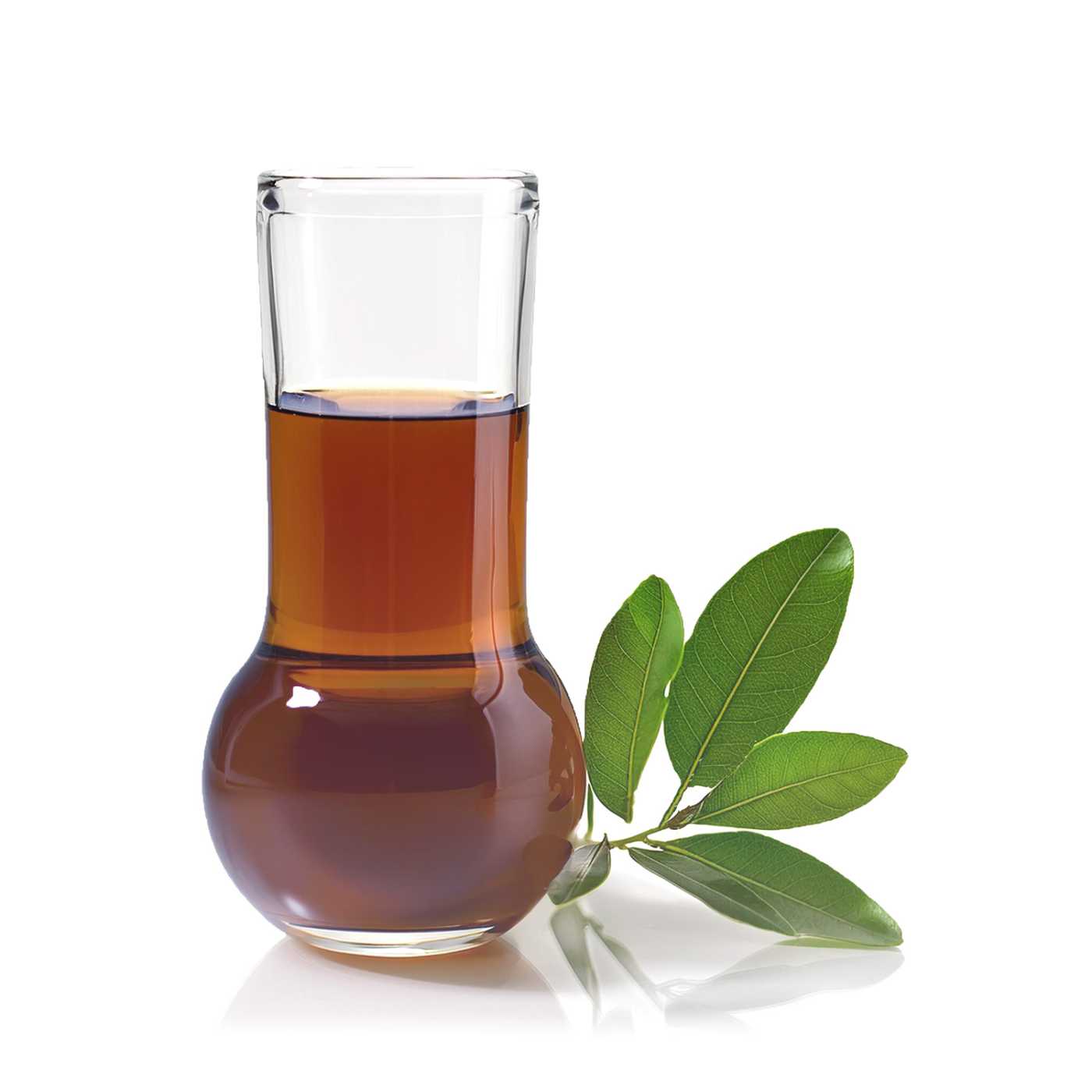
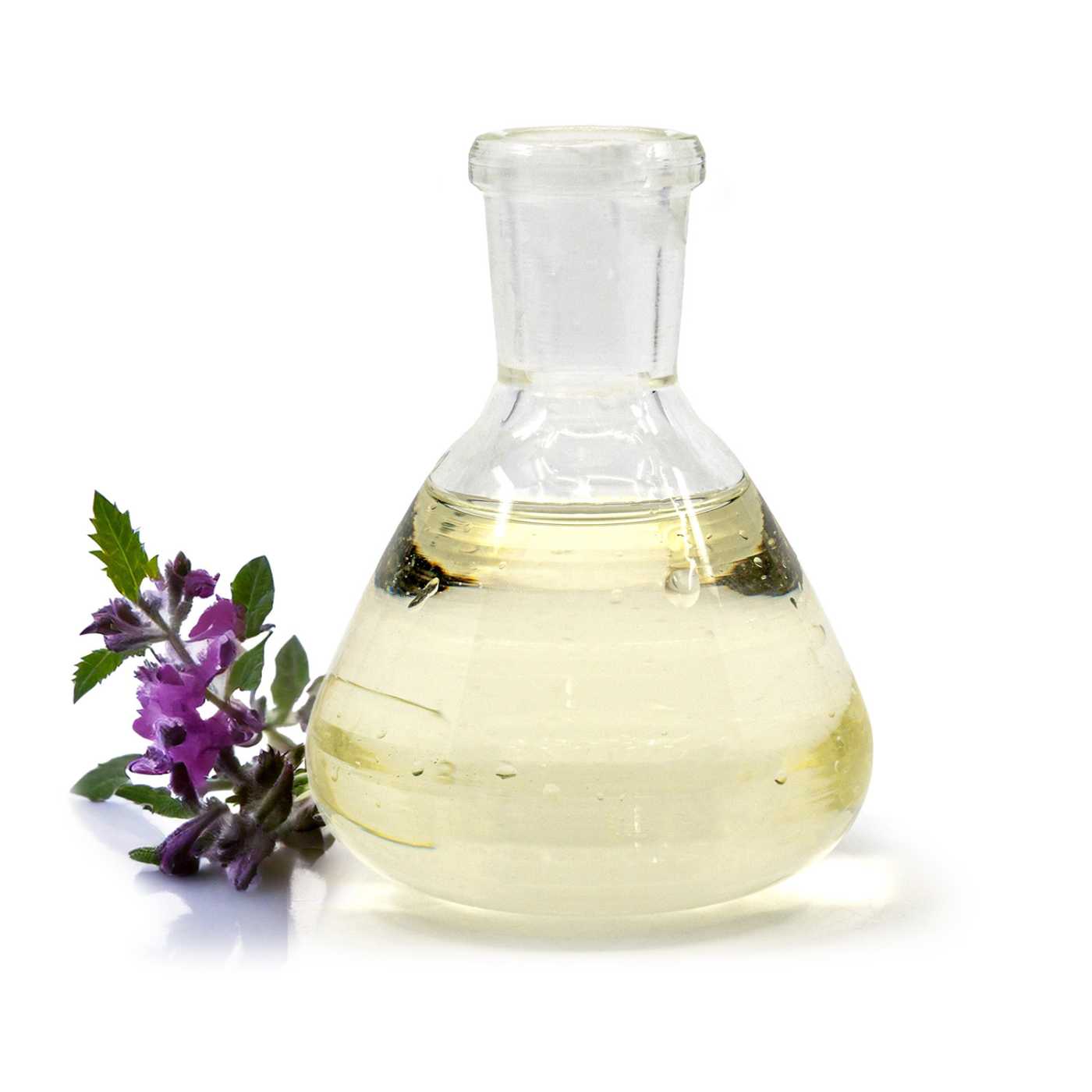
Atlas cedarwood essential oil gives cosmetics a warm, sweetish woody fragrance with a balsamic undertone. In a formulation it works as a fragrance ingredient, an active ingredient and a conditioning agent in hair and scalp products. It most often appears in products for oily and problem skin and for hair prone to oiliness.
It is obtained by steam distillation of the bark of the Atlas cedar (Cedrus atlantica) of North African origin. The ingredient is plant-based, certified as vegan and the manufacturer has not tested it on animals.
What makes it interesting in a formulation
- Fragrance – sweet, woody and balsamic. In fragrance compositions it forms a warm woody base.
- Scalp care – according to the manufacturer, it supports a balanced scalp environment and eases the feeling of discomfort and itching. It is therefore added to shampoos, conditioners and hair oils, especially for hair that quickly becomes oily.
- Soothing the skin – the manufacturer states a soothing and cooling effect and a reduction of redness on irritated skin. The result in the finished product depends on the usage rate and the other ingredients.
- Antimicrobial properties – the supplier mentions them as support for a clean-looking complexion. In cosmetics this is a complementary effect; the oil does not replace a preservative system.
- Repellent effect – according to the manufacturer, the oil has insect-repelling properties, which is why it appears in skin repellents and in fragrance blends for candles.
- Aromatherapy use – the manufacturer describes the warm woody fragrance as calming and grounding. It is used in massage oils and bath products.
Use in a formulation
The oil belongs in the oil phase and does not dissolve in water. It is incorporated into toners, hydrosol sprays and other water-based systems through a solubiliser, otherwise it separates on the surface. In emulsions it is added only in the cooling phase, once the temperature drops below 40 °C, and the mixture is then stirred thoroughly. It can equally be mixed in afterwards into a finished cream or gel base. In anhydrous products such as body and massage oils, butters and balms, it is added after the other ingredients have cooled.
There is no single universal usage rate. The manufacturer does not state a recommended range, and the maximum amount in the finished product is determined by the IFRA limit for the product category. Lip products (category 1), deodorants (category 2), eye products (category 3), face creams (category 5B), hand creams (category 5C), rinse-off shampoos and soaps (category 9) and candles (category 12) each have a different limit. The limit is an upper boundary and always applies to the total content of this oil in the finished product.
Before you set the usage rate, look up the category of your product and its limit in the IFRA certificate in the Product documentation section. The same oil has a different permitted limit in a lip balm, in a deodorant and in a shampoo.
Suitable for products such as
- Hair care – shampoos, conditioners, hair oils and scalp products for hair prone to oiliness.
- Face products for oily skin – serums, face oils, cleansing products, masks and toners with a solubiliser.
- Body care – body oils, lotions, butters, massage oils, scrubs, shower gels and soaps, where the woody fragrance carries the whole composition.
- Lip balms and eye creams – within the IFRA limits for categories 1 and 3.
- Perfumes and candles – as a woody base note in hydroalcoholic and solid perfumes and in fragrance blends for candles.
Good to know
The oil is a mixture of volatile substances, and part of the fragrance is lost when it is heated. It is therefore added at the end of production to the cooled mixture, and the container with the intermediate product is not left open for long after the oil has been added. It is suitable for both rinse-off and leave-on products, but each group has its own IFRA category with its own limit.
Check the effect on the fragrance, the colour of the finished product and the stability in your specific base in a test batch.
The oil is classified under the CLP regulation and contains hazardous substances. Before you work with it, read the safety data sheet (SDS) and always compare the usage rate with the IFRA limit for the category of your product.
Frequently asked questions
Is Atlas cedarwood essential oil soluble in water?
No, Atlas cedarwood oil does not dissolve in water and belongs in the oil phase. It is incorporated into toners, hydrosol sprays or water-based gels using a solubiliser, which disperses the oil throughout the whole volume. In emulsions it is added to the cooled mixture, and in anhydrous products it is mixed in with the other oils.
How much Atlas cedarwood essential oil can be added to a cream or shampoo?
There is no single universal value; the maximum amount is determined by the IFRA limit for the product category. A face cream belongs to category 5B, a hand cream to 5C and a shampoo to category 9, and each has its own limit. You will find the specific values in the IFRA certificate in the product documentation, and the limit applies to the total oil content in the finished product.
When is Atlas cedarwood oil added to an emulsion?
Only in the cooling phase, once the temperature drops below 40 °C. The oil contains volatile substances, and at a higher temperature part of the fragrance would evaporate. It is added after the emulsion has stabilised, and the mixture is then stirred thoroughly. It can equally be incorporated afterwards into a finished cream or gel base.
Is Atlas cedarwood essential oil suitable for hair prone to oiliness?
Yes, Atlas cedarwood oil is intended, among other uses, for hair prone to oiliness and for the scalp. According to the manufacturer, it supports a balanced scalp environment and eases the feeling of discomfort and itching. It is added to shampoos, conditioners, hair oils and scalp products, where it also acts as a conditioning agent and provides a woody fragrance.
Is Atlas cedarwood essential oil suitable for leave-on products?
Yes, it is used in both leave-on and rinse-off products. However, leave-on products such as body oils, face creams or lip balms fall into different IFRA categories than shampoos and soaps. Always compare the usage rate with the limit for the given category in the IFRA certificate in the product documentation.