Hyaluronic acid is currently a very popular raw material that you can find in many types of cosmetic products. It is a carbohydrate that also occurs naturally in our body. We can find it mainly in the skin, but also in cartilage, joints and eyes.
About this article
Hyaluronic acid is popular - and in this article we go through the essentials. You will learn how it works in our body, where it is obtained from, what benefits it can have for your skin and which of its four basic types (HMW, MMW, LMW and ULMW) suits which kind of product. The end is devoted to the practical side of manufacturing - solubility, stability, appearance and suitable packaging.
Main benefits
Why choose hyaluronic acid for the manufacture of facial care products? We bring you several benefits that hyaluronic acid can have for your skin as well!
- Regeneration of skin cells
Serums with hyaluronic acid stimulate regeneration of skin cells, their metabolism and the healing of skin injuries.
- Skin appearance and texture
Hyaluronic acid improves the appearance and texture of the skin, it can give it volume and softness.
- Prevention of dry areas
Helps in the prevention of dry areas on the skin and of skin tightness due to poor skin hydration.
- Hydration in depth
Brings hydration also into deeper parts of the skin in the case of low molecular weight hyaluronic acid.
- Wrinkles and sagging skin
Improves the appearance of wrinkles and sagging skin.
- Protective skin barriers
Helps to improve the natural protective barriers of the skin against polluted environment or UV radiation.
- For oily and acne-prone skin
Alternative to oil-based products for oily and acne-prone skin.
- Works with vitamins
When combined with vitamins, for example vitamin C and E, it helps reduce redness and signs of skin irritation.
Raw material properties
Hyaluronic acid is popular. Do you know everything about it?
In cosmetics, hyaluronic acid is used as a humectant or as a gelling agent. It is able to bind moisture from the surroundings, up to a thousand times its own weight. Thanks to this, hyaluronic acid helps capture and retain water in the skin and reduce transepidermal water loss.
Hyaluronic acid in our body
Hyaluronic acid naturally occurs in the human body, however, with age the production of hyaluronic acid in the skin decreases. This can lead to dehydration of the skin, worsening of wrinkles, change in skin texture and similar effects. However, application of hyaluronic acid in cosmetic products helps to increase skin hydration and reduce the feeling of skin dryness.
Hyaluronic acid and its origin
If you are wondering where hyaluronic acid is obtained from, the answer is microbial fermentation. It has long since ceased to be true that hyaluronic acid is produced from animal tissues. Thanks to microbial fermentation, it can be obtained in high quality and purity, and at the same time it is available in various ranges of molecular weights.
Hyaluronic acid - which one to choose?
There are several variants of hyaluronic acid available on the market, most often four basic types: high (HMW), medium (MMW), low (LMW) and ultra low molecular weight (ULMW) hyaluronic acid.
In general, the properties of hyaluronic acid result from its size, i.e. from the weight of its molecules. As the molecular weight decreases, the ability of hyaluronic acid to form highly viscous gels decreases. Therefore, if you prefer gel-like serums where no other gelling agent is used besides hyaluronic acid, you should definitely choose HMW hyaluronic acid.
However, the smaller the hyaluronic acid molecule is, the deeper it penetrates into the skin, and thus ULMW hyaluronic acid penetrates the deepest of all the types and helps hydrate the skin not only on the surface.
However, in your product you do not have to limit yourself to only one type of hyaluronic acid. If you want to combine the gelling properties of HMW acid with the deep hydration of ULMW or LMW hyaluronic acid, combine both types of hyaluronic acid in one product.
High molecular weight hyaluronic acid HMW - molecular weight 1.5-2 MDa, moisturises the skin, forms viscous gels, provides a protective hydrating barrier on the surface of the skin.
Medium molecular weight hyaluronic acid MMW - molecular weight 1-1.5 MDa, provides longer-lasting hydration, occurs in the connective tissue of the skin, still forms relatively viscous gels, but penetrates deeper into the skin than HMW.
Low molecular weight hyaluronic acid LMW - molecular weight 10-250 kDa, in cosmetic products you will also find it under the designation sodium hyaluronate, provides long-lasting hydration, has good stability, is also found in the connective tissue of the skin, its smoothing effect on wrinkles and skin lasts longer than that of HMW and MMW.
Ultra low molecular weight hyaluronic acid ULMW - molecular weight ˂10 kDa, penetrates into the deep layers of the skin, hydrates and regenerates the skin.
Manufacturing cosmetics with hyaluronic acid
Before you start manufacturing your own serum or cream containing hyaluronic acid, we bring you an overview of the basic properties that this substance has. In addition, you will learn more about stability and about tricks and tips when working with hyaluronic acid.
Hyaluronic acid and solubility
Hyaluronic acid is soluble in water, therefore it can be used in all products containing an aqueous phase. As it forms a gel in water, its complete dissolution is not the fastest. For this reason, it is ideal to pre-mix hyaluronic acid with glycerine and only then add water or hydrolate. In this way the acid hydrates faster and the lumps of non-hydrated acid disappear sooner from the product.
As hyaluronic acid forms a gel, it can be used alone to thicken serums. However, if you want to use a smaller amount of hyaluronic acid or a type with a lower molecular weight, it will be necessary to add another thickener to achieve the desired viscosity in the serum. Try for example guar gum; xanthan gum can also be used, but it can leave a slightly sticky, soapy feel on the skin after applying a product containing it.
Hyaluronic acid and stability
Hyaluronic acid is a relatively stable substance. It withstands even short 20-30 minute heating in a water bath during the preparation of emulsions, i.e. creams. With longer heating it may degrade. When storing, keep the dry form of hyaluronic acid in the form of powder away from sources of moisture, heat and direct sunlight.
Hyaluronic acid provides solutions with pH 6.5-7. However, you can also use hyaluronic acid in products where the pH is lower.
In products containing hyaluronic acid always use a preservative, because such a product will inevitably contain water.
Hyaluronic acid - appearance, odour, properties
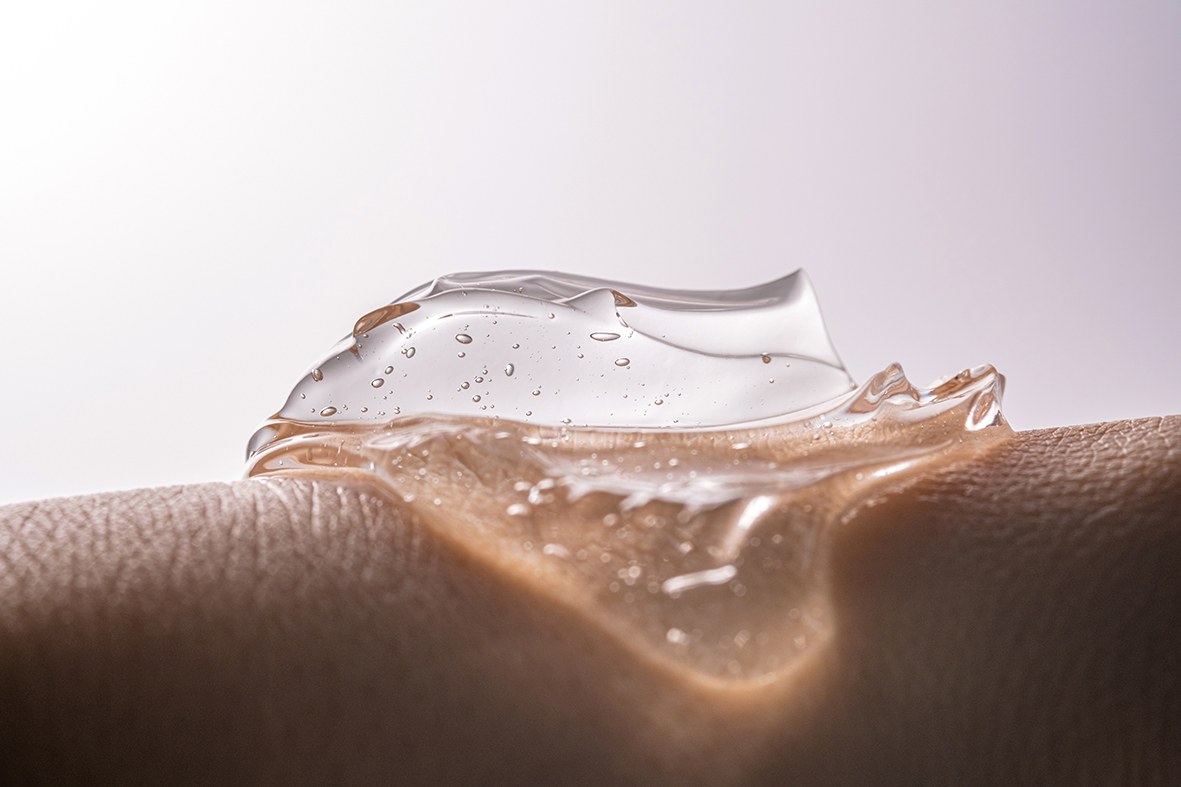
Hyaluronic acid is sold in dry form, as a fine white powder. Solutions of hyaluronic acid are without a pronounced smell or odour. Its gels spread very well on the skin, are quickly absorbed and leave the skin moistened and hydrated without a sticky feeling after application.
Hyaluronic acid - packaging
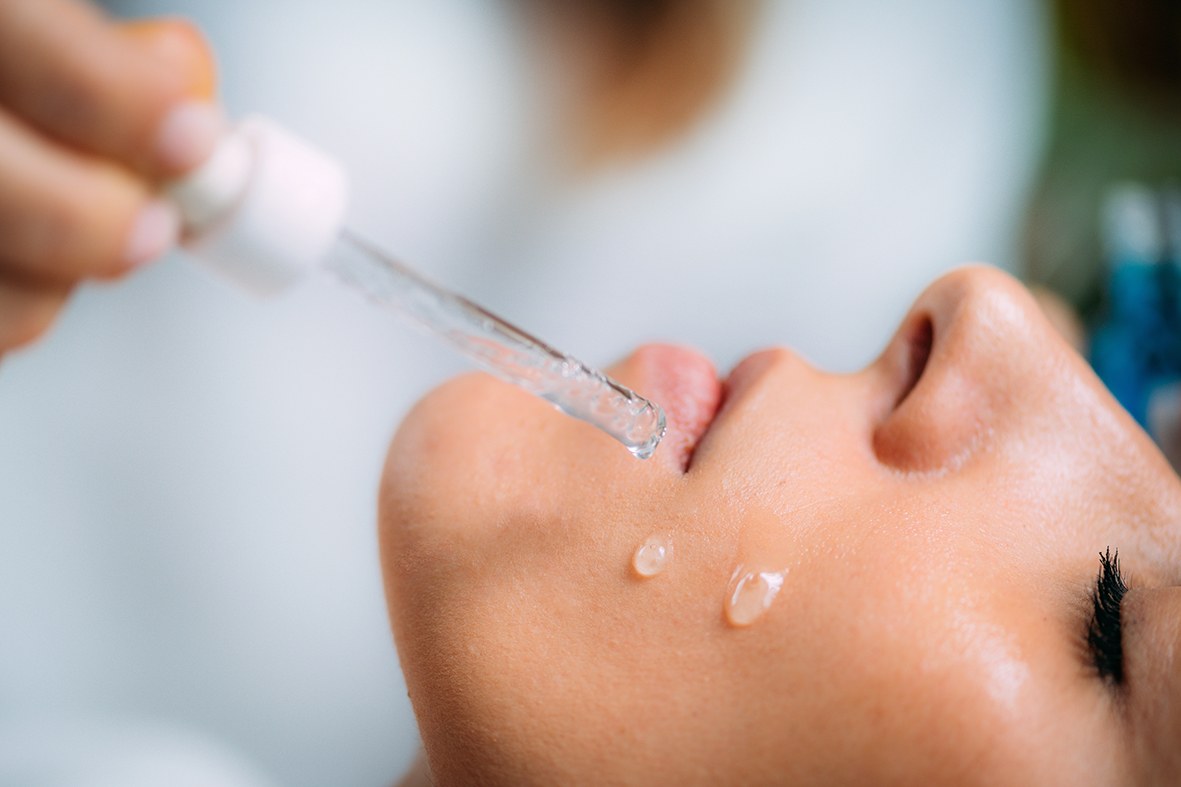
As hyaluronic acid thickens products, not all packaging types are suitable for products containing it. For serums, it is worth choosing glass bottles with a dropper, or a pump. Glass is also easy to clean and disinfect (do not forget to always disinfect the packaging before filling it with the product, for example with ethanol).
For creams you can choose jars, however your product will have a shorter shelf life, because with each use you introduce microorganisms into the remaining product by scooping it out with your fingers. As an alternative, pump bottles can again be used.
A way to reduce product contamination and oxidation and extend its lifetime is to use airless bottles. These are bottles with a pump that dispense the cream or serum thanks to the creation of a vacuum in the bottle. The product in the packaging thus does not come into contact with air or with your skin.
Frequently asked questions about hyaluronic acid
Practical questions about this raw material - origin, choosing the type, dissolving, stability, preservation and packaging.
Where is hyaluronic acid obtained from?
The answer is microbial fermentation. It has long since ceased to be true that hyaluronic acid is produced from animal tissues. Thanks to microbial fermentation, it can be obtained in high quality and purity, and at the same time it is available in various ranges of molecular weights.
Which type of hyaluronic acid should you choose?
The properties of hyaluronic acid result from the weight of its molecules. As the molecular weight decreases, the ability to form highly viscous gels decreases - so if you prefer gel-like serums without another gelling agent, choose HMW (1.5-2 MDa). The smaller the molecule, the deeper it penetrates into the skin, and thus ULMW (˂10 kDa) penetrates the deepest of all the types. In your product you do not have to limit yourself to only one type - you can combine both.
How do you dissolve hyaluronic acid properly?
Hyaluronic acid is soluble in water, but as it forms a gel in water, its complete dissolution is not the fastest. It is ideal to pre-mix hyaluronic acid with glycerine and only then add water or hydrolate - the acid hydrates faster and the lumps of non-hydrated acid disappear sooner from the product.
Does hyaluronic acid withstand heating?
Yes, it is a relatively stable substance and it withstands even short 20-30 minute heating in a water bath during the preparation of emulsions, i.e. creams. With longer heating, however, it may degrade. Store the dry powder form away from sources of moisture, heat and direct sunlight.
Does a product with hyaluronic acid need a preservative?
Yes. In products containing hyaluronic acid always use a preservative, because such a product will inevitably contain water. Solutions of hyaluronic acid have a pH of 6.5-7, but you can also use it in products with a lower pH.
Which packaging is most suitable for a serum with hyaluronic acid?
As hyaluronic acid thickens products, not all packaging types are suitable. For serums, it is worth choosing glass bottles with a dropper, or a pump. Contamination and oxidation can be reduced by airless bottles - the product in them does not come into contact with air or with your skin.
Hyaluronic acid - conclusion
Do you use hyaluronic acid? If not, you should start. We cannot even emphasise enough how important it is for our skin.
If you have experience with it and you have any tips and tricks with which we could enrich our posts, feel free to write to us at [email protected]. We will gladly reply to all messages.
Hyaluronic acid in the HMW, MMW, LMW and XS variants, thickeners such as guar gum and xanthan gum, preservatives and suitable packaging can all be found in the Handymade raw material range.