Raspberry Fruit Water, 100 ml
Pre-order€5.89(€58.90/l)

CO2 Extracts
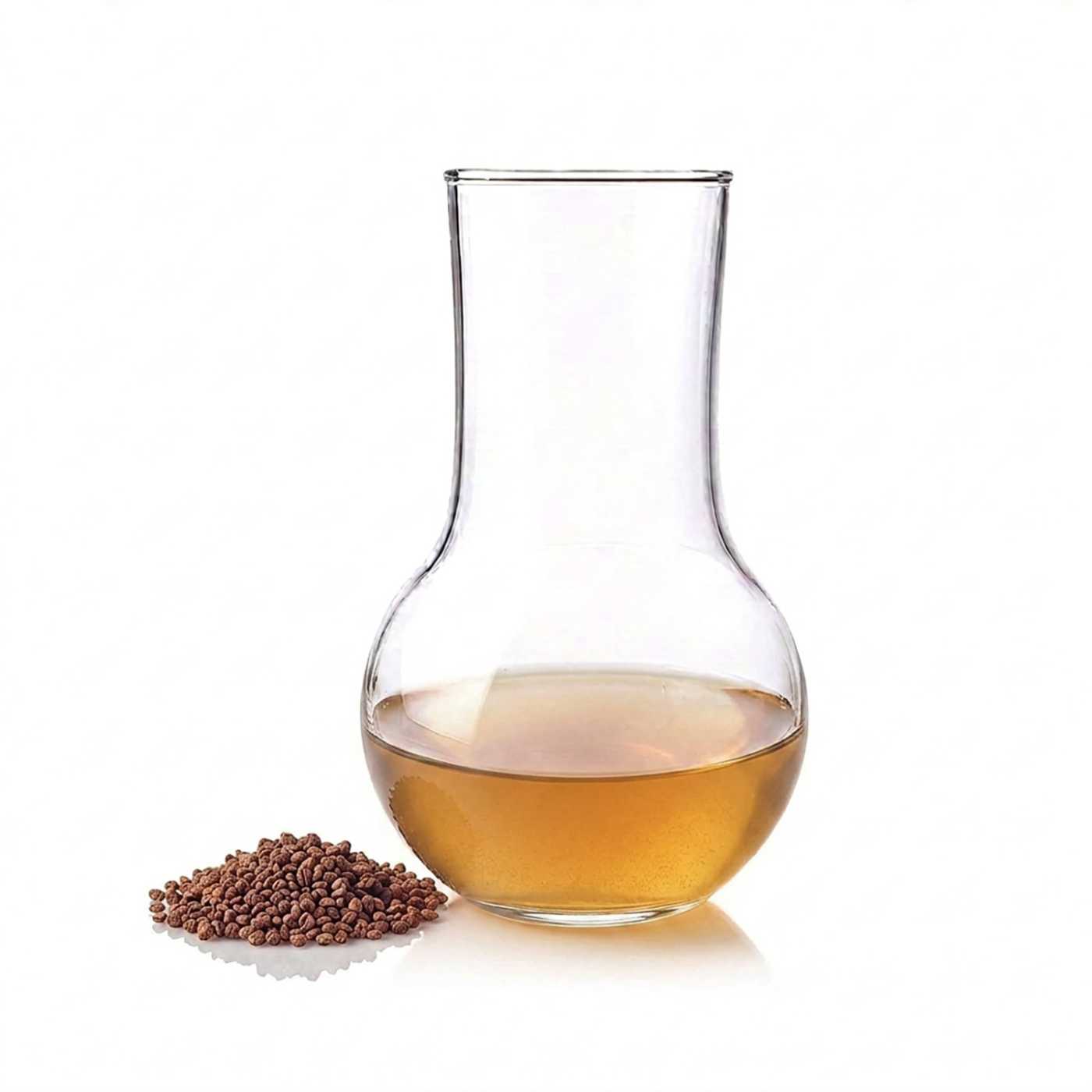
CO2-to extract from organic raspberry seeds is an oil from raspberry (Rubus idaeus) seeds obtained by carbon dioxide extraction. In facial and body cosmetics it helps the skin retain moisture and elasticity . full description
Lowest price in the last 30 days: €4.69
CO2-to extract from organic raspberry seeds is an oil from raspberry (Rubus idaeus) seeds obtained by carbon dioxide extraction. In facial and body cosmetics it helps the skin retain moisture and elasticity. It consists mainly of linoleic and alpha-linolenic acid, which are complemented by natural tocopherols and tocotrienols.
It is added to the formulation in a small amount, to oils or to an emulsion after cooling. It is suitable for products for dry, sensitive and normal skin.
The effect of the extract is based on polyunsaturated fatty acids. It contains 48–63% linoleic acid, 23–30% alpha-linolenic acid and 4% saturated fatty acids. Linoleic acid is a natural component of the lipids of the skin barrier. When the skin lacks it, it loses water more quickly and feels dry and tight.
An oil with this composition supplies these lipids to the skin. It supports the function of cell membranes and helps keep moisture in the skin and maintain its elasticity. Tocopherols and tocotrienols act as antioxidants.
The difference lies in the method of production. Pressed oil is squeezed out of the seeds mechanically. For this extract, ground dried seeds are extracted with carbon dioxide in a supercritical state, and no solvent residues remain in the extract. 6–8 kg of seeds are processed into 1 kg of extract.
The use in the formulation differs as well. Pressed oils commonly form the base of the oil phase. CO2-to extract is added in a small amount as a supplement that enriches the formulation with polyunsaturated fatty acids.
The extract is insoluble in water and mixes well with oils, so it belongs in the oil phase. It is processed below 40 °C. In emulsions it is added only in the cool-down phase, after cooling, and is not heated with the oil phase. In anhydrous products such as facial oils and oil serums, it is mixed in with the other oils.
The recommended usage rate is 0.5–5% in leave-on face and body care. In formulations, 0.5–2% is commonly used, for example around 0.5% in a serum and 2% in a lip product.
The extract is most often combined with tocopherol, jojoba oil and castor oil, and in the water phase of emulsions with hydrosols and glycerine. It has a yellow-brown colour and a characteristic odour.
Polyglycerol emulsifiers are better suited to emulsions with this extract. Emulsions made with them remained oxidatively stable even without an added antioxidant, whereas emulsions with Polysorbate 80 and no antioxidant oxidised quickly when warm.
The main risk when working with the extract is oxidation. The high proportion of polyunsaturated fatty acids makes the oil sensitive to heat, light and air, even though it is stabilised with rosemary extract. At 40 °C it oxidises noticeably faster than at room temperature or in the cold. Therefore, do not leave finished products in a warm place, and close an opened package immediately after use.
Oxidation in a cream is revealed by a change in odour and a drop in pH. In an emulsion with Polysorbate 80 and no antioxidant, a rancid smell appeared when warm and the pH dropped from approximately 5.4 to 3.4–3.7. The emulsion can be protected by an antioxidant, a chelating agent and cool storage of the finished product. For the oil on its own, what matters most is cold, darkness and the freshness of the raw material.
Do not combine the extract with oregano essential oil. In raspberry oil it acted as a pro-oxidant and, even at 0.2%, sharply increased the peroxide value when warm.
The extract is not classified as hazardous and has no restrictions on use in cosmetics. Fragrance allergens are not present in it in an amount above 0.01%. It is also suitable for vegan cosmetics. When handling it, we recommend protective goggles and oil-resistant gloves.