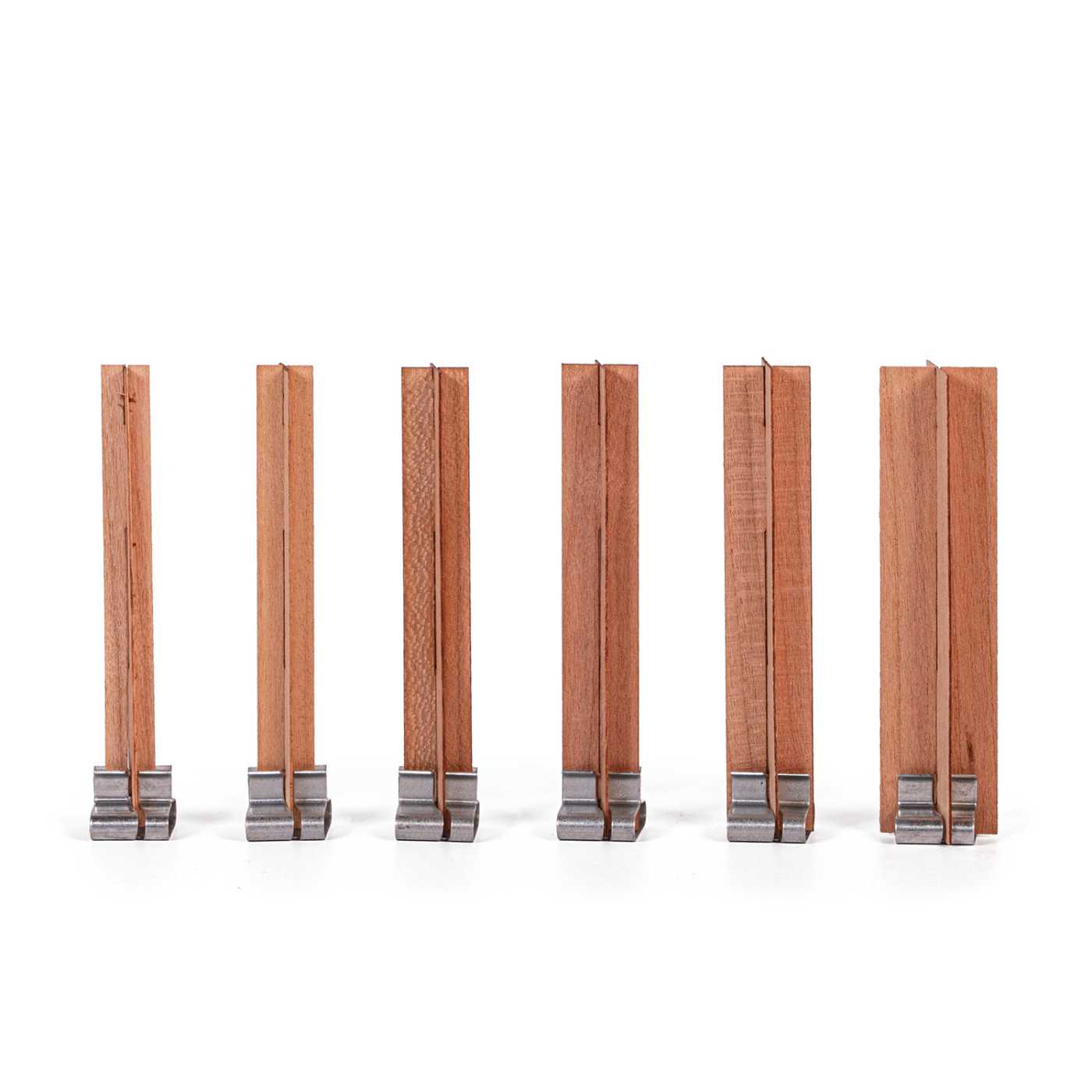
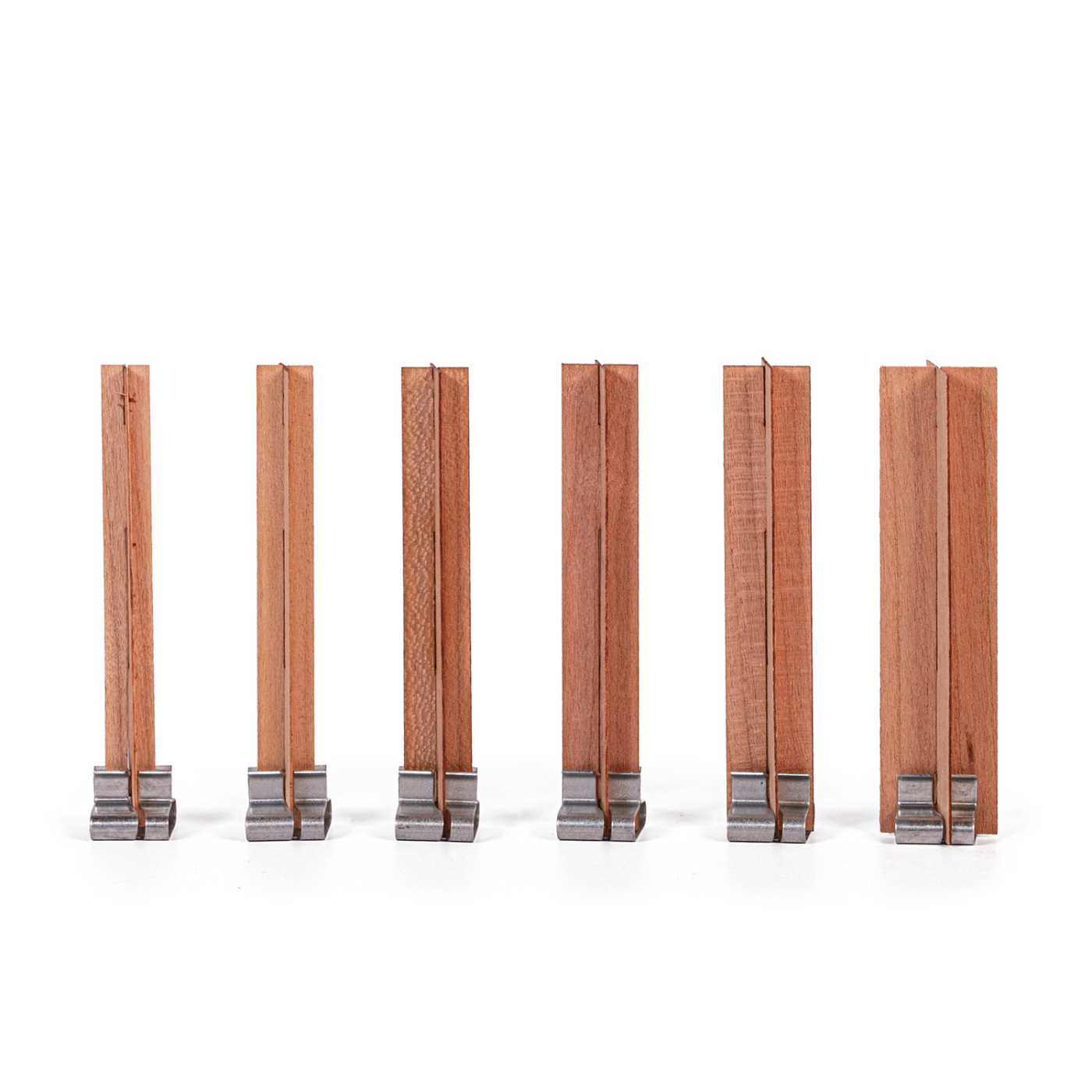
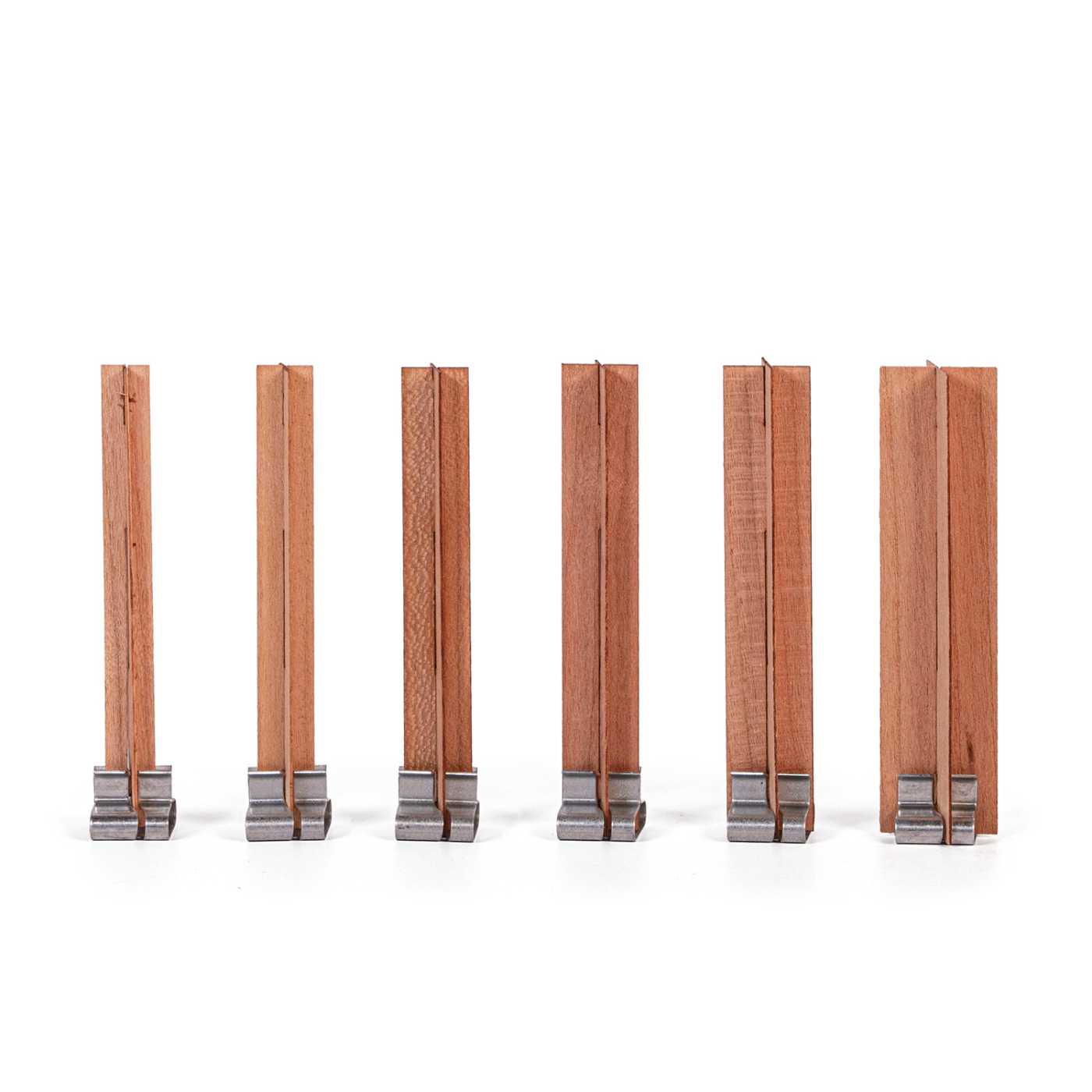
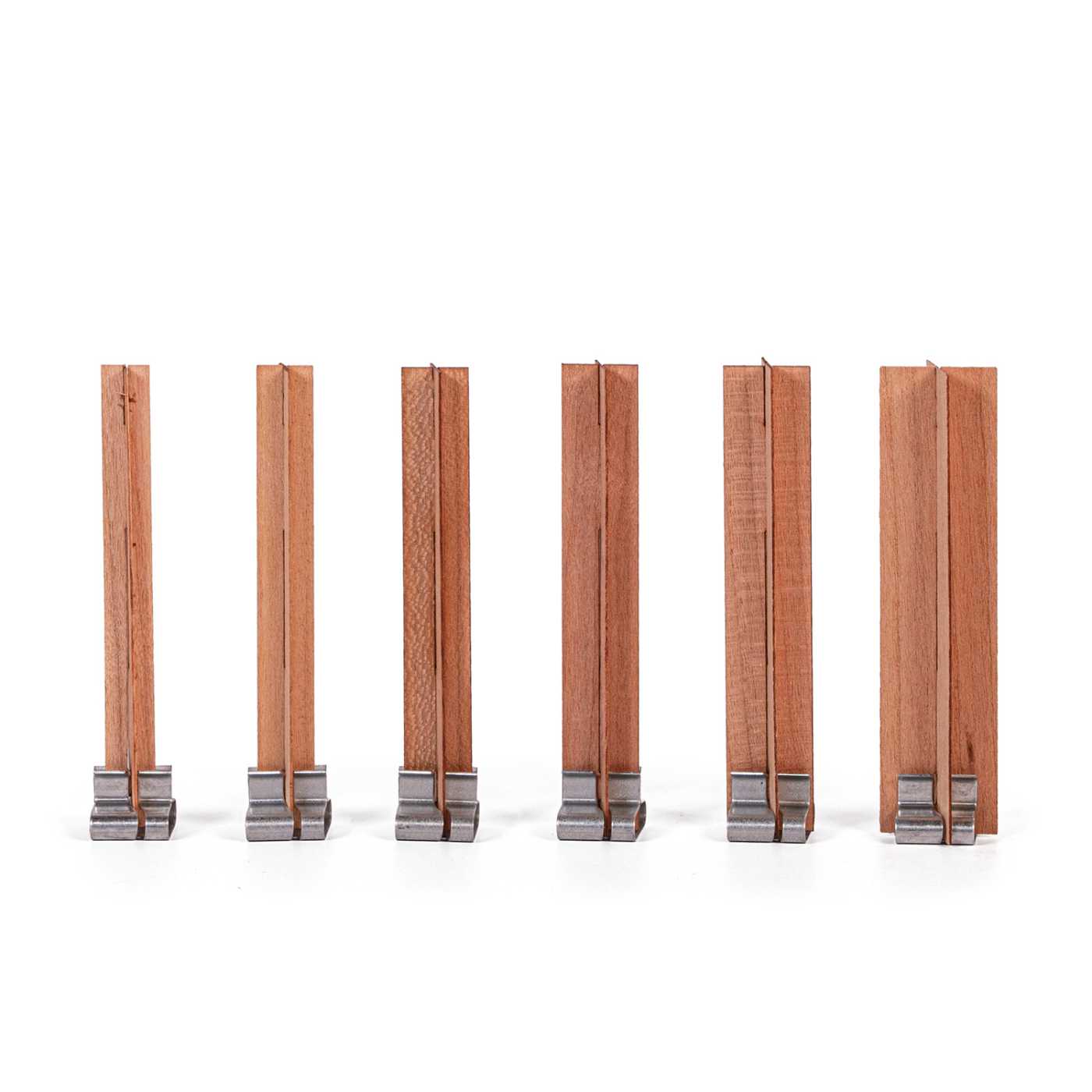
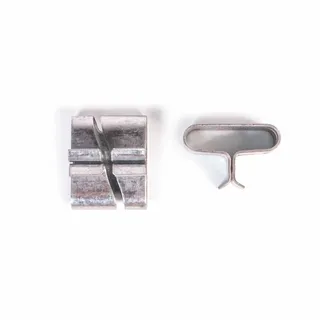
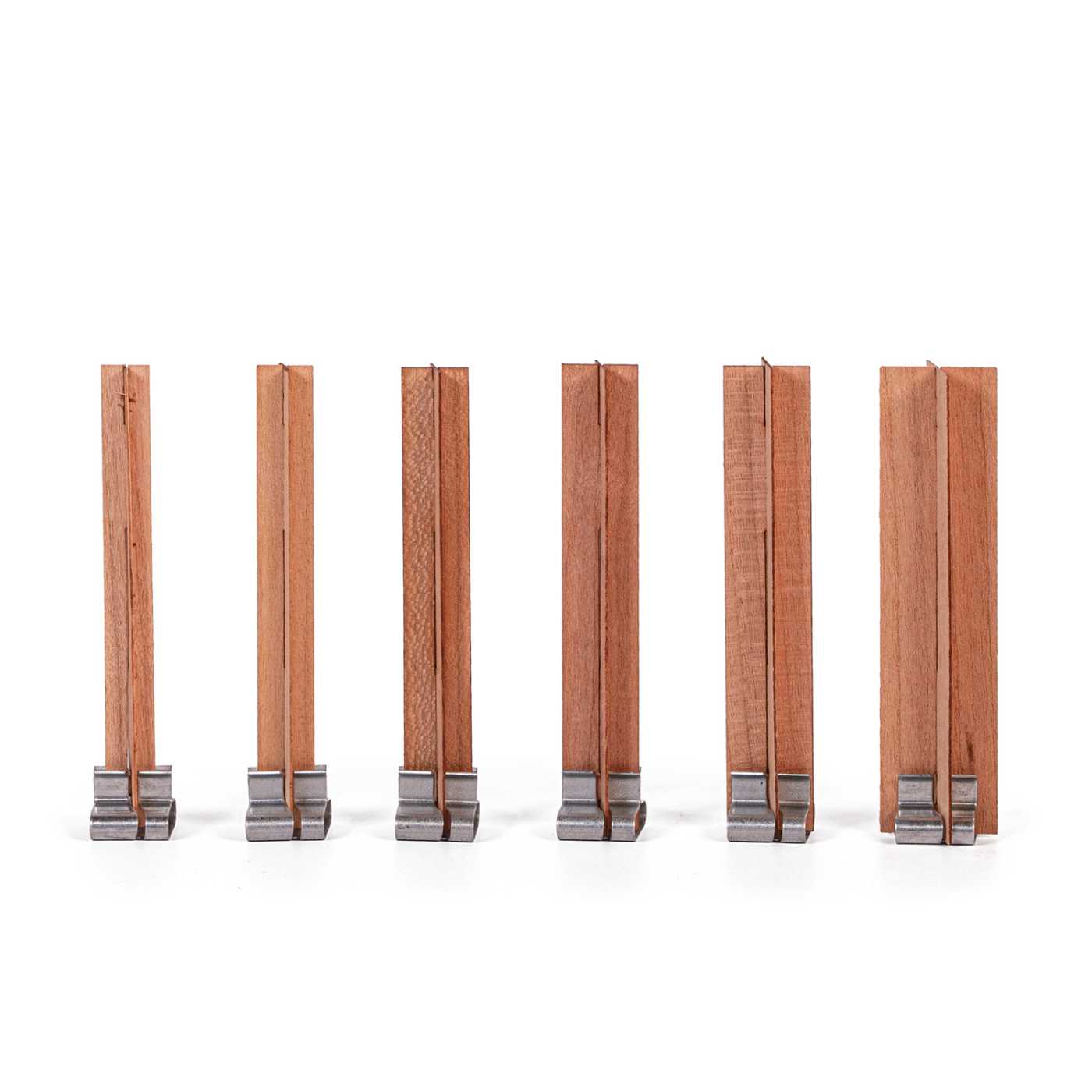
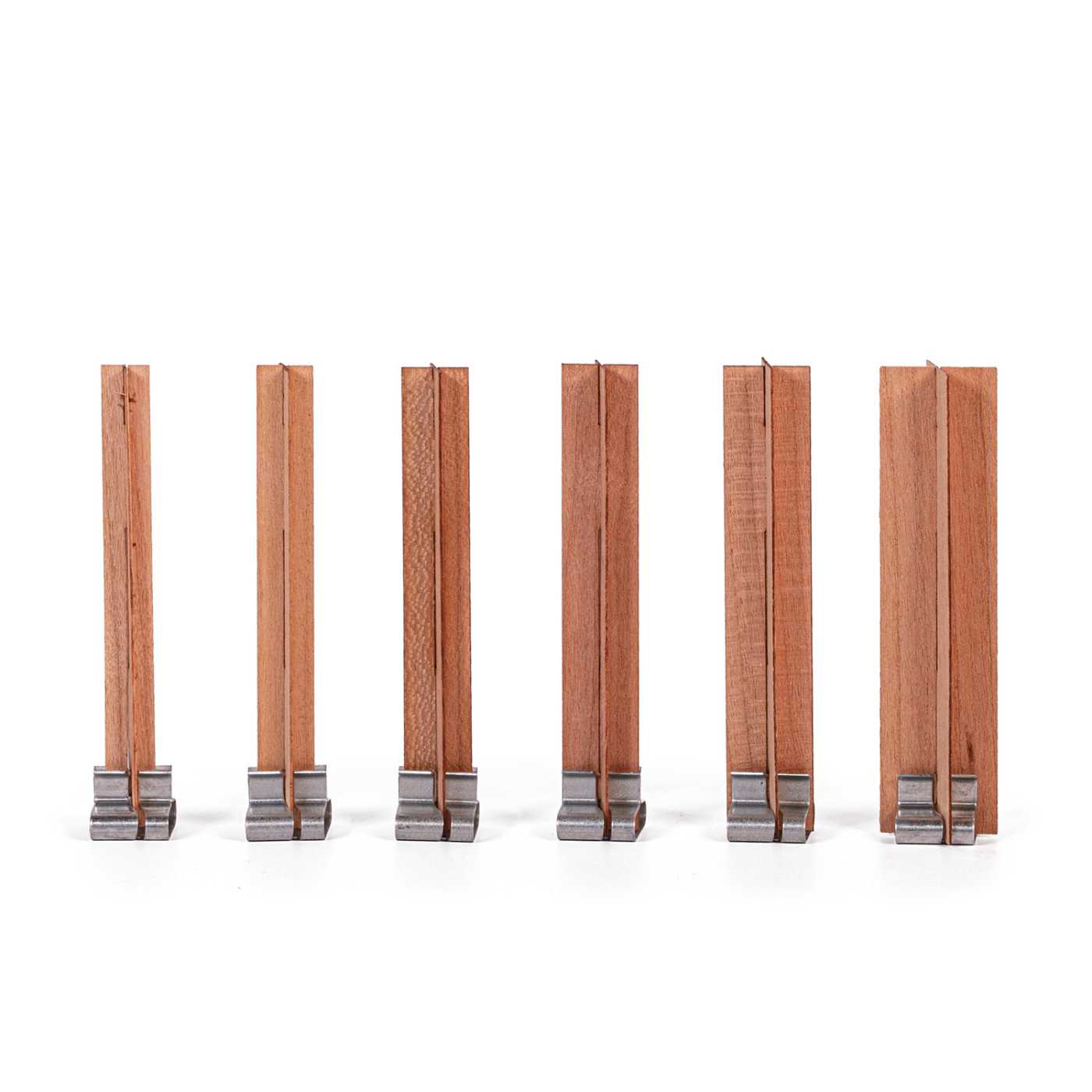
Wooden cross wick with a width of 11.11 mm is a container candle wick that burns with a soft crackling sound and a wider, flat flame. The set includes the wick and a metal sustainer: two wooden laminates joined in an X shape slide into the sustainer, which holds the wick perpendicular to the bottom of the container. It is suitable for candle makers who want to use wood instead of a cotton wick — for the sound, the appearance, and the more even melting of wax across the entire surface.
Key properties
- Cross shape – two laminates in an X shape give the flame more surface area than a single flat laminate. The wick maintains combustion more effectively and works well in waxes where a simple flat wick is harder to keep burning.
- Crackling while burning – wood produces a gentle crackling sound while burning, which is characteristic of wooden wicks and is one of the main reasons candle makers choose them.
- Metal sustainer included – the wick does not need to be glued or pressed into the wax. The sustainer is adhered to the bottom of the container, the wick is inserted into it, and it stays upright during pouring.
- Laminate thickness .02 – the manufacturer's designation; a higher number indicates a thicker laminate. Thickness together with width determines how much wax the wick draws and how large the flame will be.
- Certified wood – the manufacturer states that the wicks are made from certified wood, are natural, free from allergens, and biodegradable.
Working with the wick when making a candle
The sustainer is placed in the centre of the container and adhered to the bottom with a wick sticker or a small amount of melted wax. The wick is inserted into the sustainer so that it stands perpendicular, and only then is the wax poured. During pouring, the wood absorbs some of the wax — this is normal; the wick becomes saturated and will light more easily.
Once the wax has hardened, trim the wick just above the candle surface. A wooden wick that is too tall is difficult to light and produces smoke; one that is too short will sink into the melted wax. A few millimetres above the surface is generally sufficient — the exact height is best determined by testing with the specific wax.
Before the first lighting, allow the candle to cure fully and trim the wick. Wood ignites more slowly than cotton — hold the flame in place for longer and allow it to catch across the full width of the laminate.
Proper wick performance depends on the diameter of the container and the type of wax. The same wick behaves differently in soy, coconut and paraffin wax, and varies further with the amount of fragrance oil and dye. It is therefore not possible to determine in general whether a width of 11.11 mm is suitable for a given container diameter. It is recommended to make a test candle and check whether the wax melts evenly across the entire surface and whether the flame is neither too high nor too weak.
Suitable for products such as
- candles in glass and ceramic containers – the wick with sustainer is designed for container candles, where the sustainer holds it at the bottom;
- soy and coconut candles – natural waxes are commonly combined with wooden wicks, and the cross shape is beneficial in waxes that are slower to sustain combustion;
- scented candles – always verify wick performance with your chosen fragrance oil dosage by making a test candle.
The cross wick with sustainer is designed for use in containers; it is not suitable for freestanding candles without a container.
What is worth knowing
- Testing is necessary. Wooden wicks are more sensitive to the combination of wax, fragrance and container than cotton wicks. A single test candle will reveal whether the wick burns as a tunnel, produces smoke, or burns too high.
- Trimming before each burn. Before each lighting, remove the charred tip from the wick. An untrimmed wooden wick burns weakly and may extinguish.
- First burn. Allow the candle to burn until the wax melts evenly across the entire surface. This creates a uniform melt pool and reduces the risk of tunnelling.
- Sustainer stays in the candle. Once poured, it is embedded in the wax and is part of the finished candle — it is not intended for reuse.
- Wax with additives. A high proportion of dye or solid additives can clog the pores of the wood and cause the wick to extinguish. With coloured candles, it is worth testing with a lower dosage.
The set is intended for candle making. It is not declared for contact with food or cosmetics and must not be used for any purpose other than as a candle wick.
The wooden wick burns along with the candle; the metal sustainer is removed from the container after the candle has burned down and sorted as metal waste.
Frequently asked questions
Why does a wooden wick crackle?
The crackling is caused by moisture and air in the wood fibres releasing as they burn. This is a natural characteristic of wooden wicks, not a defect. The intensity of the sound depends on the wax and how well the wick has been saturated with wax. Crackling is usually lighter during the first few minutes of burning.
What container diameter is the 11.11 mm cross wooden wick suitable for?
An exact diameter cannot be stated in general — it depends on the wax, fragrance oil, and the shape of the container. The same wick will melt a different diameter in soy wax compared to paraffin. It is recommended to make a test candle and check whether the wax melts across the entire surface after one to two burns without overheating the glass.
How is a wooden wick secured in the container?
The wooden wick is secured using the metal sustainer included in this set. The sustainer is adhered to the bottom of the container, the wick is inserted into its groove, and stands upright during both pouring and hardening of the wax. The wick does not need to be glued, tied, or threaded through anything.
Why does a wooden wick go out?
The most common cause is a wick that is too tall or has not been trimmed, or wax with a high proportion of dye or solid additives that clog the wood. Trimming the wick just above the wax surface, removing the charred tip before each lighting, and allowing the full candle surface to melt on the first burn all help.
What is the difference between a cross and a flat wooden wick?
A cross wick consists of two laminates joined in an X shape; a flat wick is a single laminate. The cross shape gives the flame a larger surface area, making it easier to light, more stable in combustion, and better suited to waxes and containers where a flat wick would struggle to stay lit. A flat wick burns more gently and is suited to smaller containers.
Is a wooden wick suitable for soy wax?
Yes, wooden wicks are commonly used with soy and coconut wax. Natural waxes sustain combustion more slowly, so the cross shape with its greater flame surface area is an advantage. Testing in the specific wax with the specific fragrance oil dosage is always recommended, as wick behaviour changes with every change to the formulation.



 Wooden wick, .02 cross, 11.11 mmDrevený knôt, .02 krížový, 11,11 mm ZASOBA