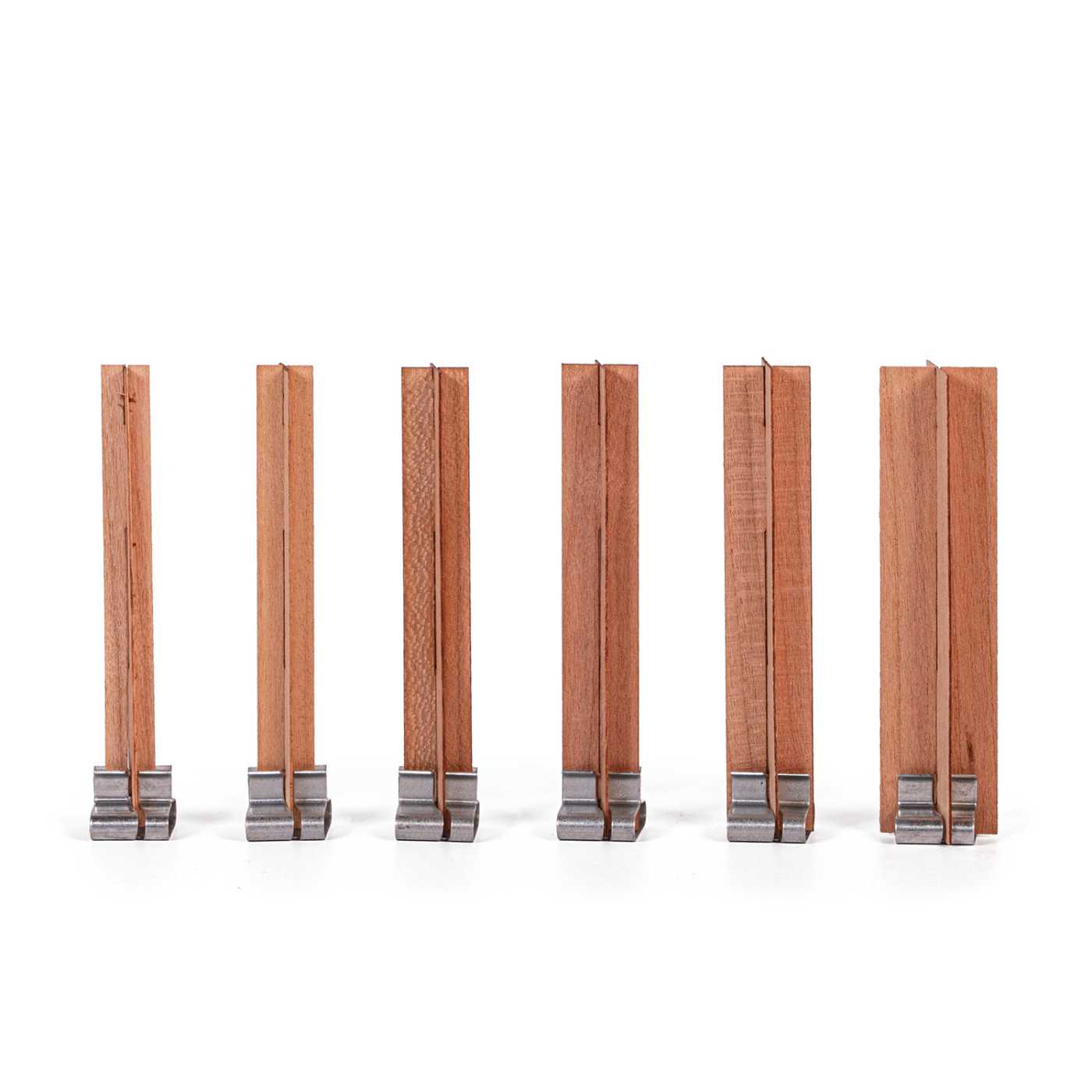
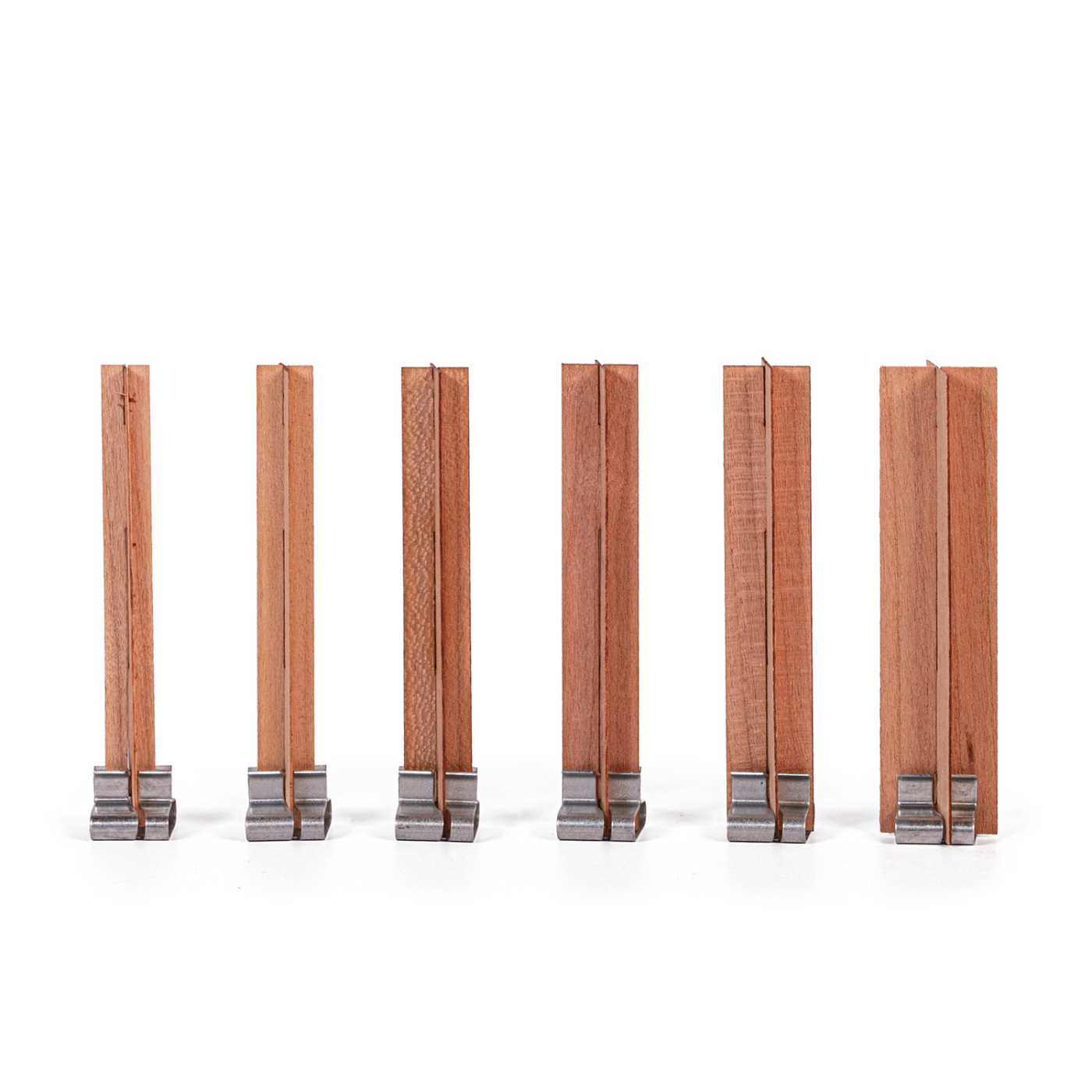
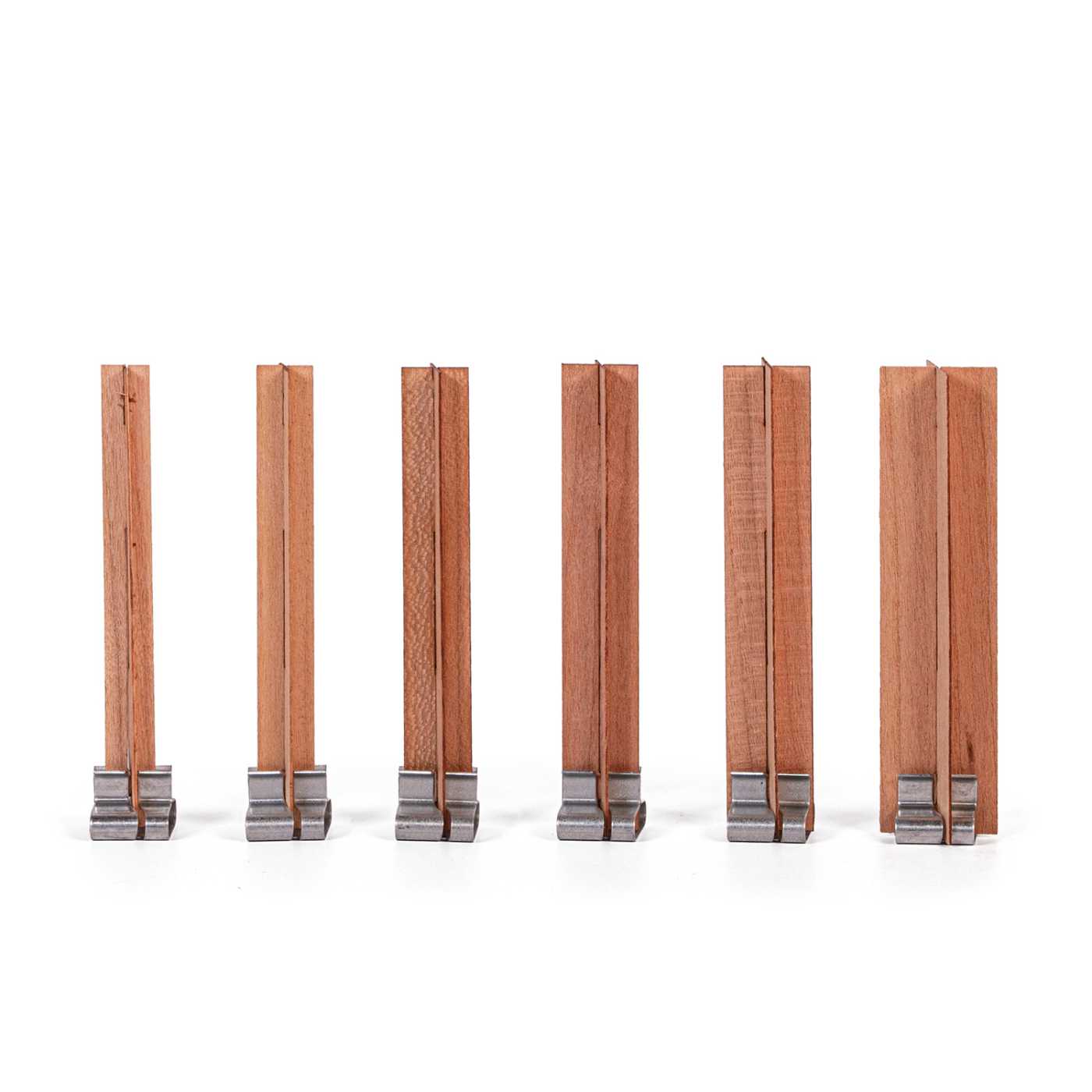
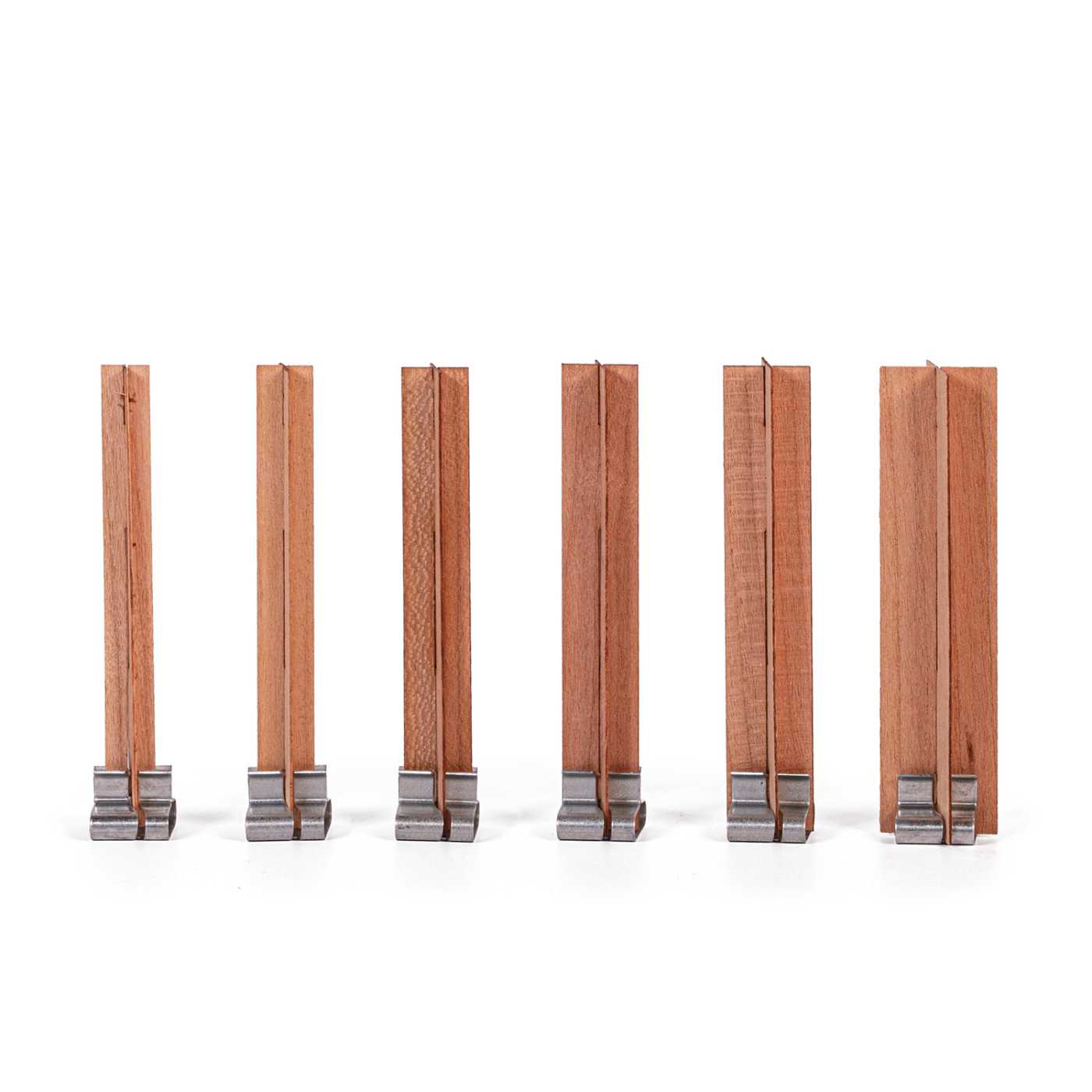
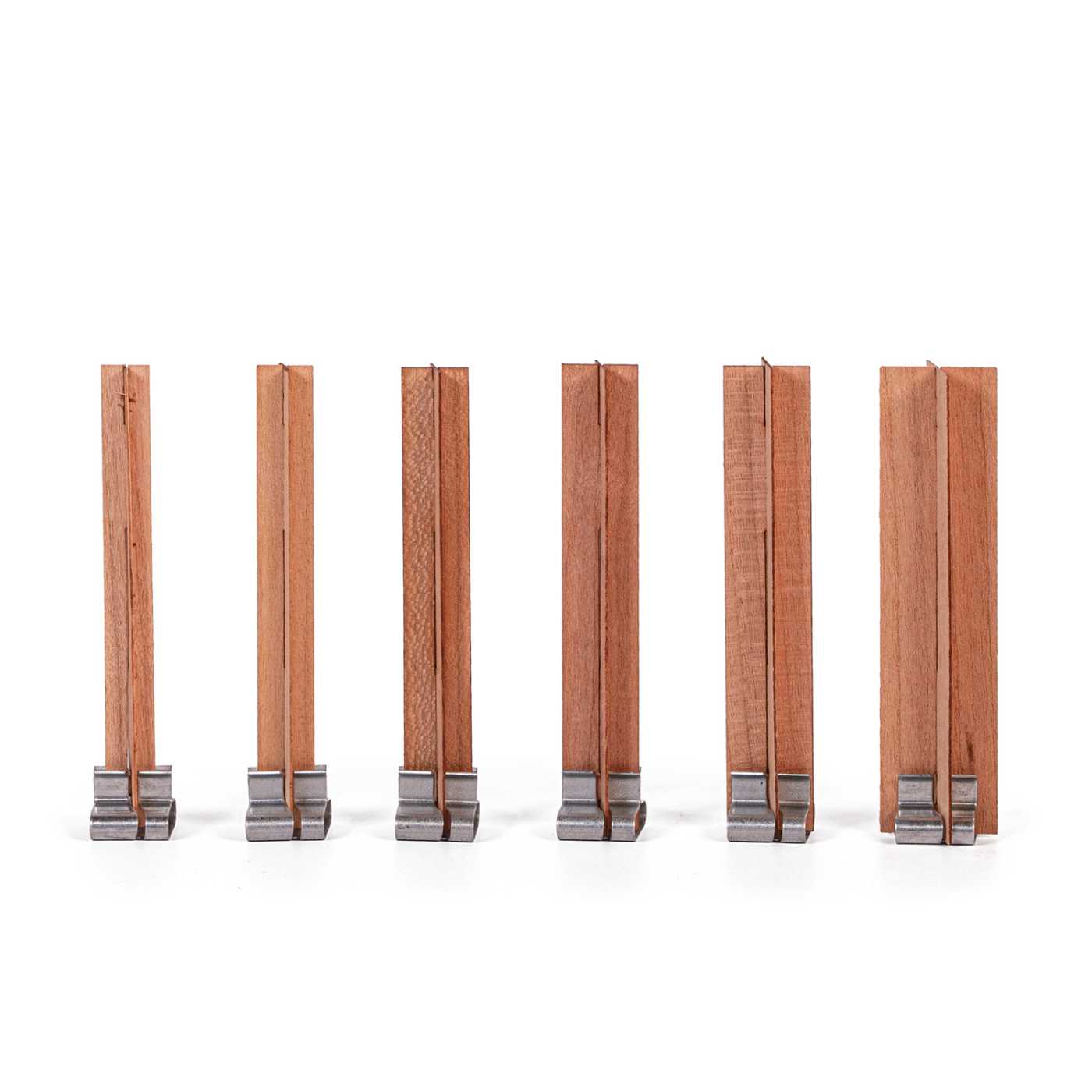
Wooden wick, .02 cross, 7.93 mm with stand
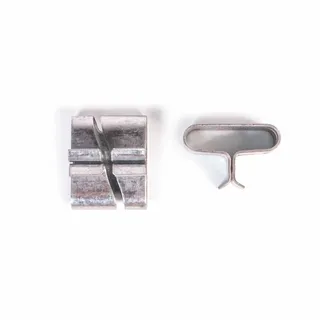
Wooden cross wick with stand is designed for container candles where a simple flat wick cannot melt the entire wax surface. Two wooden slats joined in an X shape give the flame more fuel, which is why cross wicks are chosen especially for candles with a larger diameter. Burning is accompanied by the characteristic gentle crackling sound — the main reason people reach for wooden wicks. The kit includes a metal stand that holds the wick perpendicular to the bottom of the container.
The wick is made by an American manufacturer from certified wood. It is listed as natural, allergen-free and biodegradable.
Why a cross wick
- Wider melt pool – two slats transfer more heat to the wax, so the candle burns more evenly toward the container wall and tunnels less.
- More pronounced crackling – the sound during burning is more distinct than with a simple flat wick.
- Stable flame – the X shape keeps the wick stiffer, the flame tilts less and the slats do not bend during burning.
- Stand included – the metal stand has a slot for the cross wick, holds it upright, and eliminates the need for improvised gluing of two slats into the wax.
How to read the designation
The width of 7.93 mm is the wick width. The designation .02 is the slat thickness according to the manufacturer — a higher number means a thicker slat and generally more intense burning, a lower number means gentler burning with a smaller flame. When choosing, go by the container diameter and wax type, not the number alone.
Use in candle making
Place the stand in the centre of the container bottom and secure it with a drop of wick glue or a small amount of melted wax. Insert the wick into the stand slot so it stands straight and both slats are evenly positioned. Pour the wax at the standard working temperature for the chosen wax type. The wooden wick absorbs the wax, and this absorption is the prerequisite for stable burning.
Once the wax has set, trim the wick close to the wax surface. Wooden wicks burn correctly when trimmed short — typically a few millimetres above the wax. A longer wick smokes and the flame becomes unstable. Trim before every light.
Test every combination of wax, container and fragrance with a trial burn. Check whether the melt pool reaches the container wall, whether the flame smokes, and whether the container overheats. Based on the results, choose a different wick width or thickness.
Suitable for candles such as
- Medium and large-diameter glass container candles – this is where the wider melt pool of a cross wick makes the most difference.
- Soy, coconut and blended plant waxes – softer waxes with a lower melting point are commonly used with wooden wicks, but behaviour in a specific blend must be verified by testing.
- Scented candles – a larger flame helps release the fragrance evenly; the fragrance load must stay within the recommendation for the given wax.
Good to know
- A wooden wick is slower to catch than a cotton wick on the first light. While the slats absorb the wax, the flame is smaller; it stabilises after a moment.
- If the flame goes out, the most common cause is a wick trimmed too long or a wax that wicks poorly through the wick. A shorter trim or a different wax type will help.
- If the container overheats or the wick smokes, the wick is too strong for that diameter. Choose a narrower or thinner variant.
- One cross wick per container is sufficient for correct burning.
Never leave a burning candle unattended and use only containers designed for candles that can withstand heat. Leave adequate clearance between the flame and the rim of the container.
Frequently asked questions
What is a cross wooden wick better at than a simple wooden wick?
A cross wooden wick is better suited to candles with a larger diameter. Two slats joined in an X shape give the flame more fuel, the melt pool is wider and the candle burns more evenly all the way to the container wall. A simple flat wick is better for narrower containers, where a cross wick would overheat the glass.
How is a wooden cross wick secured in the container?
A wooden cross wick is secured with the metal stand included in the kit. The stand is glued to the centre of the container bottom with a drop of wick glue or melted wax, and the wick is inserted into the slot so it stands straight. The stand holds both slats in the correct position during pouring and as the wax sets.
How short should a wooden wick be trimmed?
A wooden wick should be trimmed short — typically a few millimetres above the wax surface — before every light. A wooden wick that is too long will smoke, the flame will be unstable and the candle may go out. A short trim is the most common fix for burning problems with wooden wicks.
Why does a wooden wick go out or burn weakly?
The most common cause is a wick trimmed too long or a wax that does not absorb well into the wooden wick. Trim the wick shorter and let the candle burn long enough to form a full melt pool. If the problem persists, the wax is not suitable for that wick or the fragrance load is too high. Verify this with a trial burn using a different combination.
Which wax is a .02 cross wooden wick suitable for?
A wooden cross wick is commonly used in soy, coconut and blended plant waxes, which are the most widely used in container candles. However, behaviour varies depending on the specific wax, container diameter and fragrance load, so a trial burn in the exact formulation is necessary before larger production runs.
What does the thickness designation .02 mean for a wooden wick?
The number .02 is the manufacturer's slat thickness designation. A higher number means a thicker slat and generally stronger burning; a lower number means gentler burning with a smaller flame. Always confirm the right thickness for a specific container and wax with a trial burn.



 Wooden wick, .02 cross, 7.93 mmDrevený knôt, .02 krížový, 7,93 mm ZASOBA