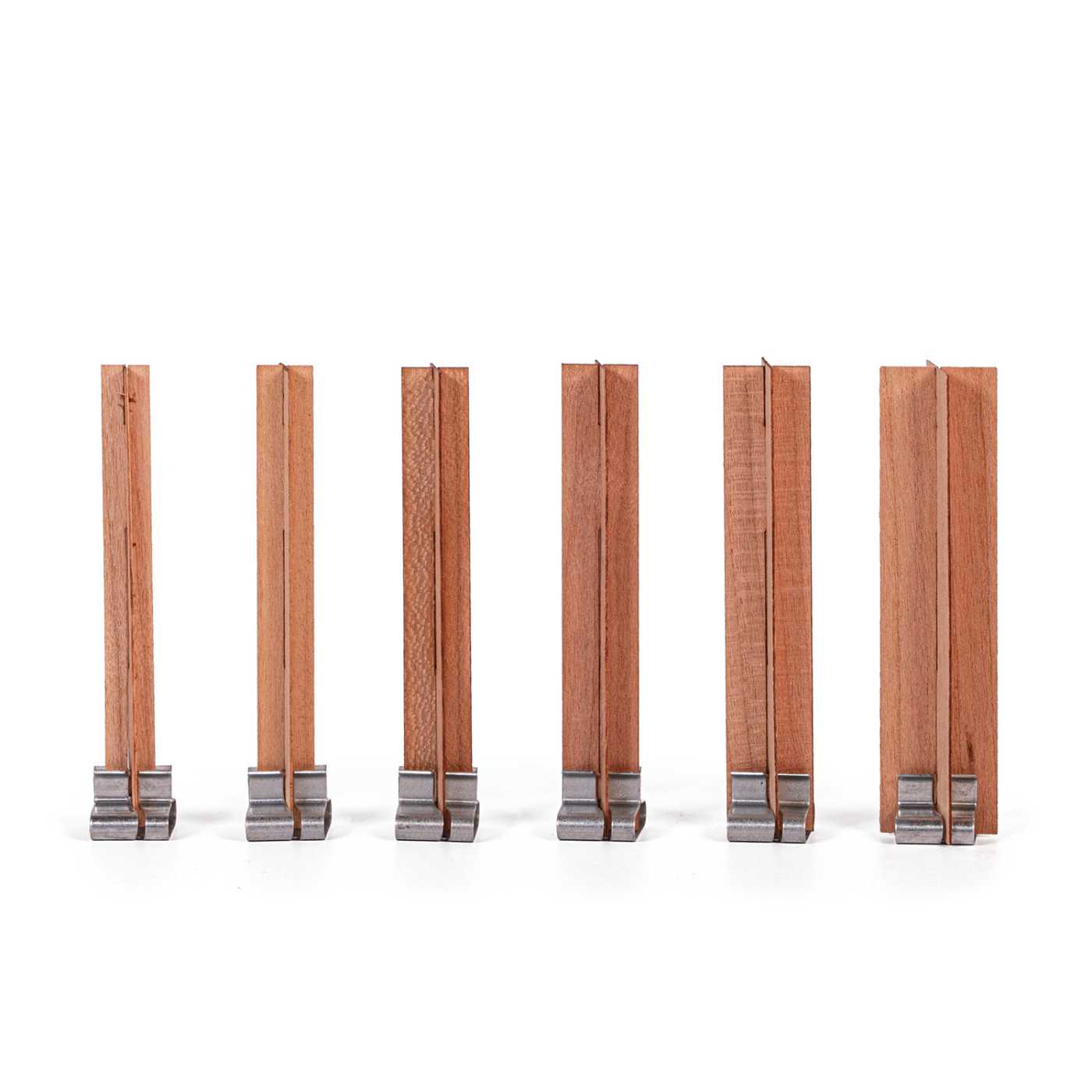
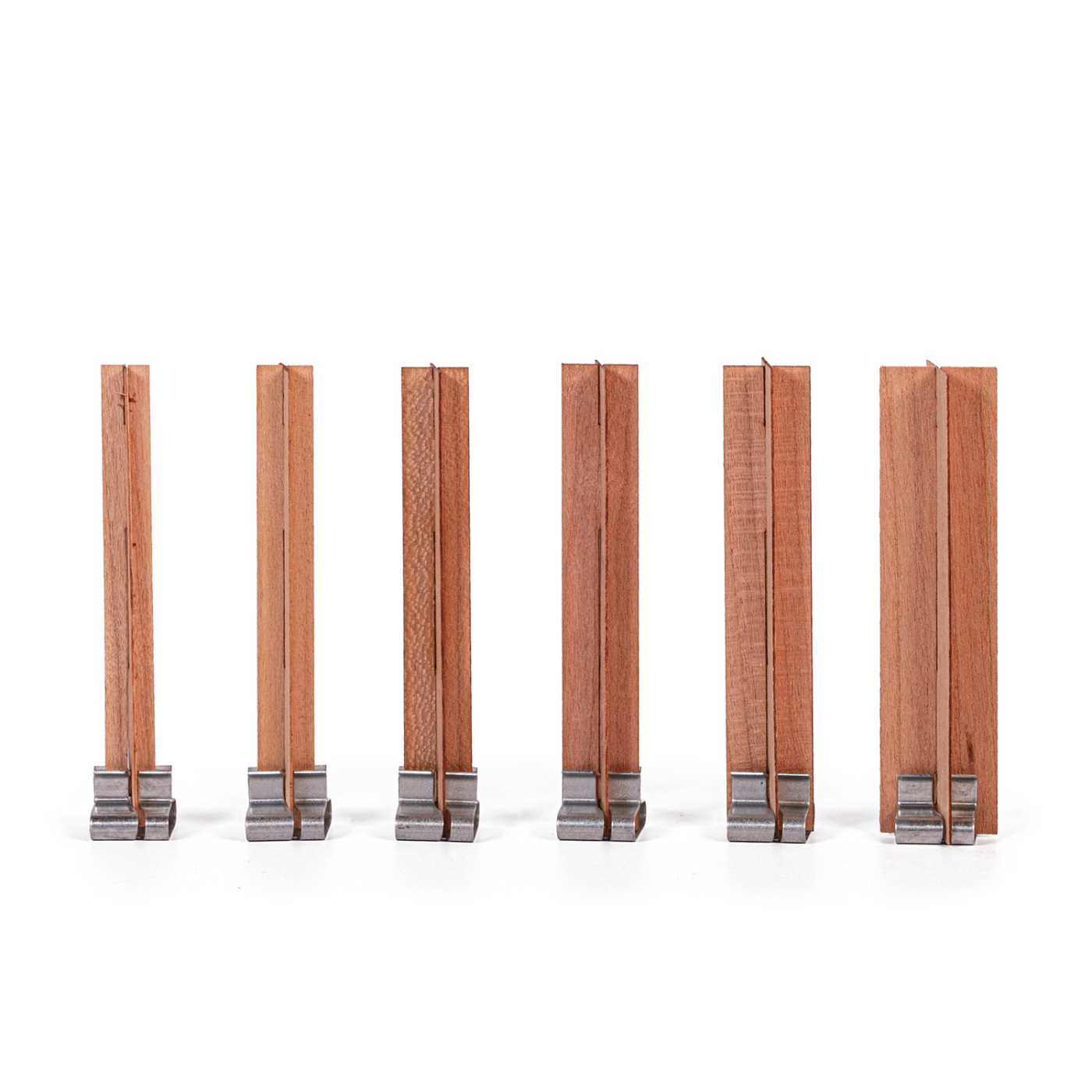
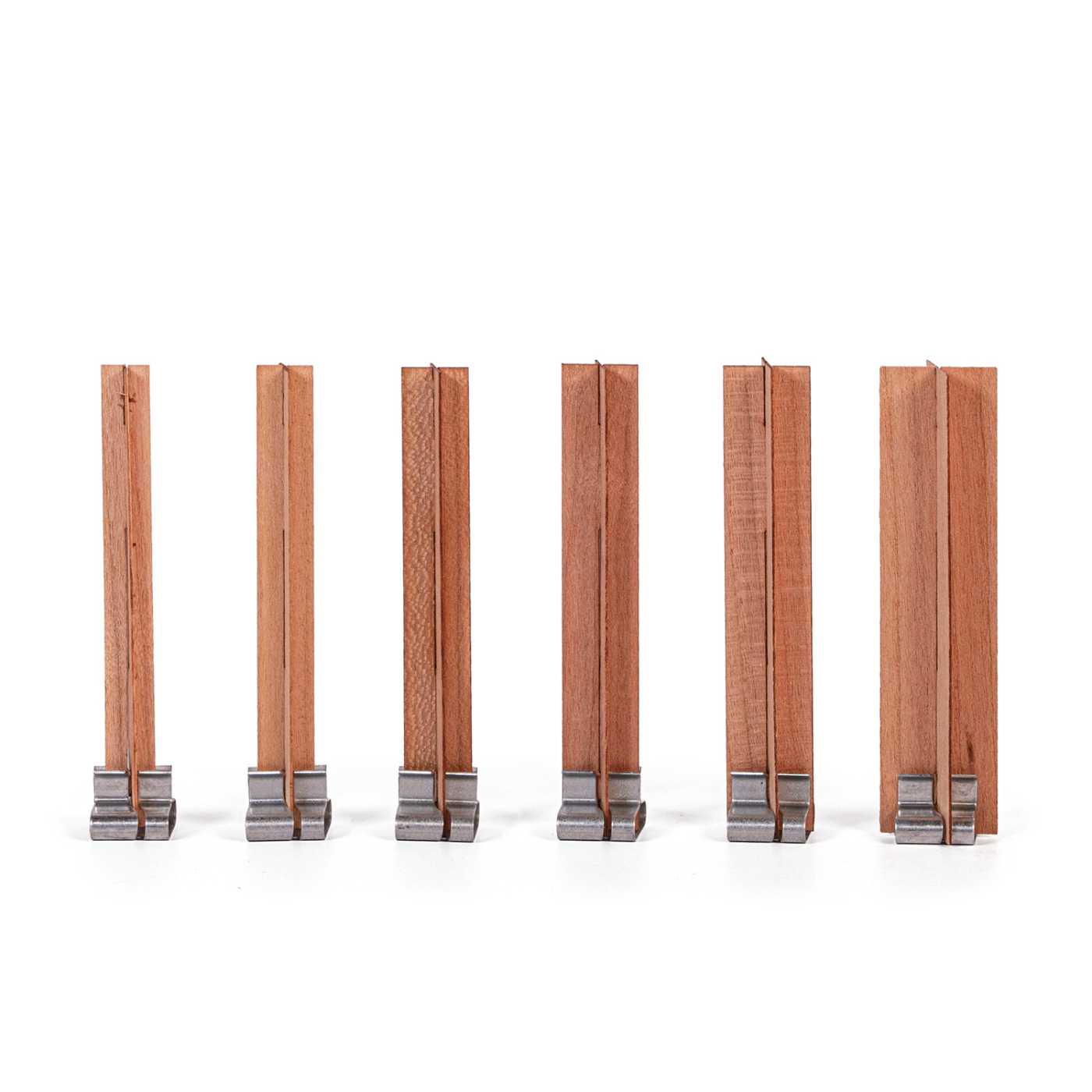
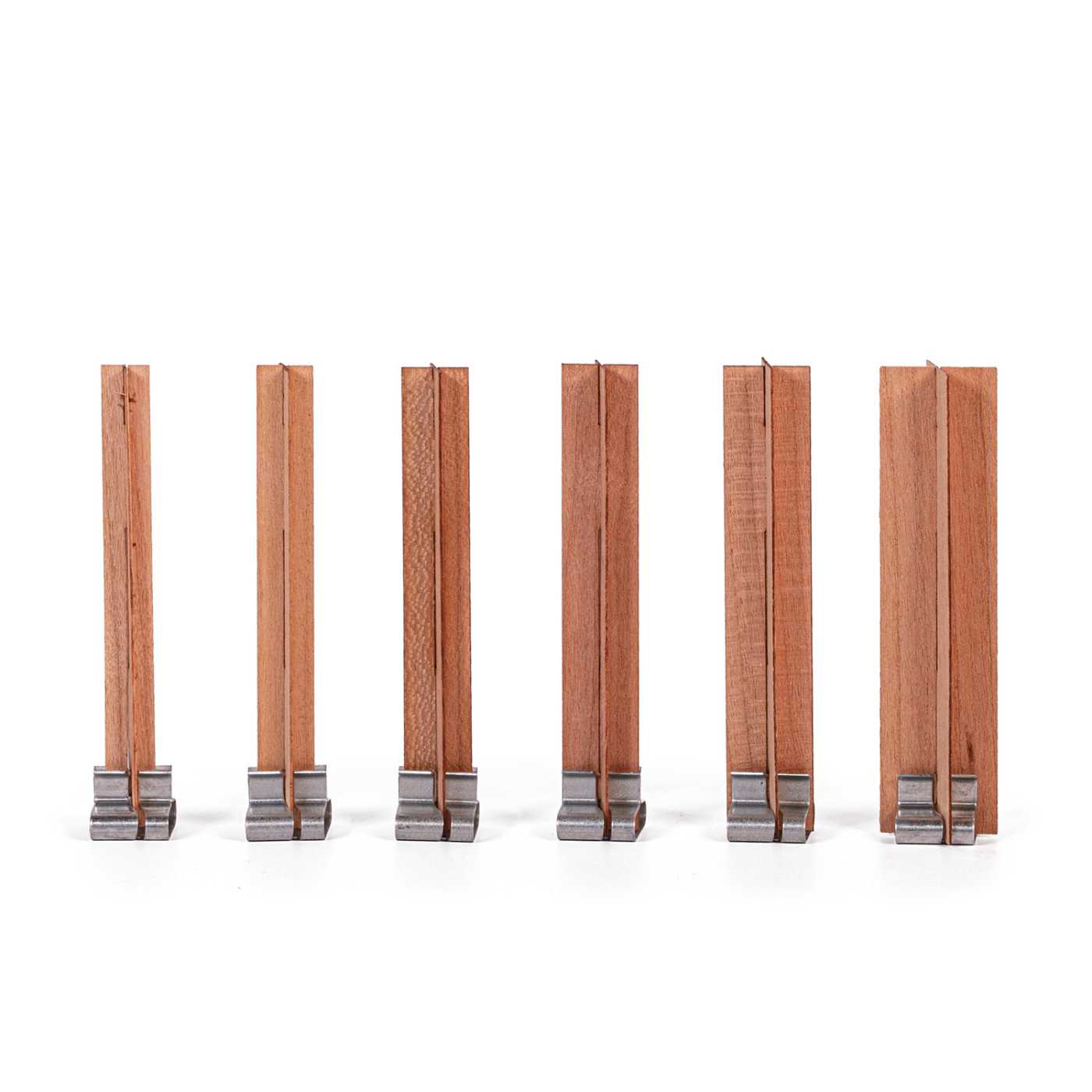
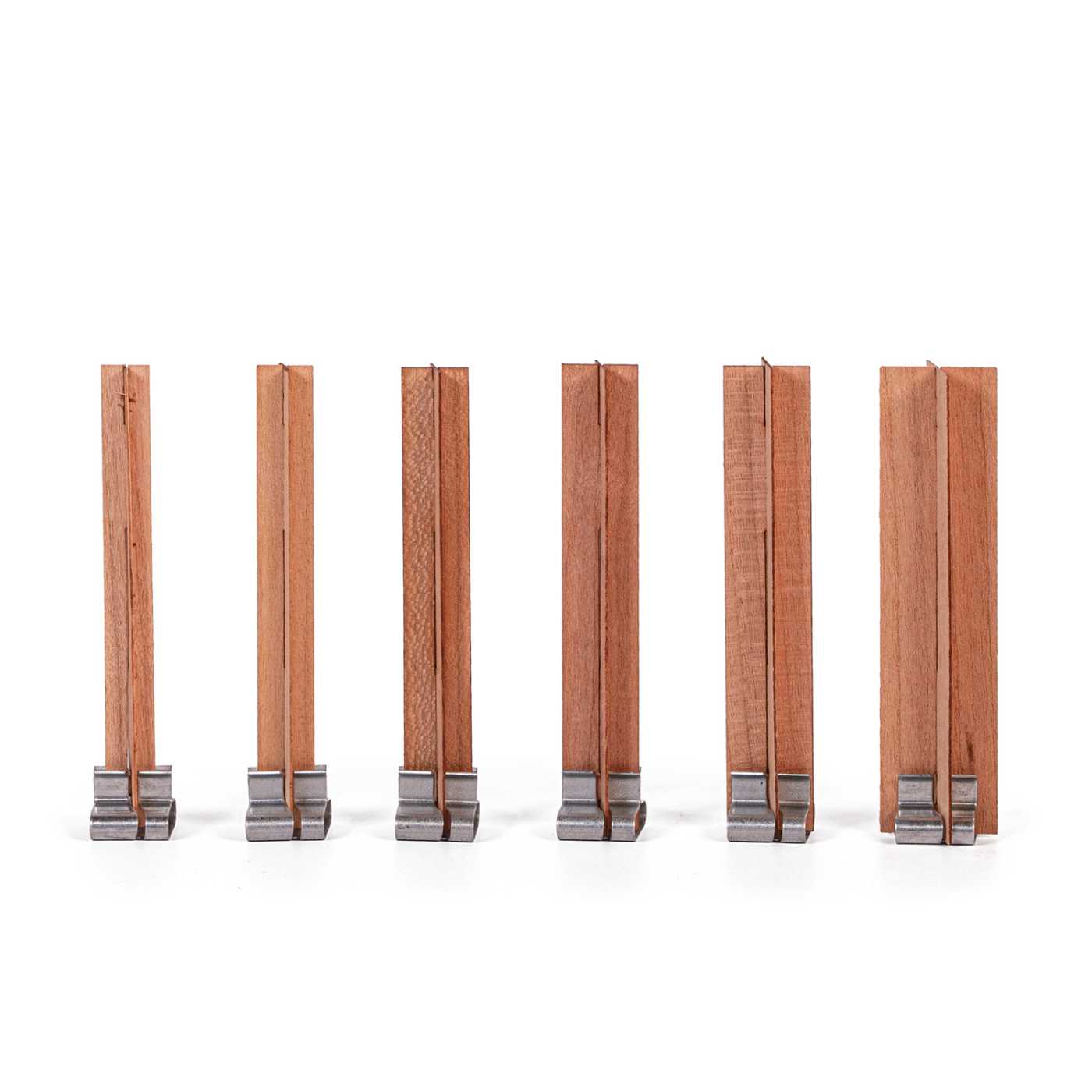
Wooden wick .02 cross with a width of 12.7 mm is a container candle wick that replaces the classic cotton wick with a thin wooden slat. It is chosen for its low, wide flame and gentle crackling during burning, which gives the candle a calmer, fireplace-like character. The cross design joins two slats in an X shape, so the wick stands more firmly and draws more wax to the flame than a simple flat slat.
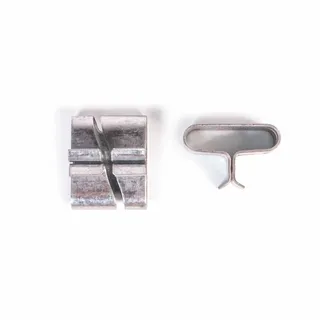
The set also includes a metal sustainer, which holds the wick upright on the bottom of the container and keeps it in place during wax pouring. According to the manufacturer, the wood is from certified sources, allergen-free and biodegradable.
How a wooden wick differs from a cotton wick
- Flame shape – the wooden slat burns with a low, wide flame that melts wax evenly across the full diameter of the container.
- Sound – the wood crackles gently during burning. This is a natural property of the material, not a defect of the wick or the wax.
- Appearance – the wide slat is visible in the candle and becomes part of the design.
- Stability – the cross shape of two slats holds its form even in melted wax and does not tilt as easily as a single thin slat.
Cross shape and slat thickness
The designation .02 is the manufacturer's slat thickness code; a higher number means a thicker slat. Thickness together with width determines how much wax the wick draws to the flame, and therefore the flame size and the width of the melt pool. A cross wick has more mass than a flat wick of the same width and is therefore typically used in wider containers or with waxes that are harder to melt.
There is no universal chart matching wick width to container diameter, because the result depends on the type of wax, fragrance load, colourant and container shape. The correct size always needs to be confirmed by test burning.
During test burning, let the candle burn for at least a few hours and check whether the wax has melted all the way to the container wall, whether the flame produces soot and whether the wick drowns in the wax. If the wax only melts in the centre, the wick is too weak for that container. If the flame burns high and the container overheats, it is too strong.
How to work with the wick
Insert the wick into the metal sustainer and fix the sustainer to the bottom of the container using a wick sticker or a drop of melted wax. Before pouring, check that the wick stands straight and centred in the container. A crooked wick burns unevenly and leaves unmelted wax on one side. Pour the wax at the temperature recommended for the given wax type and leave the wick undisturbed while the wax sets.
Once the wax has set, trim the slat just above the wax surface. A wooden wick does not burn down the same way as a cotton wick. A charred layer remains on its edge, which must be removed before each subsequent lighting, otherwise the flame decreases or the wick goes out.
A long wooden wick burns with an excessively high flame and overheats the container. Trim it before every light, not only when it starts to smoke.
Which candles it is suited for
- Candles in glass containers – the slat is visible; it works particularly well in clear and frosted glass and in low, wide containers.
- Candles in tins and ceramics – the sustainer holds the wick on a flat base; test burning will confirm whether the wick strength matches the container diameter.
- Candles made from plant-based and blended waxes – wooden wicks are commonly used in soy, coconut, rapeseed and blended waxes.
The wooden wick with sustainer is not suitable for free-standing candles (pillar, moulded) because it requires a firm base to which the sustainer can be attached.
Good to know
- Wood is a natural material; individual slats may vary in grain and shade, which has no effect on burning.
- A higher fragrance load and some colourants can slow wax melting, resulting in a smaller melt pool. In that case, try the next wick size up.
- The sustainer remains at the bottom after the candle has burned down. When reusing the container, remove it after warming the remaining wax and dispose of it in metal recycling.
- The set is not intended for contact with food or cosmetics and is used exclusively for candle making.
Frequently asked questions
Is the wooden wick .02 cross suitable for soy wax?
Yes, wooden wicks are commonly used in soy wax and the cross shape helps with its slower melt. The correct wick size for a given container diameter and fragrance load must be confirmed by test burning, as soy waxes from different manufacturers behave differently.
How is the wooden wick fixed to the bottom of the container?
Insert the wick into the metal sustainer included in the set and stick the sustainer to the bottom of the container using a wick sticker or a drop of melted wax. The sustainer holds the slat upright during both pouring and setting, so no top support is needed.
Why does the wooden wick crackle during burning?
Gentle crackling is a natural property of burning wood, not a wick defect. The intensity of the sound varies depending on the wax, flame size and condition of the slat. With a properly trimmed wick, the crackling is quiet and steady.
How often and to what length should the wooden wick be trimmed?
The wooden wick should be trimmed before every light, just above the wax surface. At the same time, remove the charred layer from the edge, which prevents wax absorption. Without this step, the flame diminishes and the wick may go out.
What is the difference between a cross wooden wick and a flat wooden wick?
A cross wick consists of two slats joined in an X shape; a flat wick is a single slat. The cross shape has more mass, draws more wax to the flame and stands more stably, so it is used for wider containers and harder-to-melt waxes. A flat wick is better suited for smaller diameters.
What does the .02 thickness designation mean for a wooden wick?
It is the manufacturer's slat thickness designation, where a higher number means a thicker slat. Thickness combined with the 12.7 mm width determines the amount of wax drawn and therefore the flame size. Exact behaviour in a specific wax is confirmed by test burning.



 Wooden wick, .02 cross, 12.7 mmDrevený knôt, .02 krížový, 12,7 mm ZASOBA