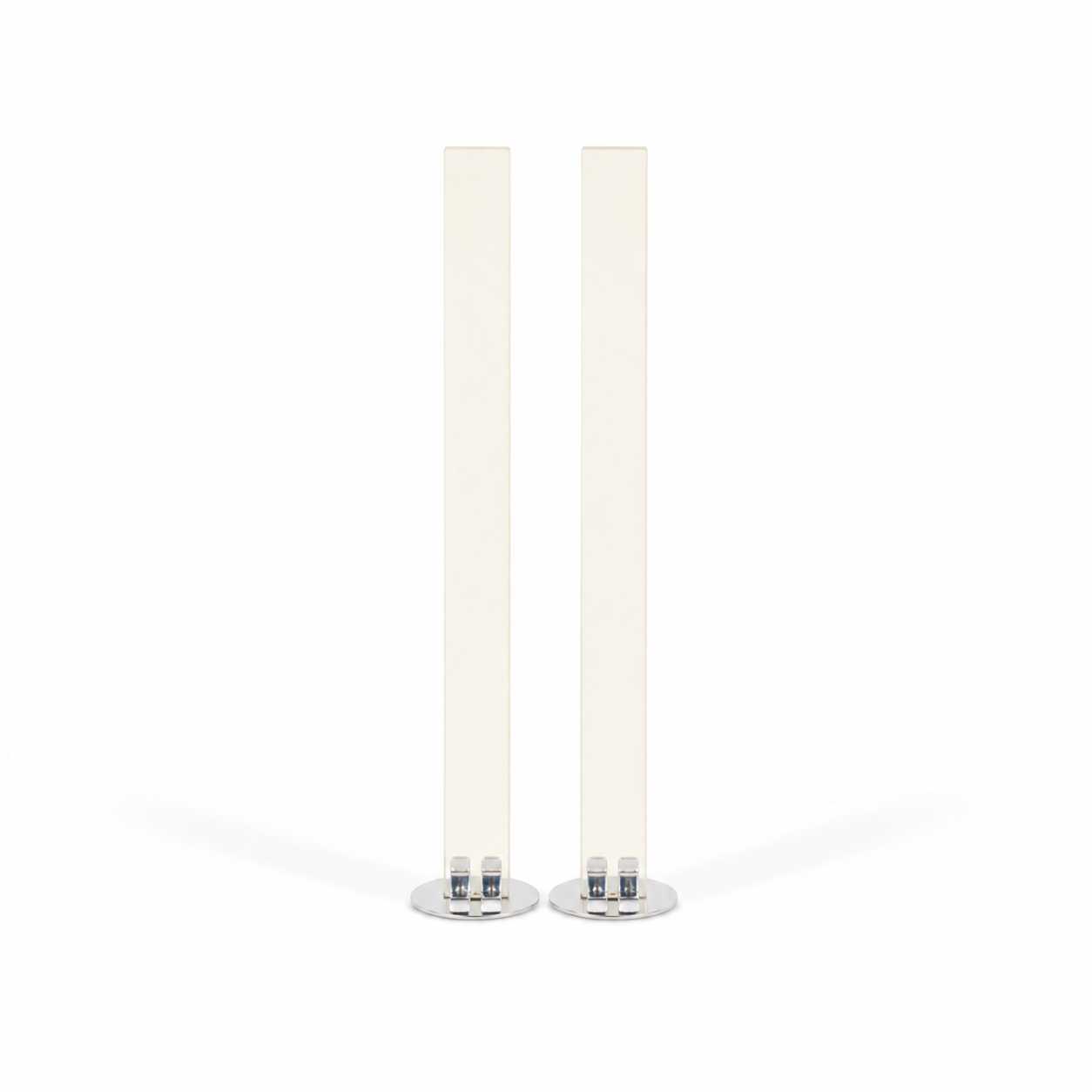
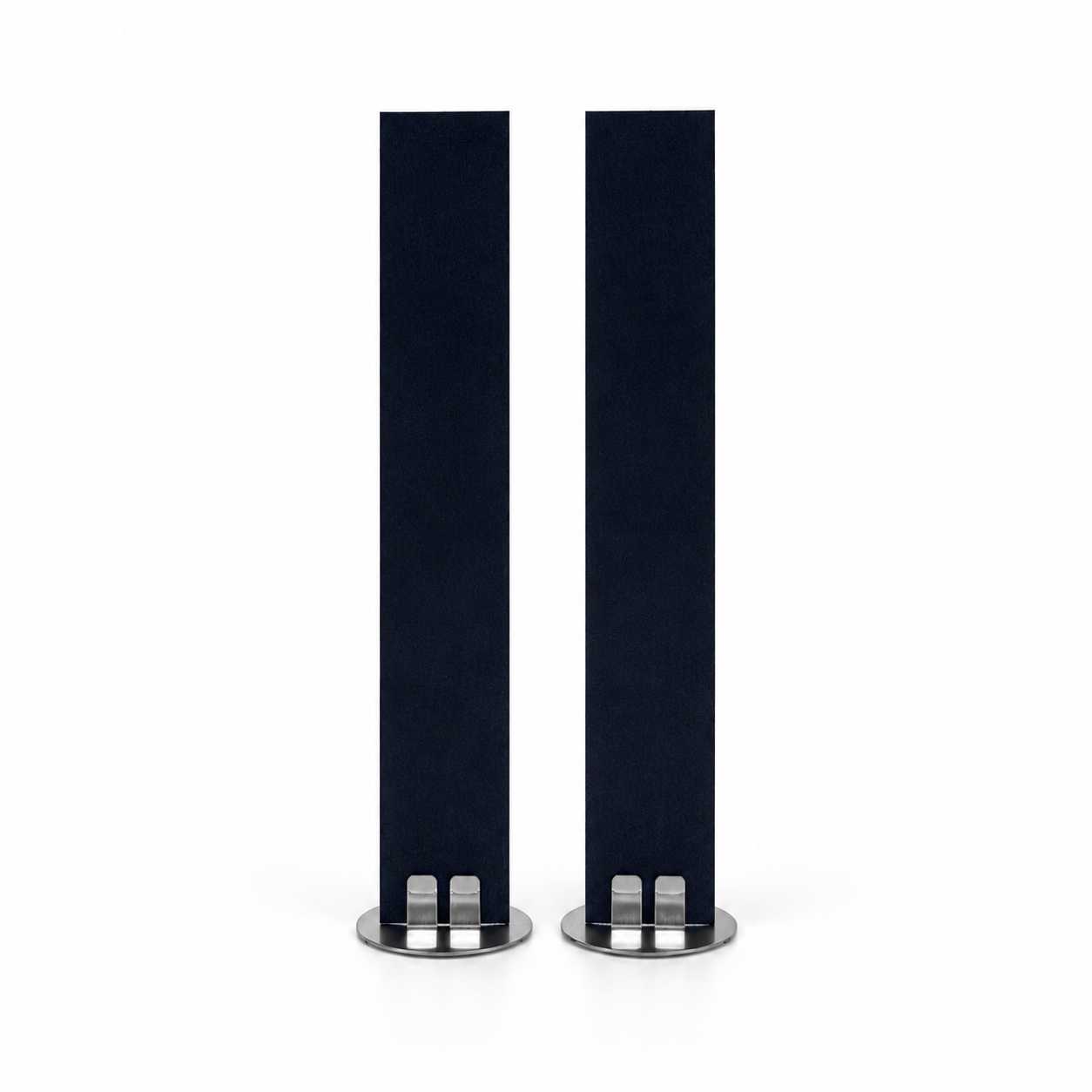
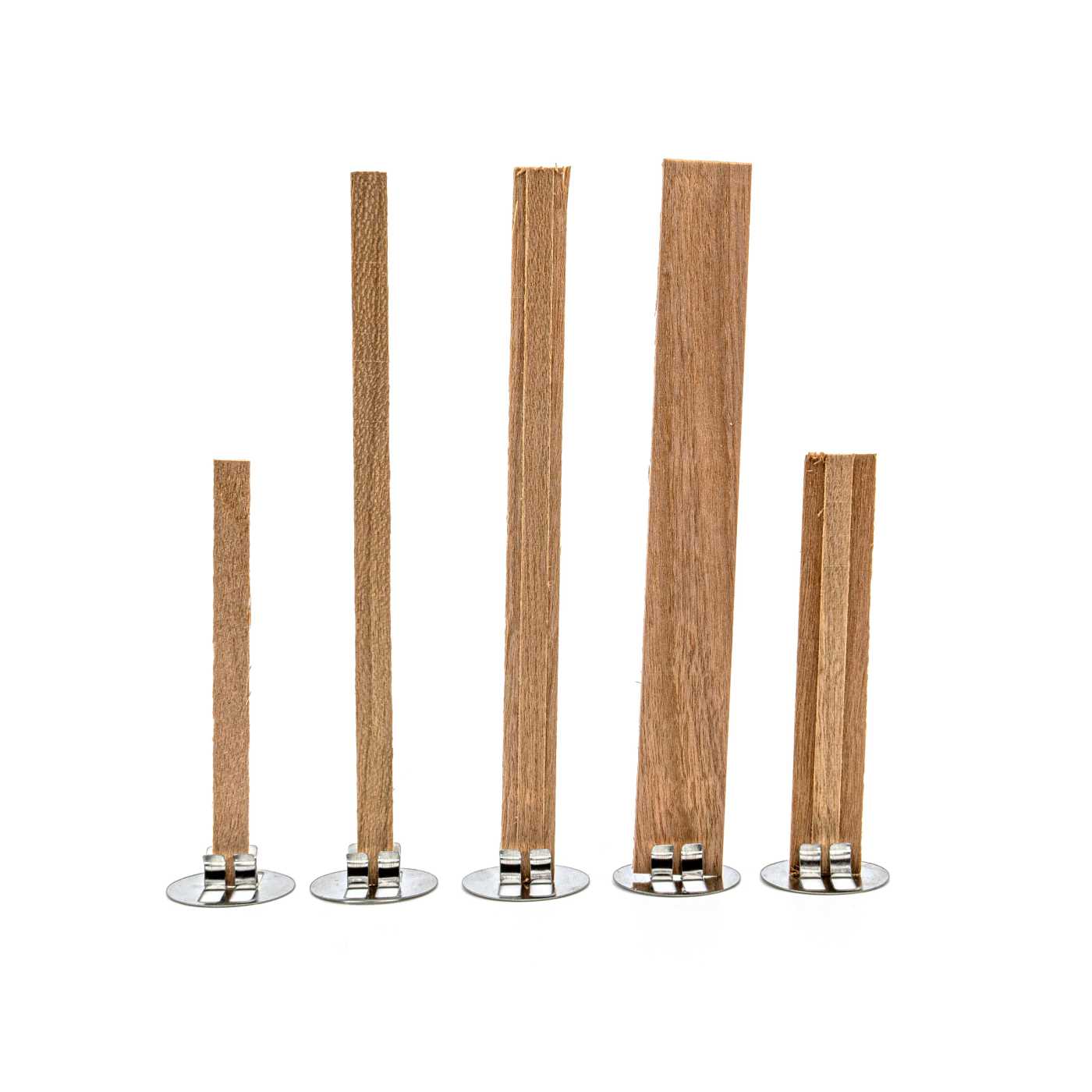
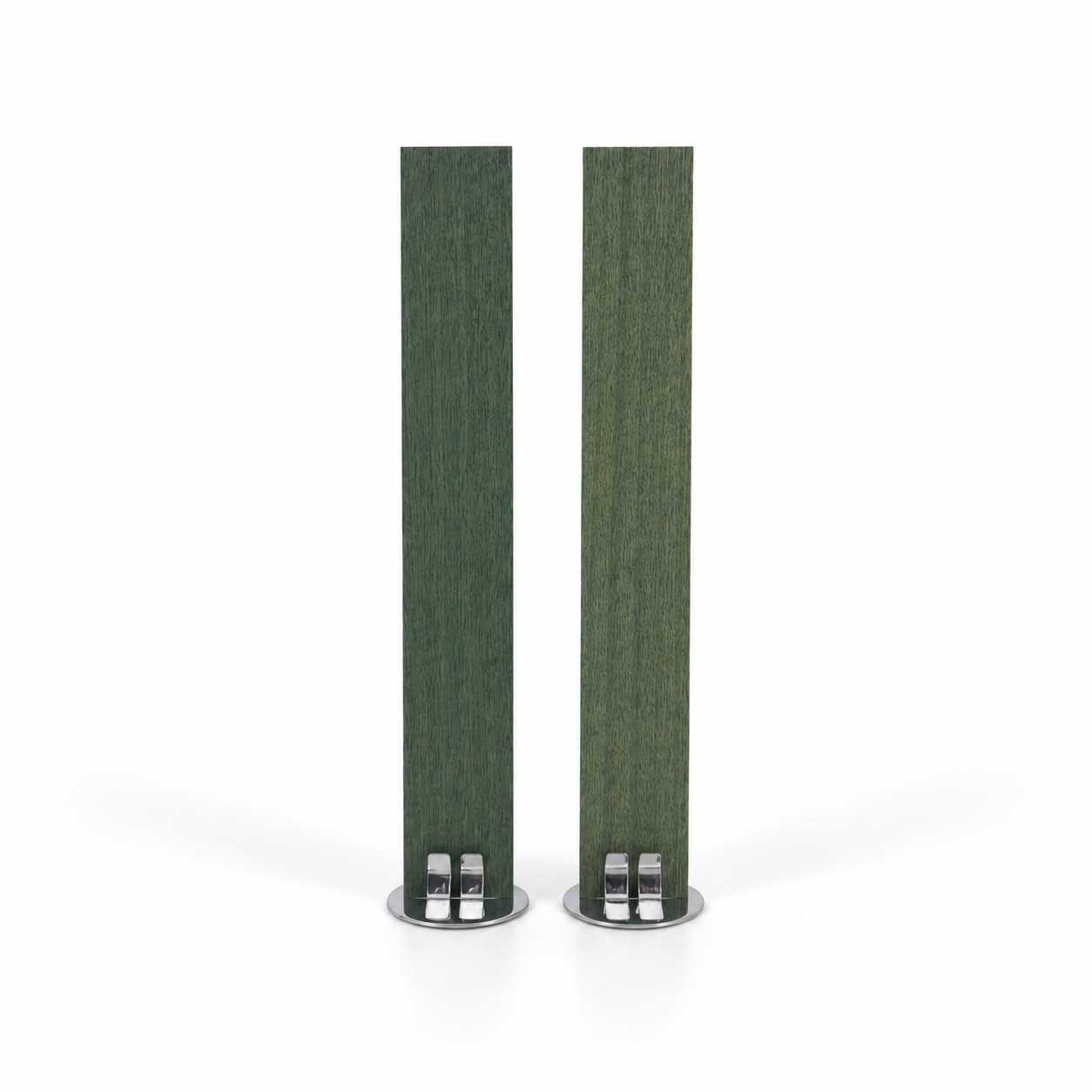
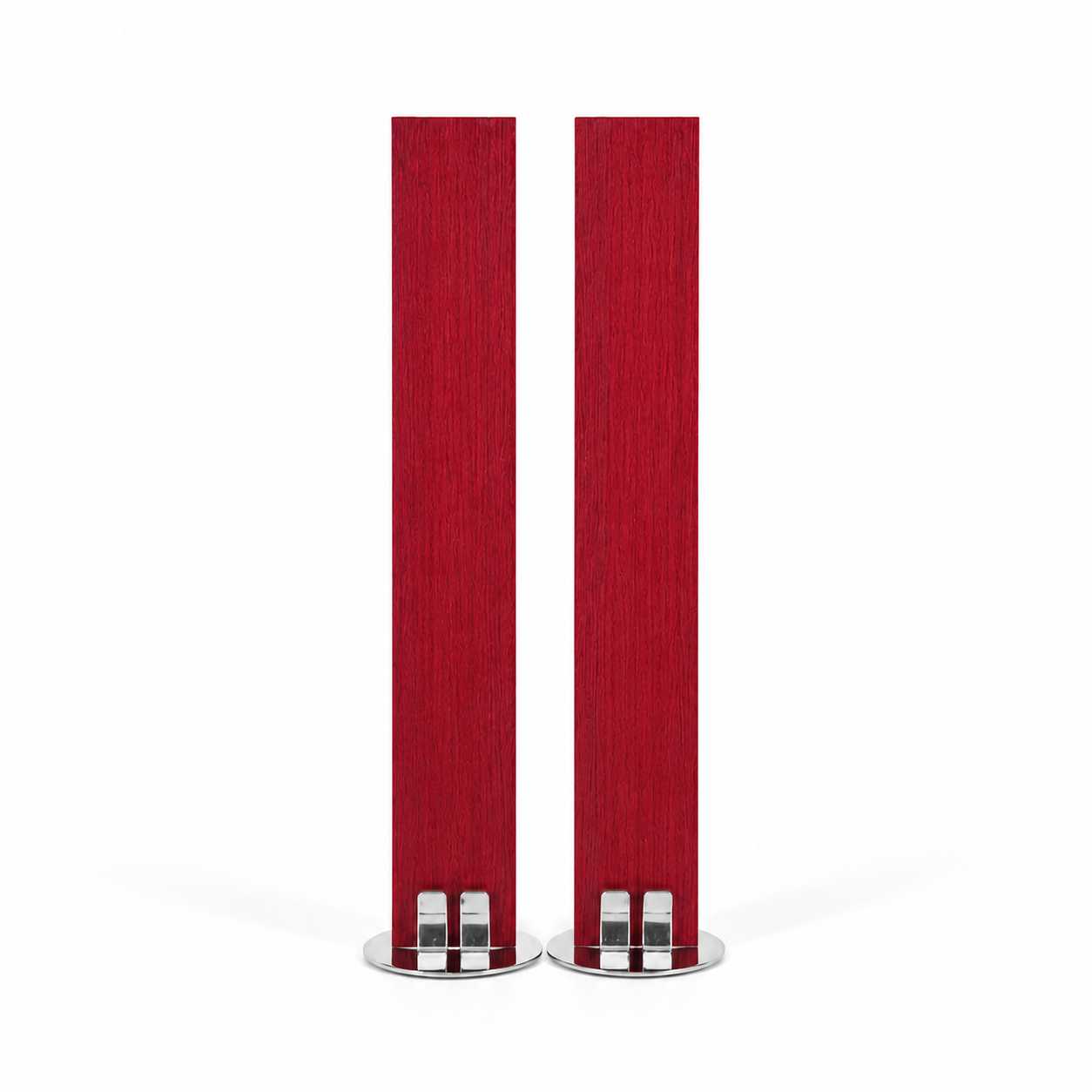
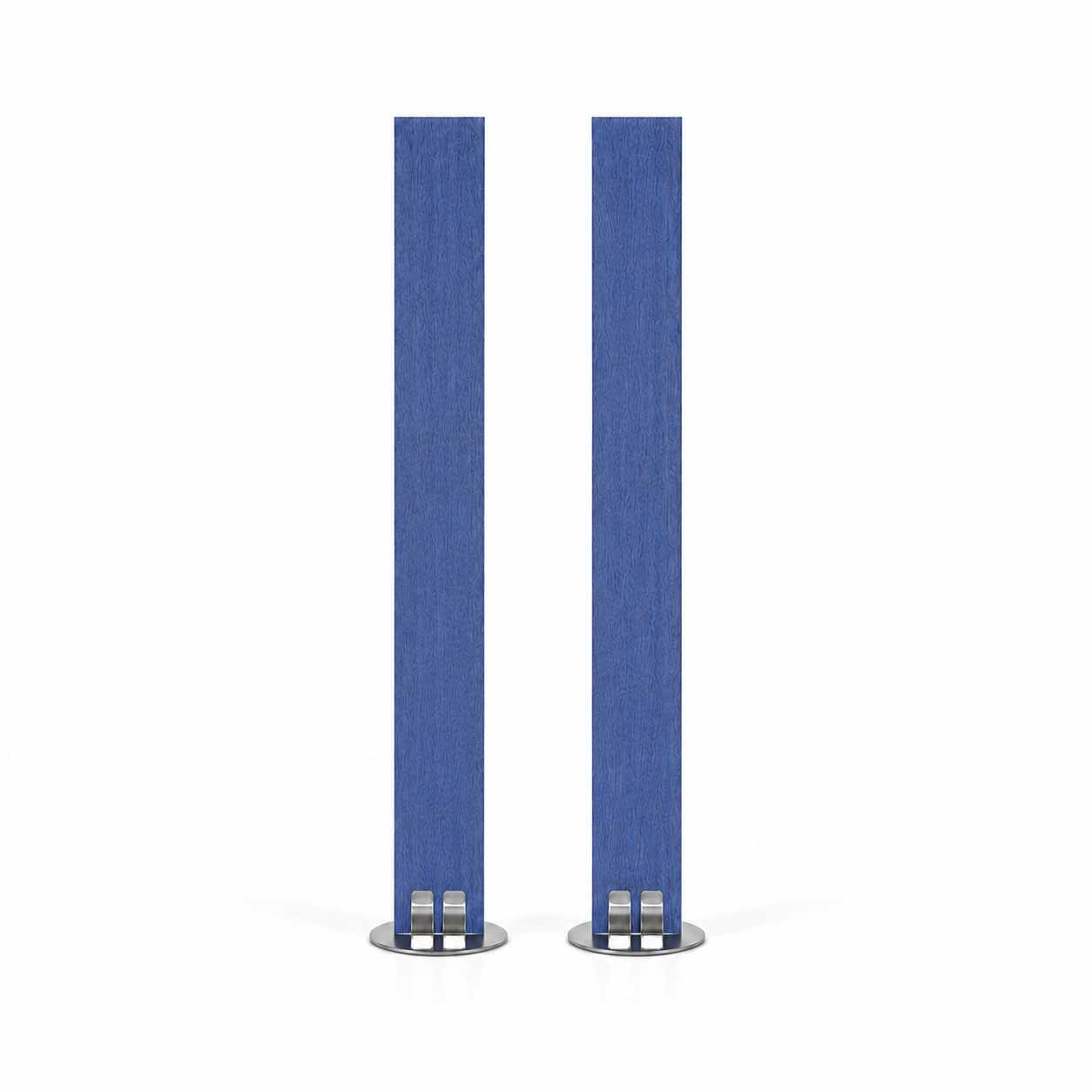
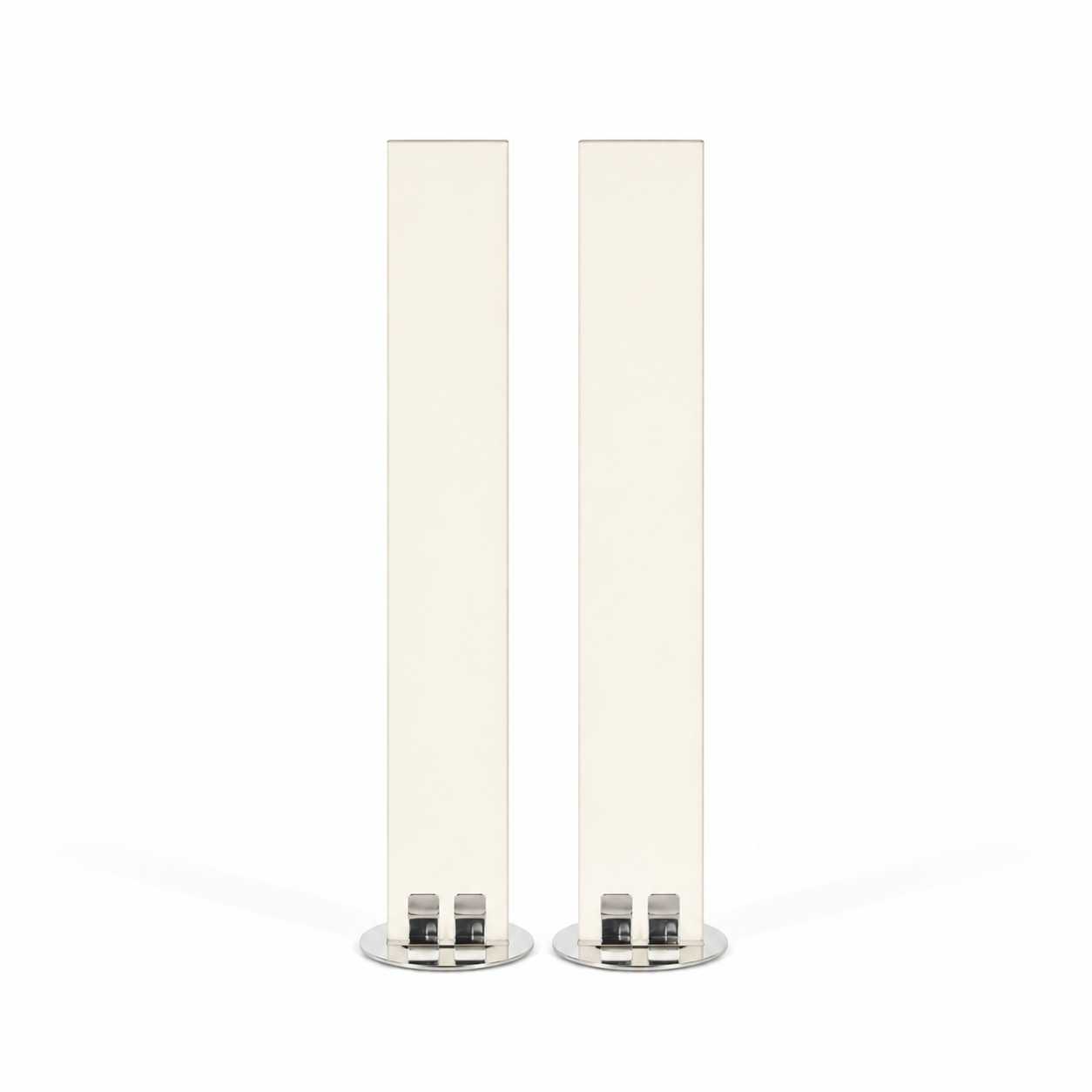
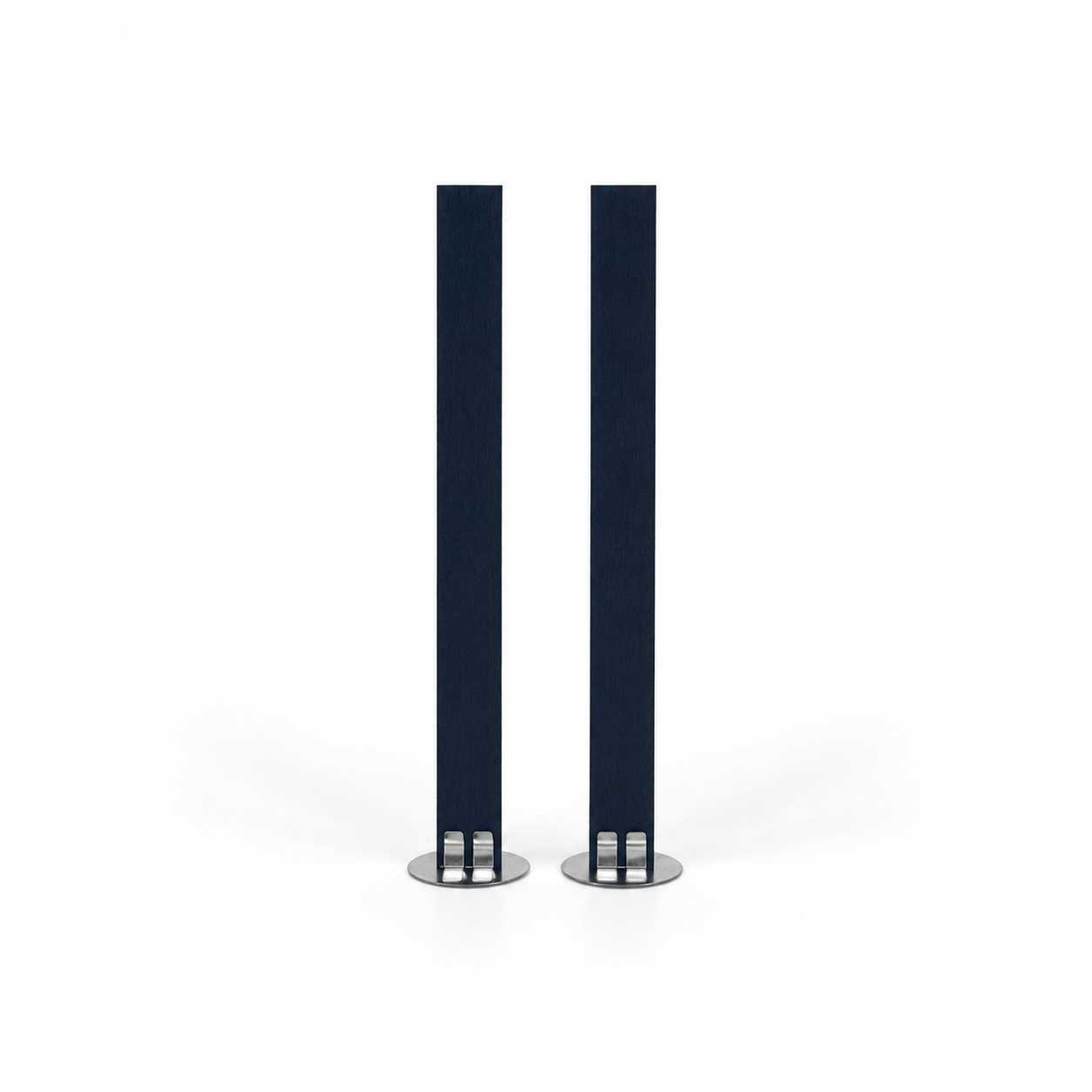
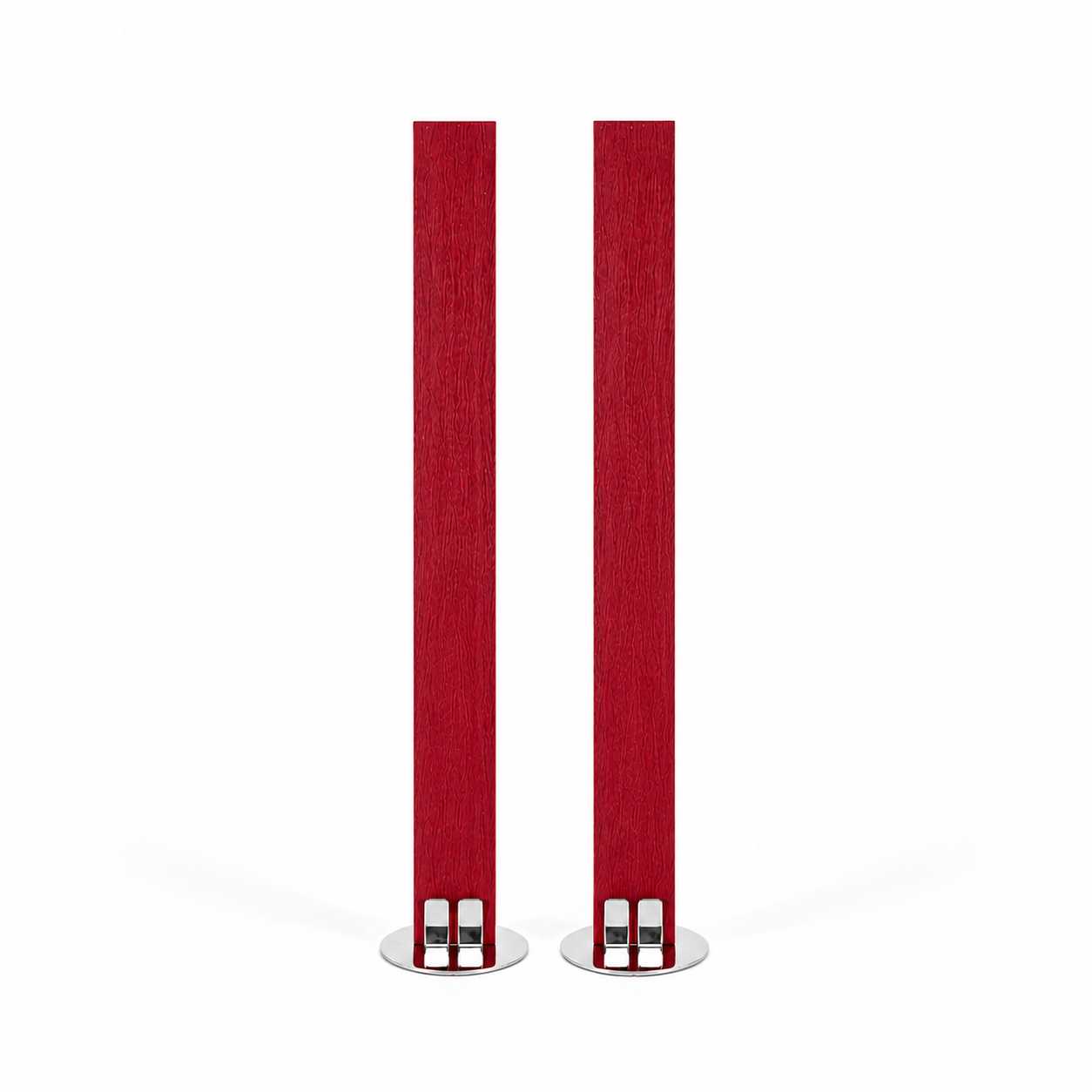
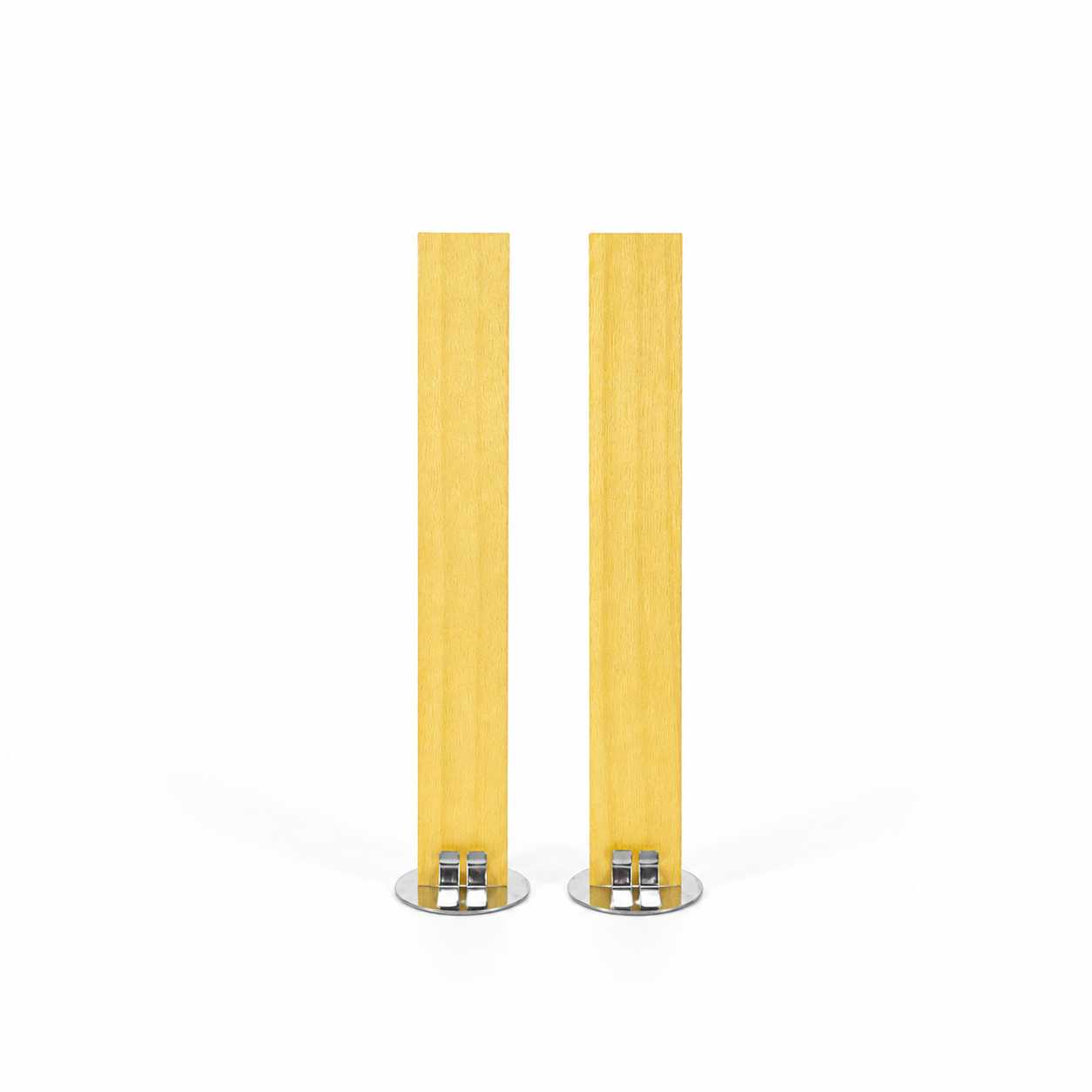
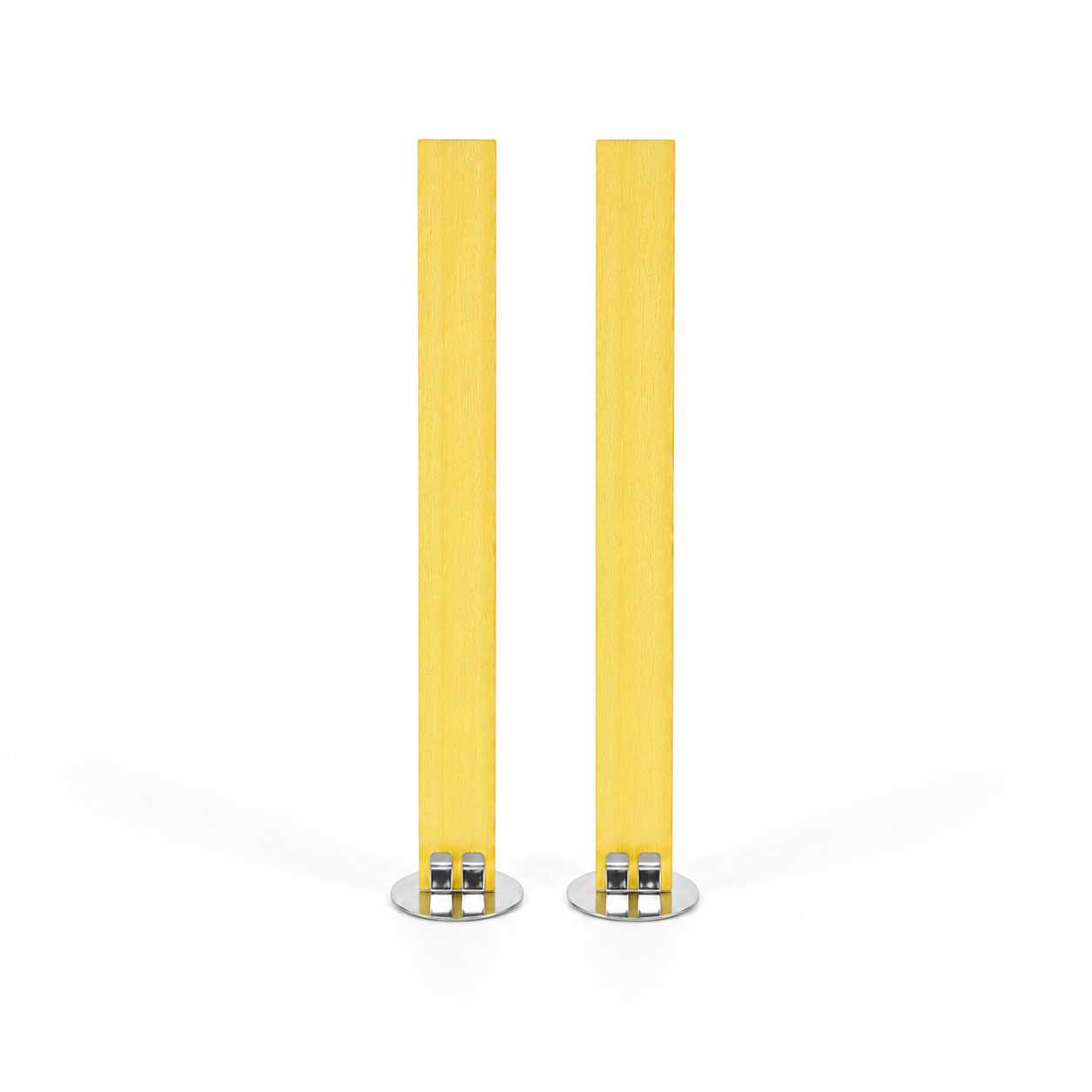
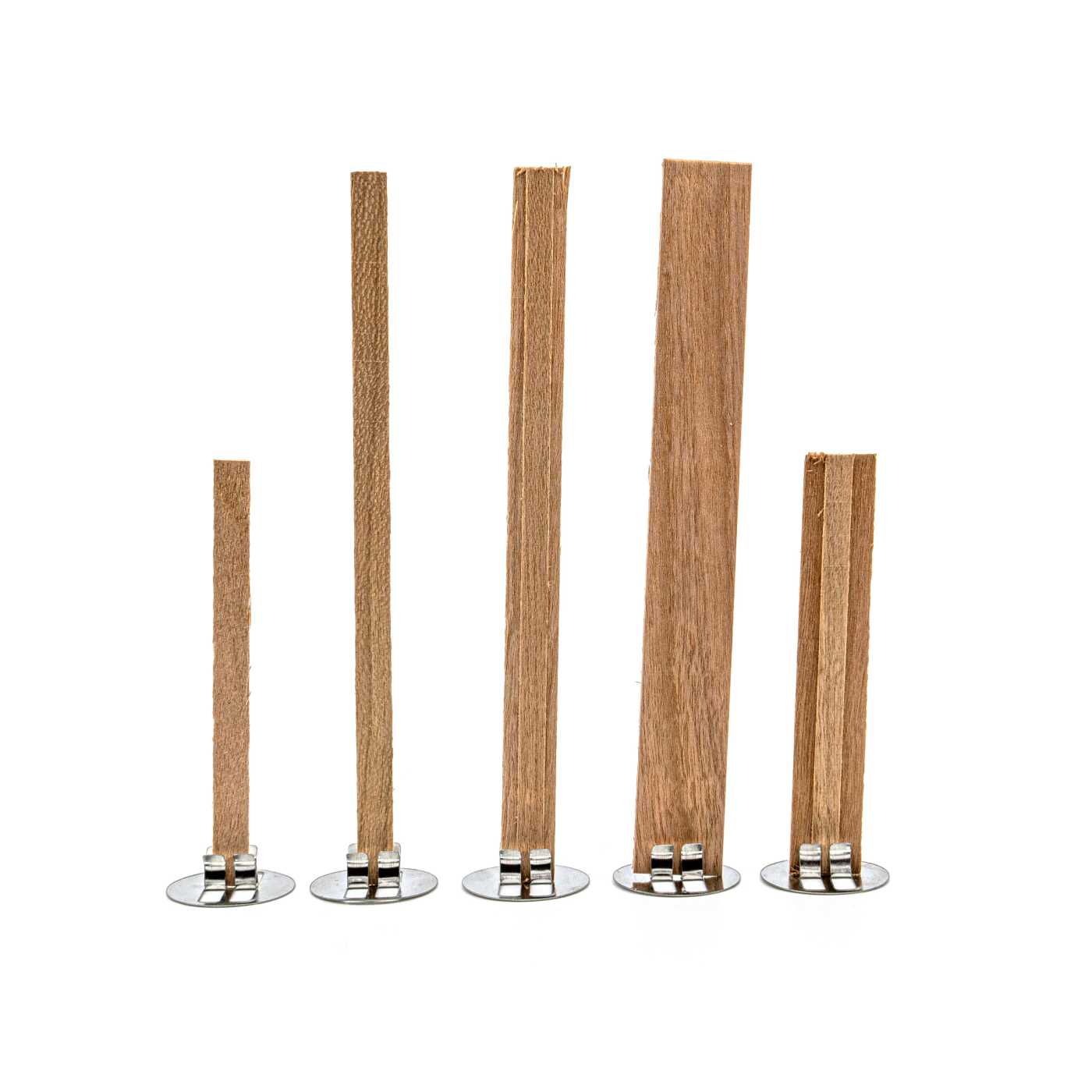
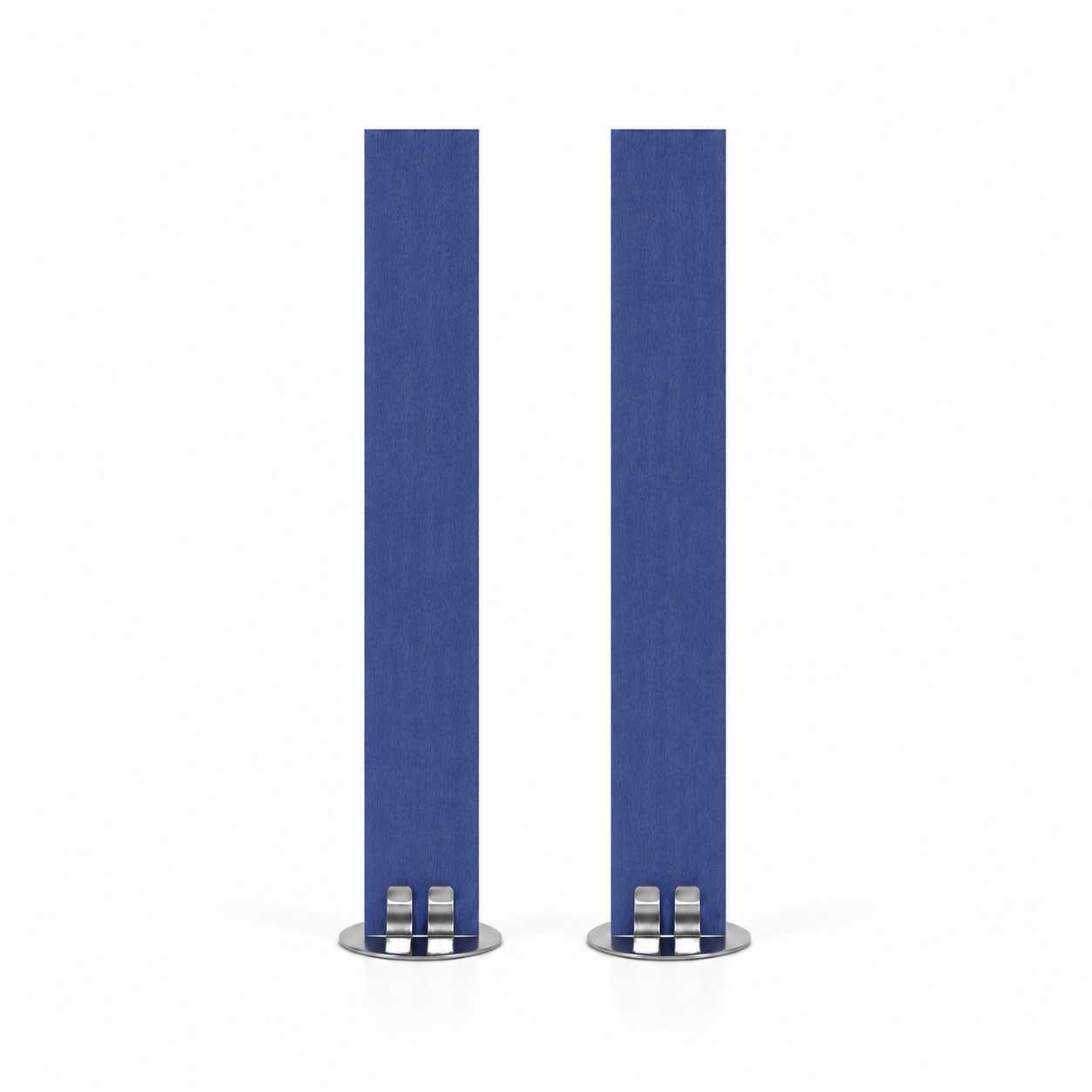
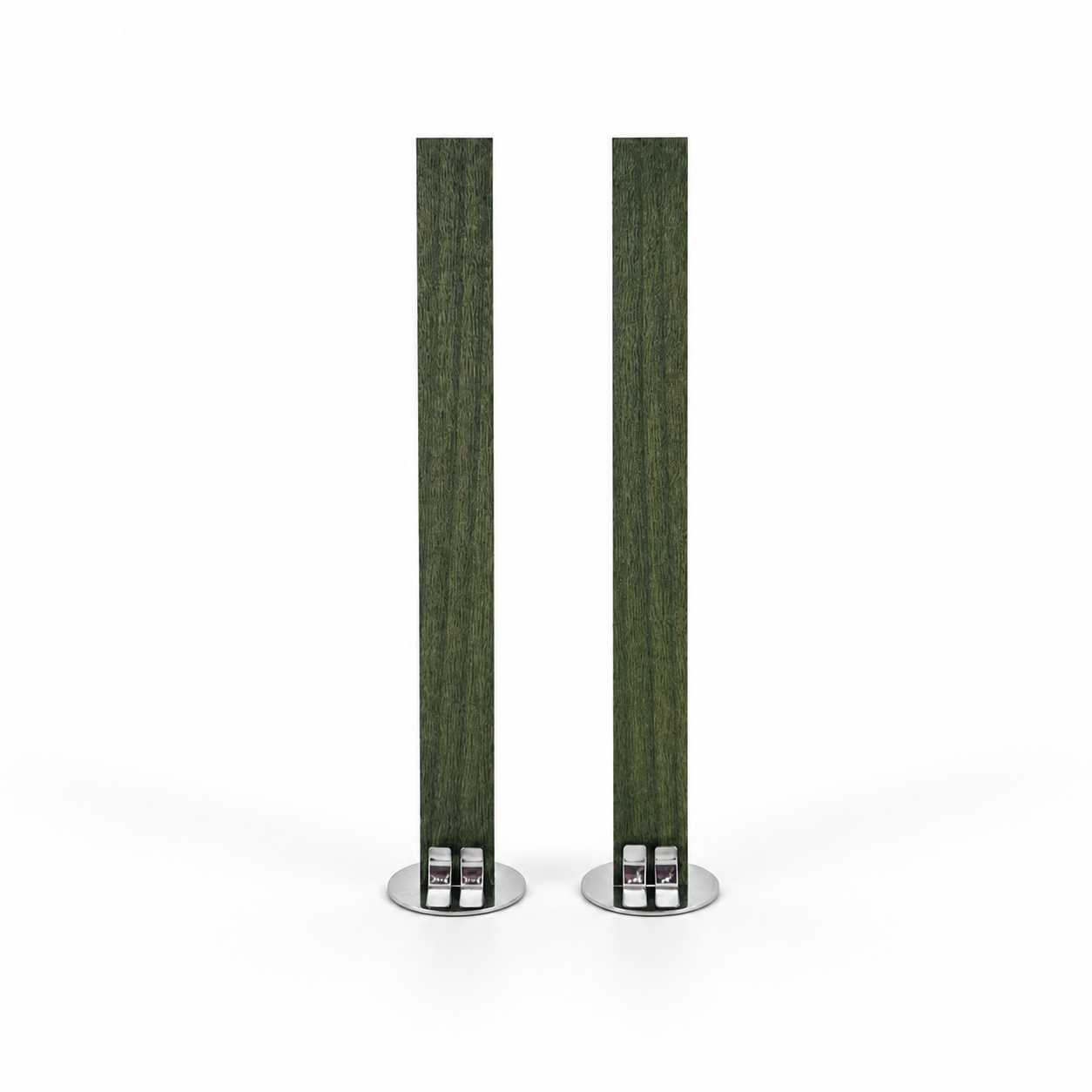
A wooden wick in a green shade is an alternative to cotton wicks for candle makers who want to give their candle a lower, wider flame and a characteristic gentle crackling while burning. It is supplied as a complete set with a sustainer: a flat wooden tab 12.7 mm wide and a round metal sustainer that holds the wick perpendicular to the bottom of the container. The coloured tab stands out especially in candles made in clear or light-coloured glass, where the wick becomes a visible design element even before the first lighting.
The wick is made from certified wood. The manufacturer describes it as natural, allergen-free and biodegradable.
Key features
- Single tab, thickness .02 – the .02 designation is the manufacturer's code for tab thickness; a higher number means a thicker tab. Thickness affects flame size and the rate at which wax melts.
- Flat shape, 12.7 mm wide – a flat wick burns across its full width, so the flame is lower and wider than with a cotton wick.
- Green colouring of the tab – the colour is a design element for candles where the wick is meant to be visible through the container wall or to match the wax colour.
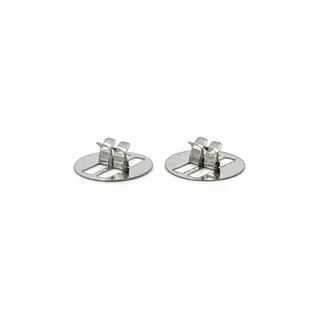
- Metal sustainer included – the circular base holds the tab upright and stable; no separate tab clip is needed. The sustainer is designed for straight, double and cross wooden wicks.
How to work with a wooden wick
Slide the tab into the slot of the metal sustainer and attach the sustainer to the bottom of the container using a wick sticker or hot-melt adhesive designed for wicks. Position the sustainer exactly in the centre. A flat wick that is off-centre melts the wax unevenly.
After pouring the wax and allowing it to set, trim the wick. Wooden wicks are trimmed shorter than cotton wicks – as a guide, to a few millimetres above the wax surface. A tab that is too long will smoke and produce an unstable flame.
The performance of a wooden wick depends on the container diameter, wax type and fragrance load. Before producing a larger batch, always make a test candle and check that the wax melts across the full diameter of the container without tunnelling and without excessive smoking.
Suitable for products such as
- Candles in glass containers – the most common application; a flat wick and wide flame suit containers with a consistent diameter.
- Candles made with plant-based waxes – soy, coconut, rapeseed wax and their blends are a common pairing with wooden wicks. Test performance in paraffin or beeswax, as harder waxes often require a different tab thickness.
- Designer and gift candles – a coloured wick visible through the glass and a soft crackling sound while burning are perceived by the customer as part of the overall experience.
Good to know
A wooden wick behaves differently from a cotton wick, so do not transfer cotton experience directly. The thinner .02 tab creates a smaller melt pool than thicker variants. If tunnelling occurs during testing in a wider container, move to a thicker tab rather than a longer wick.
Wood absorbs wax more slowly than cotton. The first lighting of the candle may therefore take a little longer, and the flame will stabilise after several tens of seconds. This is normal behaviour, not a wick defect.
A high fragrance or dye load can overwhelm a wooden wick. This shows up as a weak flame or spontaneous extinguishing. For such formulations, reducing the fragrance dosage or testing a different tab thickness usually helps.
The tab is made from natural wood, so the shade of the green colouring and the wood grain may vary slightly between individual pieces.
Trim the wick before each lighting and remove any charred edge from the tab. A long or charred wooden wick smokes and produces a flame that is higher than is safe for the container.
Frequently asked questions
Is the .02 wooden wick suitable for soy wax?
Yes, wooden wicks are commonly used with soy and other plant-based waxes. Plant-based waxes have a lower melting point and a flat wick creates an even melt pool in them. However, always verify suitability for the specific container and scented formulation with a test candle, as wick performance also depends on the container diameter and fragrance load.
What does the .02 designation on a wooden wick mean?
The .02 designation is the manufacturer's code for the thickness of the wooden tab – the higher the number, the thicker the tab. Thickness together with width determines how much wax the wick can vaporise, i.e. the flame size and the width of the melt pool. A thinner tab is better suited to smaller and medium containers; for wider containers, check by testing whether tunnelling occurs.
How is a wooden wick attached to the bottom of the container?
Slide the wooden tab into the metal sustainer that is included in the set, then glue the sustainer to the bottom of the container using a wick sticker or hot-melt adhesive. The circular base holds the wick upright during both pouring and setting. The sustainer is also suitable for double and cross wooden wicks if you use them in another product line.
Why does a wooden wick crackle while burning?
Gentle crackling is a natural characteristic of burning wood. Moisture and resins in the tab are released as it heats up and produce a soft crackling sound. This is not a defect or a sign of poor quality; many makers deliberately use it as part of the candle experience. The intensity of the sound varies depending on the wax type and wick length.
What is the difference between a wooden and a cotton wick?
A wooden wick burns with a lower, wider flame, crackles and creates a wide melt pool. A cotton wick has a taller, narrower flame and burns silently. A wooden wick is trimmed shorter and absorbs wax more slowly, so the candle takes slightly longer to come up to flame. Test the wick choice again with every new wax and container combination – experience with cotton does not transfer to wood automatically.



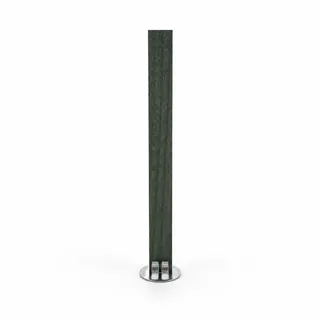 Wooden wick, .02 green, 12.7 mmDrevený knôt, .02 zelený, 12,7 mm ZASOBA