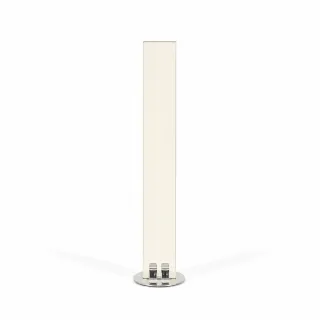
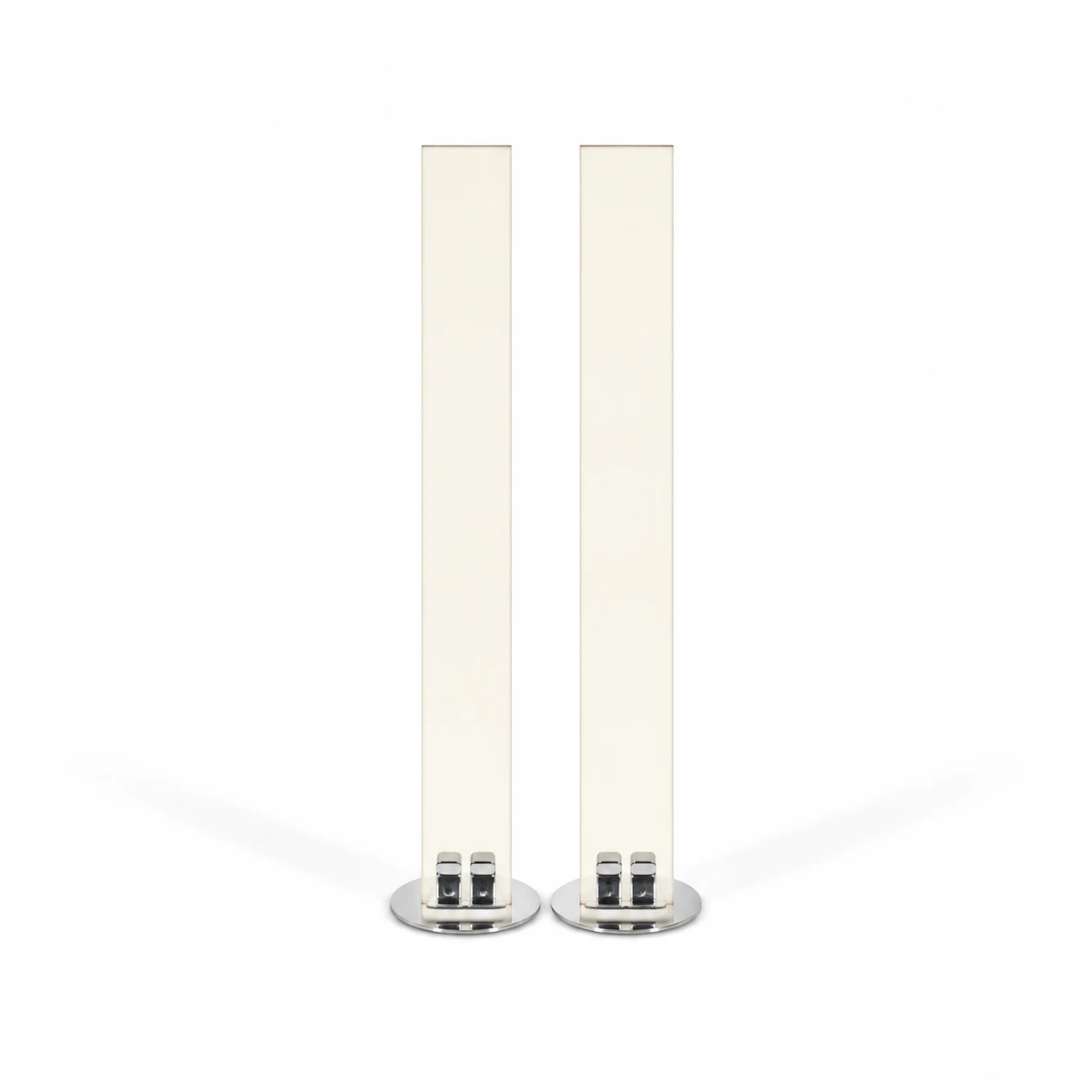
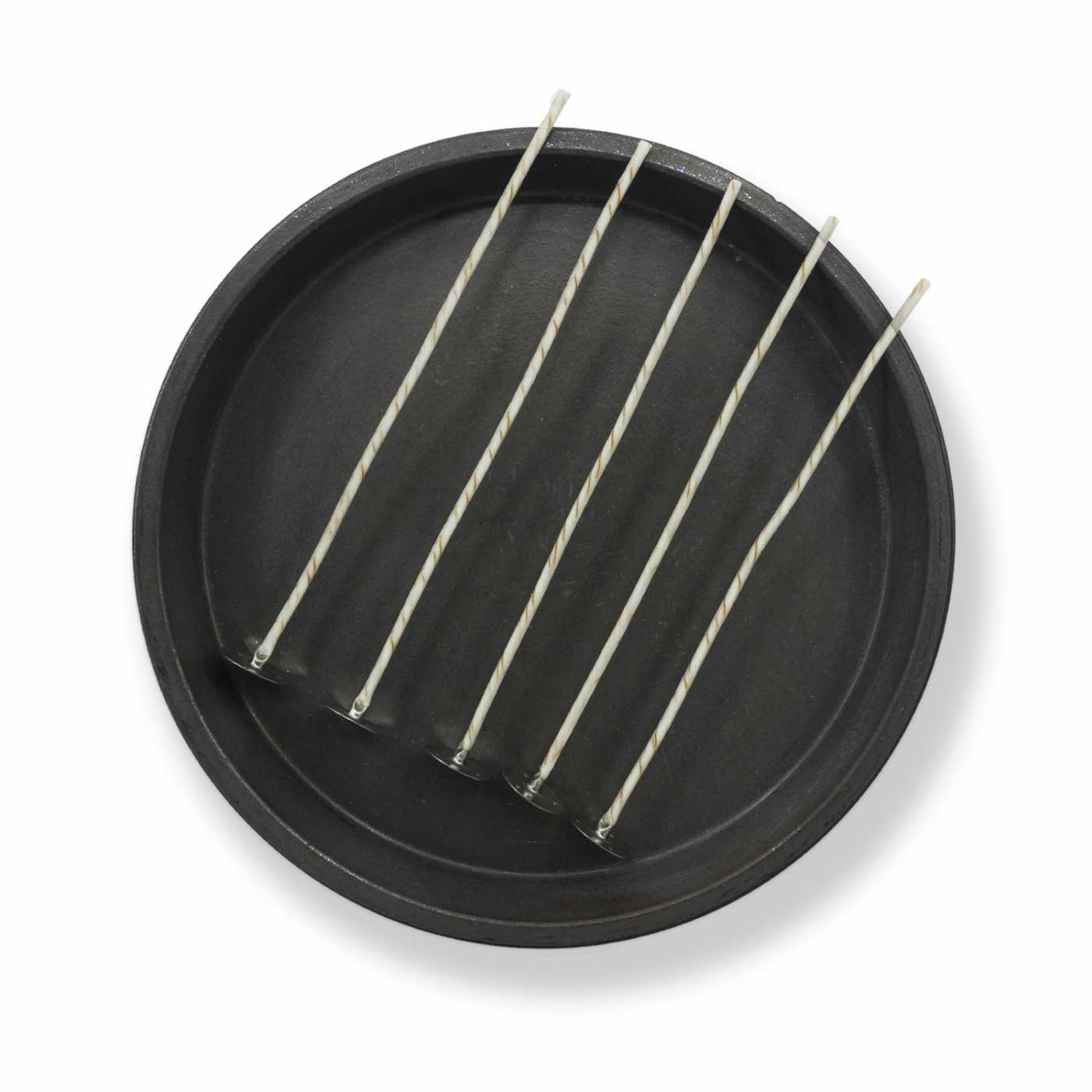
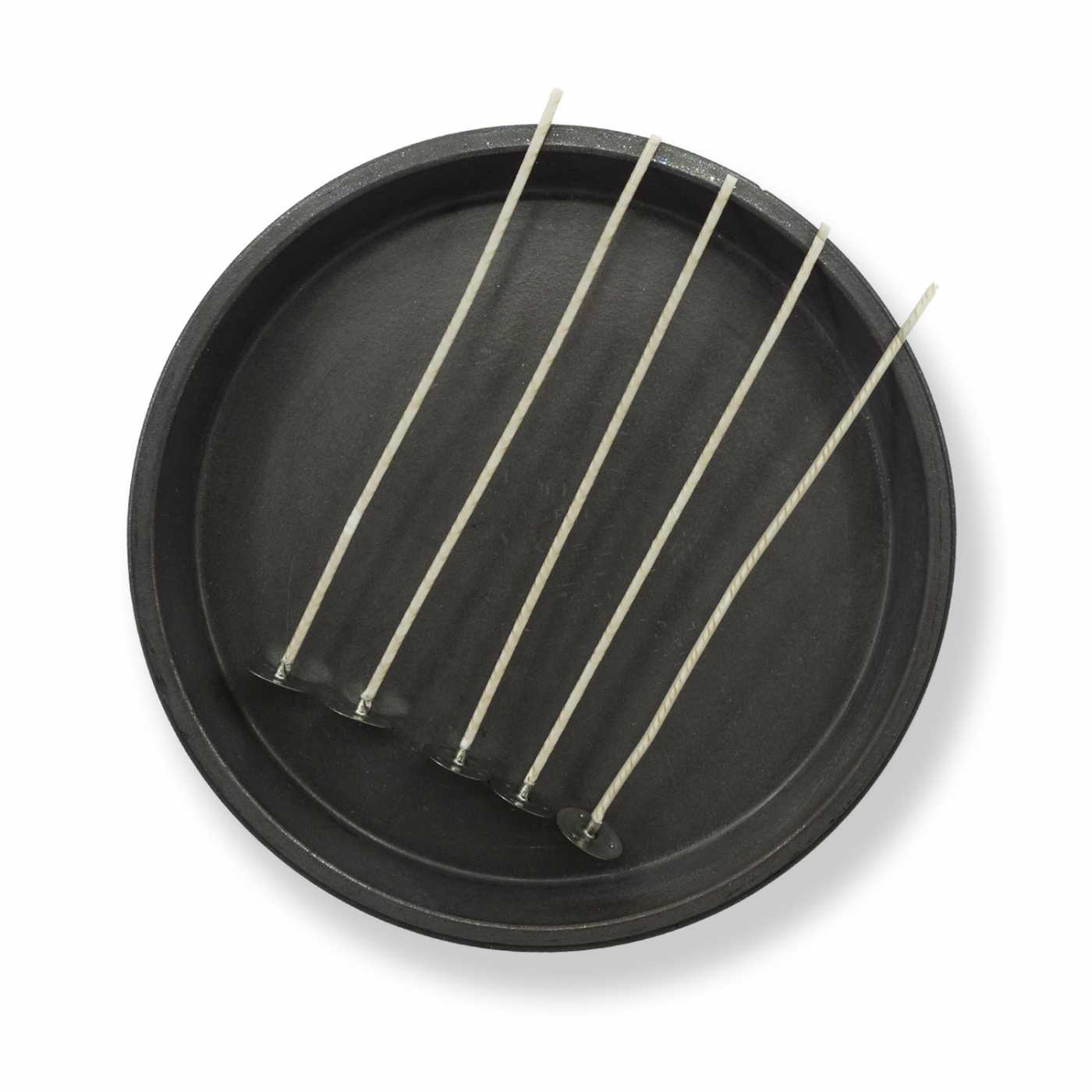
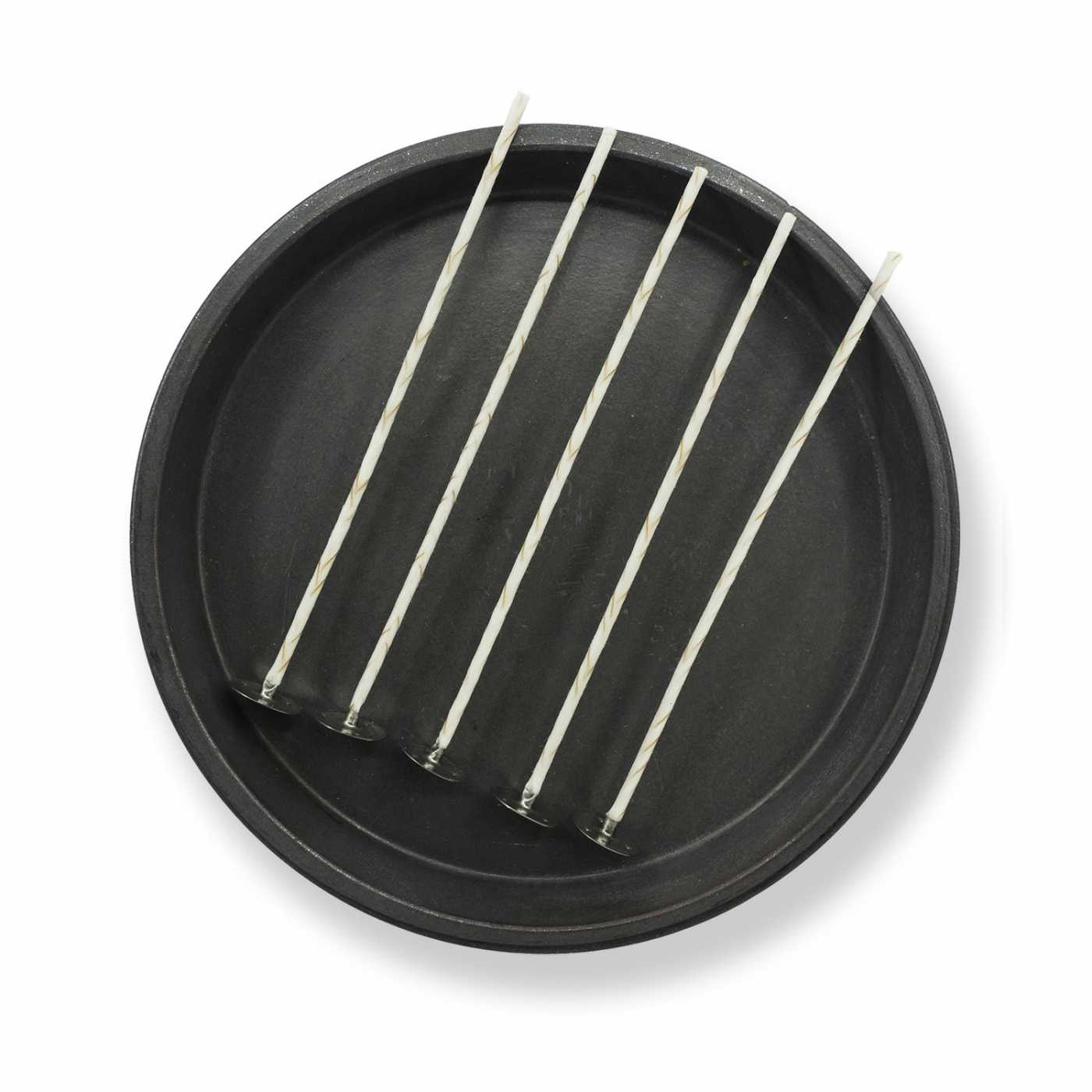
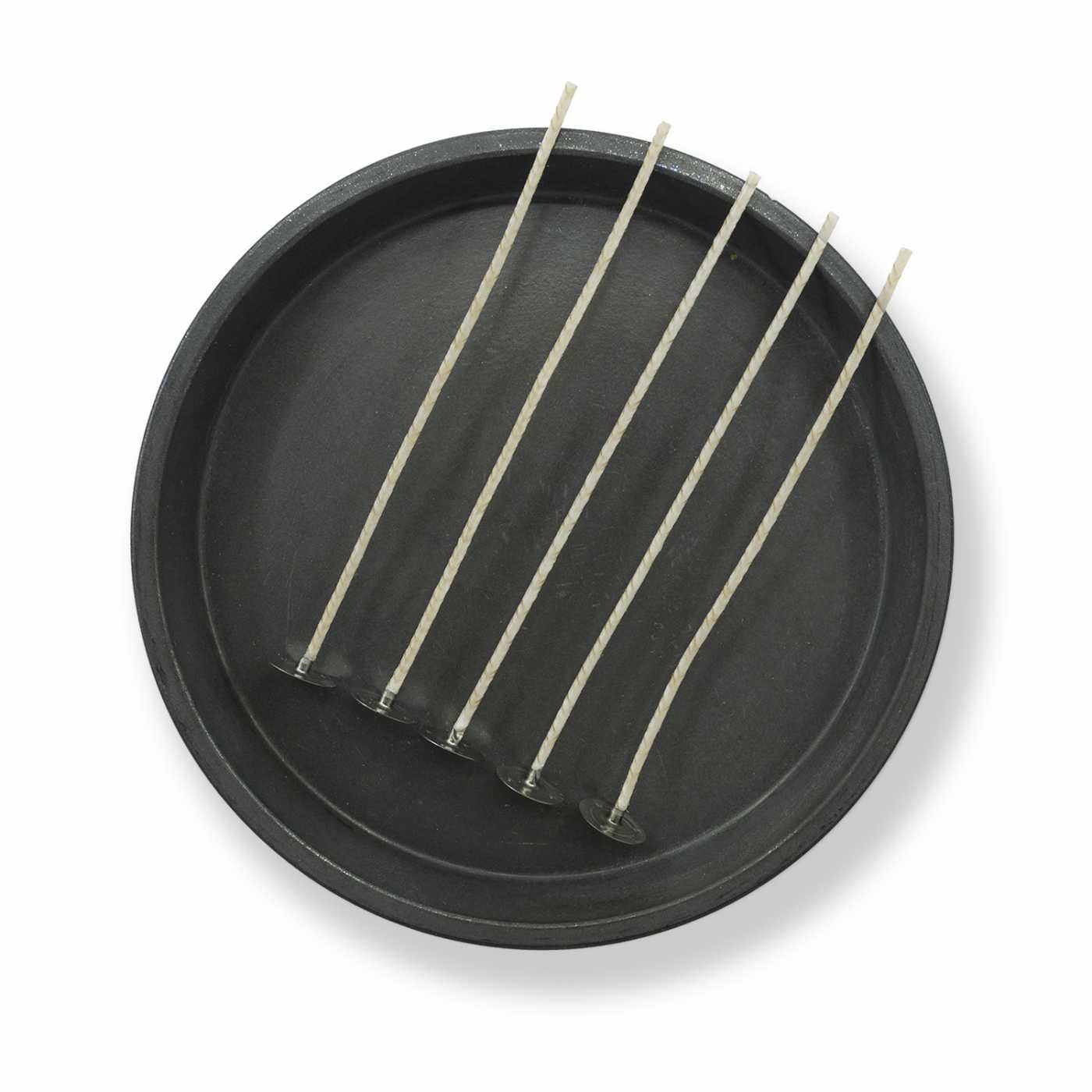
Wooden wick .02 white with a width of 15.9 mm is a flat single-strip wooden wick for making container candles. It is an alternative to cotton wicks for makers who want to give their candle a different burning character: a wide, low flame, a gentle crackling reminiscent of a fireplace, and a more evenly melted wax pool. The white finish of the strip suits pale and uncoloured waxes where the wick should appear subtle and clean.
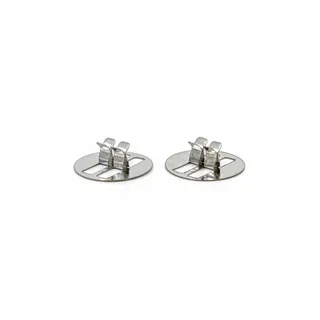
The product is supplied complete with a stand – a round metal holder that keeps the wick upright at the bottom of the container. A separate sustainer tab is not needed, nor is there any need to figure out how to anchor the strip inside the vessel.
Why choose a wooden wick
- Burning character – the wooden strip burns with a flat, wider flame than a cotton wick and crackles gently while burning. The candle thus creates a different impression not only visually but also audibly.
- Wide melt pool – the flat wick melts wax outwards, which helps reduce tunnelling (burning only in the centre of the container) and promotes fragrance throw across the full surface.
- Natural material – the strip is made from certified wood. The manufacturer states that the wick is natural, free from allergens, and biodegradable.
- Appearance – the white strip suits candles where a visible wick is part of the design: pale soy and coconut waxes, minimalist glass containers, gift candles.
How to work with the wick
The strip is inserted into the slot of the metal stand and the stand is fixed to the bottom of the container – most commonly with a wick sticker or a small amount of melted wax allowed to set. The stand should sit exactly in the centre of the container. With a flat wick it is advisable to orient the strip so that its wide side runs parallel to the longest dimension of the container.
After pouring, the wick is trimmed only once the candle has fully hardened. Wood absorbs wax, so it is sensible to let the candle rest for a few days before the first light – a well-soaked strip burns more steadily.
A wooden wick is trimmed significantly shorter than a cotton one – just a few millimetres above the wax surface. A strip that is too long burns with a tall flame, smokes, and produces soot; one that is too short will drown in the melted wax and go out.
Strip thickness and size selection
The designation .02 indicates the thickness of the wooden strip according to the manufacturer's system – a higher number means a thicker strip. Thickness combined with width determines how much wax the wick can vaporise, and therefore which container diameter and wax type it is suited to. A thinner strip burns with a smaller flame and suits narrower containers; a thicker one can handle a larger diameter and a denser wax.
This is a single-strip wick (single-ply). If the flame is weak in a particular wax, performance can be increased by using a double or cross wick. The metal stand included in the set holds straight, double, and cross wooden wicks alike.
We do not specify a container diameter for this thickness. The correct wick size must always be verified with a test burn in the specific wax, with the specific fragrance oil, and in the specific container – this applies even more to wooden wicks than to cotton ones.
Which candles it suits
- Container candles in glass – the most typical use; the stand is fixed to the bottom and the glass maintains the shape of the melt pool.
- Soy, coconut, and rapeseed wax candles – softer plant-based waxes with a lower melting point are commonly paired with wooden wicks; blends containing paraffin should be tested.
- Scented candles – the wide melt pool promotes fragrance throw. Fragrance oil changes burning behaviour, however, so tests are always carried out with the final formulation.
- Design and gift candles – the white strip is a visible element that complements pale wax and simple labels.
Wooden wicks are not recommended for freestanding pillar candles without a container – there is no wall to keep the melted wax around the wide flame.
What's good to know
- The first burn matters – let the candle burn on first light until the wax pool has reached the container walls. Otherwise a tunnel forms that is difficult to correct later.
- Lighting – a wooden strip ignites more slowly than a cotton wick. It helps to tilt the candle and let the lighter flame travel along the entire top edge of the strip rather than just one corner.
- Weak flame or extinguishing – most commonly indicates a wick that is too short, an overly saturated strip, or a wax that is too dense for the given thickness. Removing the carbonised layer from the top edge helps; switching to a double wick is another option.
- Crackling – depends on the wax and the moisture content of the wood, and may vary between different wax batches. This is not a wick defect.
- Stand – the metal sustainer remains at the bottom of the container after the candle has burned down. The flame therefore goes out before it reaches the very base.
Every recipe change – a different wax, a higher fragrance oil load, a different container diameter – requires a new burn test. Results from one combination cannot be transferred to another.
Frequently asked questions
How is a wooden wick secured in the container?
The wooden wick is inserted into the metal stand supplied with the product and the stand is adhered to the bottom of the container with a wick sticker or a drop of melted wax. The stand holds the strip upright during pouring and setting, so the wick does not tilt. Once the candle has hardened, the strip is trimmed to the required height above the wax surface.
How high should a wooden wick extend above the wax?
A wooden wick is trimmed to just a few millimetres above the wax surface – significantly shorter than a cotton wick. A strip that is too long burns with a tall flame and produces soot; one that is too short drowns in the melted wax and goes out. Before each subsequent light it is advisable to remove the carbonised layer from the top edge of the strip.
Which wax is wooden wick .02 suitable for?
Wooden wick .02 is commonly used in container candles made from softer plant-based waxes – soy, coconut, or rapeseed. We do not specify a particular wax and container diameter for this thickness, so suitability must be verified with a test burn using the final formulation including fragrance oil.
What does the thickness designation .02 on a wooden wick mean?
The designation .02 is the thickness of the wooden strip according to the manufacturer's system, where a higher number means a thicker strip. Thickness together with the width of 15.9 mm determines how much wax the wick vaporises and how wide a flame it produces. If the flame is too weak for a given wax, performance is increased by using a double or cross wick rather than by lengthening the strip.
Why does a wooden wick go out or burn weakly?
A wooden wick most often goes out because it is too short, the strip is saturated with wax, or the wax is too dense for the given thickness. It helps to remove the carbonised layer, let the candle rest for a few days after pouring, and melt the pool all the way to the container walls on the first burn. If the problem persists, the formulation requires a thicker or double wick.
Can a wooden wick be used in a pillar candle without a container?
A wooden wick is not recommended for freestanding candles without a container. The flat strip melts wax outwards and, without the container wall, the melted wax runs down the sides, the flame becomes unstable, and the candle burns unevenly. This wick with its stand is intended primarily for glass and other container candles.