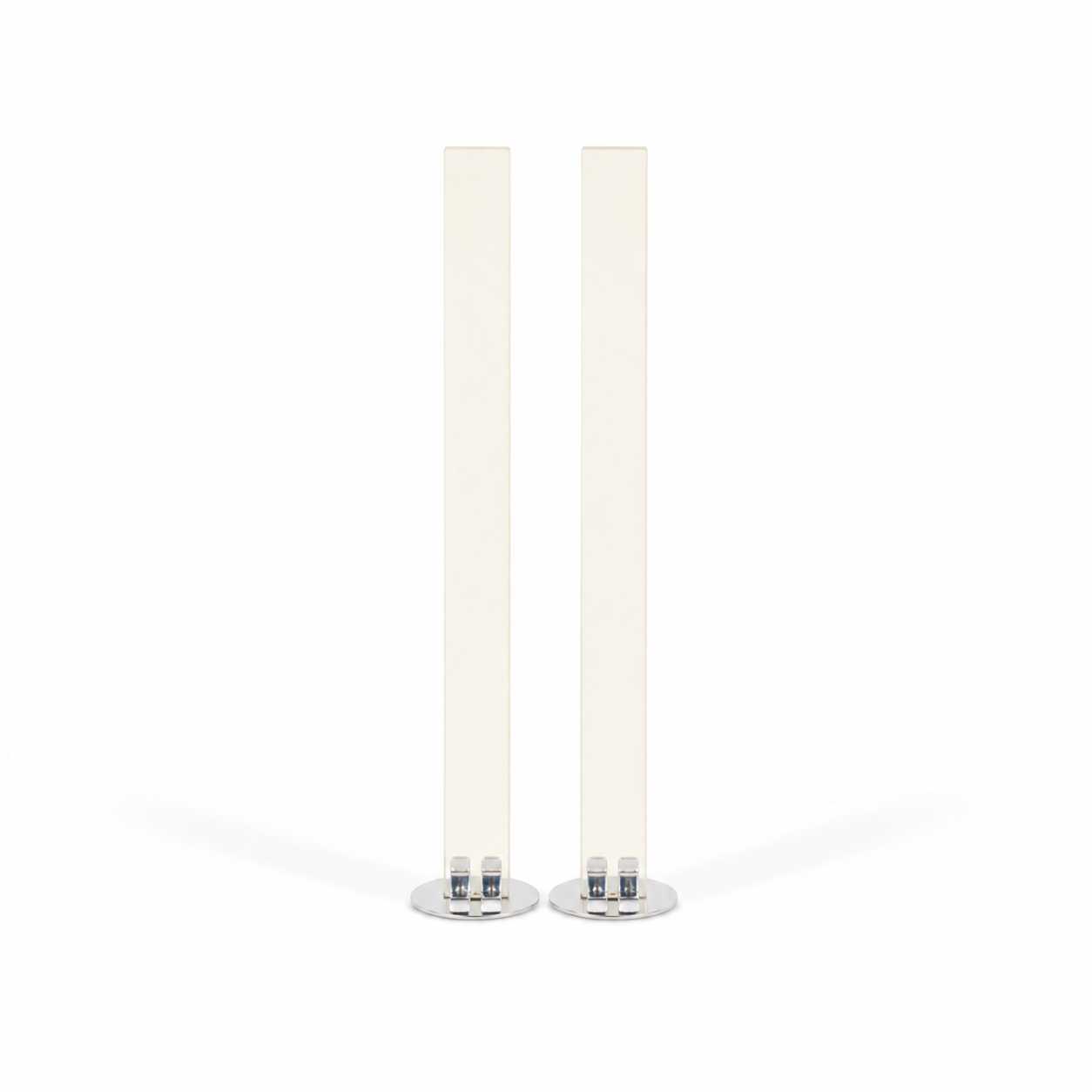
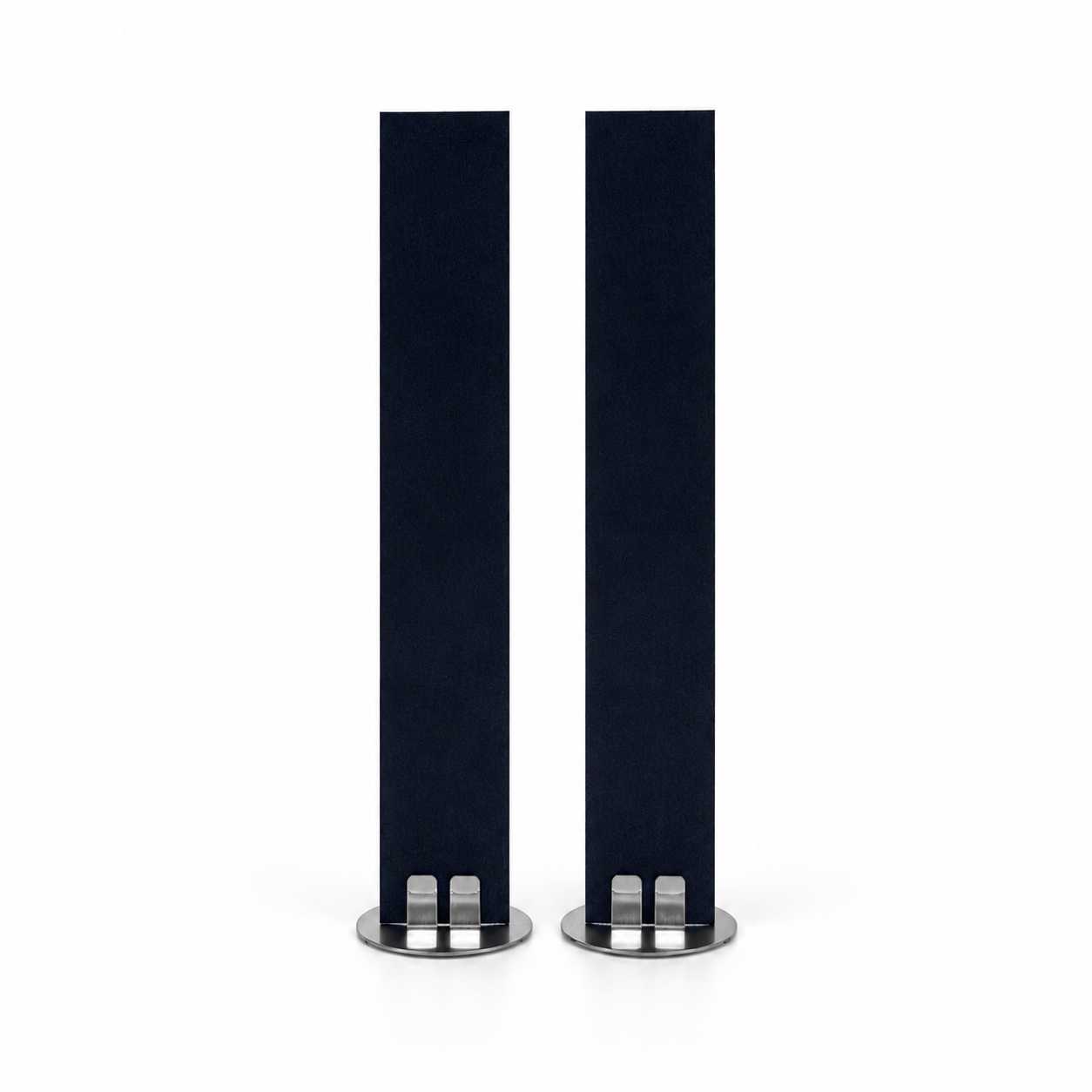
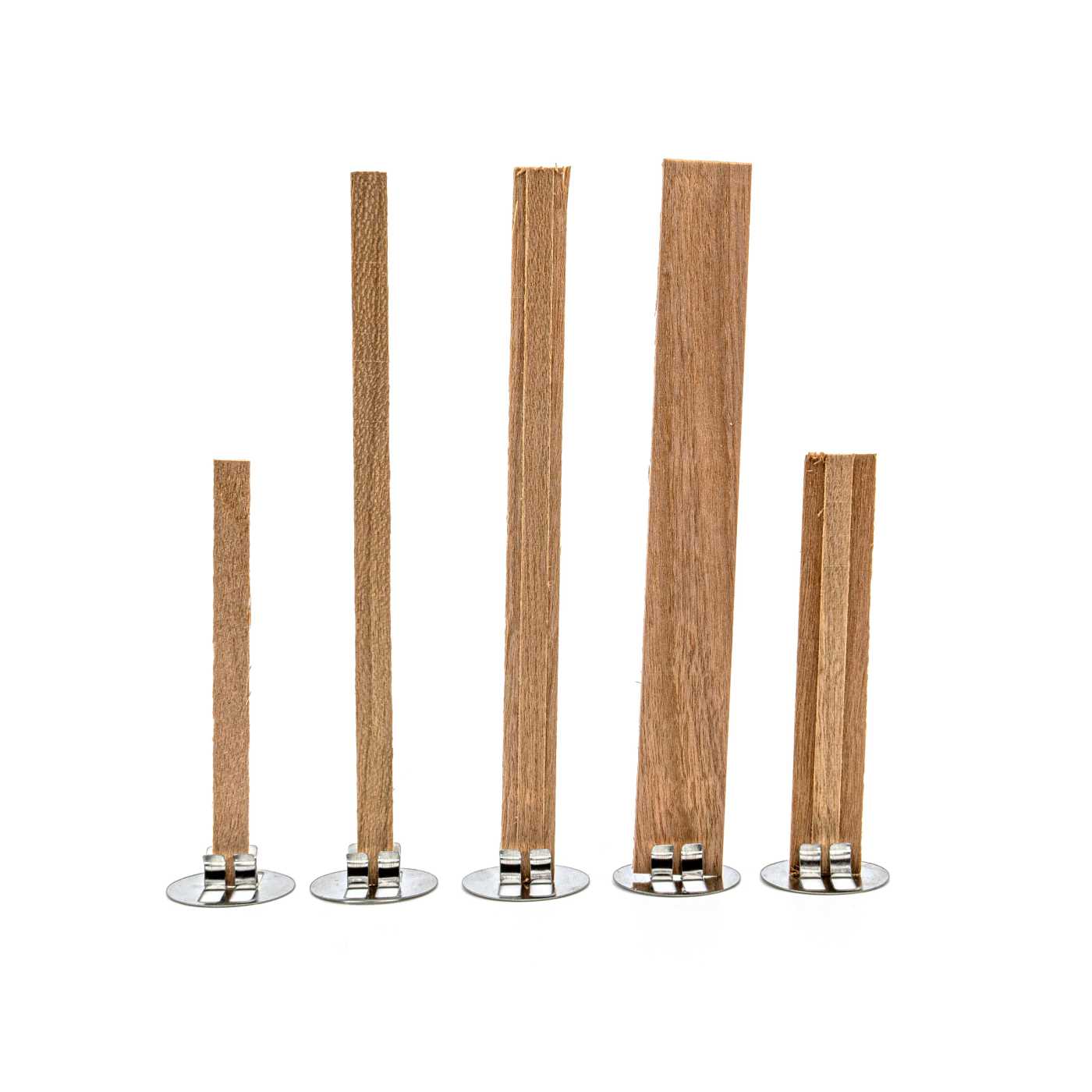
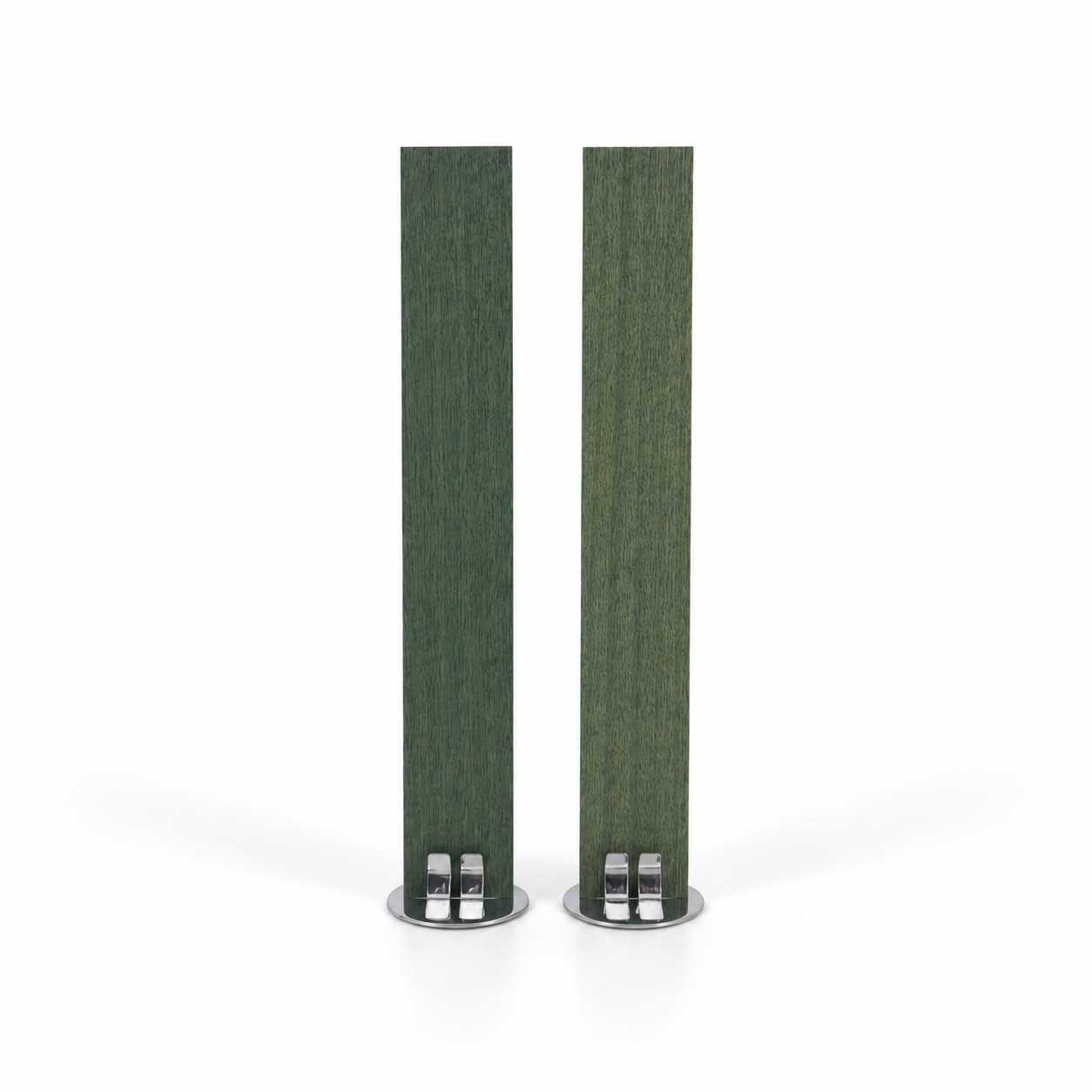
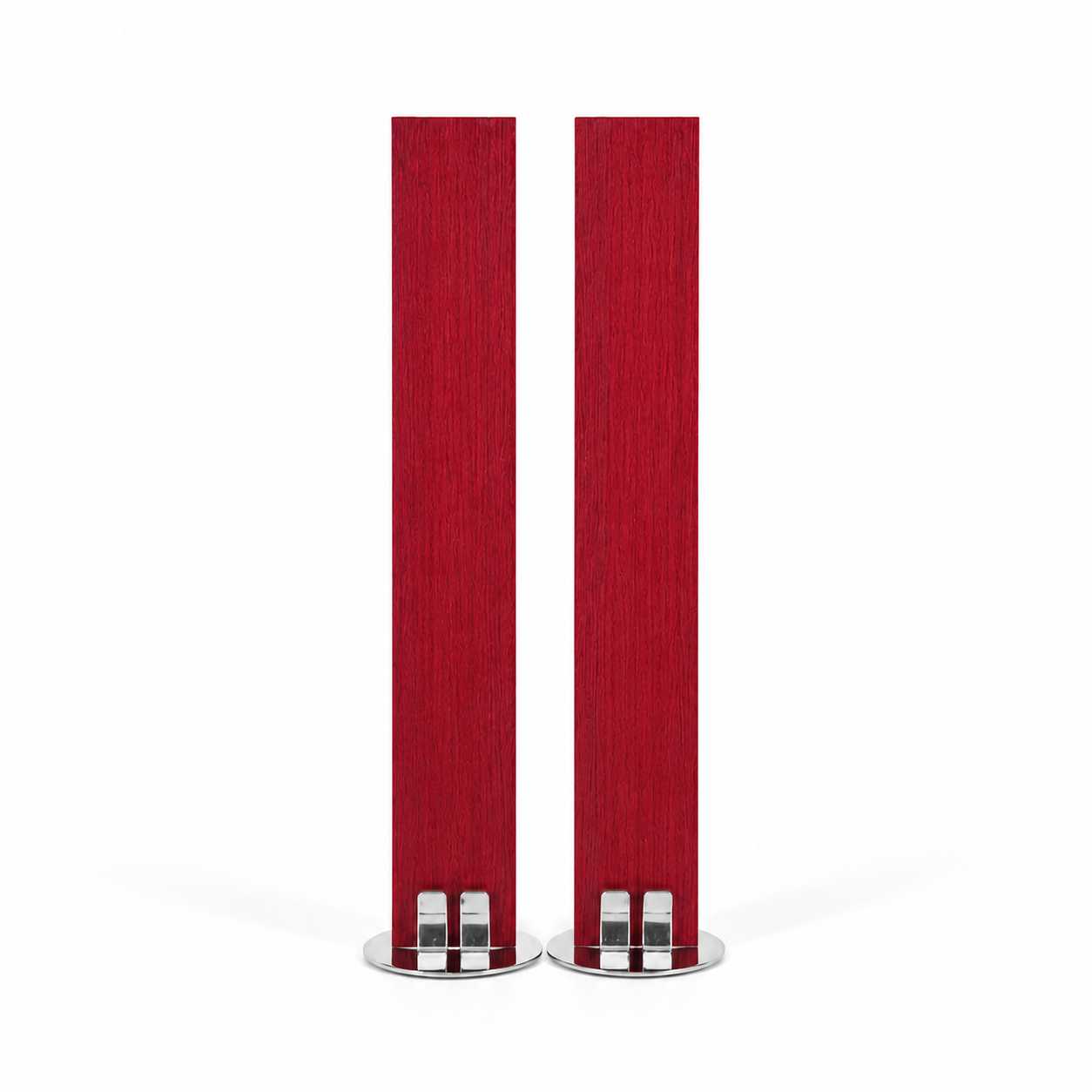
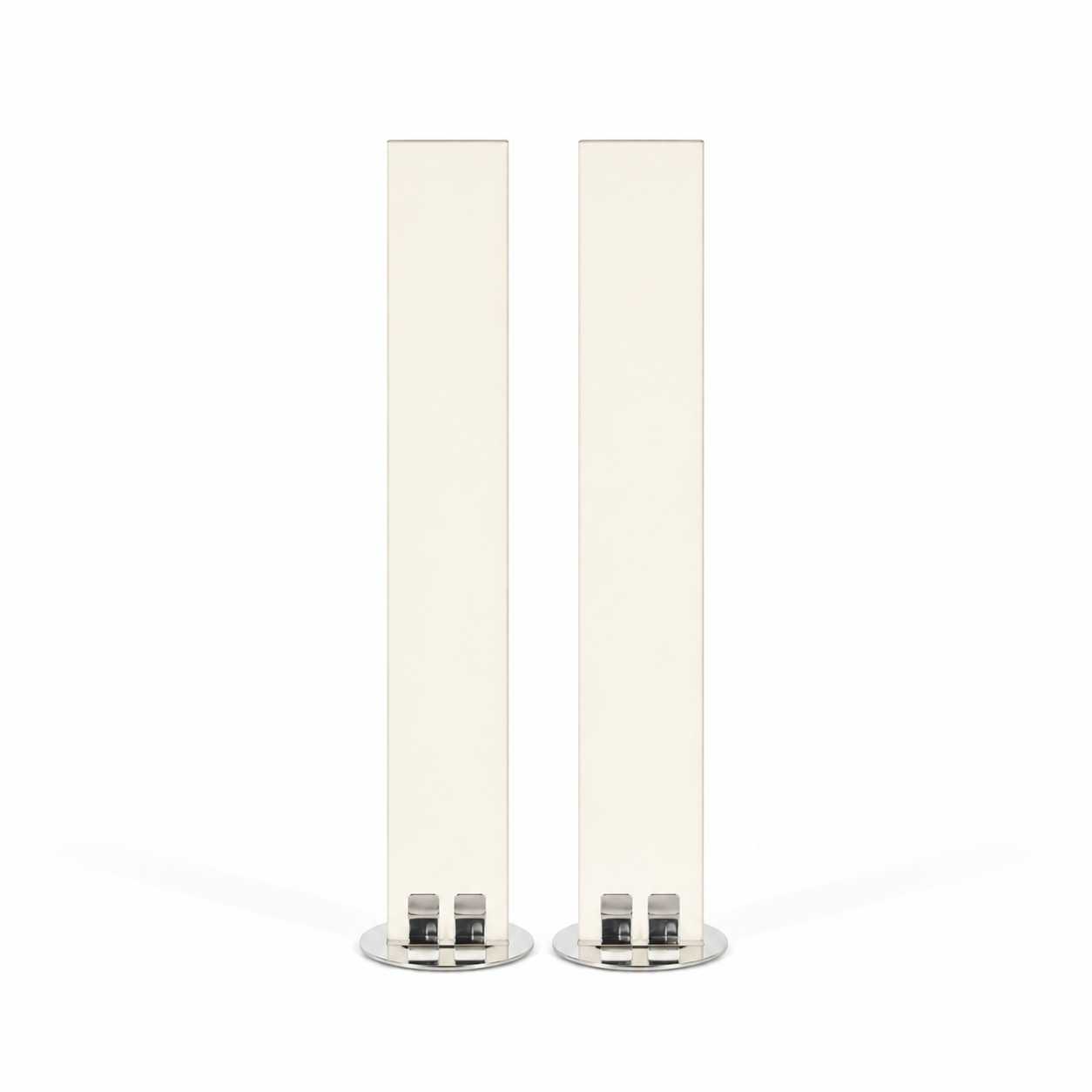
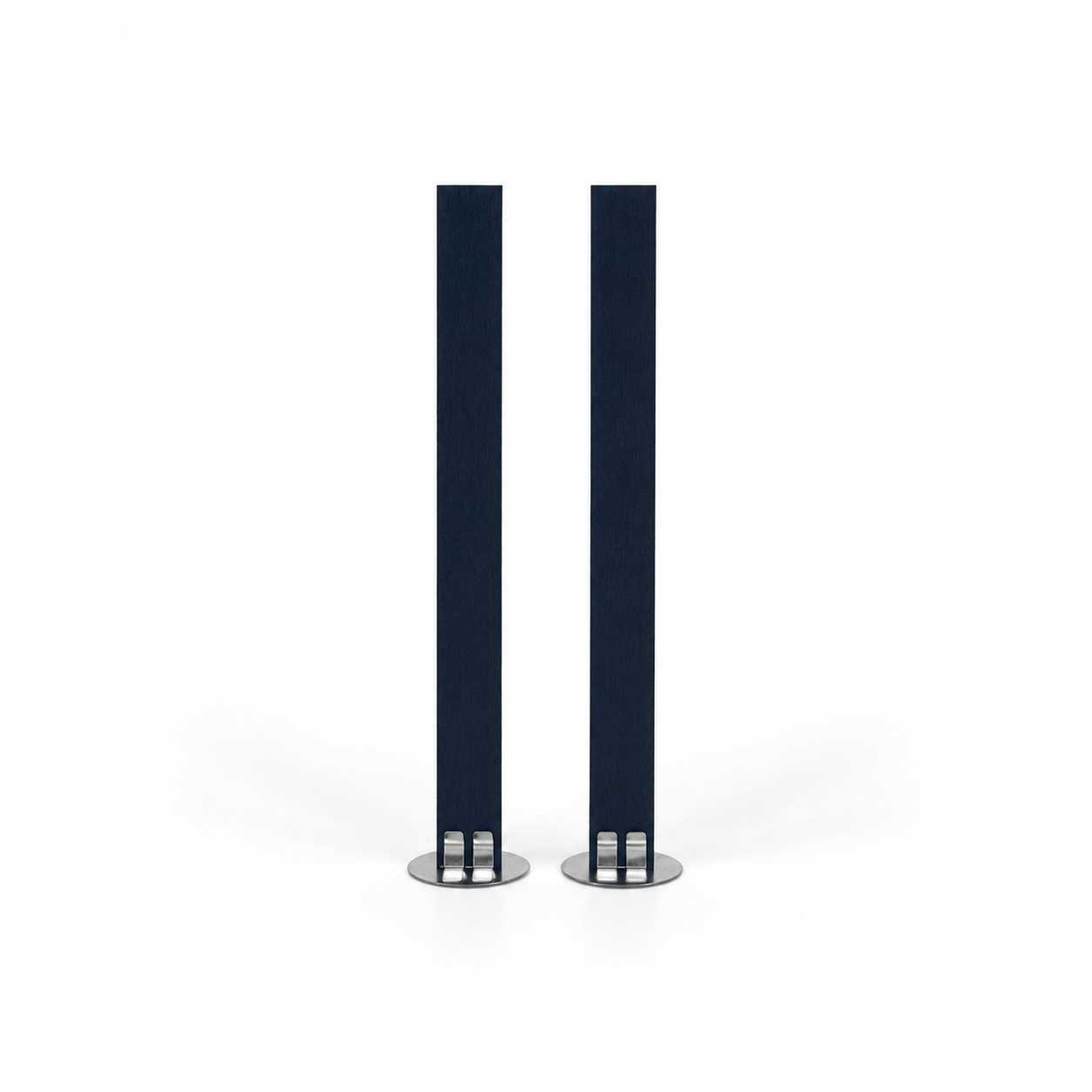
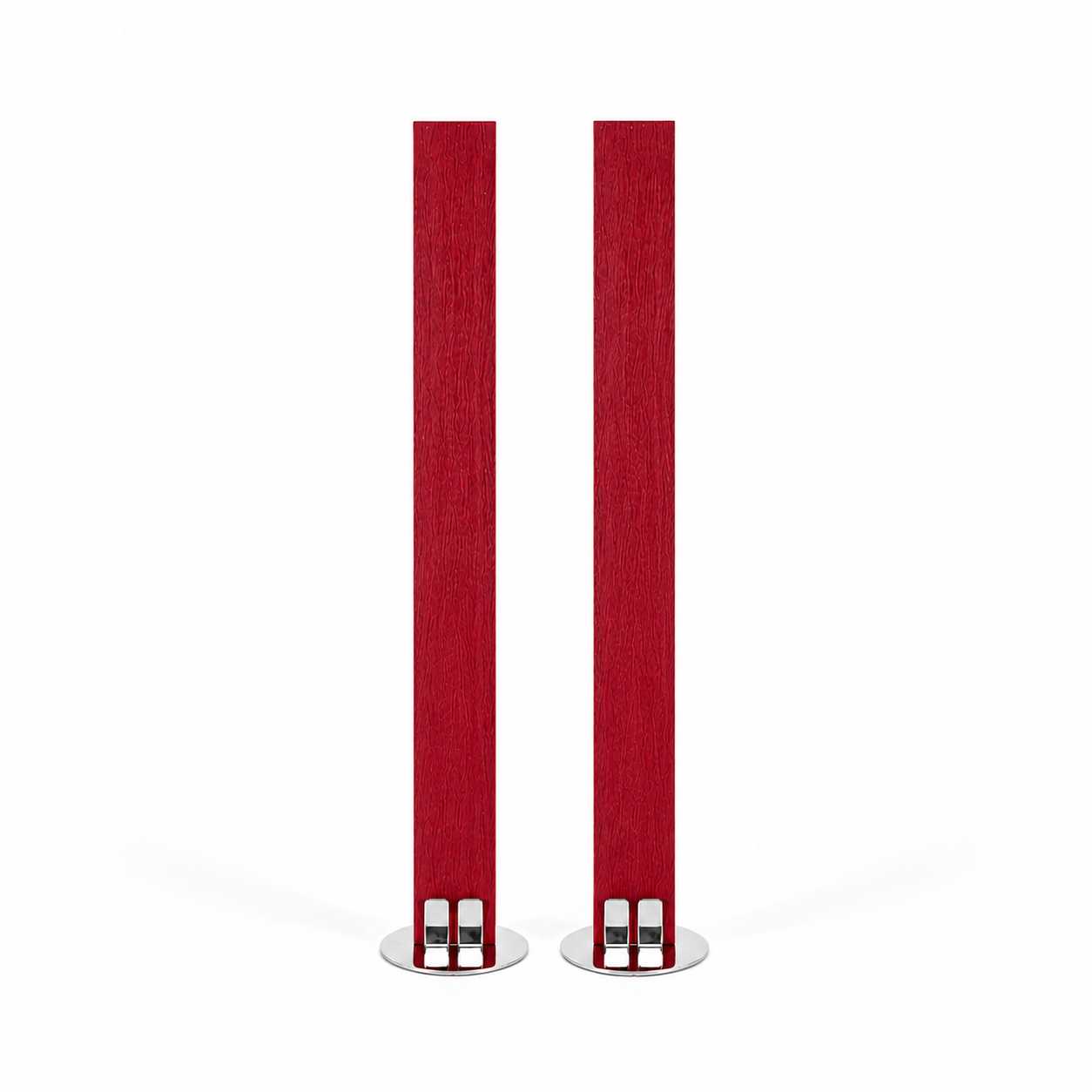
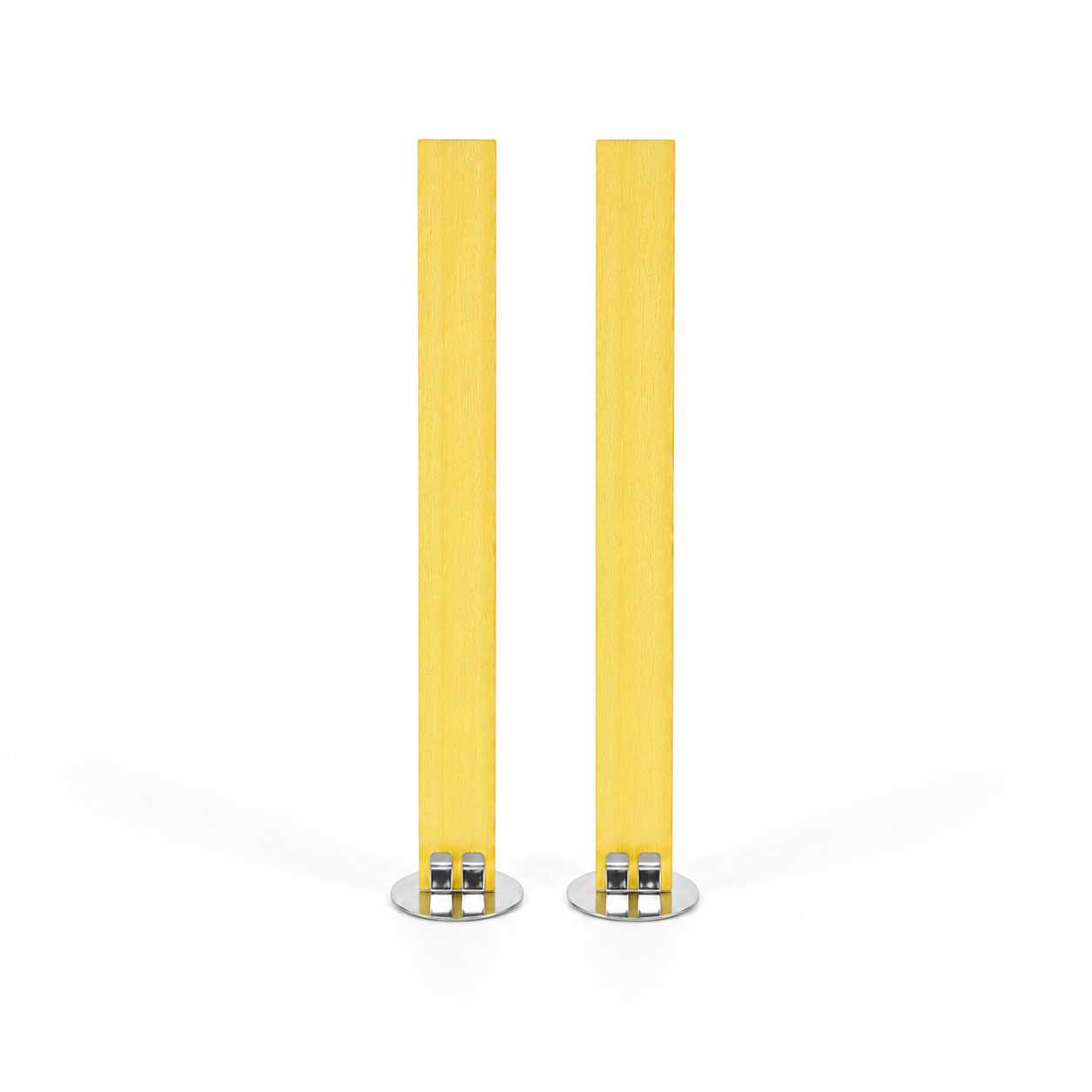
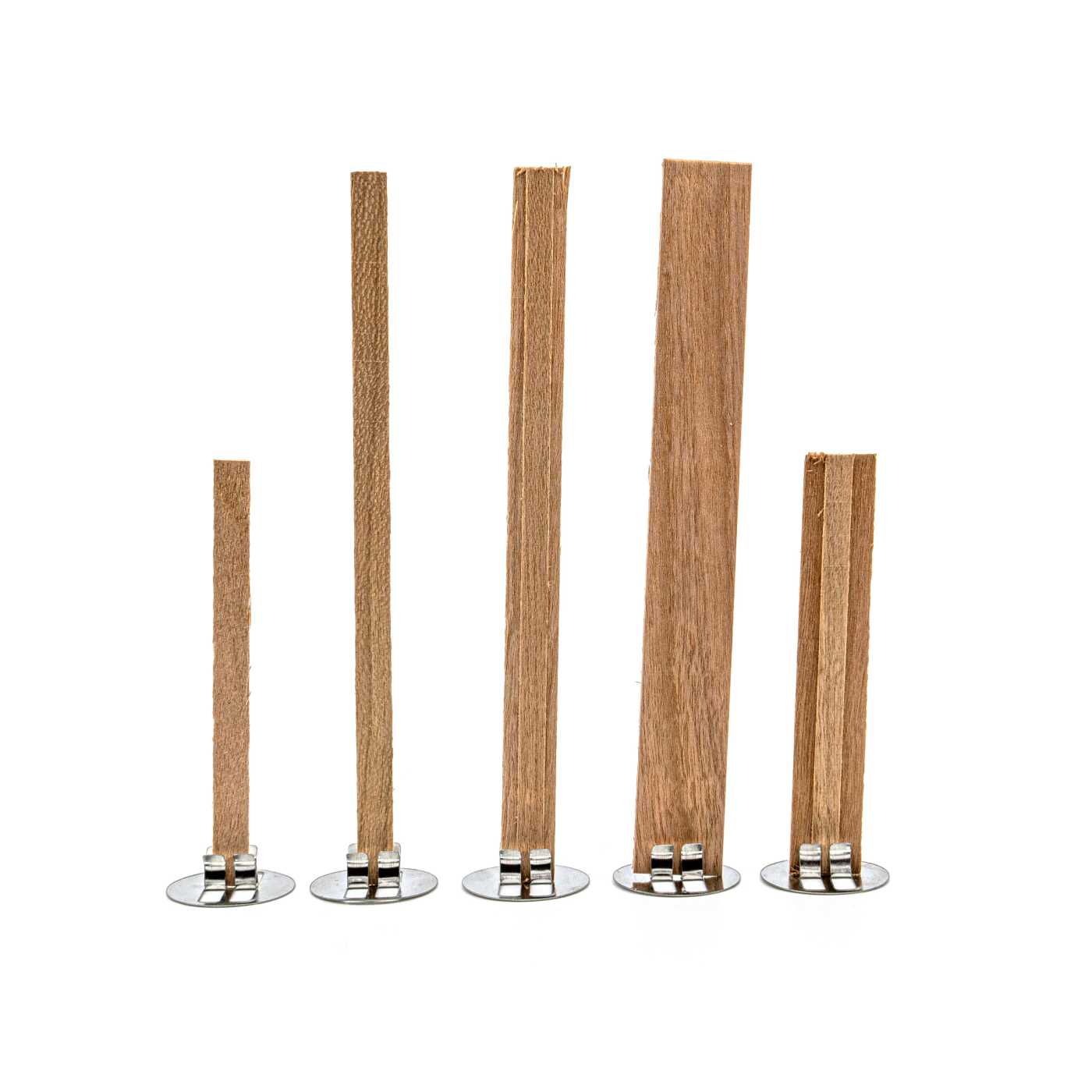
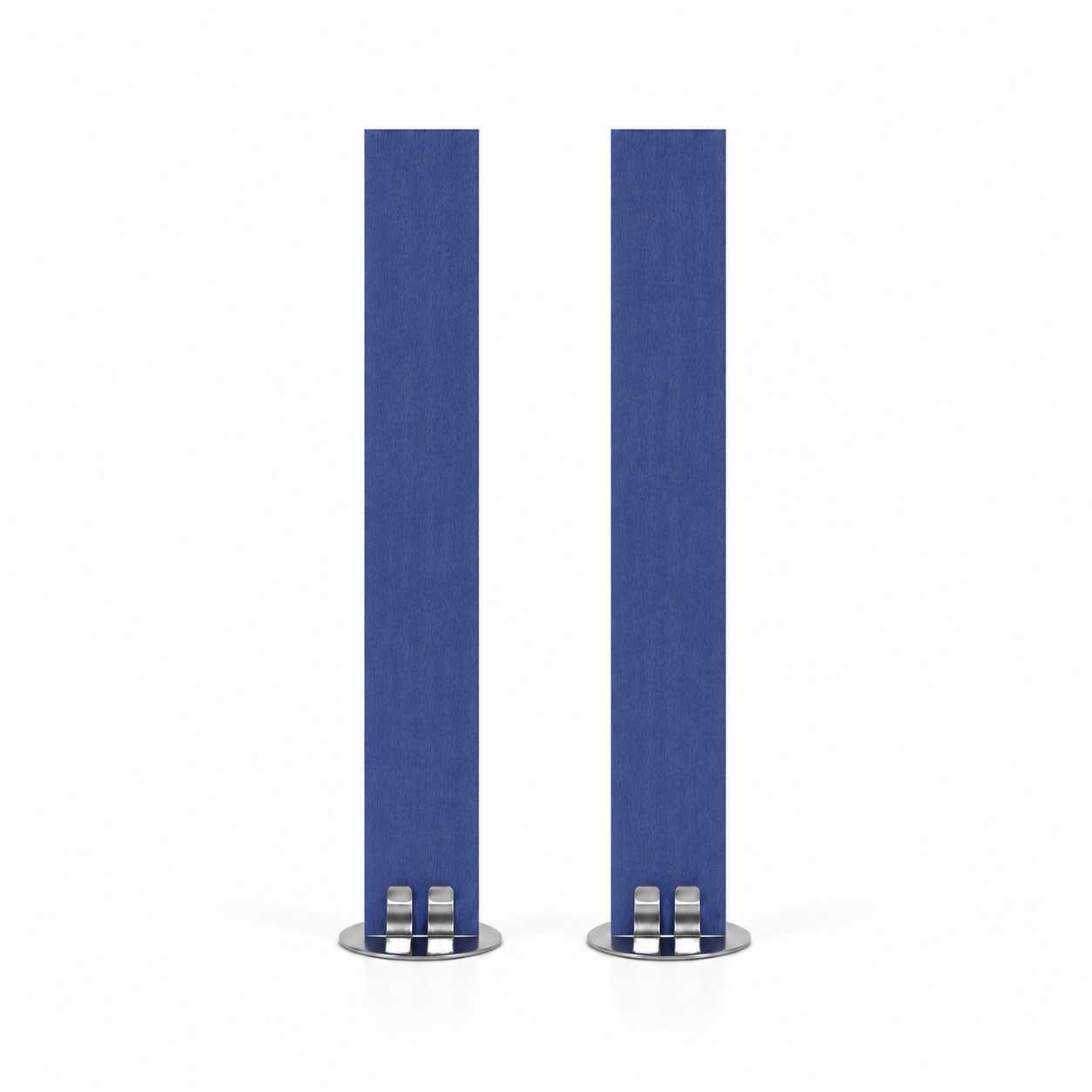
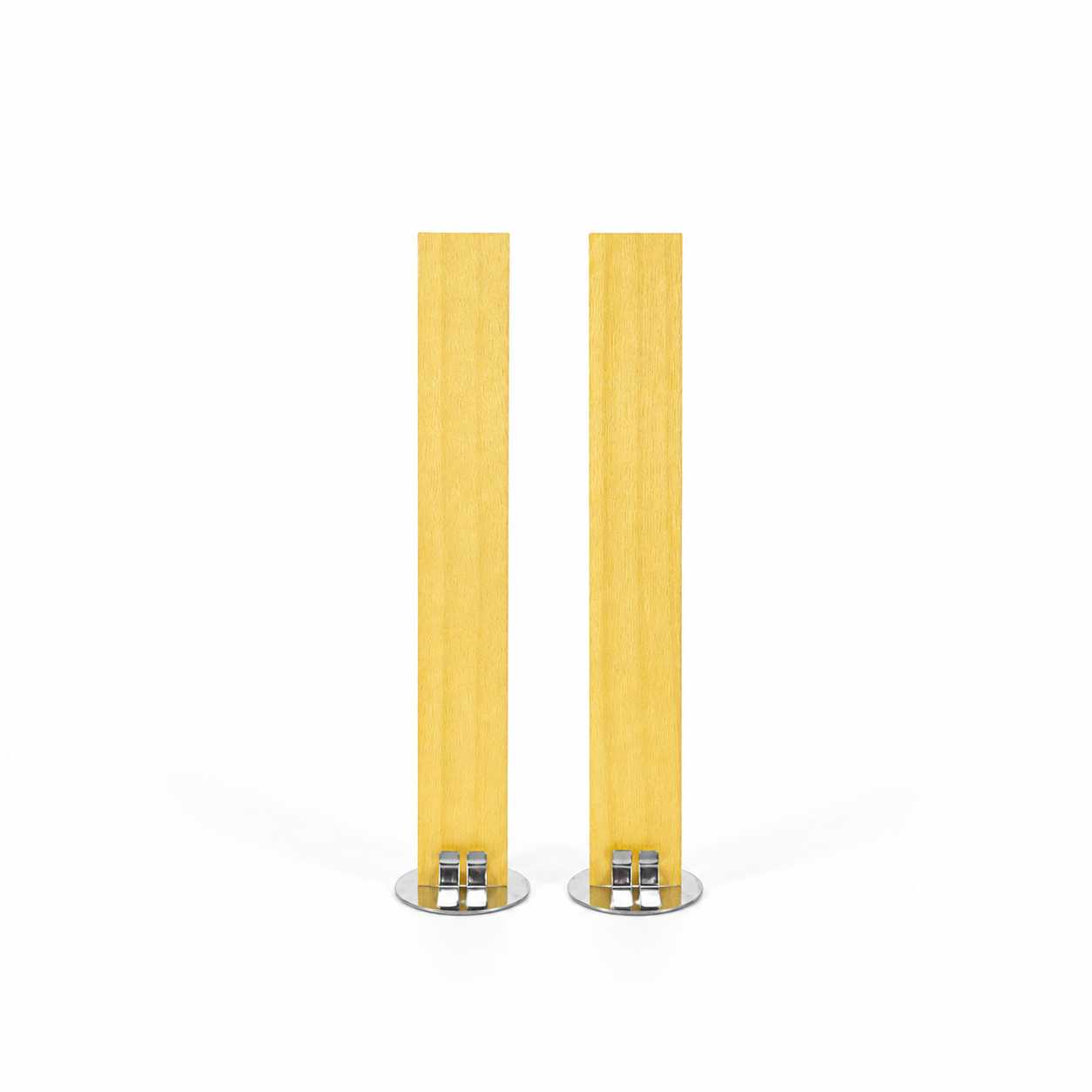
A wooden wick in yellow replaces the classic cotton wick in a candle with a flat wooden slat. When burning, it produces a low, wide flame and a quiet crackling reminiscent of a fireplace. It comes complete with a metal sustainer, so it can be placed into a container and poured with wax straight away.
This is a single-ply wick with one slat. The yellow colour is decorative – it is visible from above in a wax candle even before lighting and pairs well with candles in warm tones. The manufacturer states that the wicks are made from certified wood, are natural, allergen-free, and biodegradable.
How it differs from a cotton wick
- Flame shape – the wooden slat burns across its full width; the flame is lower and wider than that of a cotton wick. Melted wax spreads outward and creates a more even melt pool.
- Sound when burning – the wood fibres crackle softly as they burn. This is the main reason wooden wicks are chosen for candles intended to create an atmosphere.
- Easy to set up – the wick does not need to be braided or primed. The slat in its sustainer is inserted into the container directly.
- Appearance – the wooden slat is a visual element of the candle. The coloured version complements the colour of the wax or the container.
Sustainer included
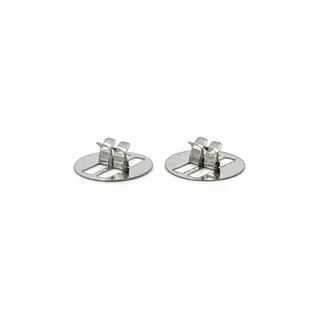
The package includes a round metal sustainer with a circular base that holds the flat wick upright at the bottom of the container. The sustainer is suitable for straight, double, and cross wooden wicks, so it works with other variants in the range as well. The slat is inserted into the sustainer so that it sits firmly and does not wobble. The sustainer is then fixed to the centre of the container bottom with an adhesive dot or a drop of hot wax.
Candle-making process
- Setting up – fix the wick in its sustainer to the centre of the container bottom before pouring the wax. With wider containers, temporarily propping the slat helps prevent it from shifting while the wax sets.
- Pouring the wax – wax is poured at the temperature recommended for the particular wax type and fragrance blend. The candle should set completely before the first burn.
- Trimming before lighting – once set, trim the slat above the wax surface so that only a short stub remains. A wooden wick that is too long is difficult to light and produces smoke.
- First burn – it should last until the wax melt pool reaches the walls of the container. This prevents a tunnel from forming around the wick.
Wooden wicks are sensitive to the combination of wax, fragrance blend, and container diameter. Always pour a test candle before a larger batch and monitor flame height, soot formation, and melt pool width. If the wick burns weakly or goes out, try a thicker slat or a double wick. If the flame smokes and is too high, choose a thinner slat or a narrower width.
Good to know
- Slat thickness – the designation .02 is the manufacturer's code; a higher number means a thicker slat. Thickness determines how much wax the wick draws to the flame.
- Container diameter – the slat is 19.1 mm wide. The appropriate container diameter depends on the wax type, its melting point, and the fragrance load, so suitability is verified through test burning.
- Wax type – softer waxes with a lower melting point, such as soy or coconut, generally perform better with wooden wicks than hard waxes. With harder waxes or a higher fragrance load, a thicker slat may be needed.
- Storing wicks – wood absorbs moisture from the air, and a damp wick burns poorly. Slats should therefore be kept dry before use.
- Safety – a candle with a wooden wick should never be left burning unattended. A trimmed wick and regular removal of the charred tip reduce the risk of a high flame and container overheating.
A single-ply wick of thickness .02 is not suitable for every combination of wax and container. Do not rely on the wick size alone – rely on the result of a test burn. With wooden wicks in particular, the difference between a suitable and an unsuitable candle can come down to a single slat thickness.
Frequently asked questions
What container is a wooden wick 19.1 mm wide suitable for?
A 19.1 mm wooden wick is suitable for a container in which it produces an even melt pool across the full surface during a test burn. The exact diameter depends on the wax type, fragrance load, and slat thickness, so suitability is verified through test burning. If the wax melts only around the wick, the container is too wide for that particular slat.
Why does a wooden wick go out or burn weakly?
The most common causes are a slat that is too thin for the wax, a wick that protrudes too far above the surface, or a charred tip that has not been removed. A wooden wick needs a short stub above the wax and a clean tip before every light. If the problem persists after trimming, a thicker slat or a double wick will help, or alternatively a wax with a lower melting point.
How is a wooden wick secured to the bottom of the container?
A wooden wick is placed into the container using the metal sustainer included in the package. The slat is inserted into the sustainer so that it sits upright, and the sustainer is fixed to the centre of the container bottom with an adhesive dot or a drop of hot wax. Once the wax has been poured and set, the wick holds firmly and requires no adjustment during burning.
Is a yellow wooden wick suitable for soy wax?
Yes, wooden wicks are commonly used with soy wax because the softer wax with its lower melting point melts well with a wooden slat. Even with soy wax, however, a test burn is needed to confirm the correct slat thickness for the given container and fragrance load. The yellow tint is a decorative feature and has no bearing on the choice of thickness.
How often should a wooden wick be trimmed?
A wooden wick should be trimmed before every light, not just once after making the candle. The burned and charred tip of the slat is snapped off with fingers or cut with scissors so that only a short, clean stub remains above the wax. Without this step the flame gradually shrinks, the candle smokes, and it burns unevenly.
Can the sustainer in the package be used with other wooden wicks?
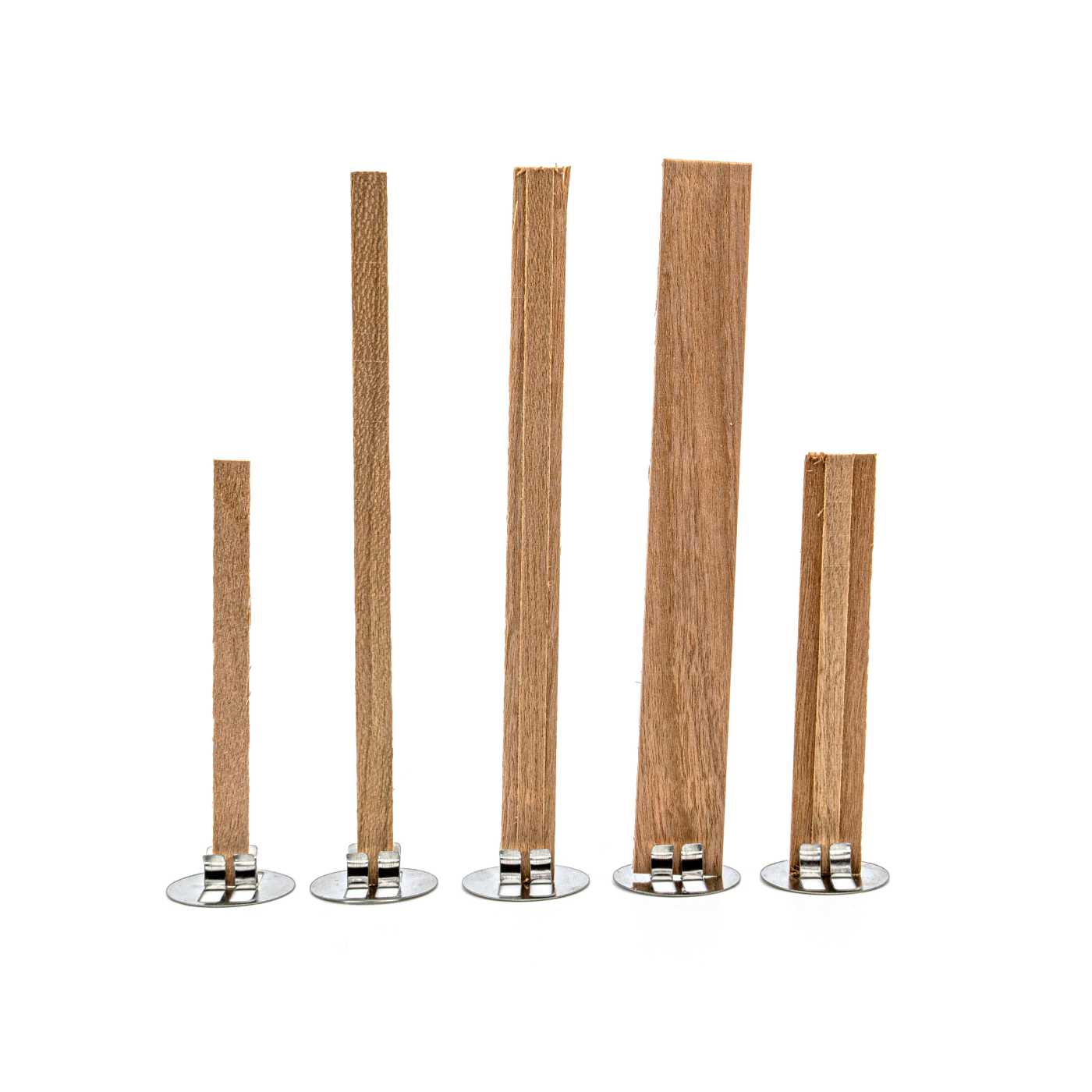
Yes, the metal sustainer included is designed for straight, double, and cross wooden wicks, so it can be used with various slat variants from the range. The important thing is that the slat sits firmly and upright in the sustainer. With a double or cross wick, both slats are inserted into the sustainer together.



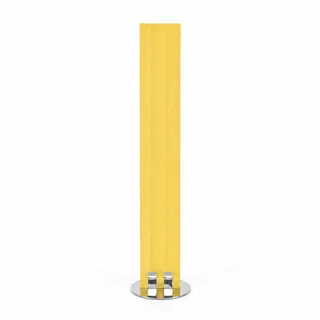 Wooden wick, .02 yellow, 19.1 mmDrevený knôt, .02 žltý, 19,1 mm ZASOBA