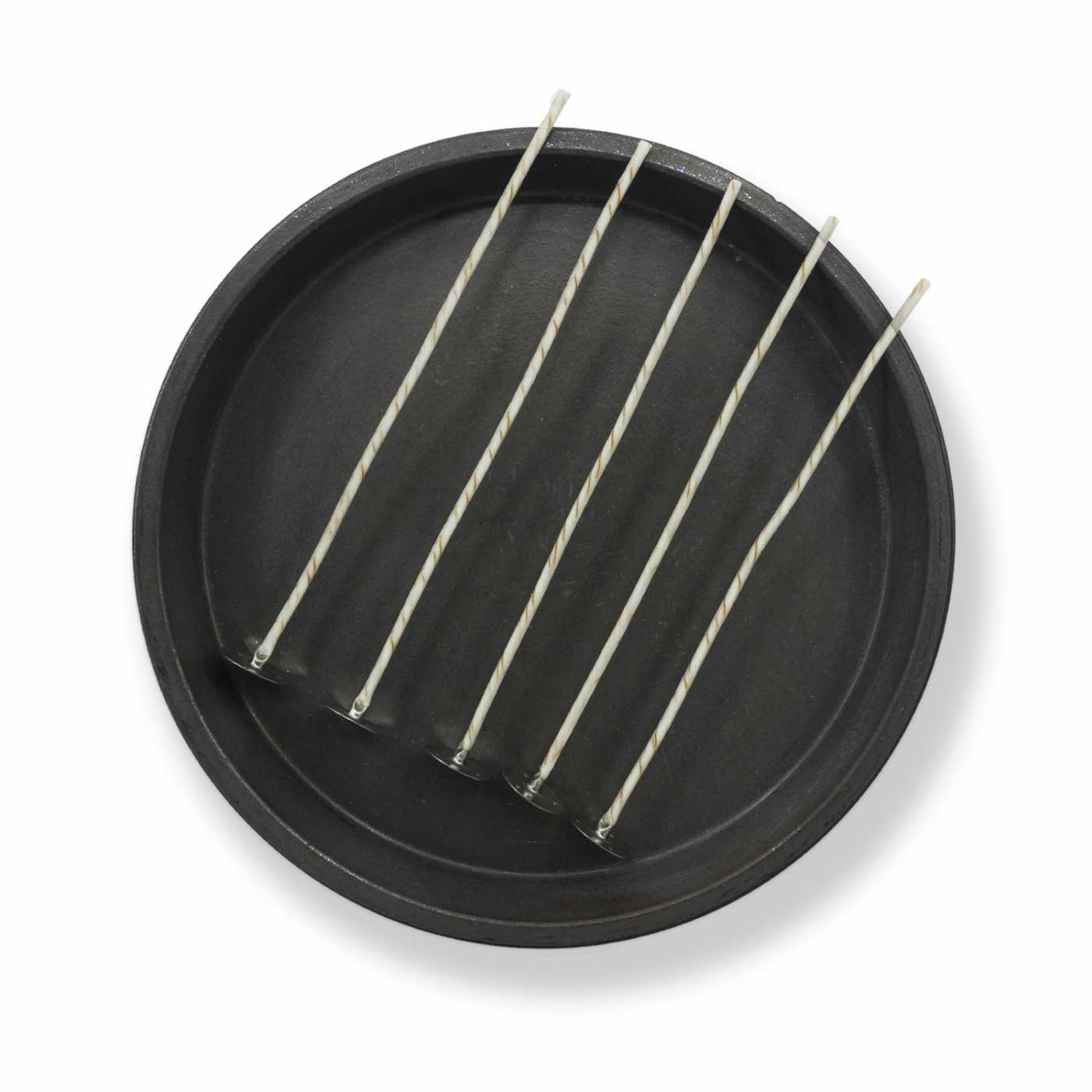
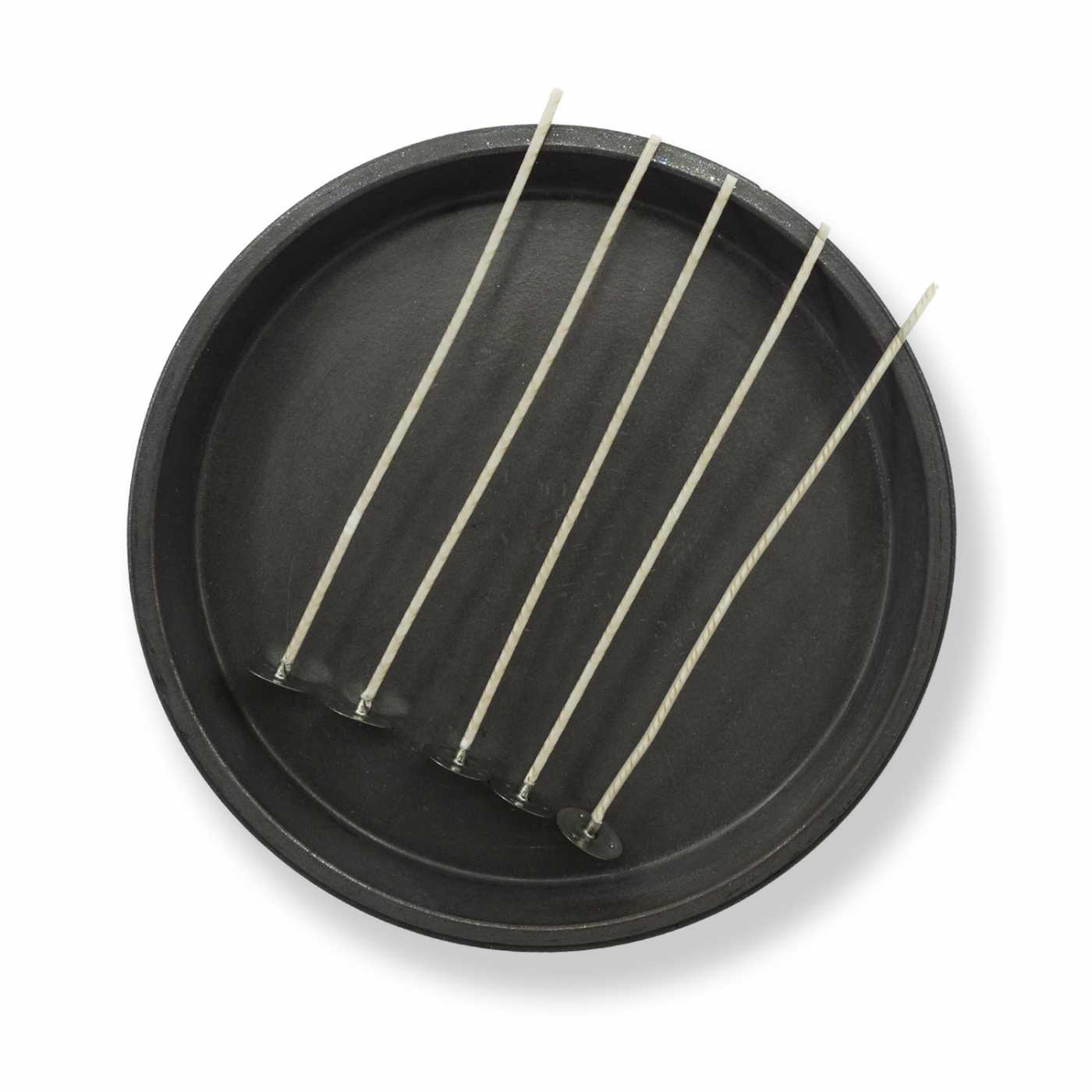
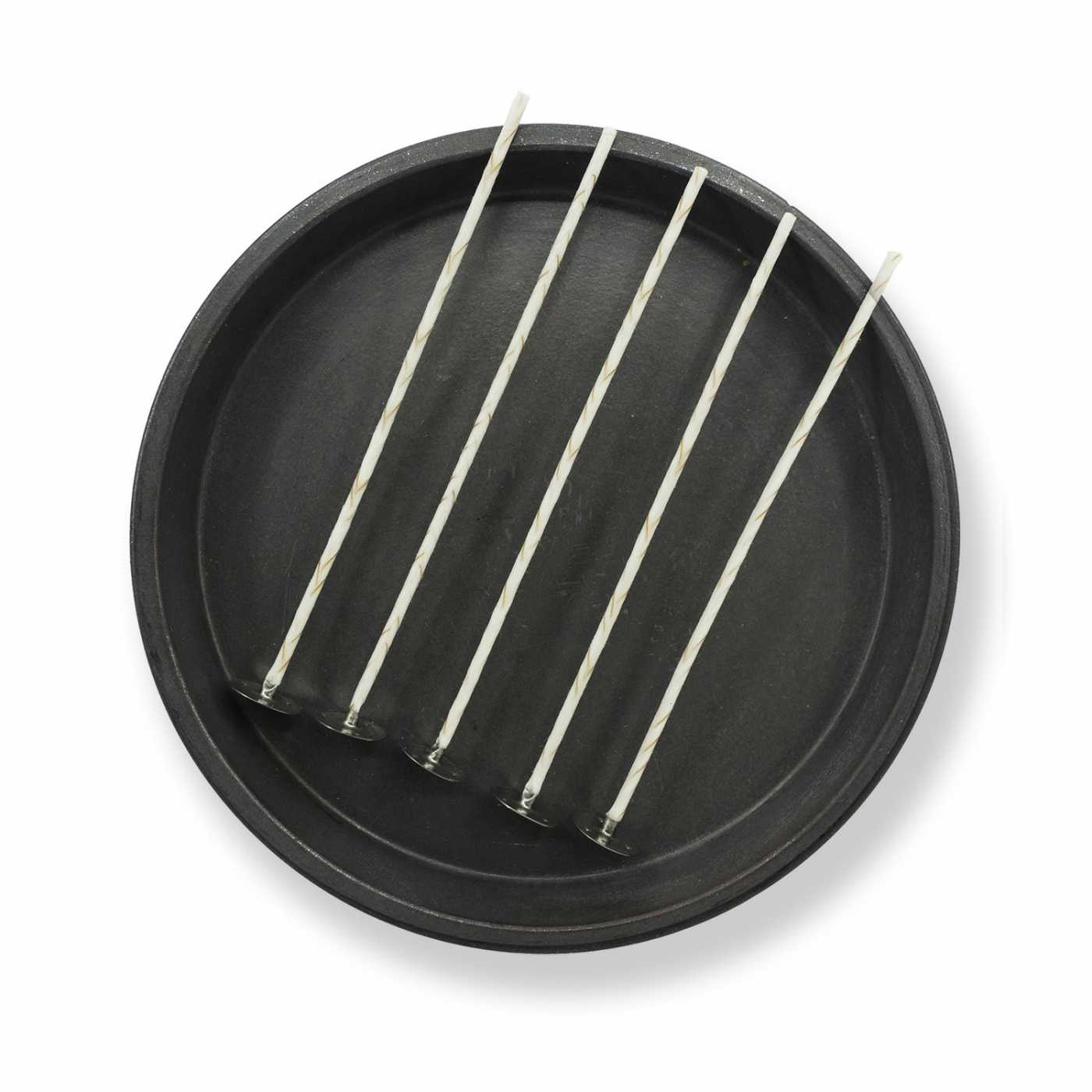
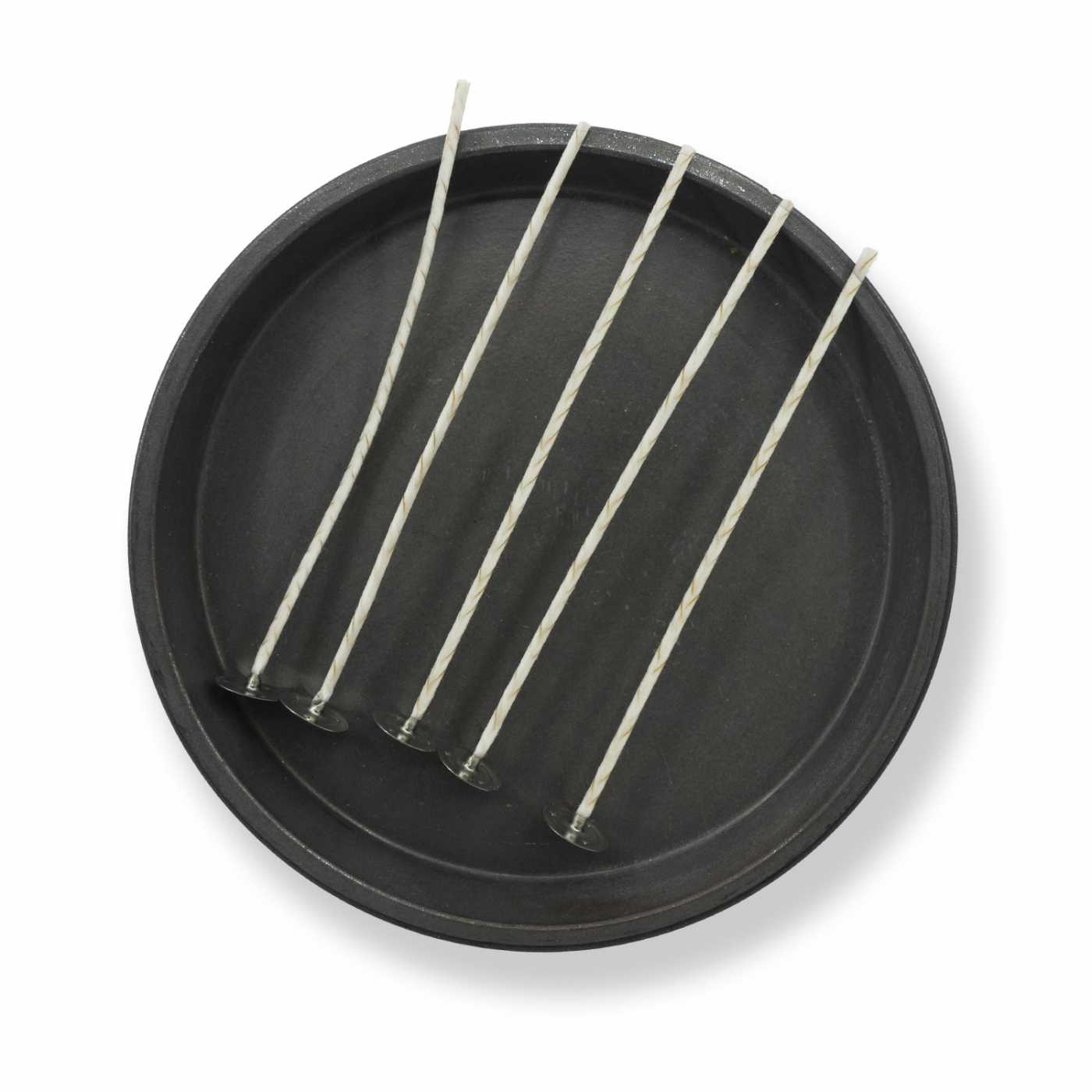
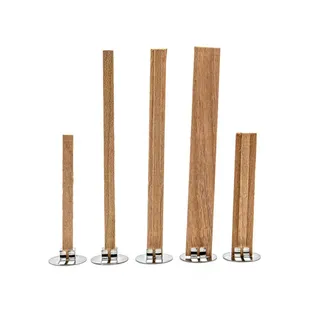
A wooden crackling wick is a flat wick made from a wooden slat designed for container candles. It belongs to a series of wicks that crackle gently when burning. The pack contains 100 wicks along with metal sustainers, so the sustainers do not need to be purchased separately.
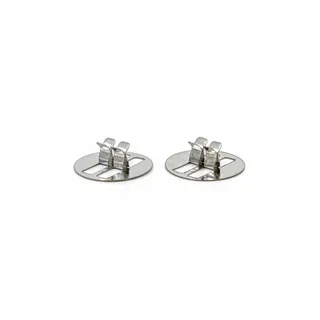
This is a single-ply wick, meaning a single wooden slat. A round steel sustainer holds it upright on the bottom of the container.
What makes a wooden wick interesting
- Crackling during burn – the single-ply slat is designed to crackle gently as it burns. Sound intensity varies depending on the formulation.
- Sustainer included – the round sustainer is suitable for straight, double and cross wooden wicks.
- Certified wood – the manufacturer describes the wicks as natural, allergen-free and biodegradable.
How to fit the wick into a candle
The wick is inserted into the sustainer, and the sustainer is attached to the centre of the bottom of a clean, dry container. A wick sticker or a drop of melted wax can be used to secure it. Once the candle has fully set, trim the wick with wick pliers or wick scissors.
A wooden wick should be trimmed short, to just a few millimetres above the wax surface. A wick that is too long produces a tall, unsteady flame or goes out.
Choosing the wick width and thickness
Wick width is chosen based on the container diameter and wax type. The manufacturer indicates slat thickness with a number, and a higher number means a thicker slat.
Whether the wick is the right choice is only confirmed by a test burn:
- Wick too weak – the flame is small, goes out, and the wax melts only in the centre (tunnelling).
- Wick too strong – the flame is tall, produces smoke, soot forms and the container overheats.
We recommend verifying every combination of container, wax, fragrance and dye with a test burn of the complete candle. Only a burn test will show whether the wax pool melts evenly and the flame stays steady.
Good to know
- First burn – it is advisable to let the candle burn until the wax pool reaches the edge of the container. This prevents tunnelling on subsequent uses.
- Before each lighting – the charred tip of the wick should be snapped off or cut away. The burnt residue restricts wax flow and leads to a weak flame.
- Effect of the formulation – fragrance oils, essential oils and dyes all affect how the candle burns. Changing the fragrance in an established formulation therefore calls for a new test.
- Lighting – apply the flame along the full width of the slat so the wick ignites evenly.
- Customer information – when selling candles it is worth including a short guide on trimming the wick, as a wooden wick requires different care from a cotton one.
Frequently asked questions
Why does a wooden wick crackle when burning?
A wooden wick crackles because burning wood naturally produces sound, and the single-ply slat is made to let that sound come through. The intensity is not the same in every candle. It is affected by the type of wax, the amount of fragrance oil and the dye. In some formulations the sound is distinct, in others barely noticeable, so it is worth comparing several variants in a test burn.
What does the .03 designation on a wooden wick mean?
The .03 designation indicates the thickness of the wooden slat according to the manufacturer's numbering, where a higher number means a thicker slat. This wick is single-ply, meaning it consists of a single slat. Thickness, together with wick width, is selected based on the container and candle formulation. A test burn will confirm whether the choice is correct.
How and when should a wooden wick be trimmed?
A wooden wick should be trimmed short, to just a few millimetres above the wax surface. A wick that is too long burns with an unsteady flame or goes out. Trim after the candle has set and then before each subsequent lighting, removing the charred residue at the same time. Wick pliers or wick scissors work well for this.
Why does a candle with a wooden wick keep going out?
A candle with a wooden wick most often goes out because the wick is too long or the charred tip has not been removed. Trimming to a few millimetres above the surface will help. If the flame still goes out, the wick is likely too weak for the container and wax in question, and a wider or thicker slat should be tried. An excessively high fragrance load also impairs burning.
How is a wooden wick secured inside a container?
The wooden wick is inserted into the metal sustainer included in the pack, and the sustainer is glued to the centre of the container bottom. A wick sticker or a drop of melted wax is sufficient to secure it. The sustainer holds the slat upright on the bottom of the container. It is suitable for straight, double and cross wooden wicks.


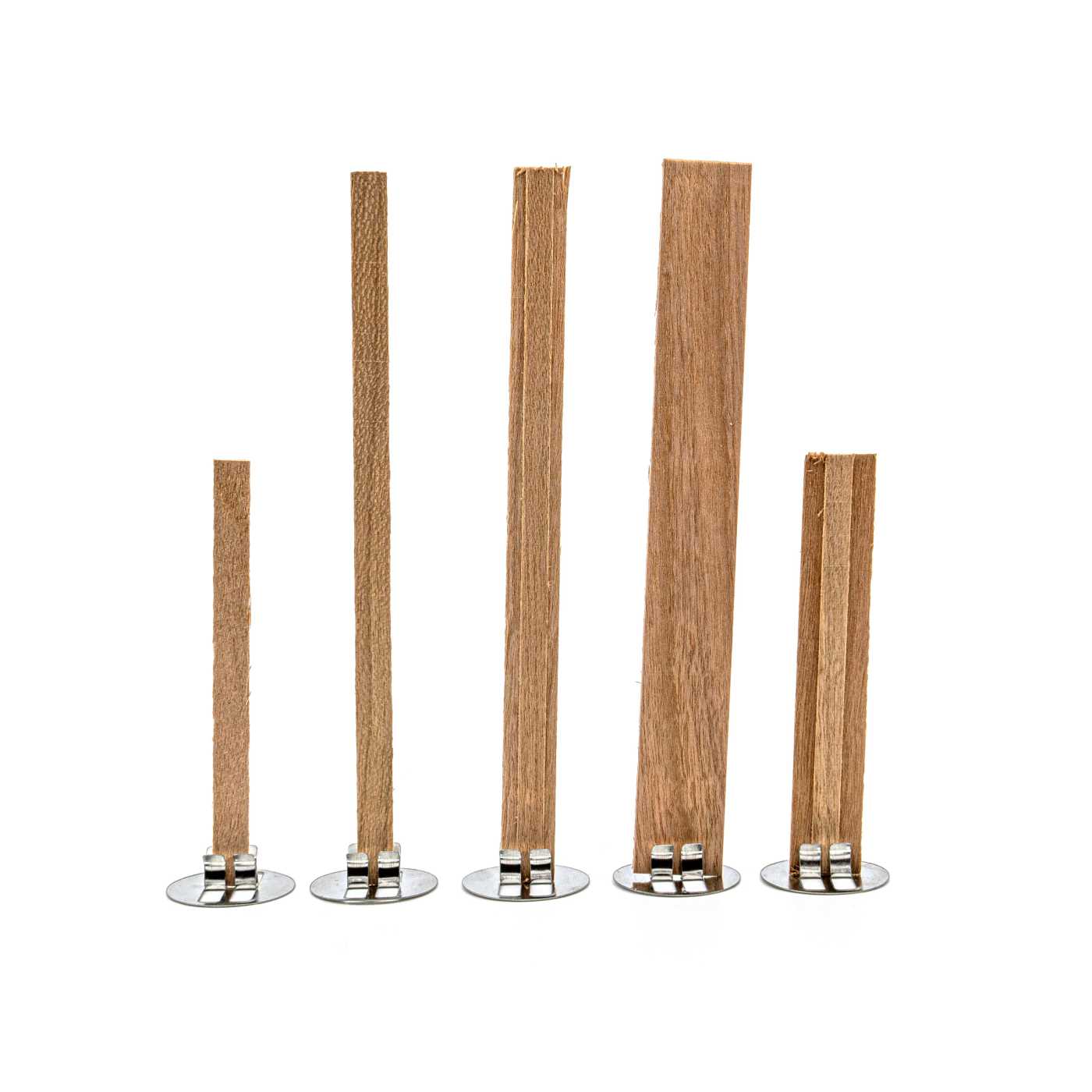
 100× Wooden wick, .03 crackling, 12.7 mmDrevený knôt, .03 praskajúci, 12,7 mm ZASOBA